Alcohol and Diabetes: a Guide to Safe Drinking
Alcohol and diabetes mix in tricky ways. Learn how drinks affect blood sugar, medication risks, and practical safety tips so you can drink with confidence.

In this article(12)
The relationship between alcohol and diabetes is more complicated than counting the carbs in a beer. A glass of wine at dinner or a cocktail at a wedding can shift your blood sugar in ways that surprise even people who have lived with diabetes for years. Understanding what actually happens inside your body when you drink is the difference between enjoying a social evening and waking up in the middle of the night with a low you did not see coming.
This guide pulls together what current research and major diabetes organizations recommend, then translates it into the kind of practical advice you can actually use. We will cover how alcohol interacts with your liver, your medications, and your meter, plus what the safe limits look like for type 1, type 2, and pre-diabetes. The goal is not to tell you whether to drink. The goal is to help you make an informed choice.
How Alcohol and Diabetes Interact
Your liver does two jobs that matter here. It releases stored glucose to keep your blood sugar steady between meals, and it filters toxins out of your bloodstream. Alcohol counts as a toxin, so the liver drops everything else and metabolizes the alcohol first. According to the National Institute on Alcohol Abuse and Alcoholism, this can take several hours depending on how much you have had.
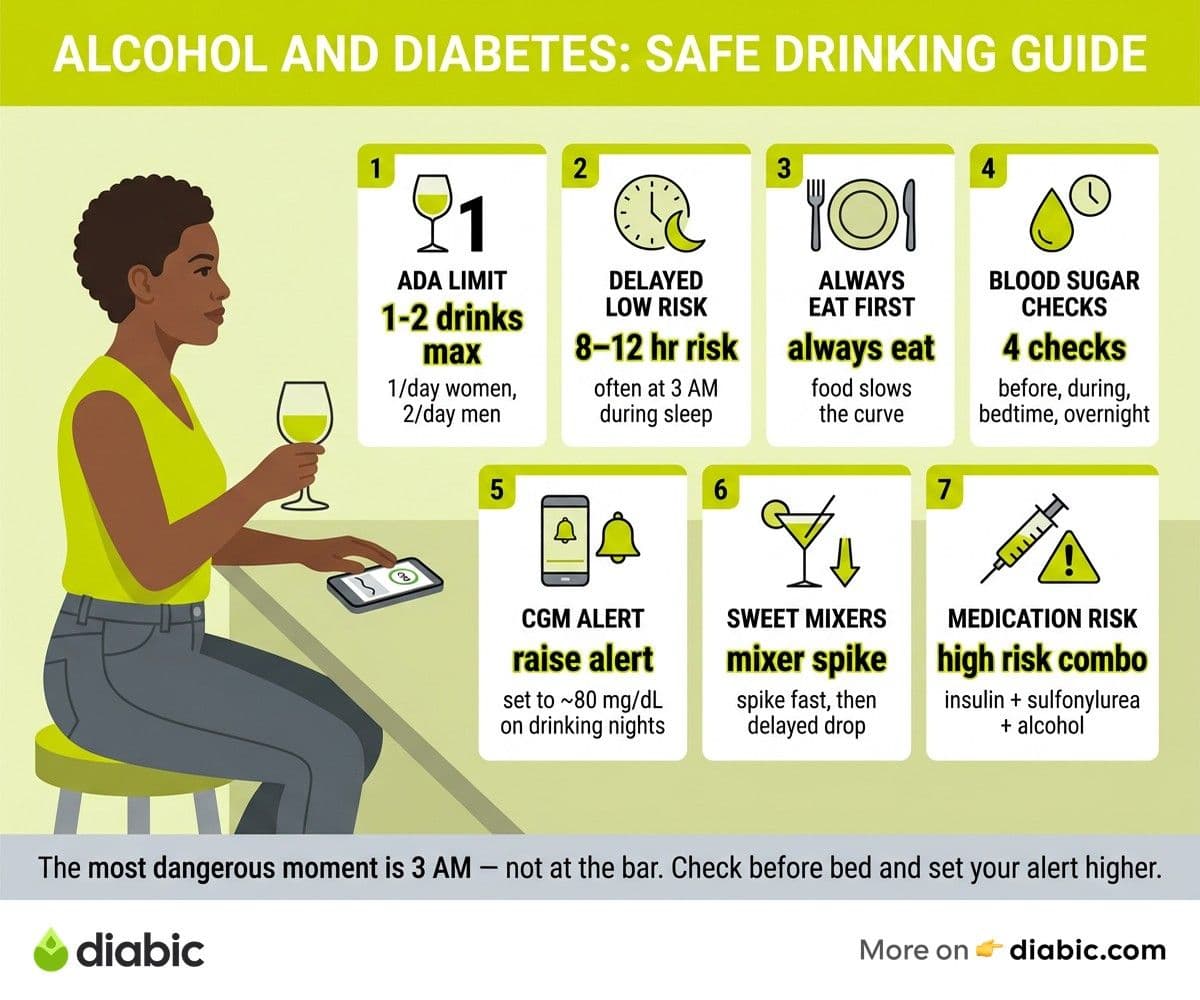
While your liver is busy with alcohol, it is not releasing glucose. For someone without diabetes, the pancreas adjusts and nothing dramatic happens. For a person with diabetes who takes insulin or sulfonylureas, the medication keeps working as usual while the liver's safety net is offline. That gap is where dangerous lows can sneak in, sometimes 8 to 12 hours after the last drink.
Mixed drinks add another layer. A margarita or rum and coke can spike blood sugar fast because of the sugary mixer, then drop it hours later as the alcohol kicks in. The result is a roller coaster that is harder to read than a standard meal. Beer and sweet wine can do something similar on a smaller scale. Spirits served neat or with diet mixers tend to lower blood sugar without the initial spike.
Medications matter too. Insulin and sulfonylureas (like glipizide and glyburide) raise the risk of severe lows when combined with alcohol. Metformin can interact with heavy drinking to cause a rare but serious condition called lactic acidosis. If you take any of these, the conversation about drinking is different than it would be on diet and exercise alone.
Understanding Alcohol Consumption and Diabetes Risk
The picture for type 2 diabetes risk is not as clear as you might expect. Some studies in the Diabetes Care journal have found that light to moderate alcohol consumption, particularly wine with meals, is linked to a slightly lower risk of developing type 2 diabetes. Other research suggests the protective effect may have been overstated. The honest answer is that drinking is not a strategy for preventing diabetes, and the risks of heavy drinking outweigh any small benefit.
Heavy drinking is a different story. Chronic heavy alcohol use damages the pancreas, the same organ that produces insulin. It raises triglycerides, contributes to weight gain, and worsens insulin resistance. A pattern of binge drinking, defined as four or more drinks in two hours for women and five or more for men, can push someone with pre-diabetes closer to a type 2 diagnosis.
For people already living with diabetes, the alcohol risks specific to type 2 diabetes include higher odds of nerve damage, fatty liver, and harder-to-manage blood pressure. The carbohydrate and calorie load of common drinks also adds up faster than most people realize. A regular beer has about 13 grams of carbs and 150 calories. A piña colada can hit 50 grams of carbs and over 500 calories in a single glass.
Insulin sensitivity shifts in the short term too. After moderate drinking, your body may respond more strongly to insulin for several hours, which is part of why delayed lows happen. Over years of heavy drinking, the opposite can occur, with sensitivity decreasing as inflammation and fat accumulation in the liver build up.
The Effects of Alcohol on Blood Sugar
The immediate effect depends on what you drink. A glass of dry red wine with dinner usually causes a small dip. A sweet cocktail or sangria can push numbers up by 50 to 100 mg/dL within an hour. Beer falls somewhere in between, and craft beers with higher alcohol content tend to hit harder than light lagers.
The delayed effect is what catches people off guard. Several hours after drinking, sometimes overnight, blood sugar can drop sharply because the liver is still recovering. This is why the most common dangerous moment is not at the bar. It is at 3 a.m., when you are asleep and not feeling the early warning signs of a low. For more on how alcohol affects insulin in type 1 diabetes, the timing of insulin doses around drinks deserves special attention.
Eating with alcohol changes the equation in your favor. Food slows alcohol absorption, gives the liver something else to work with, and reduces the steepness of any low. Drinking on an empty stomach, especially after exercise, is the fastest path to trouble. Pair every drink with food that contains some carbs and protein, even if it is just a handful of nuts and a few crackers.
Monitoring strategies matter on nights when you drink. Check before you start, again after one or two drinks, before bed, and once during the night if you can. If you wear a continuous glucose monitor, set the low alert higher than usual, somewhere around 80 mg/dL, to give yourself extra warning time. Eat a small snack with slow carbs (like whole-grain toast with peanut butter) before sleeping if your bedtime number is on the lower end of your range.
Pre-Diabetes and Alcohol: What to Know
Pre diabetes and alcohol consumption is a topic that gets less attention than it should. If you are in the pre-diabetes range, with a fasting glucose of 100 to 125 mg/dL or an A1C of 5.7 to 6.4 percent, the lifestyle choices you make now have a bigger impact on whether you develop type 2 than almost any other factor. Alcohol is part of that picture.
Moderate drinking, defined by the CDC alcohol guidelines as up to one drink per day for women and two for men, does not appear to significantly accelerate progression to type 2 diabetes for most people. Heavy or binge drinking does. If you have pre-diabetes and you drink more than the moderate threshold most weeks, cutting back is one of the highest-impact changes you can make.
Metformin, often prescribed for pre-diabetes or early type 2, deserves a specific note. The combination with heavy alcohol use raises the risk of lactic acidosis, a condition that causes muscle pain, weakness, and breathing problems. Light drinking with metformin is generally considered low risk, but the threshold drops quickly with heavier use. Talk to your doctor about what is reasonable for your situation.
Other lifestyle factors compound the picture. Poor sleep, low physical activity, and a diet high in refined carbs all interact with alcohol in ways that nudge blood sugar in the wrong direction. The good news is that these levers all work in reverse. Better sleep, regular movement, and balanced meals make moderate drinking easier for your body to handle.
Practical Guidelines for Safer Drinking
The ADA's alcohol guidance lines up with general public health recommendations: up to one drink per day for women and up to two for men. A "drink" means 12 ounces of regular beer, 5 ounces of wine, or 1.5 ounces of distilled spirits. Larger pours and craft beers count as more than one drink, even if the glass looks the same.
A few simple habits make a real difference:
- Eat before and during drinking. A meal with carbs and protein blunts the immediate spike and reduces the risk of a delayed low. Avoid drinking on an empty stomach, especially after exercise.
- Choose your drink carefully. Dry wine, light beer, and spirits with diet mixers carry fewer carbs than sweet cocktails, sangria, or sugary mixed drinks. For ideas, see our roundup of best low-carb drink options for diabetes.
- Pace yourself. Sip water between drinks, and aim for no more than one drink per hour to give your liver time to keep up.
Tell at least one person you are with that you have diabetes and what to do if your blood sugar drops. Hypoglycemia can look like drunkenness to an outside observer, with slurred speech, confusion, and clumsy movements. A friend who knows the difference can be the reason you get help instead of being put to bed.
If your blood sugar drops after drinking, the standard 15-15 rule still applies: 15 grams of fast-acting carbs (glucose tabs, juice, or regular soda), wait 15 minutes, then recheck. Skip the sugar-and-fat combinations like ice cream or chocolate for treating a low after drinking, since the fat slows the sugar absorption when you need speed. If a friend or family member needs to use glucagon, they can. Glucagon still works while alcohol is in the system, though the response can be slower than usual.
From my experience: the night that taught me the most about alcohol and type 1 was a wedding ten years ago, where I had two glasses of champagne, danced until midnight, and went to bed without checking. I woke up at 4 a.m. soaked in sweat with a blood sugar of 38 mg/dL. Since then, I have a non-negotiable rule on drinking nights, which is a check before bed, a slow-carb snack if I am under 120, and a CGM alert set 10 points higher than usual. The rule has saved me from a repeat more times than I can count.
When to Avoid Alcohol Completely
There are situations where the safest answer is not drinking at all. These include:
- Active or recent diabetic ketoacidosis (DKA) or severe hypoglycemia in the past few months
- Significant kidney or liver disease, where alcohol metabolism is already compromised
- Pancreatitis, current or past, since alcohol is a major risk factor for recurrence
- Pregnancy or planning pregnancy, including gestational diabetes
- Hypoglycemia unawareness, the loss of early low blood sugar symptoms
- Active treatment with medications that have strong alcohol interactions, such as certain antibiotics or diabetes drugs your provider flags
Pregnancy deserves special mention. There is no known safe amount of alcohol during pregnancy, and this applies to gestational diabetes as much as any other type. The combination of alcohol's effects on the developing baby and the unstable blood sugar patterns of GDM make abstinence the only safe choice during those nine months.
Recognizing when occasional drinking has become problematic is harder than it sounds. The signs include drinking more than planned on most occasions, hiding drinking from family or your healthcare team, having more lows than you used to, or finding that drinking is interfering with your A1C goals. If any of these resonate, talk to your provider. Diabetes management and alcohol use disorder are treatable together, and you do not have to figure it out alone.
Frequently Asked Questions
Can you drink alcohol if you have diabetes?
Most people with well-managed diabetes can enjoy moderate alcohol. The ADA suggests up to one drink per day for women and two for men, paired with food and within your usual blood sugar targets. If you take insulin or sulfonylureas, the conversation is different and worth having with your healthcare provider before deciding what works for you.
How does alcohol affect blood sugar in people with diabetes?
Alcohol blocks the liver from releasing stored glucose, which can cause blood sugar to drop, sometimes 8 to 12 hours after drinking. Sugary mixed drinks can cause an initial spike followed by a delayed low, while spirits with diet mixers tend to lower blood sugar without the spike. The exact effect depends on the type of drink, the amount, your medications, and whether you ate alongside it.
What should I drink if I want to keep blood sugar steady?
Lower-carb options include dry red and white wine, light beer, and spirits with diet or zero-calorie mixers. Skip sugary cocktails, sweet wines, and regular sodas as mixers. Pair every drink with food, and limit yourself to one or two drinks total when you are managing alcohol and diabetes together.
Is it safe to drink with metformin?
Light to moderate drinking is generally considered low risk with metformin, but heavy drinking can raise the chance of lactic acidosis, a rare but serious side effect. If you take metformin and drink regularly, ask your doctor what limits make sense for you.
What should I do if my blood sugar drops after drinking?
Treat with 15 grams of fast-acting carbs (glucose tabs, juice, or regular soda), wait 15 minutes, then recheck. Avoid fat-heavy treatments like chocolate or ice cream since fat slows the sugar absorption. If you cannot keep fluids down or you lose consciousness, that is an emergency and someone should call 911 or use glucagon if available.
Shahriar P. Shuvo is the founder of Diabic. He has lived with diabetes for over 14 years, and built Diabic to deliver the practical, evidence-based self-management tools he wished existed when he was first diagnosed. By trade, Shahriar is a senior design and frontend engineer with 6+ years shipping products at Agora, Timescale (now Tiger Data), and ShareTrip. He writes from the intersection of lived diabetes experience and product craft, focused on what works in daily management rather than what sounds good in a textbook.
Medically reviewed by
Dr. Shanto Arian is an internal medicine physician now specializing in clinical and aesthetic dermatology, with a parallel academic focus on epidemiology and public health. He holds an MBBS, MPH, MSc (UK), MRCP (UK), MRCPI (Ireland), Diploma in Dermatology (UK), and Diploma in Aesthetic Medicine (USA). Dr. Arian trained in internal medicine, including hospital work on hematology cases such as graft-versus-host disease, before moving toward dermatology. Skin is one of the earliest places diabetes shows itself, from acanthosis nigricans and diabetic dermopathy to slow foot wound healing, and that intersection is where his clinical and Diabic-review work meet. On Diabic, Dr. Arian medically reviews content on diabetes diagnosis, complications, dermatologic manifestations, and pharmacotherapy, ensuring every claim aligns with current ADA, NICE, and peer-reviewed literature.
More from Living with Diabetes
View all
A Gentle Chair Yoga Routine for people with diabetes
A gentle chair yoga for people with diabetes routine with safe poses, modifications for neuropathy, retinopathy, and joint pain, plus tips for older.

Shift Work and Diabetes: Managing Irregular Hours
Shift work and diabetes is a tough combination. Learn how to manage meals, sleep, medication, and blood sugar when your hours rotate or flip overnight.

Dating with Diabetes: When to Tell a New Partner
Dating with diabetes brings unique disclosure questions. Here is when to tell a new partner, what to say, and how to handle the conversation with.
Clinician-reviewed habits, plain-language guides, and honest answers - the small shifts that make living with diabetes feel lighter, every day.