Best Low-Carb Alcoholic Drinks for Diabetes
Low carb alcoholic drinks diabetes-friendly options exist across spirits, wine, beer, and seltzers. Here is what to order and what to skip.

In this article(12)
Finding low carb alcoholic drinks diabetes-friendly enough for a casual evening out does not mean resigning yourself to plain vodka and soda water for the rest of your life. There are plenty of options across spirits, wine, beer, and cocktails that keep carbs in check while still letting you enjoy a drink at a wedding, a barbecue, or a quiet Friday at home. The trick is knowing which carbs are hiding in your glass, which mixers quietly add ten grams of sugar, and how alcohol itself behaves in your bloodstream once it arrives.
We are going to walk through the actual numbers (carbs per serving, what is in popular cocktails, what to ask a bartender) so you can build a short list of go-to drinks that fit your management plan. None of this is permission, and none of it is restriction. It is information you can take or leave. We assume you are a capable adult, and we trust you with the details.
From my experience: With type 1 for 14 years, the drink that taught me the most was a regular margarita at a friend's wedding around 2017. I bolused for the carbs I guessed were in it, my blood sugar shot to 280, and then around 3 a.m. my Dexcom alarm pulled me out of sleep at 58 mg/dL. Now my default at any bar is tequila with soda water and lime, I eat actual food with the first drink, and I set my Dexcom low alert about 20 points higher before bed on any night I drink.
Why Low Carb Alcoholic Drinks Diabetes-Friendly Choices Matter
Carbohydrates in drinks behave differently than carbs from food because liquid sugar arrives fast, often without the fiber, fat, or protein that slows absorption. A frozen margarita can deliver more sugar than a slice of cake, and it gets to your bloodstream in a fraction of the time. That speed is why a poorly chosen drink can spike blood sugar within fifteen minutes, particularly on an empty stomach. Our comprehensive look at alcohol and diabetes covers the broader picture, but the headline is that carbs in cocktails matter at least as much as carbs at dinner.
Alcohol itself adds a second layer. Once your liver is busy metabolizing ethanol, it pauses its other job of releasing stored glucose to keep your blood sugar steady. That pause can cause a delayed low (sometimes hours after drinking, often overnight), especially for people who use insulin or sulfonylureas. So the goal with drink selection is twofold: keep the carb load low to prevent an early spike, and pair drinks with food to soften the later drop. The American Diabetes Association and USDA Dietary Guidelines both recommend a maximum of one drink per day for women and two for men, and pairing alcohol with food is standard guidance from both groups.
A note on labels. "Sugar-free" on a mixer often means no added sugar, not zero carbs. Tonic water marketed as "diet" is sometimes still sweetened with high-fructose corn syrup. Flavored vodkas and "skinny" pre-mixed cocktails frequently contain three to eight grams of sugar per serving despite the marketing. We always recommend reading the actual nutrition label or asking the bartender to show you the bottle. For more on how the body handles different drink types, our piece on risks and limits of alcohol with type 2 diabetes covers the longer-term context.
Best Spirits and Mixed Drinks for Diabetes
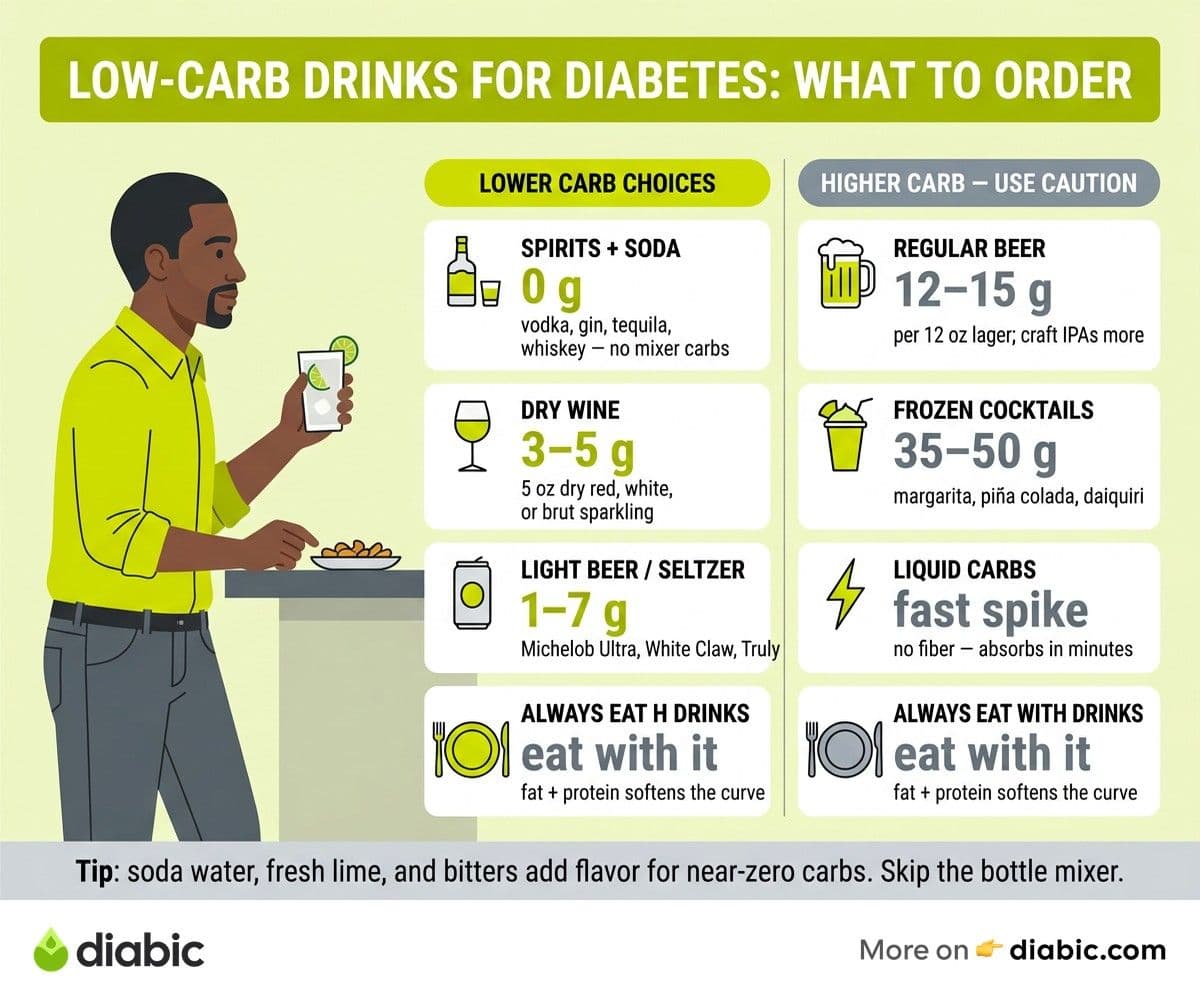
Plain distilled spirits are the lowest-carb alcohol category, full stop. Vodka, gin, tequila, whiskey, rum, and brandy all contain zero carbohydrates per 1.5-ounce serving when consumed neat or on the rocks. The carbs come from what you mix them with, which is where most people accidentally turn a clean drink into a sugar bomb. A vodka cranberry, for example, can carry 25 to 35 grams of carbs depending on the pour, almost entirely from the cranberry juice.
Mixers worth keeping on rotation are soda water (zero carbs), club soda (zero carbs), diet tonic (check the label, ideally zero), unsweetened iced tea, sugar-free flavored seltzers like Spindrift Light or LaCroix, and a wedge of lime or lemon. A two-ounce pour of dry vermouth in a martini adds only about 1 gram of carbs. Bitters add negligible amounts. If you like the burn of a margarita, a tequila with fresh lime juice and a splash of sugar-free orange syrup is a reasonable swap for the bottled mix.
The cocktails to skip or modify are the ones built on juice, syrup, or soda. Margaritas (35 to 50g carbs), piña coladas (45g+), daiquiris (30 to 40g), Long Island iced tea (30g+), and most slushy or frozen drinks fall in this category. Old fashioneds (about 4g carbs), Manhattans (about 3g), gin and diet tonic (under 2g), vodka soda with lime (under 1g), and tequila with sparkling water (under 1g) are all in the low-carb pocket. At home, a simple mix of two ounces gin, four ounces sugar-free tonic, and a wedge of cucumber is roughly 2g of carbs and goes down like summer.
Wine and Diabetes: Picking the Right Bottle
Wine sits in a friendly middle of the carb scale when you choose well. A five-ounce pour of dry red wine (cabernet, merlot, pinot noir, syrah, malbec) typically contains 3 to 4 grams of carbs. Dry whites (sauvignon blanc, pinot grigio, dry chardonnay, dry rosé) come in slightly higher at 3 to 5 grams. Brut and extra-brut champagne or sparkling wine is a quiet winner at 1 to 2 grams per glass. For a closer look at the physiology, our piece on how wine affects blood sugar levels breaks down the research.
The wines to be careful with are the sweet ones. Moscato can carry 8 to 12 grams of carbs per glass. Riesling varies widely by producer, with some labeled "trocken" (dry) at around 3g and others at 10g+. Port, sherry, ice wine, and most dessert wines run 14 to 20 grams per smaller pour. Sweet sparkling wines labeled demi-sec or doux are also worth skipping if low carb is the goal.
Pour size matters more than people think. A standard "glass of wine" at a restaurant is often six or seven ounces, not five, which can push a 4-gram glass to 5 or 6 grams in practice. Asking for a five-ounce pour or buying smaller wine glasses for home is a quiet way to keep your numbers honest. Pairing wine with a meal that includes fat and protein (cheese, olives, a piece of grilled fish) further smooths blood sugar response, which is supported by research published in Diabetes Spectrum on alcohol and glycemic control.
Beer and Hard Seltzer: A Diabetes Guide
Standard beer is one of the higher-carb alcohol categories because the malted grains used in brewing leave residual sugars and dextrins behind. A regular 12-ounce lager runs 12 to 15 grams of carbs, and craft IPAs can climb to 20 grams or more. Light beers (Michelob Ultra, Miller Lite, Corona Premier, Heineken Light) sit in a much friendlier 2 to 7 gram range, which makes them a workable everyday option if you enjoy beer.
Hard seltzers have rewritten this category over the last few years. Most national brands (White Claw, Truly, High Noon, Bud Light Seltzer) come in at 1 to 2 grams of carbs per 12-ounce can with around 100 calories. The catch is that flavored hard seltzers vary, and some "premium" versions add real fruit juice that bumps carbs to 5g or more. The USDA FoodData Central database is a reliable place to verify a specific brand if the label is unclear.
Here is a quick comparison of typical drinks per standard serving. The National Institute on Alcohol Abuse and Alcoholism defines a standard drink as 12 oz beer, 5 oz wine, or 1.5 oz spirits.
Reading nutrition labels on beer and seltzer is genuinely helpful because brands vary more than the marketing suggests. Look for "carbohydrates per serving" on the back of the can or the brand's website.
Drinks to Avoid and Smarter Swaps
The biggest carb traps live in the cocktail menu. Frozen drinks (margaritas, daiquiris, piña coladas, mudslides) are mostly sugar by volume. Long Island iced tea, mojitos with simple syrup, mai tais, and most tiki drinks fall in the same category. Pre-mixed bottled cocktails and "skinny" cans deserve a label check, because the word "skinny" is marketing rather than nutrition.
Flavored vodkas can be misleading. Some are infused with natural flavors and contain zero carbs (Tito's, Ketel One unflavored, Grey Goose Essences). Others, particularly fruit and dessert flavors, contain 3 to 8 grams of carbs per shot from added sugar. The bottle's nutrition information or the brand's website will tell you. Restaurant traps include "house margaritas" made from sour mix, sangria (typically 15g+ from added sugar and fruit), and frozen drink machines that run on a sugar-heavy base.
Smarter swaps are usually simple. Margarita becomes tequila on the rocks with fresh lime, soda water, and a salted rim. Mojito becomes white rum, fresh lime, muddled mint, and soda water without the simple syrup. Vodka cranberry becomes vodka, splash of cranberry, and lots of soda water. Whiskey sour becomes whiskey, lemon, a few drops of liquid stevia, and an egg white if you want the foam.
Practical Tips for Ordering Out
Bars and restaurants are where good intentions tend to slip, mostly because the menu does not list carbs and the noise makes it hard to ask. We recommend deciding on your order before you walk in. A vodka soda with lime, a tequila and sparkling water, a glass of dry red, or a light beer cover almost any setting and require no negotiation with a busy bartender.
Questions worth asking when something looks borderline are whether the cocktail is made with juice or sour mix, whether the tonic is regular or diet, and whether the wine list has a brut sparkling. Bartenders are generally happy to make a vodka soda look fancy with a citrus twist or a sprig of rosemary, and the carb count stays at zero. Building two or three reliable orders into muscle memory saves the mental energy of starting from scratch every time.
If you take insulin, alternating each alcoholic drink with a glass of water (or a sugar-free seltzer) is a practical hedge against both the early spike and the delayed low. Eating a meal with the first drink, checking your blood sugar before bed, and keeping fast-acting glucose at your bedside are the three habits we recommend most often. People who use a continuous glucose monitor often set a low alert about 20 mg/dL above their usual threshold on drinking nights.
Frequently Asked Questions
What low-carb drinks can people with diabetes have?
Dry wines (3 to 4g per 5oz), spirits with zero-carb mixers like soda water or diet tonic (under 1g per drink), light beers (2 to 7g per 12oz), and hard seltzers (1 to 2g per 12oz) are generally the lowest-carb options. A shot of plain vodka, gin, whiskey, or tequila has zero carbs on its own. Always pair drinks with food and monitor your blood sugar, particularly if you use insulin.
What are the best alcoholic drinks for diabetes that are low carb?
Spirits mixed with soda water and citrus, brut champagne or sparkling wine, dry red or white wine, light beers under 5g carbs, and unflavored hard seltzers are among the lowest-carb options at any bar. Old fashioneds and Manhattans are reasonable cocktail choices because they avoid juice and syrup. Avoid frozen drinks, sweet cocktails, and dessert wines if you want to keep carbs in check.
Does alcohol raise or lower blood sugar?
It can do both. Sweet drinks raise blood sugar quickly because of their sugar content, while alcohol itself can cause delayed lows by pausing your liver's release of stored glucose. The combined effect is one reason pairing drinks with food is important, especially for people who take insulin or sulfonylureas. Hypoglycemia from alcohol can occur up to 12 hours after drinking, so checking before bed is a good practice.
Is wine or beer better for diabetes?
Dry wine generally has fewer carbs per serving than regular beer, with a five-ounce pour of dry red running 3 to 4g compared with 12 to 15g for a standard 12-ounce lager. Light beers and hard seltzers close that gap considerably. Either can fit into a diabetes management plan when chosen carefully, paired with food, and kept within recommended limits.
A Final Word
Drinking with diabetes is a personal call, and the best drink is the one you can enjoy without disrupting the rest of your week. Building a short list of low carb alcoholic drinks diabetes management can absorb, pairing alcohol with food, and keeping an eye on your numbers covers most of what matters. If you are unsure how alcohol fits with your medications or treatment plan, your endocrinologist or diabetes educator is the right person to map it out with you.
Shahriar P. Shuvo is the founder of Diabic. He has lived with diabetes for over 14 years, and built Diabic to deliver the practical, evidence-based self-management tools he wished existed when he was first diagnosed. By trade, Shahriar is a senior design and frontend engineer with 6+ years shipping products at Agora, Timescale (now Tiger Data), and ShareTrip. He writes from the intersection of lived diabetes experience and product craft, focused on what works in daily management rather than what sounds good in a textbook.
Medically reviewed by
Dr. Rezwana Parvin Rumpa is an obstetrics and gynaecology specialist with clinical focus on gestational diabetes, PCOS, and fertility. She holds the MRCOG (Final Part) from the Royal College of Obstetricians and Gynaecologists in London, the MRCPI (Final Part) from the Royal College of Physicians of Ireland, and an MBBS from Shaheed Monsur Ali Medical College under Dhaka University. Dr. Rumpa serves as a Senior Medical Officer in the Obs and Gynae department at BRB Hospitals Ltd, where she has spent three years managing prenatal care, emergency obstetric cases, and women's-health surgery. On Diabic, she medically reviews content for women living with diabetes, with particular attention to pregnancy, PCOS, and reproductive-health intersections.
More from Living with Diabetes
View all
A Gentle Chair Yoga Routine for people with diabetes
A gentle chair yoga for people with diabetes routine with safe poses, modifications for neuropathy, retinopathy, and joint pain, plus tips for older.

Shift Work and Diabetes: Managing Irregular Hours
Shift work and diabetes is a tough combination. Learn how to manage meals, sleep, medication, and blood sugar when your hours rotate or flip overnight.

Dating with Diabetes: When to Tell a New Partner
Dating with diabetes brings unique disclosure questions. Here is when to tell a new partner, what to say, and how to handle the conversation with.
Clinician-reviewed habits, plain-language guides, and honest answers - the small shifts that make living with diabetes feel lighter, every day.