Alcohol and Type 1 Diabetes: How It Affects Insulin
Alcohol and diabetes 1 is a tricky combination because insulin is always working. Learn how drinking affects insulin, hypoglycemia risk, and safe.

In this article(11)
The conversation about alcohol and diabetes 1 rarely happens in clinic appointments, which is exactly why so many people learn about it the hard way. Insulin is always part of the picture for type 1, and alcohol changes the rules of how that insulin behaves. A couple of drinks at dinner can quietly set up a 3 a.m. low that hits while you are sleeping, long after the bar tab is closed.
This is not an article that says you cannot drink. Most adults with type 1 diabetes can include moderate alcohol in their lives with planning, monitoring, and a few non-negotiable habits. What it takes is understanding the specific mechanism alcohol uses to lower blood sugar, the timing window when that risk peaks, and the small adjustments that make the difference between a fine evening and an ambulance call.
We will walk through what the research shows, how to choose lower-risk drinks, the insulin-adjustment thinking your endocrinologist may want to discuss, and the social-safety habits that matter when type 1 meets a night out. The aim is practical, not preachy.
How Alcohol and Type 1 Diabetes Affect Each Other
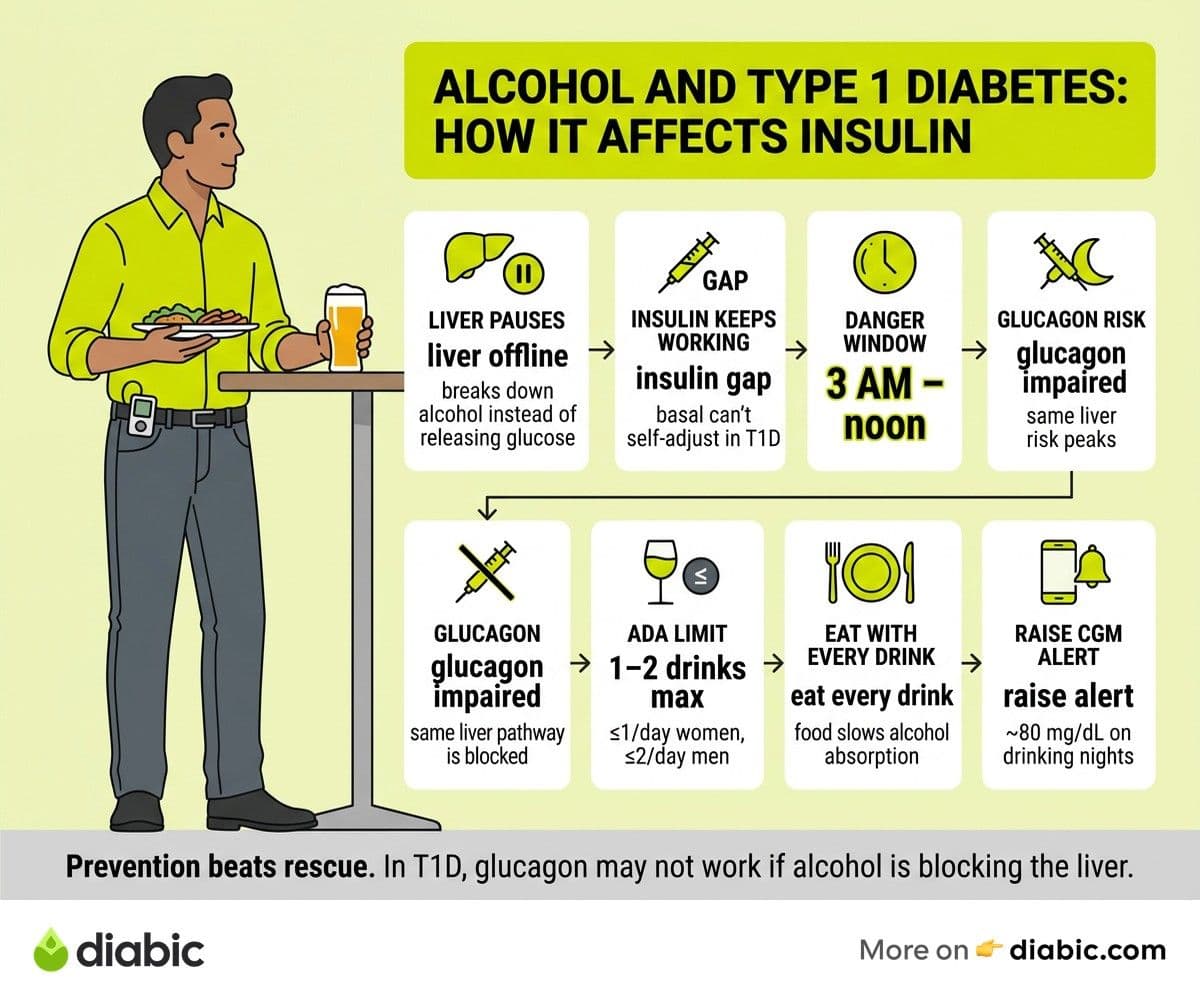
The interaction between alcohol and diabetes 1 starts with the liver. Your liver normally releases small amounts of glucose between meals to keep blood sugar from drifting too low, a process called gluconeogenesis. When you drink, the liver shifts its full attention to breaking down ethanol, and that steady glucose release slows or stops. For someone without diabetes, the pancreas would simply lower insulin output to match. For someone with type 1, the basal insulin you injected or that your pump is delivering keeps working at the same rate, and the safety net is gone.
This is why type 1 diabetes makes alcohol more unpredictable than type 2. The liver suppression effect is the same, but the insulin coming in does not adjust itself. Your blood sugar can keep ticking down for hours after the last drink, often during sleep, and the usual counter-regulatory hormones that should rescue you are also blunted by alcohol. Research published in the Diabetes Care journal has documented severe and prolonged hypoglycemia in adults with type 1 after even moderate evening drinking.
The timeline is the part that catches people off guard. Most people expect alcohol's effect to be immediate, similar to a fast-acting carb. The reality is the opposite. Blood sugar may rise first if the drink contains carbs, then drift down as the alcohol-driven liver suppression takes over, and then stay low for 8 to 16 hours after the last drink. The danger window for an alcohol-related low is often between 3 a.m. and noon the next day, not while you are still out.
Glucagon is the other piece. The injectable rescue medication you may carry for severe lows works by telling the liver to release stored glucose. Alcohol blocks the very pathway glucagon uses, which means glucagon may not work as well during an alcohol-related hypoglycemia event. Studies in the Diabetologia journal have shown impaired counter-regulatory responses after drinking, which makes prevention even more important than rescue.
Alcohol Consumption and Type 1 Diabetes: What Research Shows
Studies on alcohol consumption and type 1 diabetes consistently flag the same pattern. Hypoglycemia risk rises sharply in the 12 to 24 hours after drinking, even when blood sugar looks fine before bed. The risk is highest when drinking on an empty stomach, after exercise, or in the absence of a bedtime snack. Continuous glucose monitor data has made this pattern visible in ways that fingerstick checks could not.
The 12 to 24 hour window is worth taking seriously because it covers the next morning, when you might assume the alcohol has worn off. Many people with type 1 see a CGM trend that starts to slide around 4 a.m., bottoms out near breakfast, and only stabilizes after the morning meal. If you have a CGM, reviewing the patterns from past drinking nights is one of the most useful exercises you can do.
Long-term A1C is more complicated. Light to moderate drinking has not consistently been shown to worsen A1C in adults with type 1, but heavier drinking is associated with poorer overall management, more emergency visits, and higher rates of diabetic ketoacidosis. The American Diabetes Association recommends that people with type 1 who choose to drink follow moderate-drinking limits of no more than one drink per day for women and two for men.
Glucagon effectiveness research adds another layer. Because alcohol impairs the liver's ability to release stored glucose on demand, the rescue medications and the body's own counter-regulation can both fall short. The practical translation is that prevention beats rescue in this scenario, and the prevention tools are food, monitoring, and sometimes insulin adjustments.
Alcohol and Diabetes 1: General Principles That Apply
The general alcohol and diabetes guidance applies across types and is the foundation that everything else builds on. Eat before you drink and ideally during. Food slows alcohol absorption, gives the liver other work to do, and reduces the size of the eventual blood sugar drop. Skipping the meal because you do not feel hungry is the most common setup for a bad night.
Never drink on a fully empty stomach if you take insulin. Even a few crackers, a piece of cheese, or a small handful of nuts changes the curve. Carrying fast-acting glucose, whether tablets or a sugar gel, is non-negotiable when you go out, and so is keeping it somewhere you can reach without needing help.
Hydration sits next to food in importance. A glass of water between drinks is not just good for the next-morning headache, it is a physiological hedge that slows your overall alcohol intake and supports your kidneys. People who pace themselves with water tend to drink less alcohol overall and feel better the next day.
Limiting overall intake is the third principle. The ADA's moderate-drinking thresholds apply, and for type 1 there is good reason to stay well under them on most occasions. Our guide to alcohol and diabetes walks through the broader rules in more detail, and complements what is specific to type 1 here.
Choosing Lower-Risk Drinks
Drink choice has a real impact on blood sugar predictability. Spirits with sugar-free mixers, like vodka soda or whiskey with sparkling water and lime, deliver alcohol without piling on carbs. They are more predictable for bolus calculations because the only variable is the alcohol itself, which you can plan for separately. Pre-batched cocktails and anything with simple syrup, juice, or sweetened mixers can deliver 30 to 50 grams of carbs in a single glass.
Beer carries 8 to 15 grams of carbs per 12 ounces for most regular styles, with light beers running closer to 3 to 6 grams. The carb content can cause a small early rise that confuses the picture, especially if you bolus for it and then run into the alcohol-driven low later. Many people with type 1 find that a single beer with a meal works well, and that the second one is where the unpredictability starts. Our breakdown of how wine affects blood sugar covers wine specifically, and our roundup of low-carb alcoholic drinks for diabetes lists specific options worth knowing.
Dry wines are generally a lower-carb option. A 5-ounce glass of a dry red or white usually carries 2 to 5 grams of carbs, low enough that most people do not bolus for it directly. Sweet wines, dessert wines, and ports run much higher and behave more like a sugary mixer.
Drinks worth being careful with include long island iced teas, frozen cocktails, sweet cider, dessert wines, and anything labeled "punch." The combination of high alcohol content and high carb content makes both directions of blood sugar change harder to predict. If you are at a wedding or a holiday gathering where these are the only options, switching to water for a round or two is a reasonable approach.
Insulin Adjustments and Drinking Strategies
The single most common adjustment people with type 1 make for drinking is reducing or skipping the bolus for the carbs in their drink, particularly later in the evening. The thinking is that the alcohol will lower blood sugar over the following hours, so a full bolus on top can stack the drop. This is a conversation to have with your endocrinologist before applying it on your own, because the right adjustment depends on your insulin sensitivity, your meal, and the drink. The JDRF's resources on type 1 and alcohol cover the basic principles in more depth.
Pump users sometimes lower their basal rate by 10 to 30 percent overnight after drinking, often using a temp basal that runs 6 to 12 hours. Again, the right number is personal, and your CGM data from previous drinking nights is the best teacher. People without a pump may use a smaller bedtime snack with slow carbs and protein to bridge the overnight period.
Bedtime checks are the floor under all of this. A blood sugar reading before bed gives you the chance to add a snack if you are running below your usual target, or to set a more aggressive low alert if you are wearing a CGM. Many people set their overnight low alert higher than usual, around 90 to 100 mg/dL, on nights they have been drinking. The earlier you catch the slide, the smaller the carb correction needed.
A bedtime snack with mixed macronutrients is often the simplest insurance policy. A piece of whole-grain toast with peanut butter, a small bowl of oatmeal, or a glass of milk with a few crackers all give the liver a small reservoir to draw on. If you tend to run low overnight after drinking, this is the habit that pays off the most. CGM alerts as a backup, not the primary plan, are how many people layer the safety net.
Staying Safe While Socializing
The people you are drinking with matter more than you might think. Telling at least one friend that you have type 1 diabetes, where your fast-acting glucose is, and what symptoms to watch for can be the difference between a quick recovery and a dangerous delay. The conversation does not have to be long. A simple "if I get really confused or out of it, give me one of these" while showing them your glucose tablets is enough.
Wearing medical identification is the next layer. A bracelet, necklace, or even a clear notification on your phone's lock screen tells emergency responders what they need to know if you cannot speak for yourself. People with type 1 sometimes resist this for cosmetic reasons, but modern options are much less obvious than the old metal tags.
The most dangerous overlap is between intoxication and hypoglycemia symptoms. Slurred speech, confusion, stumbling, and irritability look the same to friends and to strangers. The risk is that someone helps you home and into bed assuming you just had too much, when what you actually needed was glucose. This is the case that medical identification and a clear pre-conversation prevent.
A simple personal checklist for nights out makes the prep nearly automatic. Eat a real meal first, carry glucose tablets, wear medical ID, tell one friend, charge your phone, and decide your drink limit before you start ordering. Many people with type 1 also keep a snack in their bag or coat pocket for the walk home or the rideshare. None of this is exciting, but it is the difference between a fine evening and one you wish had gone differently.
From my experience: After 14 years of living with type 1 diabetes, I can say honestly that the only nights out I have ever regretted from a diabetes standpoint are the ones where I broke my own rules. Drinking on an empty stomach because I was running late and figured I would order food later. Skipping the bedtime check because I felt fine. Trusting that "I usually run high anyway, so a low won't happen tonight" reasoning that has been wrong every single time it crossed my mind. The rules are boring, and they work. A meal first, water in between, glucose tablets in the pocket, a CGM alert set higher than usual, and a check before bed have saved me from every overnight low I might have had.
The most important habit is the one that is easiest to skip when you are tired. Checking blood sugar before sleeping after a night of drinking takes 10 seconds and prevents the worst-case scenario. People who pair this with a small bedtime snack and a CGM low alert rarely experience severe overnight events. The cumulative effect of these small habits, repeated over years, is the difference between drinking being a manageable part of life and being a recurring source of fear.
Frequently Asked Questions
How does alcohol affect insulin in type 1 diabetes?
Alcohol does not directly change how injected insulin works, but it suppresses the liver's ability to release glucose. That means your basal insulin keeps lowering blood sugar without the liver's usual safety net underneath it. The effect can last 8 to 24 hours after drinking, which makes overnight and next-morning lows the biggest risk.
Can you drink alcohol safely with type 1 diabetes?
Most adults with type 1 can include moderate amounts of alcohol with planning. The core habits are eating before and during drinking, carrying fast-acting glucose, monitoring more frequently, considering a smaller bedtime snack, and checking blood sugar before sleeping. Discussing insulin adjustments with your endocrinologist is the safest way to personalize the plan.
Why does alcohol cause low blood sugar so many hours later?
Because the liver is the main backup that keeps blood sugar from drifting too low between meals. Alcohol suppresses that backup for hours after the last drink, while your basal insulin keeps working at full strength. The result is a slow drift downward that often peaks during sleep, when you are least able to feel and respond to symptoms.
Does a CGM make drinking safer with type 1 diabetes?
A continuous glucose monitor is a real upgrade for drinking nights because it can alert you to a low while you sleep. Setting the low alert higher than usual, around 90 to 100 mg/dL, gives you more time to react. CGMs are not a replacement for food, glucose tablets, and pre-bed checks, but they are the strongest safety layer available.
The honest summary on alcohol and diabetes 1 is that a few non-negotiable habits do most of the work. Eat first, water between drinks, fast-acting carbs in the pocket, a CGM alert set higher than usual, and a check before bed turn an unpredictable evening into one you can plan around. Talk to your endocrinologist about the insulin pieces that fit your routine, and let your own data from past nights teach you which adjustments actually move the needle.
Shahriar P. Shuvo is the founder of Diabic. He has lived with diabetes for over 14 years, and built Diabic to deliver the practical, evidence-based self-management tools he wished existed when he was first diagnosed. By trade, Shahriar is a senior design and frontend engineer with 6+ years shipping products at Agora, Timescale (now Tiger Data), and ShareTrip. He writes from the intersection of lived diabetes experience and product craft, focused on what works in daily management rather than what sounds good in a textbook.
Medically reviewed by
Dr. Shanto Arian is an internal medicine physician now specializing in clinical and aesthetic dermatology, with a parallel academic focus on epidemiology and public health. He holds an MBBS, MPH, MSc (UK), MRCP (UK), MRCPI (Ireland), Diploma in Dermatology (UK), and Diploma in Aesthetic Medicine (USA). Dr. Arian trained in internal medicine, including hospital work on hematology cases such as graft-versus-host disease, before moving toward dermatology. Skin is one of the earliest places diabetes shows itself, from acanthosis nigricans and diabetic dermopathy to slow foot wound healing, and that intersection is where his clinical and Diabic-review work meet. On Diabic, Dr. Arian medically reviews content on diabetes diagnosis, complications, dermatologic manifestations, and pharmacotherapy, ensuring every claim aligns with current ADA, NICE, and peer-reviewed literature.
More from Living with Diabetes
View all
A Gentle Chair Yoga Routine for people with diabetes
A gentle chair yoga for people with diabetes routine with safe poses, modifications for neuropathy, retinopathy, and joint pain, plus tips for older.

Shift Work and Diabetes: Managing Irregular Hours
Shift work and diabetes is a tough combination. Learn how to manage meals, sleep, medication, and blood sugar when your hours rotate or flip overnight.

Dating with Diabetes: When to Tell a New Partner
Dating with diabetes brings unique disclosure questions. Here is when to tell a new partner, what to say, and how to handle the conversation with.
Clinician-reviewed habits, plain-language guides, and honest answers - the small shifts that make living with diabetes feel lighter, every day.