Probiotic Supplements and Diabetes: What to Know
Probiotic supplements and diabetes research is evolving fast. See what works, which strains have evidence, and how to choose a quality product safely.

In this article(20)
The relationship between probiotic supplements and diabetes is one of the most rapidly evolving areas in metabolic health. A decade ago, gut bacteria were a fringe topic at endocrinology conferences. Today, researchers are publishing meta-analyses on how specific bacterial strains may influence fasting glucose, insulin sensitivity, and even A1C.
That shift has triggered a flood of probiotic products marketed to people managing blood sugar. Some claims are grounded in real science. Others are wishful thinking dressed up in clinical-sounding language. The goal of this guide is to help you separate the two.
We will look at what current research actually shows, which strains have the most evidence behind them, what to check on a label, and how to talk with your doctor before adding anything new to your routine.
The Connection Between Probiotic Supplements and Diabetes
Your gut hosts trillions of bacteria that help digest food, train your immune system, and produce compounds that influence metabolism. Researchers studying probiotic supplements and diabetes have found that people with type 2 diabetes often show different patterns of gut bacteria compared to people without the condition. The microbial mix tends to be less diverse, with fewer of the species that produce short-chain fatty acids linked to better insulin sensitivity.
Nature Reviews Endocrinology has published extensive work on this gut-metabolism link. The leading hypothesis is that disruptions in the microbiome contribute to chronic low-grade inflammation, which in turn worsens insulin resistance over time. Some studies also point to a gut-brain-pancreas axis, where signals from intestinal bacteria help regulate appetite hormones and glucose-stimulated insulin release.
This is exciting science, but it is also early science. Researchers are still mapping which bacteria do what, how individual diets shape those communities, and whether adding live cultures through supplements can meaningfully shift the picture. The honest answer is that probiotics show promise for diabetes management, but they are not a magic fix.
How the gut microbiome influences insulin sensitivity
Beneficial gut bacteria ferment dietary fiber into short-chain fatty acids like butyrate, propionate, and acetate. These compounds help maintain the gut lining, reduce inflammation, and may improve how your cells respond to insulin. When the microbiome shifts toward less helpful species, that fermentation pathway weakens.
Animal studies and small human trials suggest that restoring some of those beneficial species can nudge insulin sensitivity in the right direction. The effect size is modest, and results vary widely between people. Genetics, baseline diet, medications, and even sleep patterns all influence how someone responds to a probiotic intervention.
Do Probiotics Help Lower Blood Sugar?
This is the question most people land on when they search for "do probiotics help lower blood sugar for people with diabetes." The short answer is that some evidence points to small but real improvements in fasting glucose and insulin resistance, particularly with multi-strain formulations taken consistently for at least 8 to 12 weeks.
A meta-analysis published in Diabetes Care pooled results from multiple randomized trials and found that probiotic supplementation was associated with modest reductions in fasting blood glucose and HOMA-IR (a measure of insulin resistance) in people with type 2 diabetes. The reductions were statistically significant but clinically small, often in the range of a few mg/dL for fasting glucose.
A1C improvements have been less consistent. Some trials show a small drop, others show no measurable change. This likely reflects the wide variation in strains used, dosages tested, and study durations. Probiotics taken for four weeks may not be enough time to influence a marker that reflects three months of average blood sugar.
Why strain-specific research matters
Not all probiotics are interchangeable. Saying "probiotics may help blood sugar" is a bit like saying "antibiotics may help infections." The strain matters enormously. A trial showing benefits with Lactobacillus acidophilus NCFM tells you very little about what to expect from a generic Bifidobacterium product on a drugstore shelf.
When you look at supplement labels, you will see strain identifiers like "L. rhamnosus GG" or "B. lactis HN019." Those letter-number codes refer to specific strains that have been studied. Generic genus and species names without a strain designation usually mean the product has not been characterized at the level needed for evidence-based use.
The Role of Nutrition in Gut Health and Diabetes
Probiotic supplements are only one piece of the gut-health puzzle. The conversation about nutrition and diabetes increasingly recognizes that what you feed your existing gut bacteria may matter as much as which new bacteria you add. Prebiotic fibers act as fuel for the beneficial species you already have, helping them thrive and crowd out less helpful bacteria.
Fiber-rich foods like beans, lentils, oats, onions, garlic, asparagus, and whole grains all support a diverse microbiome. Fermented foods such as plain yogurt, kefir, sauerkraut, kimchi, and tempeh add live cultures along with the food matrix that helps them survive digestion. For many people, a food-first approach delivers more lasting microbiome benefits than supplements alone.
That does not mean supplements are useless. They can be a useful addition when dietary diversity is limited or when targeting a specific strain studied for a specific outcome. The two approaches are complementary, not competing.
Prebiotic foods that feed beneficial gut bacteria
If you want a practical starting point, aim for 25 to 35 grams of fiber per day from a mix of sources. Some particularly microbiome-friendly options include:
- Legumes such as black beans, chickpeas, and lentils
- Allium vegetables like onions, leeks, and garlic
- Resistant starches found in cooked-and-cooled potatoes or green bananas
- Cruciferous vegetables including broccoli, cauliflower, and Brussels sprouts
Increase fiber gradually if you are not used to eating much. Going from 10 grams to 35 grams overnight tends to produce a few uncomfortable days of gas and bloating, which can derail an otherwise good plan.
What Probiotics Are Best for Diabetes?
People searching "what probiotics are best for diabetes" usually want a brand recommendation. We are not going to give one, partly because individual response varies and partly because the supplement industry shifts quickly. What we can offer is a framework for evaluating any product you consider.
The World Gastroenterology Organisation publishes a probiotic guidance document that rates strains by the strength of evidence for various conditions. For type 2 diabetes and metabolic markers, the strains with the most supporting research include several Lactobacillus species (L. acidophilus, L. rhamnosus, L. casei) and Bifidobacterium species (B. lactis, B. longum, B. bifidum).
Multi-strain products that combine several of these species have generally shown larger effects in trials than single-strain products. This may be because different strains contribute different mechanisms, or because diversity itself is part of what makes a probiotic effective.
How to read probiotic supplement labels effectively
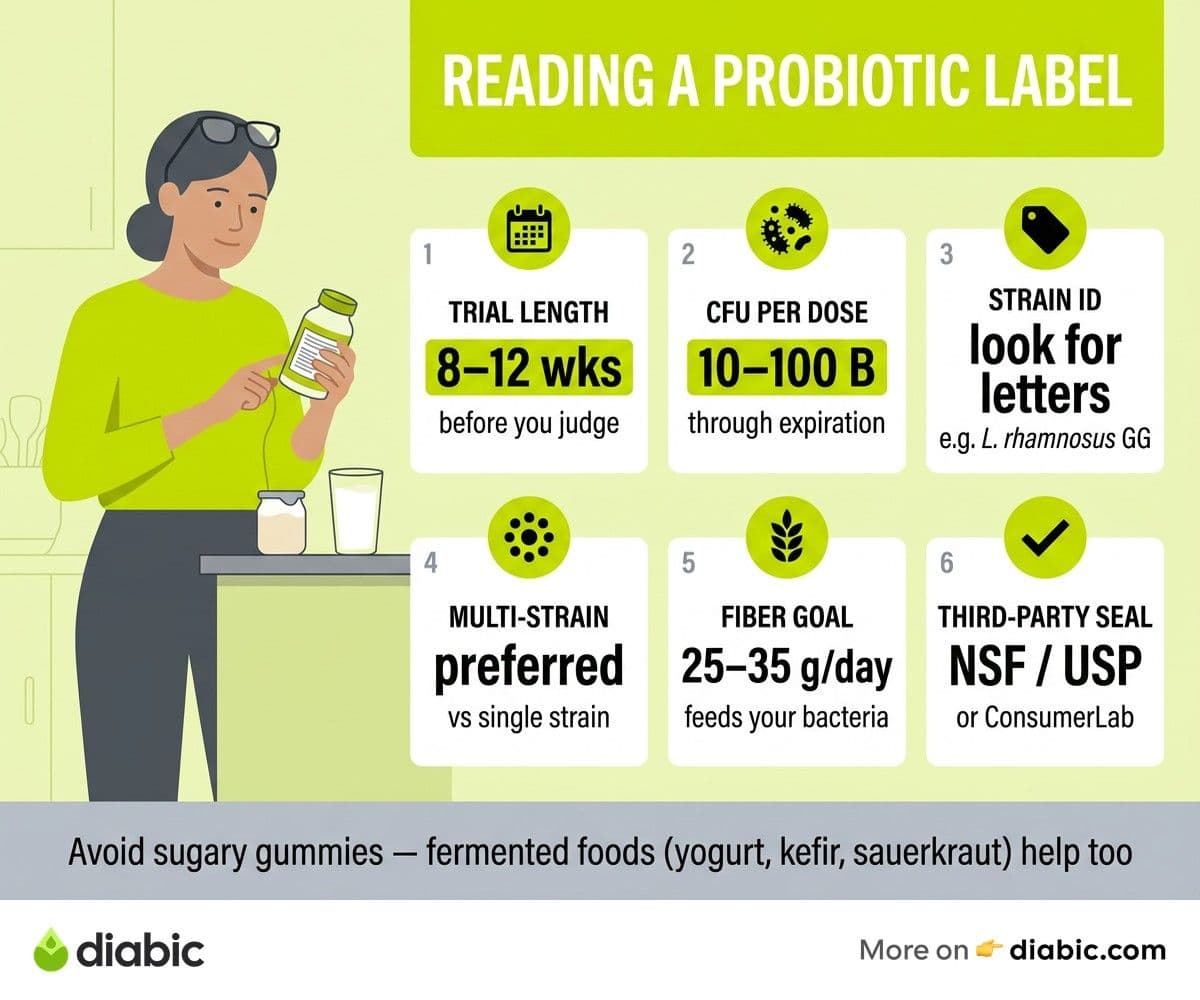
A trustworthy probiotic label will tell you four things. First, the specific strains in the product, written with both the genus and species and a strain identifier (the letters and numbers after the species name). Second, the colony-forming units (CFU) per dose, with the guarantee through expiration rather than at the time of manufacturing. Third, third-party testing or certification from organizations like NSF, USP, or ConsumerLab. Fourth, storage requirements, since many strains lose potency at room temperature.
CFU counts on diabetes-related research typically range from 10 billion to 100 billion per day. Higher is not always better. Some strains work at lower doses, and very high CFU counts can cause digestive upset, especially in the first week of use.
Antioxidant Supplements That Complement Probiotics
The case for antioxidant supplements for diabetes is more nuanced than the marketing usually suggests. Oxidative stress contributes to the long-term complications of high blood sugar, and antioxidants in food clearly play a protective role. Whether antioxidants in supplement form add the same benefit is less clear, and high doses of certain antioxidants have actually shown harm in clinical trials.
That said, some antioxidant compounds may pair well with probiotics for gut health. Polyphenols from berries, green tea, cocoa, and olive oil seem to selectively feed beneficial gut bacteria, acting as a kind of prebiotic. Vitamin C and vitamin E from food sources support the gut lining. The general principle is that antioxidant-rich whole foods, combined with probiotic and prebiotic strategies, give you more reliable benefits than stacking isolated supplement pills.
For specific nutrients that have stronger individual evidence in diabetes care, our guide to vitamin D supplements for diabetes covers what the research shows on that front. Vitamin D status is particularly worth checking, since deficiency is common and may influence both insulin sensitivity and gut health.
When a food-first approach makes more sense
If you are already eating a varied diet rich in vegetables, legumes, fermented foods, and minimally processed grains, the marginal benefit of stacking multiple supplements is often small. Supplements are best thought of as a way to address specific gaps, not a substitute for the broader pattern of how you eat.
From my experience: After 14 years of living with diabetes, I have tried just about every supplement category at some point. Probiotics gave me the most consistent benefit on digestion, less on blood sugar specifically. The single biggest improvement came when I increased fiber from food. Supplements were useful, but they amplified what was already working. They never carried the weight on their own.
Safety and Practical Considerations
Probiotics are generally well-tolerated by healthy adults. The most common side effects are mild gas, bloating, or changes in bowel habits during the first week or two as your gut adjusts. These usually settle down. The NIH National Center for Complementary and Integrative Health summarizes the safety profile and notes that serious adverse events are rare in healthy populations.
People with significantly compromised immune systems, recent abdominal surgery, central venous catheters, or severe acute illness should talk with their doctor before starting probiotics. Rare cases of bloodstream infections from probiotic strains have been reported in those situations.
For people with diabetes specifically, the main practical concern is checking that the supplement does not contain hidden sugars, sweeteners, or unnecessary fillers that affect blood sugar. Some chewable or gummy probiotics contain enough added sugar to register on a CGM. Capsules and powders are usually cleaner.
Potential interactions with diabetes medications
There are no widely documented direct interactions between probiotics and standard diabetes medications like metformin or insulin. However, because probiotics may modestly lower blood glucose, anyone using insulin or sulfonylureas should monitor more closely when starting a new probiotic, watching for any unexpected drops.
If you take other supplements, be aware that some interact in unexpected ways. Our overview of collagen supplements for diabetes walks through what to check when stacking products. The same principles apply more broadly: more pills is not always better, and some combinations cancel each other out.
How long to try probiotics before evaluating results
Most clinical trials run for 8 to 12 weeks before measuring outcomes. That is a reasonable window to give a probiotic a fair trial. Track what you can measure: digestion, energy, fasting blood sugar, post-meal numbers if you use a CGM, and how you feel overall. If nothing changes after three months of consistent use, the product probably is not doing much for you, and switching strains or stopping is reasonable.
Other minerals and nutrients sometimes get pulled into the same conversation. Our deeper look at magnesium supplements and diabetes covers another nutrient with stronger individual evidence in this space.
Talking to your doctor about adding probiotics
Bring the bottle to your next appointment. Ask whether the strain has any documented interactions with your current medications, whether your immune status or any recent procedures change the safety calculation, and what blood sugar pattern would suggest the probiotic is helping or not. Most doctors are supportive of patients trying probiotics; they just want to know what you are taking.
The bigger conversation about probiotic supplements and diabetes will keep evolving as research matures. For now, treat probiotics as a reasonable adjunct worth trying alongside the basics of nutrition, movement, sleep, and medication adherence. They are not a replacement for any of those, but for some people they add a real, if modest, benefit on top.
FAQ
Do probiotics help lower blood sugar for people with diabetes?
Some clinical trials show modest improvements in fasting blood sugar and insulin sensitivity with specific probiotic strains. The effects are generally small and not consistent across all studies. Probiotics work best as a complement to standard diabetes management, not a standalone treatment.
What probiotics are best for diabetes?
Strains with the most research support for diabetes include Lactobacillus acidophilus, Lactobacillus rhamnosus, and Bifidobacterium lactis. Multi-strain formulations with at least 10 billion CFU tend to perform better in studies. Look for third-party tested products with guaranteed potency through expiration, not just at manufacturing.
Are probiotic supplements safe to take with metformin or insulin?
There are no well-documented direct interactions between probiotics and common diabetes medications. Because probiotics may produce small drops in blood glucose, people using insulin or sulfonylureas should monitor more closely for the first few weeks when starting a new probiotic. Talk with your doctor before adding any new supplement.
How long does it take for probiotics to show an effect on blood sugar?
Most studies that show benefit run for 8 to 12 weeks of daily use. Three months is a reasonable trial period before deciding whether a particular probiotic is worth continuing. Improvements in digestion often appear within the first two to four weeks; metabolic effects take longer.
Can fermented foods replace probiotic supplements?
For many people, yes. Yogurt, kefir, sauerkraut, kimchi, and other fermented foods provide live cultures along with fiber and other compounds that support gut health. Supplements are useful when targeting a specific researched strain or when dietary intake of fermented foods is limited.
The honest takeaway on probiotic supplements and diabetes is that the science supports a modest, complementary role rather than a starring one. Talk to your doctor before you add a new product, give it eight to twelve weeks, and judge it on what your numbers and digestion actually do.
Shahriar P. Shuvo is the founder of Diabic. He has lived with diabetes for over 14 years, and built Diabic to deliver the practical, evidence-based self-management tools he wished existed when he was first diagnosed. By trade, Shahriar is a senior design and frontend engineer with 6+ years shipping products at Agora, Timescale (now Tiger Data), and ShareTrip. He writes from the intersection of lived diabetes experience and product craft, focused on what works in daily management rather than what sounds good in a textbook.
Medically reviewed by
Dr. Shanto Arian is an internal medicine physician now specializing in clinical and aesthetic dermatology, with a parallel academic focus on epidemiology and public health. He holds an MBBS, MPH, MSc (UK), MRCP (UK), MRCPI (Ireland), Diploma in Dermatology (UK), and Diploma in Aesthetic Medicine (USA). Dr. Arian trained in internal medicine, including hospital work on hematology cases such as graft-versus-host disease, before moving toward dermatology. Skin is one of the earliest places diabetes shows itself, from acanthosis nigricans and diabetic dermopathy to slow foot wound healing, and that intersection is where his clinical and Diabic-review work meet. On Diabic, Dr. Arian medically reviews content on diabetes diagnosis, complications, dermatologic manifestations, and pharmacotherapy, ensuring every claim aligns with current ADA, NICE, and peer-reviewed literature.
More from Diet & Fitness
View all
Simple Diabetes Exercise Routine for Beginners
A simple diabetes exercise routine for beginners with a 7-day plan, strength basics, and safety tips to help you move more without feeling overwhelmed.

Diabetes Friendly Smoothie Recipes: 5 No-Spike Picks
Five diabetes friendly smoothie recipes that balance protein, fat, and fiber to keep blood sugar steady. Includes a simple framework for building your own.

Can Exercise Prevent Diabetes? Research Says Yes
Can exercise prevent diabetes? Landmark studies show a 58% lower risk with regular activity. Here's how much you need and which workouts help most.
Clinician-reviewed habits, plain-language guides, and honest answers - the small shifts that make living with diabetes feel lighter, every day.