Collagen Supplements for Diabetes: Worth It in 2026?
Are collagen supplements for diabetes actually worth it? Review the research on blood sugar, skin, joints, safety, and how to choose a quality product.

In this article(12)
- What Are Collagen Supplements for Diabetes and Why People Consider Them
- Do Collagen Supplements Affect Blood Sugar
- Antioxidant and Anti-Inflammatory Supplements for Diabetes
- Collagen Safety for People with Diabetes
- Nutrition and Diabetes: Getting Collagen from Food
- Should You Take Collagen Supplements with Diabetes
Collagen supplements for diabetes have become a popular topic as more people with diabetes look for ways to support skin, joint, and wound healing. The question is whether these powders and capsules deliver real benefits or just a premium price tag wrapped in good marketing.
The honest answer is somewhere in the middle. Collagen is a protein the body genuinely needs, and diabetes does seem to accelerate its breakdown. But the supplement industry runs ahead of the evidence, and most of the bold claims on a tub of collagen peptides are not yet proven in well-controlled trials with people who have diabetes.
This guide pulls together what the research actually shows, where the safety questions are, how collagen interacts with blood sugar, and how to think about it next to other supplements you may already be considering.
What Are Collagen Supplements for Diabetes and Why People Consider Them
Collagen is the most abundant protein in the human body. It builds skin, joints, tendons, blood vessels, and the connective tissue that holds everything in place. Collagen supplements for diabetes typically come as hydrolyzed collagen peptides, which are smaller chains the body can absorb more easily than whole collagen.
Diabetes appears to accelerate collagen breakdown through a process called glycation, where excess glucose binds to proteins and stiffens them. Over time, this affects skin elasticity, joint cushioning, and how well wounds heal. Research in the Journal of Diabetes Research has documented changes in collagen structure in people with long-standing diabetes, particularly in skin and small blood vessels.
Three concerns drive most of the interest:
- Skin changes. Drier, thinner skin is common with diabetes, especially on the lower legs.
- Joint discomfort. Knee, hip, and shoulder pain show up earlier and more often.
- Slow wound healing. Even small cuts take longer to close, which is partly a circulation issue and partly a connective-tissue issue.
The collagen supplement market has grown into a multi-billion-dollar category, and "diabetes-friendly" or "blood sugar safe" claims now appear on many labels. Whether those claims hold up is the next question.
From my experience: I tried collagen peptides for about six months a couple of years into my diabetes diagnosis. My joints felt slightly better and my fingernails were noticeably stronger, but my A1C did not move. That fits roughly with what the research suggests, which is that collagen may help connective tissue without doing much for blood sugar either way.
Do Collagen Supplements Affect Blood Sugar
Does collagen affect blood sugar levels is one of the first questions people ask, especially if they are watching their continuous glucose monitor closely. The short version: current evidence suggests collagen supplements have a small to negligible direct effect on blood sugar, and in some cases may even modestly support insulin sensitivity.
Collagen is a protein, not a carbohydrate. Protein has a much smaller and slower effect on blood glucose than carbs do, and pure collagen peptides typically contain zero carbohydrates per serving. A scoop of unflavored collagen powder dropped into coffee or oatmeal will not produce a meaningful glucose spike on its own.
A few small studies in the Nutrients journal have looked at collagen peptides and metabolic markers. Results suggest possible improvements in fasting glucose and insulin sensitivity, but sample sizes are small, follow-up periods are short, and most participants did not have diabetes. We are at the "interesting signal, more research needed" stage, not the "proven benefit" stage.
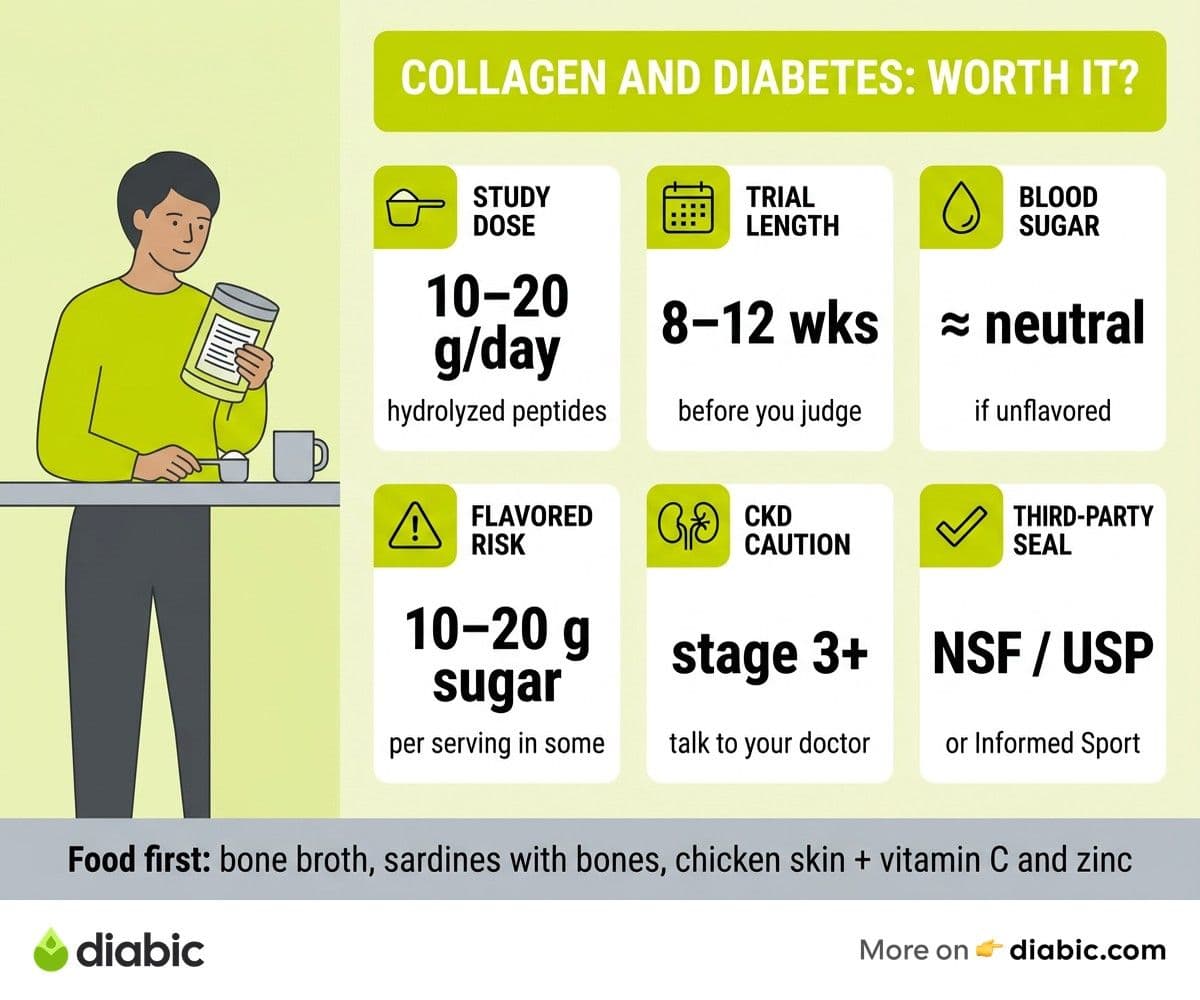
The bigger blood sugar risk with collagen products is not the protein, it is the additives. Flavored versions can contain 10 to 20 grams of added sugar per serving. Some "collagen creamers" hide sugar and refined oils inside a wellness label. If you choose to try collagen, unflavored or stevia-sweetened versions are the safer pick for people watching glucose.
Antioxidant and Anti-Inflammatory Supplements for Diabetes
Antioxidant supplements for diabetes often come up in the same conversation as collagen, because oxidative stress and inflammation are part of why collagen breaks down faster in the first place. Chronic high blood sugar generates more reactive oxygen species, which damage proteins, lipids, and the lining of blood vessels.
Vitamin C is the most direct link to collagen. Your body cannot synthesize new collagen without it, regardless of how many peptides you swallow. Most adults get enough from a balanced diet, but stress, smoking, and chronic illness can lower levels. The question is rarely whether to mega-dose vitamin C, but whether your diet includes regular sources like citrus, peppers, berries, and leafy greens.
Other supplements that often appear alongside collagen include vitamin D, magnesium, omega-3s, and curcumin. They each address inflammation through different pathways. We cover one of these in more depth in our piece on vitamin D supplements for diabetes, since vitamin D status correlates strongly with insulin sensitivity in observational studies.
Stacking supplements is where things get expensive and confusing. The honest read on the literature is that diet quality, sleep, and consistent exercise outperform almost any supplement combination for managing inflammation. Supplements work best when they fill a measurable gap, not as a replacement for the basics.
Collagen Safety for People with Diabetes
Are collagen supplements safe for people with diabetes is a fair safety question, especially because the supplement industry is loosely regulated. The general answer is that collagen is well tolerated by most people, but there are a few diabetes-specific cautions worth raising with your doctor before you start.
Reported side effects are usually mild: bloating, fullness, mild heartburn, or an aftertaste from the powder. Serious reactions are rare. Collagen does not typically interact with common diabetes medications like metformin, GLP-1 receptor agonists, or insulin in clinically significant ways, but interaction data is limited and your prescriber should still know what you are taking.
Kidney function is the most important caveat. Collagen is concentrated protein, and people with diabetic kidney disease (chronic kidney disease stage 3 or higher) are often advised to moderate protein intake. The NIDDK's nutrition guidance for adults with chronic kidney disease walks through how protein needs shift as kidney function declines. If your eGFR is reduced, talk to your doctor before adding any protein supplement, including collagen. This is one place where general wellness advice does not apply across the board.
Quality control is the other concern. Supplements are regulated by the FDA as food, not as drugs, which means premarket testing is not required. Independent testing has found inconsistent ingredients, contaminants, and inaccurate labels across the category.
What to look for on a label:
- Third-party testing. Look for NSF, USP, or Informed Sport seals. ConsumerLab maintains independent test results for many brands.
- Source clarity. Bovine, marine, or chicken-derived, with sourcing details listed.
- Minimal additives. No added sugars, artificial flavors, or unnecessary fillers.
- Honest dosage. A typical serving is 10 to 20 grams of peptides; anything wildly higher or lower deserves a second look.
Nutrition and Diabetes: Getting Collagen from Food
Nutrition and diabetes is a long conversation, and supplements are only one chapter of it. Before adding a powder, it is worth asking whether your diet is already supporting collagen production through whole foods, because food sources come with cofactors that supplements often lack.
Collagen-rich foods include bone broth, chicken with skin, slow-cooked cuts like oxtail and short ribs, the skin and small bones of canned fish like sardines and salmon, and gelatin. Bone broth in particular delivers collagen alongside electrolytes and amino acids in a low-carb package, which fits well into most diabetes-friendly meal plans.
Foods that support your body's own collagen synthesis are just as important. Vitamin C from peppers, citrus, berries, broccoli, and leafy greens drives the enzyme reactions that build new collagen. Zinc from oysters, beef, pumpkin seeds, and lentils is another required cofactor. Copper, found in nuts, seeds, and shellfish, is the third main building block.
A diabetes-aware meal plan can absorb all of this without any extra cost. A weekly soup made from a roast chicken carcass, a few servings of berries, leafy greens at most meals, and a handful of pumpkin seeds covers most of what a powder does, with fiber and other nutrients on top.
For people who eat little animal protein, supplements may make more sense as a gap-filler. For everyone else, food first is usually the more efficient strategy.
Should You Take Collagen Supplements with Diabetes
Collagen lands in the middle of the supplement evidence ladder. It has more support than many trendy products, less support than something like vitamin D for deficient individuals, and roughly comparable support to creatine supplements and diabetes research, which has shown some promise for muscle and possibly insulin sensitivity but is still early.
If you are weighing whether to try collagen, a few questions help cut through the marketing:
- Do you have specific symptoms (joint pain, slow wound healing, noticeable skin changes) that collagen might address
- Is your protein intake already adequate from food
- Do you have any kidney concerns that would make a high-protein supplement a poor fit
- Is the budget better spent on something with stronger evidence for your situation, like magnesium supplements and diabetes or probiotic supplements and diabetes coverage of gut health and insulin sensitivity
If you decide to try it, give it a fair trial of 8 to 12 weeks at a consistent daily dose. Connective tissue turns over slowly, so a two-week experiment will not tell you much. Track what you are looking for: joint comfort, nail and hair quality, wound healing time, or skin texture. Subjective measures are still data.
Realistic expectations matter. Collagen will not change your A1C, will not heal complications, and is not a substitute for the basics of diabetes management. It may, in the right person, support skin and joints in a noticeable way. That is a reasonable goal for a supplement, and a reasonable bar for whether it is worth the monthly cost.
FAQ
Are collagen supplements safe for people with diabetes?
Collagen supplements are generally considered safe for most people with diabetes, though anyone with kidney disease should consult their doctor first because of the high protein content. Check for added sugars or fillers in flavored products, and choose third-party tested brands to reduce contamination risk.
Does collagen affect blood sugar levels?
Current research suggests collagen supplements have minimal direct impact on blood sugar. Some early studies show collagen peptides may modestly support insulin sensitivity, but the evidence is preliminary. Collagen is a protein, so it does not spike blood sugar the way carbohydrates do. Watch out for added sugars in flavored versions.
How much collagen should someone with diabetes take?
Specific dosages should come from your healthcare provider, not from us. Most clinical studies on collagen peptides have used 10 to 20 grams per day, but the right amount for you depends on your kidney function, overall protein intake, and other supplements. Talk to your doctor or a registered dietitian before starting.
How long does it take to see results from collagen?
Connective tissue rebuilds slowly. Most studies that report benefits use 8 to 12 weeks of daily supplementation. If you do not notice any change after three months of consistent use, the supplement is probably not doing much for you.
Is bone broth as good as collagen powder?
For many people, yes. Bone broth provides collagen along with amino acids and minerals, and it fits naturally into a diabetes-friendly diet. The downside is it is harder to standardize the dose, and homemade versions vary widely in collagen content depending on cook time and ingredients.
The takeaway on collagen supplements for diabetes is that they are a reasonable option for people with specific connective-tissue concerns, not a must-have for everyone managing blood sugar. The strongest version of a "yes" is when food sources are already in place, kidney function is healthy, and the budget supports a quality, third-party tested product. As always, your healthcare provider knows your full picture and is the right person to confirm whether this fits your plan.
Shahriar P. Shuvo is the founder of Diabic. He has lived with diabetes for over 14 years, and built Diabic to deliver the practical, evidence-based self-management tools he wished existed when he was first diagnosed. By trade, Shahriar is a senior design and frontend engineer with 6+ years shipping products at Agora, Timescale (now Tiger Data), and ShareTrip. He writes from the intersection of lived diabetes experience and product craft, focused on what works in daily management rather than what sounds good in a textbook.
Medically reviewed by
Dr. Rezwana Parvin Rumpa is an obstetrics and gynaecology specialist with clinical focus on gestational diabetes, PCOS, and fertility. She holds the MRCOG (Final Part) from the Royal College of Obstetricians and Gynaecologists in London, the MRCPI (Final Part) from the Royal College of Physicians of Ireland, and an MBBS from Shaheed Monsur Ali Medical College under Dhaka University. Dr. Rumpa serves as a Senior Medical Officer in the Obs and Gynae department at BRB Hospitals Ltd, where she has spent three years managing prenatal care, emergency obstetric cases, and women's-health surgery. On Diabic, she medically reviews content for women living with diabetes, with particular attention to pregnancy, PCOS, and reproductive-health intersections.
More from Diet & Fitness
View all
Simple Diabetes Exercise Routine for Beginners
A simple diabetes exercise routine for beginners with a 7-day plan, strength basics, and safety tips to help you move more without feeling overwhelmed.

Diabetes Friendly Smoothie Recipes: 5 No-Spike Picks
Five diabetes friendly smoothie recipes that balance protein, fat, and fiber to keep blood sugar steady. Includes a simple framework for building your own.

Can Exercise Prevent Diabetes? Research Says Yes
Can exercise prevent diabetes? Landmark studies show a 58% lower risk with regular activity. Here's how much you need and which workouts help most.
Clinician-reviewed habits, plain-language guides, and honest answers - the small shifts that make living with diabetes feel lighter, every day.