Hypothyroidism and Diabetes: Managing Both Together
Hypothyroidism and diabetes often overlap and complicate each other. Learn how to manage both conditions together with practical, day-to-day strategies.

In this article(36)
Living with hypothyroidism and diabetes at the same time adds layers of complexity that many people do not expect. Both conditions affect your metabolism, energy levels, and weight, and each one can quietly make the other harder to manage. The fatigue you blame on a bad night of sleep may actually be a thyroid trending low, while the stubborn morning blood sugar may have a thyroid story behind it too.
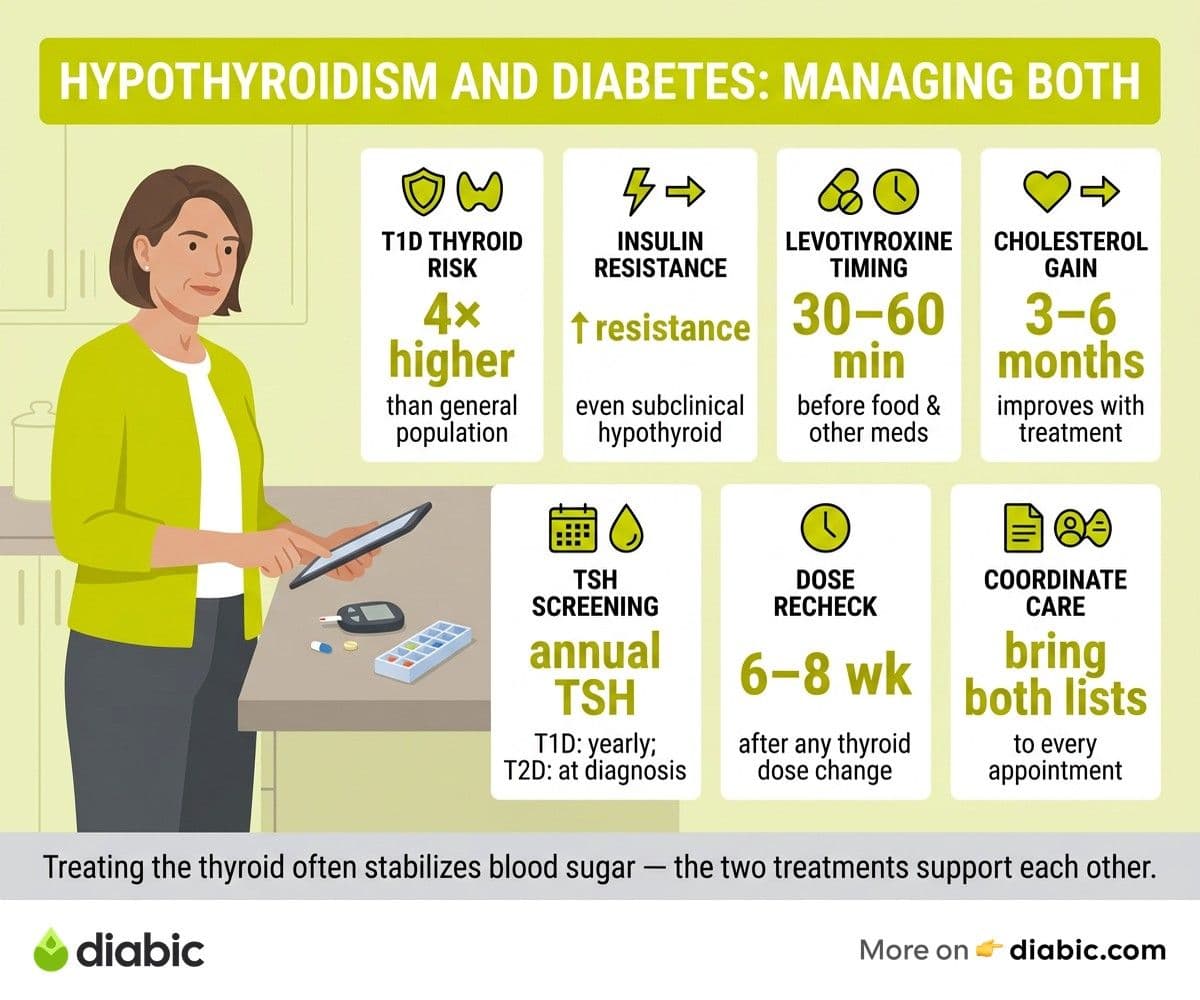
The two conditions show up together more often than chance would suggest. People with type 1 diabetes have a four-fold higher risk of autoimmune thyroid disease, and people with type 2 diabetes also see elevated rates of thyroid dysfunction compared to the general population. Knowing this connection changes how you ask questions at appointments.
This guide pulls together the practical pieces of managing hypothyroidism and diabetes side by side: how the conditions feed each other, how to time medications, what to watch on labs, and how to spot the difference between a thyroid problem and a blood sugar problem when symptoms overlap.
How to Manage Hypothyroidism and Diabetes Together
A unified plan is more effective than treating each condition in isolation. Hypothyroidism slows your metabolism, which changes how your body responds to food, medication, and exercise. Diabetes responds to all of those same inputs. When you treat the thyroid and the blood sugar as one system, the management gets simpler, not harder.
The American Diabetes Association Standards of Care recommend annual thyroid screening for everyone with type 1 diabetes and screening at diagnosis for type 2 diabetes. If your last thyroid panel was more than a year ago, ask for one. The test is usually a TSH, sometimes paired with a free T4 and antibody panel to look for how thyroid affects blood sugar in your specific case.
Why these conditions often co-occur
Type 1 diabetes is autoimmune, and so is the most common form of hypothyroidism, Hashimoto's. Once your immune system has shown a willingness to attack one endocrine gland, the odds of it targeting another go up. That is the simple explanation for the overlap in type 1 diabetes.
Type 2 diabetes is not autoimmune, but it shares risk factors with thyroid dysfunction. Insulin resistance, chronic inflammation, and weight changes all alter how the thyroid responds. The result is a higher rate of subclinical hypothyroidism in people with type 2 diabetes than in the general population.
Building a unified approach
A single integrated plan beats two separate plans. Ask your endocrinologist or primary care provider to coordinate thyroid testing with your usual diabetes labs so the picture is whole rather than piecemeal. Bringing both medication lists to every appointment helps too, since interactions are often missed when each condition is managed in a different chart.
Track symptoms in one place. A simple weekly note about energy, weight, mood, and blood sugar trends gives the doctor more usable data than memory alone. Patterns become visible over six to eight weeks that no single appointment will catch.
Treating both conditions at once
Skipping thyroid treatment because you are focused on diabetes, or vice versa, usually backfires. Untreated hypothyroidism makes blood sugar harder to manage and raises cholesterol, which compounds cardiovascular risk for someone already living with diabetes. Treating the thyroid often improves diabetes outcomes within a few months.
The reverse is also true. Better blood sugar reduces the inflammatory load on your endocrine system, which in some people makes thyroid medication easier to dose. The two treatments support each other when run in parallel.
How Does Hypothyroidism Affect Diabetes Control
The short answer is that low thyroid function changes nearly every variable that drives blood sugar. Metabolism slows, insulin sensitivity changes, weight shifts, and mood drops. Each of these touches diabetes management.
The longer answer involves specific mechanisms worth understanding so you can spot when something is off before the lab test catches up.
Slowed metabolism and blood sugar regulation
Thyroid hormones set the pace of metabolism. When thyroid output drops, the body burns calories more slowly, processes glucose less efficiently, and clears insulin from the bloodstream at a different rate. The combined effect is unpredictable blood sugar, especially after meals.
You may also notice that exercise feels harder or produces smaller blood sugar drops than it used to. That is the slowed metabolic engine, not a failure of effort. Adjusting expectations until the thyroid is properly treated prevents a lot of unnecessary frustration.
Increased insulin resistance
Research published in the Thyroid journal has shown that hypothyroidism is associated with increased insulin resistance, even at the subclinical level where TSH is only mildly elevated. The mechanism is not fully understood, but the practical effect is that the same insulin dose works less well when thyroid hormone is low.
People with type 2 diabetes may notice their oral medications are not holding blood sugar where they used to. People with type 1 may need slightly higher basal insulin. Both changes usually reverse once thyroid replacement is dialed in.
Weight gain that complicates management
Hypothyroidism slows weight loss and can drive modest weight gain even without changes in eating habits. For someone with type 2 diabetes who has been working hard at lifestyle changes, that can feel demoralizing. The weight gain is not a failure of discipline, it is a hormonal change that needs treatment.
Once thyroid hormone levels normalize, the weight typically stabilizes and may slowly come down. Aggressive dieting during untreated hypothyroidism rarely works and often makes the metabolism even more sluggish.
Cholesterol changes and heart risk
Low thyroid function raises LDL cholesterol and triglycerides. Diabetes already raises cardiovascular risk, so the two together push the heart picture in the wrong direction quickly. This is one of the strongest reasons to treat hypothyroidism even when the only symptom feels like fatigue.
Ask your provider for a lipid panel along with your annual thyroid screen. Treating the thyroid often improves cholesterol numbers within three to six months without any other intervention.
Thyroid and Blood Sugar Levels
Thyroid hormones and blood sugar are linked through several mechanisms, and the relationship runs in both directions. Understanding the link helps make sense of the unpredictable readings many people see when thyroid function is off.
How thyroid hormones regulate metabolism
Thyroxine and triiodothyronine, the two main thyroid hormones, set how quickly cells use glucose. When thyroid levels are normal, glucose uptake and insulin response are predictable. When thyroid levels drop, both processes slow, and blood sugar lingers longer than expected after meals.
The liver also responds to thyroid hormones. Low thyroid output can reduce the liver's overnight glucose release in some people, which contributes to the next mechanism.
Why low thyroid leads to instability
A slower metabolism does not mean lower blood sugar overall. It means less predictable blood sugar. Some people see higher post-meal numbers because glucose clears more slowly. Others see lower fasting numbers because the liver's overnight glucose release is reduced.
Neither pattern is wrong, they are both expressions of the same metabolic slowdown. The fix is not to chase each reading with a medication change. The fix is to address the thyroid first, then re-evaluate diabetes management once levels are stable.
The hypothyroid paradox
People are often surprised to learn that hypothyroidism can produce both highs and lows. The variability is part of what makes diagnosis tricky. Symptoms can pull in opposite directions on different days, and the lab test is the only reliable arbiter.
If your blood sugar pattern has shifted without a clear cause, ask for a TSH check. The test is inexpensive and quickly rules thyroid in or out as the driver.
The Hashimoto's Connection
Hashimoto's thyroiditis is the most common cause of hypothyroidism, and it is autoimmune. For people with type 1 diabetes, the autoimmune link is meaningful. For people with type 2, Hashimoto's is less common but still worth ruling out when symptoms suggest thyroid involvement.
Our deeper piece on the Hashimoto's and type 1 diabetes connection walks through the antibody testing and what to expect. The condensed version follows here.
Why Hashimoto's drives most hypothyroidism
In Hashimoto's, the immune system gradually attacks the thyroid gland, reducing its hormone output over time. The decline is usually slow, sometimes stretching over years before symptoms become hard to ignore. That gradual onset is part of why the condition is often diagnosed late.
A simple blood test for thyroid peroxidase antibodies confirms the diagnosis. If the antibodies are present, the cause is autoimmune even when TSH is still in the normal range.
The autoimmune link with type 1 diabetes
People with type 1 diabetes carry a much higher risk of autoimmune thyroid disease, including Hashimoto's and the opposite condition, Graves'. The shared mechanism is the same misfiring immune system that targeted the pancreas.
If you have type 1 diabetes, the American Thyroid Association recommends regular TSH screening at least every one to two years, and sooner if symptoms appear. Catching the slide early often means starting on a lower medication dose and avoiding the worst of the fatigue and weight changes.
Screening recommendations
For type 1 diabetes, screen at diagnosis and then annually. For type 2, screen at diagnosis and repeat every few years or sooner if symptoms appear. Pregnancy adds its own thyroid screening recommendations, especially for anyone with diabetes of any type.
If you have a first-degree relative with autoimmune thyroid disease, mention it to your provider. Family history shifts the screening interval shorter.
Thyroid Medication and Diabetes Interactions
Levothyroxine is the standard thyroid replacement and the most common prescription for hypothyroidism. It does not directly raise blood sugar, but starting it or adjusting the dose can shift diabetes management in subtle ways. Knowing what to expect prevents a lot of confused troubleshooting.
For a deeper preparation guide, our piece on thyroid medication questions for your doctor covers the conversation point by point.
How levothyroxine affects blood sugar
Once levothyroxine starts working, your metabolism speeds up toward normal. That can mean better insulin sensitivity, slightly lower fasting blood sugar, and faster post-meal clearance. People with type 1 diabetes sometimes need a small reduction in basal insulin within the first few weeks of starting therapy.
The change is usually gradual. Watch your numbers, keep notes, and share the trend with your endocrinologist. Pre-emptive insulin reductions are rarely needed, but reactive adjustments may be.
Timing considerations with diabetes medications
Levothyroxine is best absorbed on an empty stomach, ideally 30 to 60 minutes before food, coffee, or other medications. Calcium, iron, and certain antacids interfere with absorption. Some diabetes medications, including metformin, are taken with meals, so the simplest pattern is to take thyroid medication first thing in the morning and diabetes medication later with breakfast.
Consistency matters more than perfection. The body adapts to a steady routine. Random timing causes the levothyroxine dose to feel different week to week, which complicates everything else.
What to monitor when adjusting
When starting or changing thyroid medication, plan to recheck TSH after about six to eight weeks. That is the standard window for the body to settle into a new dose. During that period, watch your blood sugar more closely than usual and note any patterns of unexpected highs or lows.
Cardiovascular symptoms, including palpitations or unusual fatigue, deserve a call to the prescribing doctor. They can signal a dose that is too high or too low for your body.
Symptoms That Overlap and Confuse
Diabetes and hypothyroidism share too many symptoms to count. Fatigue, weight changes, brain fog, dry skin, and mood shifts can come from either one. Telling them apart is part medical workup and part pattern recognition.
When fatigue is hypothyroid
Hypothyroid fatigue tends to be heavy and unrelenting. You sleep eight hours and wake up still tired. You feel cold when others are comfortable. You move slower than usual without noticing why. Blood sugar is often unrelated, and a glass of water and a snack do not fix it.
If those signs match your experience, a TSH check is the next step. The lab test settles the question quickly.
When fatigue is blood sugar
Blood sugar fatigue tends to be more reactive. It hits after a meal, peaks, then resolves over an hour or two. It often pairs with thirst, hunger, or a foggy sensation that improves once blood sugar comes back into range.
Checking your meter or CGM during the fatigue tells the story. If your numbers are high or trending high, the cause is likely glucose. If the numbers are normal and you still feel exhausted, look upstream at the thyroid.
Why regular labs matter
Symptoms alone are not enough to manage either condition. A TSH every six to twelve months, paired with your usual A1C and lipid panels, gives you and your provider a stable data set to work from. Patterns across labs reveal what symptoms cannot.
From my experience: After 14 years of living with type 1 diabetes, the thing I wish I had known earlier is that fatigue is not a single signal. For years I assumed every tired afternoon was a high or a low. When my thyroid finally tipped into hypothyroid range, the fatigue felt different but I had no vocabulary for it. A TSH at my next quarterly appointment caught it, and within two months on levothyroxine the heavy version of tired lifted.
Practical Tips for Daily Management
The best diabetes-thyroid management plans are built from small repeatable habits rather than dramatic overhauls. The Endocrine Society recommends regular monitoring and coordinated care, and most of that translates into a few daily choices.
Medication timing strategies
Take levothyroxine first thing in the morning, with water only, and wait 30 to 60 minutes before coffee or breakfast. Set a recurring alarm if mornings are chaotic. The half-life of the medication is long, so missing by a few minutes is fine, but skipping doses or shifting timing dramatically is not.
Diabetes medications can stay on whatever schedule already works for you. The two regimens do not need to be synchronized, only consistent.
Dietary choices that support both
A diet that supports stable blood sugar usually supports the thyroid too. Plenty of vegetables, lean proteins, healthy fats, and whole grains, with moderate portions. Iodine is needed for thyroid function, and most people with a varied diet get enough from dairy, eggs, and fish.
Avoid extreme restrictions that some online thyroid programs recommend. Cutting out broad food groups rarely improves thyroid outcomes and often worsens diabetes management by creating unstable eating patterns.
Exercise benefits for both
Movement helps insulin sensitivity, mood, and weight, and it supports thyroid hormone metabolism too. Start with what you can sustain, even ten minutes a day, and build from there. The metabolic boost from exercise is real, even when thyroid function is below ideal.
If you are training in a gym, mention both conditions to your trainer. They will adjust intensity and recovery time appropriately.
Building a healthcare team that communicates
A well-functioning team makes everything easier. Endocrinologist, primary care, ophthalmologist, dentist, and registered dietitian are the usual roster. Ask each provider to share notes through a patient portal so the next person sees the latest labs and changes.
If your endocrinologist and primary care are not coordinated, take the lead. Bring printed labs, write down questions, and let each provider know what the others are doing. The patient who connects the dots usually gets better care than the one who waits for the system to do it.
Putting It Together
Hypothyroidism and diabetes are two endocrine problems that touch nearly every part of daily life. Treating both at once, with consistent monitoring and a team that communicates, makes the management feel less like a juggling act and more like a single coordinated routine.
The pieces that matter most are simple. Annual thyroid labs, consistent medication timing, attention to symptoms that overlap, and a willingness to adjust when something changes. Talk to your doctor about screening intervals if it has been more than a year, and bring your blood sugar log to thyroid appointments so the picture is whole.
FAQ
How to manage hypothyroidism and diabetes together?
Focus on treating both conditions with medication as prescribed, monitoring thyroid levels and blood sugar regularly, and making lifestyle choices that support both. Coordination between your endocrinologist and diabetes care team is essential, and an annual TSH paired with your A1C makes the picture clear.
How does hypothyroidism affect diabetes control?
Hypothyroidism slows metabolism, can increase insulin resistance, and promotes weight gain, all of which make blood sugar harder to manage. Proper thyroid hormone replacement often improves diabetes outcomes and may stabilize cholesterol numbers within a few months.
Can thyroid medication change my insulin needs?
Yes, sometimes. As levothyroxine restores normal metabolism, insulin sensitivity often improves. Some people with type 1 diabetes need a modest basal insulin reduction within the first few weeks of starting thyroid medication. Watch your numbers and share the trend with your provider.
How often should I check my thyroid if I have diabetes?
For type 1 diabetes, screen TSH annually. For type 2 diabetes, screen at diagnosis and every few years, sooner if symptoms appear. Pregnancy and family history of autoimmune thyroid disease often shorten the interval.
Shahriar P. Shuvo is the founder of Diabic. He has lived with diabetes for over 14 years, and built Diabic to deliver the practical, evidence-based self-management tools he wished existed when he was first diagnosed. By trade, Shahriar is a senior design and frontend engineer with 6+ years shipping products at Agora, Timescale (now Tiger Data), and ShareTrip. He writes from the intersection of lived diabetes experience and product craft, focused on what works in daily management rather than what sounds good in a textbook.
Medically reviewed by
Dr. Rezwana Parvin Rumpa is an obstetrics and gynaecology specialist with clinical focus on gestational diabetes, PCOS, and fertility. She holds the MRCOG (Final Part) from the Royal College of Obstetricians and Gynaecologists in London, the MRCPI (Final Part) from the Royal College of Physicians of Ireland, and an MBBS from Shaheed Monsur Ali Medical College under Dhaka University. Dr. Rumpa serves as a Senior Medical Officer in the Obs and Gynae department at BRB Hospitals Ltd, where she has spent three years managing prenatal care, emergency obstetric cases, and women's-health surgery. On Diabic, she medically reviews content for women living with diabetes, with particular attention to pregnancy, PCOS, and reproductive-health intersections.
More from Health & Complications
View all
Diabetes and Dental Implants: What to Know First
Diabetes dental implants guide covering safety, A1C targets, recovery expectations, gum health prep, and what to ask your oral surgeon before surgery.

Burning Mouth Syndrome and Diabetes Explained
Burning mouth syndrome diabetes link explained, including neuropathy, dry mouth, and thrush causes plus treatment options that may bring real relief.

Dental Care for people with diabetes: Tips That Help
Practical dental care diabetics need, with real tips for protecting teeth and gums when diabetes raises your risk for oral health problems.
Clinician-reviewed habits, plain-language guides, and honest answers - the small shifts that make living with diabetes feel lighter, every day.