Thyroid and Blood Sugar Levels: What to Know
How thyroid and blood sugar levels are connected, why thyroid problems cause spikes and lows, and what to ask your doctor about TSH testing.

In this article(21)
The relationship between your thyroid and blood sugar levels is more significant than most people realize. Whether your thyroid is overactive or underactive, the effect on glucose can be substantial, and for people with diabetes, understanding this connection is key to fewer unexpected highs and lows.
If you have been struggling with unexplained blood sugar swings despite a steady routine, your thyroid is one of the first things worth checking. The thyroid sets the metabolic pace for the entire body, and when that pace shifts, glucose handling shifts with it. This guide explains the mechanism in plain language and walks through what to do about it.
How Does the Thyroid Affect Blood Sugar Levels
The thyroid produces two main hormones, T3 and T4, that regulate how fast cells use energy. Faster metabolism means glucose is absorbed and used more quickly. Slower metabolism means glucose moves through the system at a more leisurely pace. Both extremes can throw off the careful balance that diabetes management depends on.
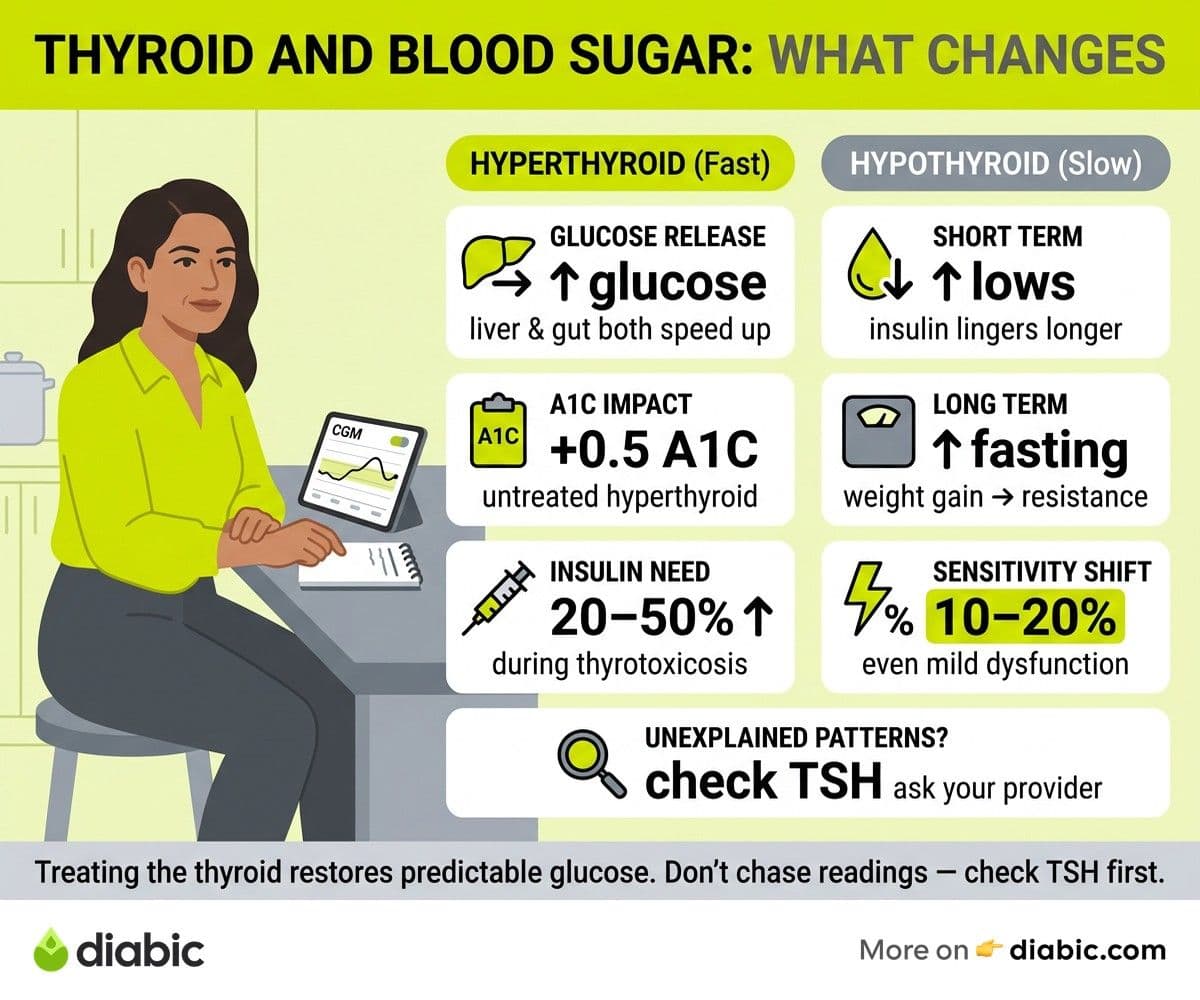
When the thyroid is overactive (hyperthyroidism), the liver releases more glucose, the gut absorbs carbohydrates faster, and insulin is broken down more quickly. The result is higher blood sugar, often with a more pronounced spike after meals. The Endocrine Society summarizes this dynamic well in its patient resources on thyroid hormones and glucose metabolism.
When the thyroid is underactive (hypothyroidism), the opposite happens. Glucose absorption slows, the liver makes less glucose, and insulin clearance drops. People with hypothyroidism may see flatter post-meal curves but a higher risk of hypoglycemia, especially overnight or several hours after a meal.
The ratio between thyroid hormones and insulin is delicate. Even mild thyroid dysfunction, the kind where TSH is just outside the normal range, can shift insulin sensitivity by 10 to 20 percent. Over a week of meals, that adds up to noticeable patterns.
Can Thyroid Problems Cause Blood Sugar Spikes
Yes, especially when the thyroid is running fast. Hyperthyroidism is well documented to cause higher fasting glucose and exaggerated post-meal spikes. According to research published in the Diabetes Care journal, untreated hyperthyroidism in people with diabetes can raise A1C by half a point or more, even when daily routines stay the same.
The mechanism is straightforward. Excess thyroid hormone signals the liver to release stored glucose at a faster rate. It also speeds the gut's emptying time, so carbs from a meal hit the bloodstream sooner. For people on insulin, this means the timing of doses may need to shift, often with a longer pre-bolus and slightly higher basal rates.
Hypothyroidism can also create blood sugar spikes, but for different reasons. As the body struggles with sluggish metabolism, weight gain and reduced physical activity often follow, which can worsen insulin resistance over time. So even though the immediate response to a meal might be muted, the longer-term picture sometimes includes higher baseline glucose.
If your blood sugar patterns have changed without an obvious reason, including more spikes, more lows, more variability, or a creeping A1C, asking your doctor for a TSH test is a reasonable next step.
Hypothyroidism and Blood Sugar
Hypothyroidism affects blood sugar in three main ways: it slows glucose metabolism, increases insulin sensitivity in the short term, and contributes to insulin resistance in the long term. The combination is paradoxical and explains why hypothyroidism can produce both lows and highs.
In the short term, slower metabolism means insulin lingers in the bloodstream longer than usual. People on insulin therapy often notice more frequent overnight lows or post-meal lows that catch them off guard. A meal that used to need 4 units of insulin might now cause hypoglycemia at the same dose.
Over months and years, untreated hypothyroidism is associated with weight gain, elevated cholesterol, and reduced physical activity. These factors gradually push the body toward insulin resistance, which can raise fasting glucose and A1C. The shift is slow but real.
Treating hypothyroidism with levothyroxine usually restores a more predictable blood sugar pattern within a few months. Some people find their insulin needs go up modestly during the adjustment phase, and others find their daily glucose curves smooth out without dose changes. For deeper coverage of this dynamic, see our guide on managing hypothyroidism and diabetes.
From my experience: in my early twenties, my CGM started showing strange overnight lows even on nights I had not eaten much. I assumed it was a basal rate issue and adjusted my pump twice with no improvement. A routine TSH test came back high, and after a few months on levothyroxine, the lows resolved on their own. It was a useful reminder that not every glucose pattern is fixable with insulin alone.
Thyrotoxicosis and Blood Sugar
Thyrotoxicosis is the medical term for too much thyroid hormone in the bloodstream, regardless of cause. Common thyrotoxicosis symptoms include rapid heartbeat, weight loss, anxiety, heat intolerance, tremor, frequent bowel movements, and trouble sleeping. For people with diabetes, blood sugar usually rises noticeably during a thyrotoxicosis episode.
The reason is metabolic acceleration. Thyroid hormone increases gluconeogenesis (glucose production in the liver), boosts intestinal glucose absorption, and shortens the half-life of insulin. The combined effect can raise fasting glucose by 20 to 40 mg/dL and worsen post-meal spikes significantly.
Insulin Requirements During Thyrotoxicosis
Many people on insulin find their daily totals go up by 20 to 50 percent during active thyrotoxicosis. This adjustment usually happens gradually as the thyroid level rises, then reverses once treatment brings the gland back into balance. CGM data is especially valuable during this phase because patterns can change week to week.
The Risk of Diabetic Ketoacidosis in Type 1 Diabetes
Untreated thyrotoxicosis is a known precipitant of diabetic ketoacidosis (DKA) in people with type 1 diabetes. The combination of high glucose, dehydration, and accelerated fat breakdown can tip someone into DKA faster than they would expect. The Mayo Clinic and other major sources flag this as a serious risk and recommend prompt treatment of any new hyperthyroid diagnosis in people with diabetes.
If you have type 1 diabetes and start noticing rapid heartbeat, sudden weight loss, or unexplained insulin resistance, contact your provider quickly. Catching thyrotoxicosis before it destabilizes your diabetes is much easier than recovering from a DKA hospital stay.
TSH Testing and Diabetes
A TSH blood test measures thyroid-stimulating hormone, the chemical signal your pituitary gland sends to the thyroid. High TSH means the pituitary is shouting at an underactive thyroid; low TSH means it is barely whispering because the thyroid is making too much hormone on its own. The test is the most sensitive single measure of thyroid function.
The American Diabetes Association recommends TSH screening at the time of type 1 diabetes diagnosis, then every one to two years thereafter. People with type 2 diabetes should also have thyroid function checked at diagnosis, and again if symptoms suggest a problem.
How Often to Check TSH
For people with diabetes:
- At diagnosis: baseline TSH and ideally thyroid antibodies if type 1.
- Every one to two years: follow-up TSH if everything was normal.
- Annually or sooner: if you take thyroid medication or have known thyroid antibodies.
- As soon as possible: if symptoms develop or blood sugar patterns shift unexpectedly.
What TSH Results Mean for Blood Sugar Management
The reference range for TSH is typically 0.4 to 4.0 mIU/L, though individual labs vary slightly. Values above the range suggest hypothyroidism, and values below suggest hyperthyroidism. Mild deviations may not need treatment immediately, but they are worth watching.
If you want to understand your TSH number in more detail, our guide on what a TSH blood test means for diabetes breaks down what each range can mean and how providers decide when to treat.
Practical Steps for Managing Thyroid and Blood Sugar Levels
The good news is that thyroid dysfunction is treatable, and most people with diabetes who develop a thyroid problem can return to predictable blood sugar patterns within a few months of starting therapy.
Build Thyroid Checks into Your Routine
If you already see your doctor every three to six months for diabetes, add TSH to one of those annual visits. It is a single tube of blood, usually covered by insurance, and the data point is worth having on file even if it stays normal year after year.
Watch for Symptom Patterns
Diabetes and thyroid disease share many symptoms, including fatigue, weight changes, mood shifts, and changes in heart rate. If something feels off and your blood sugar numbers are not telling the whole story, ask for a thyroid panel rather than assuming the problem is glucose alone.
Coordinate with Your Care Team
Whoever manages your diabetes should know about any thyroid changes, and vice versa. Levothyroxine doses, antithyroid drugs, and even adjustments to thyroid hormone replacement can shift insulin needs. Sharing a single chart between providers prevents misses.
Diet and Lifestyle
Both conditions respond well to the same set of basic habits: eating regular meals with balanced macronutrients, sleeping seven to nine hours, moving daily, and managing stress. Iodine intake matters for thyroid health, and most people in the United States get plenty from iodized salt and seafood, so supplements are rarely needed.
For people with diabetes who also have a connection to other endocrine disorders, our guide on how Cushing's affects blood sugar covers another hormone system worth understanding.
A Practical Next Step
If you live with diabetes and have not had a thyroid check in the last year, ask for a TSH test at your next visit. The lab work is simple, the result is informative, and if anything looks off, treatment is usually straightforward. Stable thyroid function makes stable blood sugar much easier to achieve.
FAQ
How does the thyroid affect blood sugar levels?
Thyroid hormones control your metabolic rate, which directly influences how your body processes glucose. An overactive thyroid speeds up glucose use and raises blood sugar, while an underactive thyroid slows metabolism and can cause unpredictable blood sugar fluctuations.
Can thyroid problems cause blood sugar spikes?
Yes. Hyperthyroidism, in particular, can cause significant blood sugar spikes by increasing glucose production in the liver and accelerating carbohydrate absorption. Unexplained blood sugar instability should prompt a thyroid check.
What TSH level is concerning for someone with diabetes?
The standard reference range is roughly 0.4 to 4.0 mIU/L. Values outside this range, especially when paired with symptoms or unstable blood sugar, are worth discussing with your provider. Some endocrinologists treat earlier in people with diabetes because of the impact on glucose control.
Does thyroid medication change blood sugar?
It can. Levothyroxine speeds metabolism back to normal, which often raises insulin requirements modestly. Antithyroid drugs do the opposite. Either way, expect some adjustment to diabetes medication during the first few months.
How often should people with diabetes have thyroid testing?
Most guidelines recommend TSH at diagnosis and then every one to two years if results are normal. People on thyroid medication, with known antibodies, or with active symptoms should test more often.
The connection between thyroid and blood sugar levels deserves more space in routine diabetes appointments than it usually gets. A single TSH test, repeated on a steady cadence, can explain weeks of unexplained pattern changes that no insulin tweak would have fixed. If your numbers have drifted recently and your routine has not, ask about adding the test the next time you see your provider. Stable thyroid function quietly makes stable blood sugar much easier to maintain.
Shahriar P. Shuvo is the founder of Diabic. He has lived with diabetes for over 14 years, and built Diabic to deliver the practical, evidence-based self-management tools he wished existed when he was first diagnosed. By trade, Shahriar is a senior design and frontend engineer with 6+ years shipping products at Agora, Timescale (now Tiger Data), and ShareTrip. He writes from the intersection of lived diabetes experience and product craft, focused on what works in daily management rather than what sounds good in a textbook.
Medically reviewed by
Dr. Shanto Arian is an internal medicine physician now specializing in clinical and aesthetic dermatology, with a parallel academic focus on epidemiology and public health. He holds an MBBS, MPH, MSc (UK), MRCP (UK), MRCPI (Ireland), Diploma in Dermatology (UK), and Diploma in Aesthetic Medicine (USA). Dr. Arian trained in internal medicine, including hospital work on hematology cases such as graft-versus-host disease, before moving toward dermatology. Skin is one of the earliest places diabetes shows itself, from acanthosis nigricans and diabetic dermopathy to slow foot wound healing, and that intersection is where his clinical and Diabic-review work meet. On Diabic, Dr. Arian medically reviews content on diabetes diagnosis, complications, dermatologic manifestations, and pharmacotherapy, ensuring every claim aligns with current ADA, NICE, and peer-reviewed literature.
More from Health & Complications
View all
Diabetes and Dental Implants: What to Know First
Diabetes dental implants guide covering safety, A1C targets, recovery expectations, gum health prep, and what to ask your oral surgeon before surgery.

Burning Mouth Syndrome and Diabetes Explained
Burning mouth syndrome diabetes link explained, including neuropathy, dry mouth, and thrush causes plus treatment options that may bring real relief.

Dental Care for people with diabetes: Tips That Help
Practical dental care diabetics need, with real tips for protecting teeth and gums when diabetes raises your risk for oral health problems.
Clinician-reviewed habits, plain-language guides, and honest answers - the small shifts that make living with diabetes feel lighter, every day.