How Cushing's Disease Affects Blood Sugar Levels
Learn how Cushing's disease raises blood sugar, triggers insulin resistance, and can cause secondary diabetes, plus what treatment looks like.

In this article(12)
If your blood sugar has been climbing for reasons that do not match your routine, your medications, or your meals, the cause may not be in your pancreas at all. Cushing's disease, a hormonal condition that floods the body with cortisol, can quietly push glucose up for months before anyone thinks to look at it. For some people with Cushing's disease, the first clue something is wrong shows up as numbers on a glucose meter that simply will not behave.
The condition often goes undiagnosed for years because the symptoms blend in with everyday issues like fatigue, weight gain, and stress. When the pituitary gland produces too much adrenocorticotropic hormone (ACTH), the adrenal glands respond by making excess cortisol, and that hormone has a powerful effect on glucose. Recognizing the signs matters because treatment can reverse much of the damage, including the blood sugar problems.
This guide breaks down what the disease is, how it affects glucose metabolism, and why it sometimes leads to diabetes. We will also look at the symptoms to watch for, how it connects to other endocrine conditions, and what recovery typically looks like.
What Is Cushing's Disease
The disease is the most common cause of endogenous Cushing's syndrome, accounting for roughly 70% of cases not caused by steroid medications. It happens when a benign tumor on the pituitary gland produces too much ACTH, which then signals the adrenal glands to release excess cortisol. The Pituitary Society describes it as a serious but treatable disorder that requires careful endocrine evaluation.
The terms for the disease and Cushing's syndrome are often used interchangeably, but they are not the same thing. The syndrome is the umbrella term for any condition that causes prolonged exposure to high cortisol, including long-term steroid use. The disease specifically refers to the pituitary tumor cause.
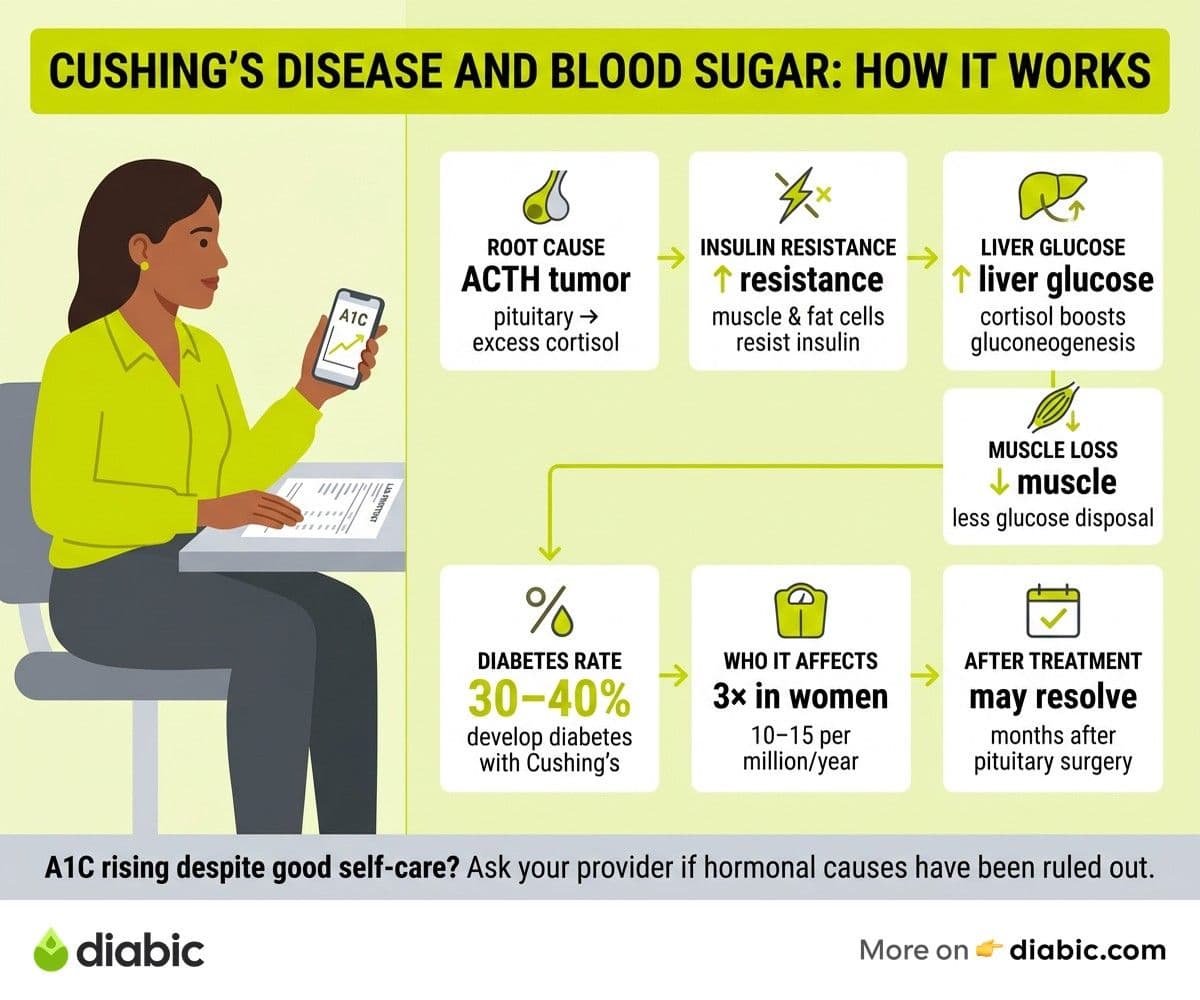
The condition is rare, affecting roughly 10 to 15 people per million each year, and it tends to occur three times more often in women than in men. Most cases are diagnosed between the ages of 20 and 50, though the disease can show up at any age. Because the symptoms come on gradually, many people live with it for years before getting a diagnosis.
How the Condition Affects Blood Sugar
Cortisol is one of the body's primary stress hormones, and one of its main jobs is to make sure glucose is available when you need it. In normal amounts, that role is helpful. In the chronic excess seen with Cushing's, cortisol becomes a major driver of high blood sugar through several overlapping mechanisms.
The first mechanism is insulin resistance. Excess cortisol makes muscle and fat cells less responsive to insulin, which means glucose stays in the bloodstream rather than moving into the cells where it can be used. Research published in the Journal of Clinical Endocrinology and Metabolism has shown that people with active Cushing's syndrome have markedly impaired insulin sensitivity compared with healthy controls.
The second mechanism is increased glucose production by the liver, a process called gluconeogenesis. Cortisol signals the liver to produce glucose from amino acids and other building blocks, even when blood sugar is already high. The combination of higher production and lower use is what makes blood sugar so hard to manage in active Cushing's.
A third factor is the breakdown of muscle tissue. Cortisol promotes muscle catabolism, which reduces the body's largest reservoir for glucose disposal. With less muscle to absorb sugar, post-meal glucose spikes become more pronounced and harder to bring down.
Can This Hormonal Condition Cause Diabetes
Yes, and the connection is well-documented. According to the NIDDK, about 30 to 40% of people with Cushing's syndrome develop diabetes, and another 10 to 30% have impaired glucose tolerance. This pattern is sometimes called steroid-induced diabetes when it stems from medication, or cortisol-induced diabetes when it comes from Cushing's itself.
The good news is that for many people, blood sugar improves significantly once the underlying cortisol excess is corrected. Studies on patients who have undergone successful surgery to remove a pituitary tumor show that diabetes resolves in a meaningful share of cases within months of treatment. For others, particularly those with longer disease duration or additional risk factors, diabetes persists and needs ongoing management.
Why does diabetes sometimes stick around after Cushing's is treated? Several reasons. Long-term cortisol exposure can permanently damage beta cell function in the pancreas, leaving you with reduced insulin production even after cortisol returns to normal. Genetic predisposition, age, and weight gain accumulated during the active disease also play a role.
If you already had type 2 diabetes before developing Cushing's, the cortisol excess often makes glucose management much harder. Treatment of Cushing's typically improves your numbers, but you may still need ongoing medications and lifestyle support. This is one reason why endocrinologists look closely at hormone status when diabetes suddenly becomes difficult to manage.
Cushing's Syndrome Symptoms to Recognize
The physical changes from Cushing's syndrome can be dramatic, but they often develop slowly enough that the person living with them does not notice. Friends, family, or even old photographs may make the difference clearer than a mirror does.
Weight gain is one of the earliest and most consistent signs, and it tends to follow a specific pattern. Fat accumulates in the abdomen, face, and upper back while the arms and legs often stay relatively thin. The "moon face" (a rounded, full appearance) and the "buffalo hump" (a fat pad between the shoulders) are classic features that show up on physical exam, and MedlinePlus's overview of Cushing syndrome catalogs the full constellation of symptoms clinicians look for.
Other recognizable changes include thin, fragile skin that bruises with minimal contact, and wide purple or pink stretch marks (called striae) on the abdomen, thighs, and breasts. Many people also notice acne, hair growth in unusual places, and slow healing of small cuts or scrapes.
Beyond the visible changes, Cushing's affects energy, mood, and strength. Profound fatigue, muscle weakness (especially when standing from a seated position), depression, anxiety, and trouble sleeping are all common. Women often experience irregular periods, while men may notice a drop in libido or fertility issues.
Symptoms That Overlap With Diabetes
Here is where things get tricky. Many of the symptoms look almost identical to symptoms of metabolic syndrome and type 2 diabetes. Weight gain, fatigue, increased thirst, frequent urination, and difficulty losing weight can all be explained by either condition. That overlap is why the diagnosis gets missed for years.
The clue that sometimes points toward Cushing's is when diabetes does not respond the way it should. If your A1C climbs despite taking your medications consistently, eating well, and staying active, it is worth asking your provider whether hormonal causes have been considered. The same goes for blood pressure that suddenly becomes harder to manage.
A few features lean more specifically toward Cushing's than toward typical diabetes. New, severe stretch marks that are wide and purple are unusual outside of pregnancy or rapid weight gain. So is significant proximal muscle weakness, which makes activities like climbing stairs or standing from a low chair surprisingly difficult. Severe, unexplained osteoporosis in someone relatively young is another red flag.
From my experience: After 14 years of living with type 1 diabetes, I have learned that when something feels off and the usual explanations do not fit, it is worth pushing for answers. I once spoke with a community member whose diabetes had spiraled out of control for nearly two years before her endocrinologist finally tested her cortisol. The diagnosis was Cushing's. Within a year of treatment, her blood sugar was back to a manageable range. Trust your instincts when your numbers do not match your effort.
Thyroid and Blood Sugar Levels: The Hormonal Web
This condition is one of several endocrine disorders that can throw blood sugar levels off, and it rarely exists in a vacuum. The endocrine system is tightly interconnected, which is why an issue in one gland often affects others. Understanding how thyroid affects blood sugar gives helpful context for the broader picture.
Thyroid disorders, polycystic ovary syndrome, growth hormone abnormalities, and adrenal conditions can all influence glucose metabolism. When diabetes is hard to manage or shows up alongside other unusual symptoms, a thorough endocrine workup may be needed. A simple way to start is by understanding what a TSH blood test means for the bigger picture of hormone health.
Many endocrinologists check thyroid function, cortisol levels, and other hormones when they take on a new diabetes patient who has unexplained symptoms. The goal is to catch any underlying contributor early so that treatment can target the root cause, not just the surface numbers.
Treatment and Blood Sugar Recovery
The first-line treatment is transsphenoidal surgery, where a neurosurgeon removes the pituitary tumor through the nasal passage. When successful, this procedure can normalize cortisol levels relatively quickly, and blood sugar often improves in tandem. Cure rates with experienced surgeons are typically in the 70 to 90% range for small tumors.
When surgery is not curative or possible, other treatments include radiation therapy, medications that block cortisol production or action, and in some cases removal of the adrenal glands. Each option has trade-offs, and the right path depends on tumor size, surgical history, and overall health. Your endocrinology team will guide you through the choice.
After treatment, blood sugar tends to drop quickly as cortisol normalizes, sometimes faster than expected. People who were taking insulin or oral diabetes medications during active Cushing's may need their doses lowered to avoid hypoglycemia. Close monitoring during this transition is important, and if you are on thyroid medication and diabetes considerations together, your provider should adjust both as your hormones rebalance.
Long-term, ongoing diabetes management may still be needed for those whose blood sugar does not fully normalize. Healthy eating patterns, regular physical activity, weight management, and follow-up labs all support continued recovery. Many people find that the rebound in energy and strength after Cushing's treatment makes lifestyle changes much easier to sustain.
FAQ
How does Cushing's disease affect blood sugar?
Excess cortisol from this condition promotes insulin resistance, stimulates the liver to produce more glucose, and breaks down muscle tissue that would normally help dispose of sugar. Together, these effects raise blood glucose levels significantly and can trigger or worsen diabetes.
Can this condition cause diabetes?
Yes. Roughly 30 to 40% of people with Cushing's syndrome develop diabetes, and many more have impaired glucose tolerance. In a significant number of cases, blood sugar improves or normalizes after successful treatment, though some people continue to need diabetes management afterward.
What are the early signs of the condition?
Common early signs of Cushing's disease include weight gain in the abdomen and face, thin skin that bruises easily, wide purple stretch marks, muscle weakness, fatigue, mood changes, and irregular periods in women. Diabetes that is suddenly hard to manage despite consistent care is another important clue worth discussing with your provider.
Is Cushing's disease reversible?
In many cases involving Cushing's disease, yes. Successful surgical removal of the pituitary tumor can restore normal cortisol levels and reverse most symptoms over time, including high blood sugar. Recovery is gradual, often taking 6 to 12 months, and some effects (like bone loss or persistent diabetes) may need separate management.
Shahriar P. Shuvo is the founder of Diabic. He has lived with diabetes for over 14 years, and built Diabic to deliver the practical, evidence-based self-management tools he wished existed when he was first diagnosed. By trade, Shahriar is a senior design and frontend engineer with 6+ years shipping products at Agora, Timescale (now Tiger Data), and ShareTrip. He writes from the intersection of lived diabetes experience and product craft, focused on what works in daily management rather than what sounds good in a textbook.
Medically reviewed by
Dr. Rezwana Parvin Rumpa is an obstetrics and gynaecology specialist with clinical focus on gestational diabetes, PCOS, and fertility. She holds the MRCOG (Final Part) from the Royal College of Obstetricians and Gynaecologists in London, the MRCPI (Final Part) from the Royal College of Physicians of Ireland, and an MBBS from Shaheed Monsur Ali Medical College under Dhaka University. Dr. Rumpa serves as a Senior Medical Officer in the Obs and Gynae department at BRB Hospitals Ltd, where she has spent three years managing prenatal care, emergency obstetric cases, and women's-health surgery. On Diabic, she medically reviews content for women living with diabetes, with particular attention to pregnancy, PCOS, and reproductive-health intersections.
More from Health & Complications
View all
Diabetes and Dental Implants: What to Know First
Diabetes dental implants guide covering safety, A1C targets, recovery expectations, gum health prep, and what to ask your oral surgeon before surgery.

Burning Mouth Syndrome and Diabetes Explained
Burning mouth syndrome diabetes link explained, including neuropathy, dry mouth, and thrush causes plus treatment options that may bring real relief.

Dental Care for people with diabetes: Tips That Help
Practical dental care diabetics need, with real tips for protecting teeth and gums when diabetes raises your risk for oral health problems.
Clinician-reviewed habits, plain-language guides, and honest answers - the small shifts that make living with diabetes feel lighter, every day.