Metformin for Type 2 Diabetes: A Practical Guide
A practical guide to metformin for type 2 diabetes covering how it works, what to expect, side effects, and how it fits with lifestyle changes.

In this article(8)
If your doctor just handed you a prescription for metformin and a folded pamphlet about side effects, you are in good company. Metformin for type 2 diabetes has been the most-prescribed first-line medication for decades, and it is still the one most clinicians reach for when blood sugar starts climbing past lifestyle changes alone.
It is also one of the most-misunderstood medications people take. Some hear "diabetes pill" and assume it works like insulin. Others worry about side effects they have heard about secondhand. The picture is more practical than scary, and knowing what to expect makes the first few weeks smoother.
This guide covers how metformin actually works, what the early days usually feel like, how to handle common side effects, and where this medication fits inside a broader plan.
How Metformin for Type 2 Diabetes Works
Metformin belongs to a class of drugs called biguanides, and it has been used for over 60 years. According to the American Diabetes Association's overview of oral diabetes medications, it is recommended as first-line therapy for most adults with type 2 diabetes because of its effectiveness, safety record, and low cost.
The drug does three main things at once. First, it reduces the amount of glucose your liver releases into the bloodstream, especially overnight and between meals. The liver of someone with type 2 diabetes tends to overproduce glucose, and metformin dampens that.
Second, it improves your cells' sensitivity to insulin, particularly in muscle tissue. Better insulin sensitivity means less insulin is needed to move glucose out of the blood and into cells where it can be used.
Third, it slightly slows the absorption of glucose from the intestines after meals. This is a smaller effect than the first two, but it contributes to gentler post-meal blood sugar curves.
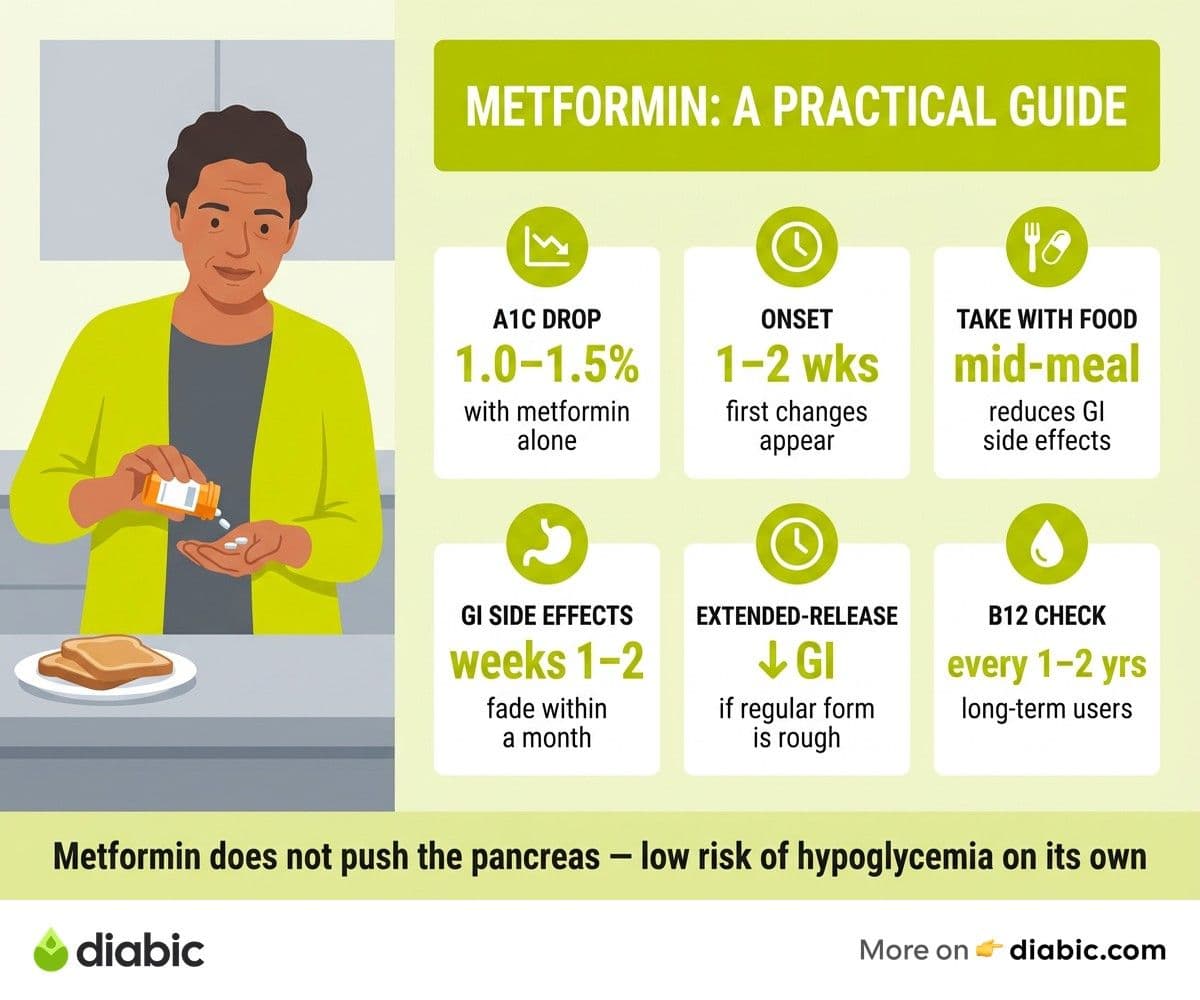
What metformin does not do is force your pancreas to make more insulin. That is why it carries a very low risk of causing low blood sugar (hypoglycemia) on its own, which makes it a safer starting point than many alternatives. The same mechanism is also why it is sometimes used outside type 2 diabetes; our piece on metformin for prediabetes: what to expect covers that adjacent use case.
If you are still building your foundational understanding, see our companion piece on what is type 2 diabetes for the bigger picture of the condition this medication is treating.
Starting Metformin: What to Expect
Most people start on a low dose and titrate up slowly to give the gut time to adjust. The typical pattern reported in prescribing literature begins with a low once-daily dose taken with the largest meal, then gradually increases over several weeks toward a maintenance range split across meals. Your prescriber will set the actual starting dose, the titration speed, and the target based on your kidney function, weight, other medications, and how your body tolerates each step.
There are two main formulations. Immediate-release metformin is taken two or three times a day with food. Extended-release metformin is taken once or twice daily and tends to cause fewer gastrointestinal side effects, which makes it a common switch for people who struggle with the immediate-release version.
Blood sugar improvements usually start within the first one to two weeks, with the bigger A1C drop showing up over two to three months. A typical A1C reduction with metformin alone is about 1.0 to 1.5 percentage points, depending on starting numbers, dose, and lifestyle changes alongside it.
Taking metformin with food is one of the most reliable ways to reduce the gut side effects that scare some people off. An empty-stomach metformin dose is much more likely to produce nausea or diarrhea than the same dose taken halfway through a meal. The Mayo Clinic's metformin drug information page is a helpful reference for dose, timing, and interaction details.
For a wider view of how this medication fits with other options, see our piece on type 2 diabetes treatment options, which covers the full landscape from first-line drugs to combination therapy.
Common Side Effects and How to Manage Them
The most common side effects of metformin are gastrointestinal: nausea, diarrhea, bloating, gas, and stomach cramps. They are usually worst in the first one to two weeks and often improve substantially after that. For most people, side effects fade within a month.
A few practical strategies that help:
- Always take metformin with food, ideally during the meal rather than before or after
- Start at a low dose and increase slowly under your prescriber's guidance
- Stay well hydrated, especially in the first weeks
- Ask about extended-release if immediate-release side effects are persistent
Switching from immediate-release to extended-release is a common adjustment when GI side effects do not settle. Many people who initially struggled with regular metformin tolerate the extended-release version with no issues. This is a worthwhile conversation to have with your prescriber rather than stopping the medication on your own.
Vitamin B12 absorption can decrease with long-term metformin use. The effect is gradual and does not affect everyone, but periodic B12 monitoring (often every one to two years) is a reasonable precaution, especially if you have other risk factors like a vegetarian diet or being over 60. Taking a daily B12 supplement is an easy fix if levels start to dip.
Lactic acidosis is the rare but serious side effect that always gets mentioned. It is genuinely uncommon, and the people most at risk are those with significant kidney impairment, severe liver disease, heavy alcohol use, or acute dehydration. Modern prescribing guidelines screen for these risks before metformin is started, which is why your provider checks kidney function (eGFR) before and during therapy.
If you ever feel persistent nausea, deep muscle pain, unusual tiredness, trouble breathing, or stomach pain that feels different from regular GI side effects, contact your provider. These can be early signs that warrant a quick check.
Metformin and Lifestyle Changes Together
Medication is a lever, not a substitute. Metformin works better when paired with consistent lifestyle changes, and the combination consistently outperforms either approach alone in research.
The landmark Diabetes Prevention Program study (summarized in many PubMed-indexed analyses) compared lifestyle intervention, metformin, and placebo in people at high risk of developing type 2 diabetes. Both metformin and lifestyle changes reduced diabetes risk significantly, but lifestyle intervention was more effective overall, especially for older adults. The takeaway is not "skip the medication"; it is "the medication does more when you also move, sleep, and eat thoughtfully."
From my experience: I have spent 14 years living with type 1 diabetes, which means I have watched many friends and family members start metformin for type 2 along the way. The pattern I see most often is that the medication produces a quick A1C drop in the first three months, and then progress slows. The people who keep improving past that early window are the ones who pair the prescription with one or two consistent lifestyle changes, not five at once.
The most useful pairings tend to be a daily walk after the largest meal, a steadier sleep schedule, and a gradual shift toward more fiber and protein at meals. None of those require a perfect diet or a gym membership.
Monitoring A1C every three to six months gives you a tangible feedback loop. If your numbers are improving, your current plan is working. If they have plateaued, that is a useful signal to revisit the lifestyle side or talk with your provider about whether the dose or the medication mix needs adjusting. Some people are also exploring whether deeper lifestyle change can put their type 2 into remission, which is the broader question we cover in can type 2 diabetes be reversed: what research says.
When Metformin Is Not Enough
For many people, metformin alone keeps blood sugar in target range for years. For others, it is not enough on its own, and that is not a failure of effort. Type 2 diabetes is a progressive condition, and most people will need additional support at some point.
Signs that you may need more than metformin include an A1C that stays above your target despite consistent use, frequent fasting blood sugar readings outside your goal range, or steadily climbing numbers over two or three checks in a row. The conversation with your provider then becomes about which add-on or alternative makes the most sense.
Common add-on medications include:
- SGLT2 inhibitors (empagliflozin, dapagliflozin), which help the kidneys remove excess glucose and have additional heart and kidney benefits
- GLP-1 receptor agonists (semaglutide, dulaglutide, liraglutide), which slow digestion, support weight loss, and have strong cardiovascular data
- DPP-4 inhibitors, which extend the action of natural gut hormones that regulate blood sugar
- Sulfonylureas, which prompt the pancreas to produce more insulin (and carry a higher risk of low blood sugar)
Each class has its own pros, cons, and ideal candidates. The NIDDK overview of diabetes medications is a useful reference for understanding the landscape.
Insulin therapy comes into the picture for some people with advanced type 2, especially when other medications no longer hold A1C in target. Starting insulin is not a moral failure or a sign you "did diabetes wrong"; it is a practical tool for a body that needs more support. Many of the misconceptions around starting insulin are worth unpacking, and we do that in diabetes insulin myths: what people get wrong.
The single most important habit through all of this is keeping the conversation open with your provider. Bring data (A1C trends, fasting numbers, side effect patterns), bring questions, and treat your treatment plan as something that can evolve. It almost certainly will.
FAQ
How does metformin work for type 2 diabetes?
Metformin works mainly by reducing the amount of glucose your liver releases and by making your body's cells more responsive to insulin. It also slightly slows glucose absorption in the intestines after meals. It does not push your pancreas to make more insulin, which means the risk of low blood sugar from metformin alone is low. Most people take it once or twice daily with food, and blood sugar improvements usually start within the first one to two weeks.
What are the side effects of metformin?
The most common side effects are gastrointestinal: nausea, diarrhea, bloating, gas, and stomach cramps. They tend to be worst in the first one to two weeks of starting or after a dose increase, and often improve within a month. Taking metformin with food, increasing the dose slowly, and switching to extended-release if needed all help. Long-term use can lower vitamin B12 levels in some people, so periodic monitoring is reasonable. Lactic acidosis is a rare but serious side effect, mostly seen in people with significant kidney problems, severe liver disease, or heavy alcohol use.
Metformin for type 2 diabetes is not a magic pill, and it does not need to be. It is a steady, well-studied tool that gives your body real help while you build the habits that compound over years. Start it well, manage the side effects, and stay in conversation with your care team.
Dr. Shanto Arian is an internal medicine physician now specializing in clinical and aesthetic dermatology, with a parallel academic focus on epidemiology and public health. He holds an MBBS, MPH, MSc (UK), MRCP (UK), MRCPI (Ireland), Diploma in Dermatology (UK), and Diploma in Aesthetic Medicine (USA). Dr. Arian trained in internal medicine, including hospital work on hematology cases such as graft-versus-host disease, before moving toward dermatology. Skin is one of the earliest places diabetes shows itself, from acanthosis nigricans and diabetic dermopathy to slow foot wound healing, and that intersection is where his clinical and Diabic-review work meet. On Diabic, Dr. Arian medically reviews content on diabetes diagnosis, complications, dermatologic manifestations, and pharmacotherapy, ensuring every claim aligns with current ADA, NICE, and peer-reviewed literature.
Medically reviewed by
Dr. Rezwana Parvin Rumpa is an obstetrics and gynaecology specialist with clinical focus on gestational diabetes, PCOS, and fertility. She holds the MRCOG (Final Part) from the Royal College of Obstetricians and Gynaecologists in London, the MRCPI (Final Part) from the Royal College of Physicians of Ireland, and an MBBS from Shaheed Monsur Ali Medical College under Dhaka University. Dr. Rumpa serves as a Senior Medical Officer in the Obs and Gynae department at BRB Hospitals Ltd, where she has spent three years managing prenatal care, emergency obstetric cases, and women's-health surgery. On Diabic, she medically reviews content for women living with diabetes, with particular attention to pregnancy, PCOS, and reproductive-health intersections.
More from Diabetes Knowledge
View all
6 Safe Dessert for Gestational Diabetes Recipes You Can
Six dessert for gestational diabetes recipes that satisfy your sweet tooth without spiking blood sugar, with carb counts and pairing tips you can use.

8 High Fiber Foods That Help with Prediabetes
Add these 8 high fiber foods for prediabetes to slow glucose absorption, support steady blood sugar, and meet the daily fiber target most people miss.

Mediterranean Diet for Prediabetes: A Practical Guide
The mediterranean diet for prediabetes is one of the best-studied eating patterns for prevention. Here is what to eat, what to avoid, and how to start.
Clinician-reviewed habits, plain-language guides, and honest answers - the small shifts that make living with diabetes feel lighter, every day.