What Is Type 2 Diabetes? A Straightforward Guide
What is type 2 diabetes in plain language? A clear guide to how it develops, how it differs from type 1, and how it is treated, with no jargon.

In this article(17)
If you have been told you have type 2 diabetes, or you are wondering whether you might, the volume of information out there can be paralyzing. So what is type 2 diabetes in simple terms, and what does it actually mean for your daily life? This straightforward guide explains what is happening in your body, how it differs from other types, and what you can do about it.
We are going to skip the medical theatrics. You will see plain language, real numbers, and links to authoritative sources where the underlying research lives. By the end, you should be able to explain type 2 diabetes to a family member without consulting a textbook, and you should know which next steps are worth your time.
This is meant as a foundation, not a replacement for your care team. If you are reading this after a recent A1C result that flagged something, take it as a starting point and bring your questions to your follow-up appointment. The goal here is clarity, not pressure.
What Is Type 2 Diabetes
Type 2 diabetes is a metabolic condition where the body becomes resistant to insulin, the hormone that moves glucose from your blood into your cells for energy. The pancreas keeps producing insulin, sometimes a lot of it, but the cells stop responding effectively. Over time, the pancreas cannot keep up with the increased demand, insulin levels eventually drop, and blood glucose stays high.
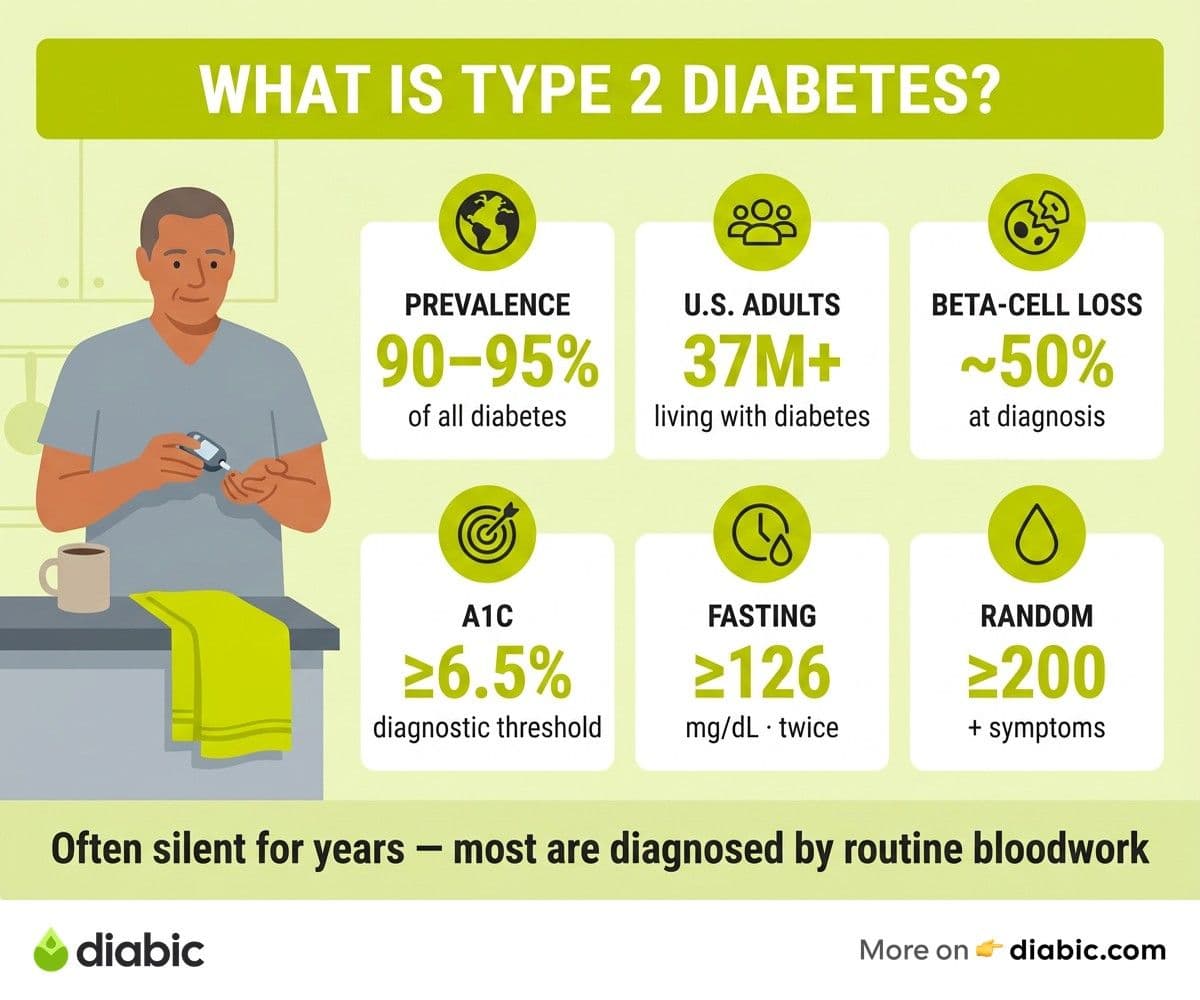
Type 2 is by far the most common form, making up roughly 90 to 95 percent of all diabetes cases worldwide. The American Diabetes Association and the World Health Organization both report that more than 37 million Americans and over 460 million adults globally live with diabetes, with the overwhelming majority diagnosed with type 2. Diagnosis is climbing in younger adults and even in children, which is changing how providers screen and counsel patients.
The biology has two main moving parts. Insulin resistance, where muscle, liver, and fat cells stop responding to insulin, is the early driver. Beta cell decline, where the insulin-producing cells in the pancreas slowly stop functioning at full capacity, is the later one. These two pieces overlap, and most people diagnosed with type 2 have both happening at the same time.
A common point of confusion is the difference between type 2 and type 1. Type 1 is an autoimmune condition where the immune system destroys the insulin-producing cells, requiring insulin from day one. Type 2 still produces insulin in most cases. The bodies behave differently, the treatments differ, and lumping them together does both groups a disservice.
How Type 2 Diabetes Develops
Type 2 diabetes does not appear overnight. It develops gradually, often over a decade or more, with insulin resistance setting in long before any number on a lab report crosses into diabetes territory. The NIDDK guide on type 2 diabetes describes this slow build clearly.
Insulin resistance as the starting point
Insulin resistance means the body's cells stop responding to insulin's signal. Imagine insulin knocking on a cell door asking it to open up and let glucose in. In a healthy body, the door opens easily. In an insulin-resistant body, the door is jammed. The pancreas responds by producing more insulin, sometimes two or three times the normal amount, to push the door open.
For years, this extra insulin can keep blood sugar in the normal range. Many people in this stage feel fine and get a clean A1C, even though the underlying machinery is straining. Risk factors that contribute to insulin resistance include excess visceral fat, physical inactivity, certain genetic variants, chronic stress, sleep deprivation, and some medications.
From normal to prediabetes to type 2
The path usually moves in three stages. Normal blood sugar gives way to prediabetes, where A1C runs between 5.7 and 6.4 percent or fasting glucose runs between 100 and 125 mg/dL. Roughly one in three American adults has prediabetes, and the majority do not know it. Without intervention, many move into type 2 within five to ten years.
Type 2 is diagnosed at an A1C of 6.5 percent or higher, a fasting glucose of 126 mg/dL or higher confirmed twice, or a random glucose above 200 mg/dL with symptoms. Our deeper look at how type 2 diabetes progresses covers what that trajectory tends to look like over years of management.
Beta cell burnout and declining insulin production
Beta cells are the insulin-producing cells in the pancreas. When they spend years overworking to compensate for insulin resistance, many of them eventually fail. Estimates suggest people diagnosed with type 2 have already lost 50 percent or more of their beta cell function by the time their A1C tips into diagnosis range.
This explains why early intervention matters. Catching prediabetes or early type 2 gives the remaining beta cells a chance to recover some function, especially with weight loss, increased activity, and dietary changes. Late intervention can still stabilize the condition, but the runway for full remission narrows over time.
Why it can develop silently
Type 2 often develops without obvious symptoms for years. Blood sugar can run elevated enough to cause subtle damage to nerves, blood vessels, and kidneys without producing the dramatic thirst and weight loss seen in type 1. By the time symptoms surface, the underlying process may have been quietly active for a long time.
That is why screening matters. The CDC's type 2 diabetes overview recommends screening for adults 35 and older, or earlier for those with a higher BMI plus another risk factor, repeated every three years if results are normal.
Type 2 Diabetes Symptoms to Recognize
When type 2 diabetes symptoms do appear, they are often easy to miss because they look like ordinary tiredness, ordinary thirst, or ordinary slow recovery from minor infections. The classic symptoms are worth knowing because they often nudge people toward the lab work that produces a diagnosis.
Increased thirst and frequent urination are the most reliable early signals. When blood sugar runs above the kidney's threshold for reabsorption, glucose spills into the urine and pulls water with it. The body responds by triggering thirst, and the cycle continues.
Fatigue and blurred vision often follow. Cells starved of glucose, even with high levels in the blood, send tiredness signals. High glucose also affects the lens of the eye, causing temporary vision changes that usually resolve as blood sugar stabilizes. Slow wound healing, frequent yeast or urinary infections, and tingling in the hands or feet round out the common list.
Many people are diagnosed without ever noticing these signs. Routine bloodwork, a pre-surgery screening, or a life insurance physical catches the elevated A1C. Our piece on type 2 diabetes symptoms that creep up slowly covers the subtle ones that most people only recognize in hindsight, and the Mayo Clinic overview of symptoms and causes is a useful clinical reference.
Causes and Risk Factors
The causes of type 2 diabetes are a mix of genetics, lifestyle, and environment. No single factor explains every case, and the popular framing of "you ate too much sugar" misses most of the picture. Insulin resistance is influenced by what you eat, but also by how much you move, how well you sleep, your stress levels, your body composition, and the genes you inherited.
Family history is a strong signal. Having a first-degree relative with type 2 doubles your risk roughly. Some genetic variants influence beta cell function and insulin sensitivity directly. Ethnicity also plays a role: prevalence is higher in Black, Hispanic, Native American, Pacific Islander, and Asian American populations, partly due to genetics and partly due to systemic factors like access to care and culturally available foods.
Lifestyle factors are real, but they are the part of the picture most often misrepresented. Excess weight, particularly visceral fat around the abdomen, raises risk substantially. Sedentary work and limited physical activity contribute. Diets high in ultra-processed foods, sugary drinks, and refined carbs make insulin resistance worse over time. Chronic poor sleep and chronic stress both nudge the body toward insulin resistance through hormonal pathways.
Other contributors deserve mention. Polycystic ovary syndrome, or PCOS, increases risk through its link to insulin resistance. A history of gestational diabetes raises lifetime risk of type 2. Age is a factor, with onset typically rising after 35, though that age is dropping. Our deeper guide to type 2 diabetes causes and who is at risk walks through each in more detail.
How Type 2 Diabetes Is Diagnosed
Diagnosis runs through standard blood tests, all of which are widely available and covered by most insurance plans. Each test measures a slightly different aspect of glucose metabolism, and providers may use one or a combination depending on the situation.
The A1C test is the most common screening tool. It reflects average blood sugar over two to three months by measuring how much glucose has bonded to red blood cells. An A1C below 5.7 percent is normal. Between 5.7 and 6.4 percent is prediabetes. At or above 6.5 percent on two separate tests indicates diabetes.
A fasting blood glucose test measures glucose after at least eight hours without food. Below 100 mg/dL is normal, 100 to 125 mg/dL is prediabetes, and 126 mg/dL or above on two tests is diabetes. The oral glucose tolerance test, or OGTT, involves drinking a sweetened solution and checking glucose two hours later. Above 200 mg/dL at the two-hour mark indicates diabetes. A random blood glucose test taken without fasting can confirm diabetes when it is above 200 mg/dL in someone with symptoms.
Most providers run two tests on different days before confirming a diagnosis, unless symptoms are dramatic or numbers are clearly elevated. If your A1C lands at the diagnostic threshold, ask which test was used, what your number was, and whether a confirmation test is needed.
Treatment and Management Overview
Type 2 diabetes treatment usually starts with lifestyle changes and one oral medication, then evolves over time as A1C, kidney function, and individual response shift. The goal is not a single perfect plan. The goal is a plan that fits your life and that gets adjusted as the condition does.
Lifestyle is the foundation. Modest weight loss of 5 to 7 percent of body weight has been shown to drop A1C meaningfully and even produce remission in some recently diagnosed people. Movement, especially after meals, lowers blood glucose acutely and improves insulin sensitivity over time. Dietary patterns matter more than any single food rule, with Mediterranean, lower-carb, and DASH-style eating all showing strong evidence in clinical trials.
Metformin for type 2 diabetes remains the first-line medication for most newly diagnosed adults. It reduces glucose production by the liver, modestly improves insulin sensitivity, and has decades of safety data. Most providers start at 500 mg once daily and titrate up over a few weeks to manage side effects.
Beyond metformin, modern type 2 treatment has grown substantially. GLP-1 receptor agonists like semaglutide and tirzepatide offer strong glucose lowering plus meaningful weight loss. SGLT2 inhibitors lower glucose by increasing urinary excretion and have additional cardiovascular and kidney benefits. Insulin enters the picture for some people, often years into the condition, and is not a sign of failure. Some people benefit from combination therapy from the start.
Blood sugar monitoring fits the medication. People on lifestyle and metformin alone may check less often, while those on insulin or sulfonylureas check more. Most providers aim for an A1C below 7 percent for general adults, with individualized targets above or below depending on age, comorbidities, and hypoglycemia risk.
Annual screenings catch complications early. The standard set includes a dilated eye exam, a urine albumin test, a foot exam, a lipid panel, and blood pressure checks. None of these tests are punitive. They protect long-term quality of life.
Living Well With Type 2 Diabetes
The phrase "living well" gets thrown around in chronic illness writing until it loses meaning. In type 2, it specifically describes building habits that keep blood sugar in range without dominating your daily mental space. The honest version is that it takes a year or two to settle into a routine that feels natural.
From my experience, after 14 years of managing diabetes, the biggest mindset shift was treating diabetes as part of life rather than a side project running outside of it. Meals are planned with carbs in mind because that is just how meals work now. A walk after dinner is non-negotiable, not because it feels noble but because it is part of how the evening looks. The energy I used to spend resisting the diagnosis went into building the routines instead.
Sustainable habits beat heroic ones. A 20 minute walk five days a week beats a 90 minute workout you do twice in January. A dinner that hits a consistent carb range beats a perfect day surrounded by chaotic ones. The emotional and mental health dimension matters here too. Diabetes distress, depression, and anxiety are common in type 2, and addressing them improves glucose outcomes as much as adjusting medication does.
Support systems make a real difference. Diabetes communities, both online and in person, normalize the daily reality and surface practical tips you will not get in a 15 minute appointment. Family members who learn the basics, even just understanding what a low feels like, take pressure off the person doing the management. For readers who also want to know how their condition compares to type 1, our piece on type 1 vs type 2 differences lays out the contrast clearly.
FAQ
What causes type 2 diabetes?
Type 2 diabetes is caused by a combination of insulin resistance, where cells stop responding to insulin properly, and progressive decline in insulin production by the pancreas. Genetics play a significant role, but lifestyle factors like physical inactivity, poor diet, excess weight, chronic stress, and inadequate sleep greatly increase risk. Unlike type 1 diabetes, type 2 is not an autoimmune condition.
How is type 2 diabetes different from type 1?
In type 1, the immune system destroys insulin-producing cells, so people with type 1 require insulin from day one. In type 2, the body still makes insulin but cannot use it effectively, and the pancreas gradually produces less over time. Type 2 develops slowly and is often managed initially with lifestyle changes and oral medications, while type 1 always requires insulin therapy.
Can type 2 diabetes go away on its own?
Type 2 diabetes does not resolve without sustained changes. Some people achieve remission, defined as an A1C below 6.5 percent without medication for at least three months, through significant weight loss, dietary changes, and increased activity. Remission is most likely when intervention happens early in the condition. Long-term monitoring is still required because the underlying predisposition remains.
What is a normal A1C for someone with type 2 diabetes?
The general target for adults with type 2 diabetes is an A1C below 7 percent, though individual targets may be tighter or looser depending on age, complications, and medication regimen. An A1C below 6.5 percent without medication typically meets the definition of remission. Your provider will set a target based on your specific situation.
Is type 2 diabetes serious?
Type 2 diabetes is a serious chronic condition that can lead to complications including heart disease, kidney disease, vision loss, and nerve damage if blood sugar stays uncontrolled for years. With effective management through lifestyle changes, medication, and regular screenings, most people with type 2 diabetes live full, active lives and significantly reduce their long-term risks.
The plain answer to what is type 2 diabetes is that it is a manageable, well-studied condition shaped by both biology and daily habits, and the trajectory you walk depends heavily on the choices you make in the first year after diagnosis. Bring your A1C results to your next appointment, ask your provider what target makes sense for your situation, and pick one or two habits to focus on rather than trying to fix everything at once.
Shahriar P. Shuvo is the founder of Diabic. He has lived with diabetes for over 14 years, and built Diabic to deliver the practical, evidence-based self-management tools he wished existed when he was first diagnosed. By trade, Shahriar is a senior design and frontend engineer with 6+ years shipping products at Agora, Timescale (now Tiger Data), and ShareTrip. He writes from the intersection of lived diabetes experience and product craft, focused on what works in daily management rather than what sounds good in a textbook.
Medically reviewed by
Dr. Shanto Arian is an internal medicine physician now specializing in clinical and aesthetic dermatology, with a parallel academic focus on epidemiology and public health. He holds an MBBS, MPH, MSc (UK), MRCP (UK), MRCPI (Ireland), Diploma in Dermatology (UK), and Diploma in Aesthetic Medicine (USA). Dr. Arian trained in internal medicine, including hospital work on hematology cases such as graft-versus-host disease, before moving toward dermatology. Skin is one of the earliest places diabetes shows itself, from acanthosis nigricans and diabetic dermopathy to slow foot wound healing, and that intersection is where his clinical and Diabic-review work meet. On Diabic, Dr. Arian medically reviews content on diabetes diagnosis, complications, dermatologic manifestations, and pharmacotherapy, ensuring every claim aligns with current ADA, NICE, and peer-reviewed literature.
More from Diabetes Knowledge
View all
6 Safe Dessert for Gestational Diabetes Recipes You Can
Six dessert for gestational diabetes recipes that satisfy your sweet tooth without spiking blood sugar, with carb counts and pairing tips you can use.

8 High Fiber Foods That Help with Prediabetes
Add these 8 high fiber foods for prediabetes to slow glucose absorption, support steady blood sugar, and meet the daily fiber target most people miss.

Mediterranean Diet for Prediabetes: A Practical Guide
The mediterranean diet for prediabetes is one of the best-studied eating patterns for prevention. Here is what to eat, what to avoid, and how to start.
Clinician-reviewed habits, plain-language guides, and honest answers - the small shifts that make living with diabetes feel lighter, every day.