Early Signs of Diabetes You Might Not Expect
The early signs of diabetes often look nothing like you expect. Tingling feet, gum issues, and skin changes can all signal rising blood sugar.

In this article(11)
The early signs of diabetes often look nothing like what you would expect. Tingling feet, gum problems, and skin changes can all point to rising blood sugar long before the classic symptoms appear. Catching these unexpected clues early gives you the best chance to act before diabetes takes hold.
Most people know to watch for thirst, frequent urination, and unexplained weight loss. Far fewer know that recurring gum infections, slow-healing cuts, or sudden vision changes can mean the same thing. Many of these signals get filed under stress, aging, or a busy season of life.
Unexpected Early Signs of Diabetes
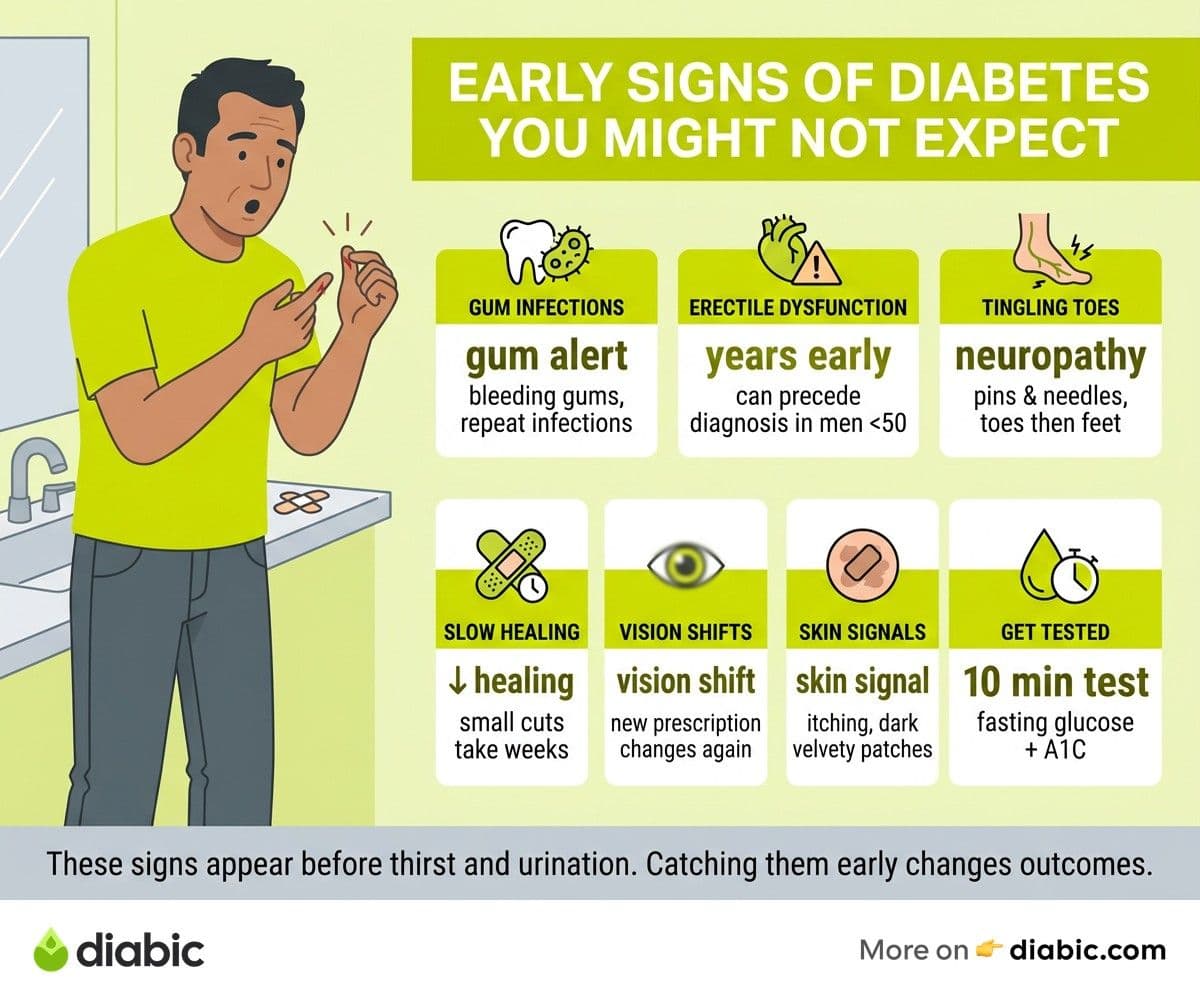
The classic symptoms get all the attention, but several less obvious ones tend to show up first, especially in type 2 diabetes. The American Diabetes Association lists a wider range of symptoms than most patients expect. Here are six that catch people off guard.
Frequent gum infections or bleeding gums High blood sugar feeds the bacteria in your mouth, leading to gum inflammation, recurrent infections, and bleeding when you brush. Periodontal disease and diabetes have a two-way relationship: each one makes the other worse.
Erectile dysfunction in men Elevated glucose damages the small blood vessels and nerves needed for erectile function. ED can appear years before a diabetes diagnosis and is often the first symptom that drives men under 50 to a doctor.
Tingling or numbness in fingers and toes This is early peripheral neuropathy. High blood sugar damages the smallest nerve fibers first, often producing a pins-and-needles sensation in the feet that comes and goes. Many people attribute it to bad shoes or sitting too long.
Slow-healing cuts and bruises Elevated glucose impairs circulation and immune function, both of which are needed for wound healing. A small cut on your hand that takes two weeks to scab over instead of three days is worth noticing.
Sudden changes in vision High blood sugar pulls fluid from the lens of the eye, causing temporary blurring. Vision can fluctuate over days or weeks. Many people get a new prescription, only to need another one a few months later as their blood sugar continues to climb.
Unexplained skin itching Persistent itching, especially in the lower legs, can signal poor circulation or an early skin infection driven by high blood sugar. Dark, velvety patches around the neck or armpits (a condition called acanthosis nigricans) are an even stronger insulin resistance signal.
Early Diabetes Symptoms in Men vs. Women
Symptoms for diabetes in men and women often overlap, but a few differences are worth knowing.
In men, sugar diabetes symptoms in men include erectile dysfunction, which can predate diagnosis by several years. Lower testosterone levels are also more common with type 2 diabetes, leading to fatigue, reduced muscle mass, and low libido. Recurrent jock itch or fungal infections in the groin can also be a clue.
In women, symptoms often present as recurring urinary tract infections (UTIs) and yeast infections. Polycystic ovary syndrome (PCOS) is closely linked to insulin resistance and can be an early indicator that diabetes risk is elevated. Our deeper look at diabetes symptoms in women covers what to watch for in more detail.
Shared symptoms across both groups include fatigue, blurred vision, slow wound healing, frequent thirst and urination, and tingling extremities. Anyone experiencing several of these together should have a fasting glucose or A1C test, regardless of gender.
From my experience: When I look back at the months before my diagnosis, the obvious symptoms (thirst and weight loss) were the loudest, but the quiet ones came first. A small cut on my finger took weeks to close. My vision changed twice in a year. I assumed it was stress and a long workweek. The blood test that finally explained it took 10 minutes.
Why These Signs of Diabetes Are Easy to Dismiss
Most early signs of diabetes are subtle, slow to develop, and easy to attribute to something else. Slow wound healing gets blamed on dry skin. Fatigue gets blamed on a stressful job. Tingling feet get blamed on shoes or posture. Gum problems get blamed on flossing too hard or too little.
The other reason these signs go unrecognized is that they overlap with normal aging. People in their 50s and 60s often expect more aches, slower healing, and changes in vision. The signs that would alarm a 25-year-old get filed as "just getting older" by someone older.
Type 2 diabetes can develop quietly over years. Blood sugar rises gradually, the body adapts, and you do not notice the change until it crosses a tipping point. By then the diagnosis arrives with a higher A1C and sometimes early complications already in motion. The NIDDK notes that many people only learn they have type 2 diabetes during routine bloodwork or after a dental, eye, or foot exam reveals related issues.
This is why routine screening matters even when you feel fine. Adults over 35, anyone with a family history, and those carrying extra weight should have an A1C or fasting glucose test every one to three years. The test is simple, cheap, and often the only way to catch prediabetes or early type 2 diabetes before symptoms become obvious. Understanding the type 1 vs type 2 differences can also help you put your symptoms in context.
From Early Signs to a Diagnosis: What Happens Next
If you suspect early signs, ask your provider for one of three blood tests. Each has a defined diagnostic threshold.
Fasting plasma glucose (FPG): Measures blood sugar after at least 8 hours without food. A reading of 100-125 mg/dL signals prediabetes. 126 mg/dL or higher on two separate tests confirms diabetes.
Hemoglobin A1C: Reflects your average blood sugar over the past 2-3 months. 5.7-6.4 percent is the prediabetes range. 6.5 percent or higher confirms diabetes.
Oral glucose tolerance test (OGTT): Measures how your body responds to a sugar drink. A 2-hour reading of 140-199 mg/dL is prediabetes; 200 mg/dL or higher is diabetes.
A single borderline reading is not a diagnosis. Most providers will repeat the test or use a second method to confirm. Borderline results land you in the prediabetes range, which is a meaningful warning but also a window of opportunity. Lifestyle changes can often return blood sugar to a normal range. Our guide to diabetes symptoms that sneak up covers more on what to watch for as the condition develops. The Mayo Clinic also has thorough information on prediabetes and how it transitions to type 2.
If you have several risk factors but no symptoms, you can still request a test. Insurance and most public health guidelines support routine screening for adults over 35, anyone with overweight or obesity, and people with a family history.
Who Should Pay Extra Attention to Early Signs
Some groups are at meaningfully higher risk and should treat any of the unexpected signs above as worth a doctor visit.
- Adults over 35 with a family history. A parent or sibling with type 2 diabetes raises your risk substantially.
- People with overweight or obesity. Excess weight, especially around the abdomen, drives insulin resistance.
- History of gestational diabetes. Women who had GD during pregnancy face a 7-10 times higher risk of type 2 diabetes within 5-10 years.
- Sedentary lifestyle and high-stress occupations. Long hours at a desk, poor sleep, and chronic stress all impair glucose handling.
- People of South Asian, Hispanic, Black, Pacific Islander, or Native American descent. Genetic factors raise risk at lower BMI thresholds.
- PCOS or known insulin resistance. Already a metabolic warning sign.
Anyone in these groups should consider screening every one to three years even without symptoms. If symptoms do appear, do not wait for an annual checkup. Our piece on insulin resistance symptoms covers the metabolic pattern that often precedes diabetes by years.
Actionable Steps After Spotting Early Signs
If you have noticed one or more of these signs, three steps make the biggest difference in the next 30 days.
Track your symptoms in a simple journal. Note when they appear, how often, and what you were doing or eating beforehand. This information helps your provider see patterns that a single appointment might miss. Phone notes are fine; do not overthink the format.
Schedule a comprehensive metabolic panel. Ask specifically for A1C and fasting glucose. If you fit one or more risk groups, ask whether a lipid panel and thyroid check are also worth doing while you are at it. Most insurance plans cover routine diabetes screening for adults over 35.
Begin small lifestyle adjustments while waiting for results. Walk 10-15 minutes after meals, swap sugary drinks for water or unsweetened tea, and add an extra serving of vegetables to dinner. These changes do not depend on a diagnosis. They help if you have prediabetes, they help if you do not, and they are easier to start while you have the motivation. Our guide to prediabetes symptoms covers what to expect if your numbers come back in that range.
If your test results land in the prediabetes range, you have time and options. Lifestyle changes can return blood sugar to normal. If they confirm diabetes, you also have time and options, just a different set. The point is to know early so you can choose. Per the CDC, more than 8 million American adults have undiagnosed type 2 diabetes today, which is why early signs matter so much.
FAQ
What are the early warning signs of diabetes?
Early warning signs include increased thirst and urination, unexplained fatigue, blurred vision, slow wound healing, and tingling in the hands or feet. Less obvious signs can include recurring gum infections, skin changes, and for men, erectile dysfunction. Many of these develop gradually over months and are easy to mistake for stress or aging.
Can you have diabetes without knowing it?
Yes. Millions of people live with undiagnosed type 2 diabetes because the symptoms develop slowly and can be mild enough to ignore. Prediabetes is even more common and almost always goes unnoticed without blood testing. Routine screenings are the most reliable way to catch diabetes before symptoms become obvious.
How quickly do early signs of diabetes progress?
Type 2 diabetes can develop over years with mild symptoms that come and go. Type 1 diabetes tends to develop quickly, often over weeks, with more dramatic symptoms like severe thirst, weight loss, and fatigue. Any sudden, intense symptoms warrant immediate medical attention.
Should I get tested if I only have one early sign?
If you have one symptom and no risk factors, mention it to your provider at your next visit. If you have one symptom and one or more risk factors (family history, overweight, age over 35), request testing now. The early signs of diabetes are easier to act on the sooner you catch them.
Shahriar P. Shuvo is the founder of Diabic. He has lived with diabetes for over 14 years, and built Diabic to deliver the practical, evidence-based self-management tools he wished existed when he was first diagnosed. By trade, Shahriar is a senior design and frontend engineer with 6+ years shipping products at Agora, Timescale (now Tiger Data), and ShareTrip. He writes from the intersection of lived diabetes experience and product craft, focused on what works in daily management rather than what sounds good in a textbook.
Medically reviewed by
Dr. Rezwana Parvin Rumpa is an obstetrics and gynaecology specialist with clinical focus on gestational diabetes, PCOS, and fertility. She holds the MRCOG (Final Part) from the Royal College of Obstetricians and Gynaecologists in London, the MRCPI (Final Part) from the Royal College of Physicians of Ireland, and an MBBS from Shaheed Monsur Ali Medical College under Dhaka University. Dr. Rumpa serves as a Senior Medical Officer in the Obs and Gynae department at BRB Hospitals Ltd, where she has spent three years managing prenatal care, emergency obstetric cases, and women's-health surgery. On Diabic, she medically reviews content for women living with diabetes, with particular attention to pregnancy, PCOS, and reproductive-health intersections.
More from Diabetes Knowledge
View all
6 Safe Dessert for Gestational Diabetes Recipes You Can
Six dessert for gestational diabetes recipes that satisfy your sweet tooth without spiking blood sugar, with carb counts and pairing tips you can use.

8 High Fiber Foods That Help with Prediabetes
Add these 8 high fiber foods for prediabetes to slow glucose absorption, support steady blood sugar, and meet the daily fiber target most people miss.

Mediterranean Diet for Prediabetes: A Practical Guide
The mediterranean diet for prediabetes is one of the best-studied eating patterns for prevention. Here is what to eat, what to avoid, and how to start.
Clinician-reviewed habits, plain-language guides, and honest answers - the small shifts that make living with diabetes feel lighter, every day.