Yoga vs Walking for Diabetes: Which Wins (2026)
Yoga vs walking for diabetes: we compare blood sugar impact, stress reduction, and time required so you can pick what fits your life and goals.

In this article(9)
The yoga vs walking for diabetes debate tends to get framed as a winner-takes-all question, and that framing leaves a lot of people stuck. The honest answer is that both forms of movement have strong research behind them, and they affect blood sugar through different but complementary mechanisms. If you only have twenty minutes today, you probably want to know which one moves the needle more, and the answer changes depending on what you ate, how you slept, and what kind of stress you are carrying.
We see this question come up constantly in the diabetes community, and the people who get the best results usually stop choosing sides. They use walking when they need a quick post-meal glucose drop, and they reach for yoga when stress is spiking their numbers or their joints need a gentler day. This guide walks through the evidence for each, where the trade-offs sit, and how to build a weekly rhythm that uses both without burning you out.
From my experience: A fifteen-minute walk after lunch is the single most reliable tool I have for shaving the top off a post-meal spike, and my Dexcom trace shows it within twenty minutes most days. On a stressful work week, the same lunch can climb thirty points higher than usual, and that is when I started leaning on a short evening yoga session to bring the next day's fasting number back down. Neither one alone gets the whole job done for me.
How Yoga Affects Blood Sugar
Yoga works on blood sugar through a quieter, more indirect path than walking. The combination of slow movement, sustained postures, and conscious breathing activates the parasympathetic nervous system, which lowers cortisol and helps the liver release less glucose into the bloodstream. Over weeks and months, regular yoga practice also builds isometric muscle strength, and stronger muscles take up glucose more efficiently. This is why people who stick with a practice often see gradual improvements in fasting numbers and overall variability.
A systematic review published in Diabetes Care and related meta-analyses found that regular yoga practice can produce A1C reductions in the range of 0.3 to 0.5 percent for adults with type 2 diabetes, alongside modest drops in fasting plasma glucose and waist circumference. That is a meaningful clinical effect, especially for people whose numbers are stress-driven rather than purely diet-driven. Specific yoga poses for diabetes such as seated forward folds, twists, and gentle inversions are often highlighted because they put light pressure on the abdominal organs and may support digestion and circulation.
Yoga also tends to be easier on joints than walking on hard pavement, which matters if you are dealing with neuropathy, knee pain, or balance issues. The breathing component alone can shift glucose readings during high-stress periods, because cortisol drives hepatic glucose output regardless of what you ate. From our experience working with readers, yoga shines when stress, sleep, and emotional load are pushing numbers up, even when food intake has barely changed.
How Walking Affects Blood Sugar
Walking is the most studied form of movement in diabetes research, and the data is consistent. Brisk walking activates the large muscles in your legs, and contracting muscles pull glucose out of the bloodstream through pathways that do not even require insulin. This is why a short walk after eating can produce such a noticeable effect on post-meal glucose, often within fifteen to twenty minutes of starting.
Research summarized in the Journal of Sports Sciences and broader studies on post-meal activity show that even ten to fifteen minutes of light walking after a meal can lower the post-meal glucose peak by around 12 to 22 percent compared with sitting. The American Diabetes Association recommends at least 150 minutes per week of moderate-intensity aerobic activity for adults living with diabetes, and walking is the single most accessible way to hit that target. No equipment, no studio fee, no learning curve.
Walking also has a strong cardiovascular profile, which matters because heart disease remains one of the most common complications associated with long-term diabetes. The WHO physical activity guidelines reinforce the same numbers and emphasize that any movement is better than none. If you sit at a desk most of the day, breaking up sitting time with short walks, or trying desk exercises for blood sugar, can layer additional benefit on top of a dedicated walk.
Yoga vs Walking for Diabetes: Head-to-Head Comparison
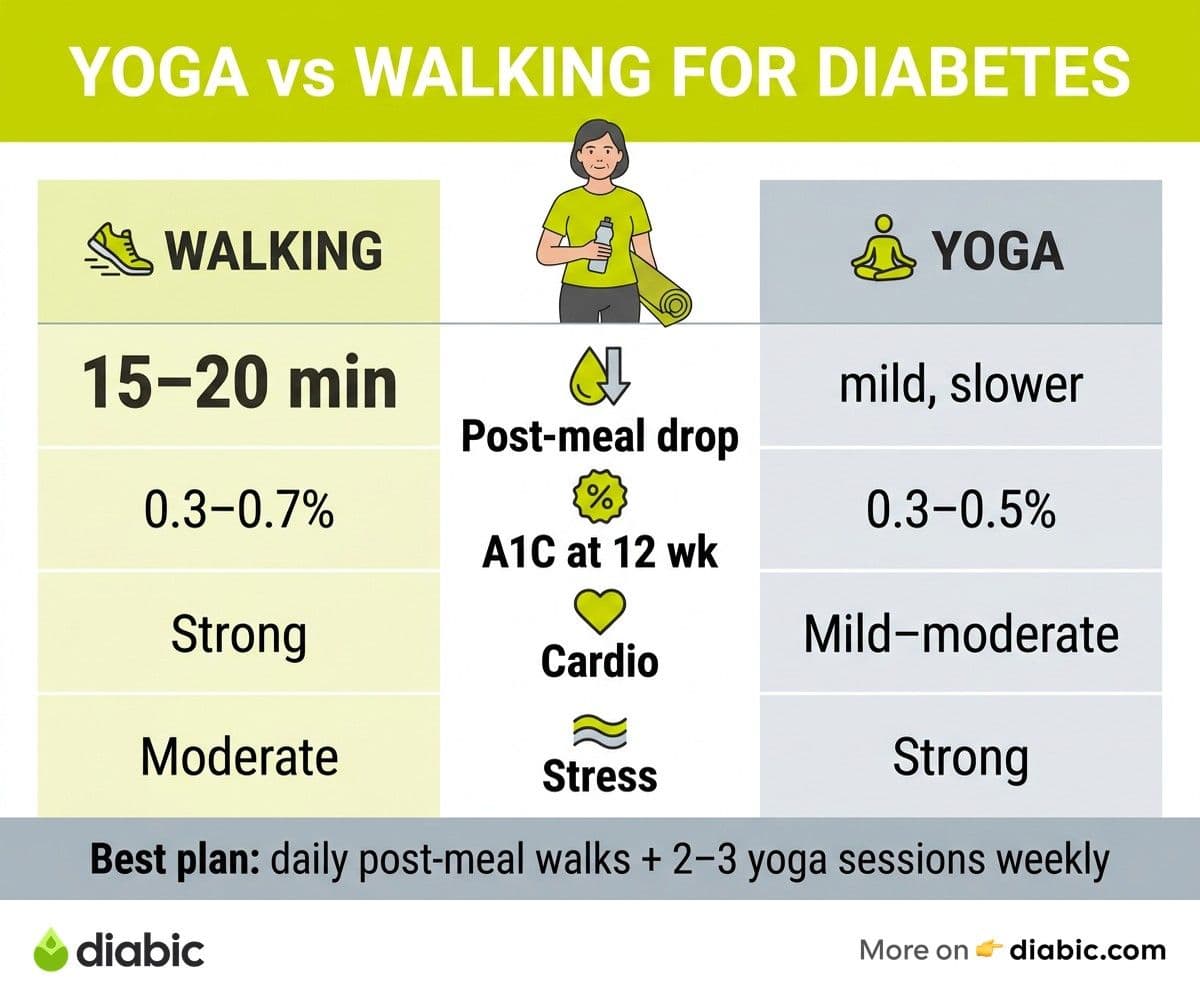
When we put yoga and walking side by side, the picture gets clearer. Walking wins on speed of effect and on cardiovascular fitness, which makes it the better tool for immediate glucose response and for hitting the standard 150-minute weekly activity target. Yoga wins on stress reduction, flexibility, joint friendliness, and on improving glucose variability driven by emotional load. Neither is universally superior, and the best yoga routine for type 2 diabetes will not replace the metabolic punch of a brisk walk, just as walking will not deliver the parasympathetic calm of a slow flow.
Here is how the two compare across the factors that matter most for daily diabetes self-care:
A useful way to read this table is to match the column to the problem you are trying to solve. If your fasting numbers are fine but post-meal spikes are stubborn, lean into walking. If your fasting numbers creep up on stressful weeks and your shoulders live near your ears, lean into yoga. Most readers benefit from both, and that brings us to how to combine them.
The Best Approach: Combine Both
The most sustainable plan is rarely one or the other. We usually suggest anchoring the week with short post-meal walks, because they protect against glucose spikes you cannot always predict from the food alone. Then we layer two to three yoga sessions per week to handle stress, mobility, and the slower work of building insulin sensitivity. Even a ten-minute session of either counts, and consistency matters more than length.
If energy is the limiting factor, our diabetes fatigue management guide goes deeper into pacing, but the short version is that yoga is often the better choice on low-energy days. A gentle [chair yoga for people with diabetes](/yoga-and-meditation/gentle-chair-yoga-routine-for-people with diabetes) sequence can move blood sugar without draining your tank. On higher-energy days, a longer walk or a brisk walk plus a short yoga cooldown gives you the best of both. Building this kind of flexibility into your week protects the habit, which is the real goal.
A simple weekly template that works for many readers looks like this:
- Three to five short walks after meals, ten to fifteen minutes each
- Two longer walks of thirty minutes for cardiovascular work
- Two to three yoga sessions of twenty to forty-five minutes
- One full rest day with optional gentle stretching
You can move pieces around, swap a walk for yoga when the weather is bad, or do both on the same day if that fits your schedule. The structure is a starting point, not a prescription.
Building a Sustainable Weekly Rhythm
The mistake we see most often is people treating movement as a switch instead of a dial. They go all-in for two weeks of daily one-hour sessions, then crash and stop entirely. Diabetes is a long game, and the activity plan that survives a stressful work week, a head cold, and a holiday weekend is the one that pays off in your A1C three months from now. Start smaller than feels useful, and add only after the smaller version has been steady for two to three weeks.
Pair movement with something you already do every day. Walks attach well to meals, dog routines, and phone calls. Yoga attaches well to mornings before checking your phone or to the wind-down hour before bed. When the cue is automatic, the behavior runs on less willpower, which matters on the days when willpower is in short supply. Tracking your blood sugar before and after a session for a week or two can also show you which type of movement has the strongest effect on your particular body, since the research averages do not always match individual response.
Finally, give yourself permission to count short sessions. A five-minute walk around the block after dinner is not a failed thirty-minute walk. It is a complete unit of glucose-lowering activity in its own right, and stacking those small wins is how most lasting progress in diabetes self-care actually happens.
FAQ
Is yoga or walking better for blood sugar?
Walking tends to lower blood sugar faster, especially after meals, because contracting leg muscles pull glucose from the bloodstream within minutes. Yoga works more slowly through stress reduction, improved insulin sensitivity, and better sleep, with measurable A1C effects after several weeks of consistent practice. For day-to-day glucose response, walking has the edge. For long-term metabolic and emotional health, yoga adds benefits that walking alone does not cover, which is why combining the two usually outperforms either one in isolation.
Should people with diabetes do yoga or walk more?
Most adults living with diabetes will benefit from prioritizing walking for the bulk of their weekly movement, since it is the easiest way to hit the 150-minute aerobic target the ADA recommends. Yoga belongs in the plan as a complement, especially for stress management, flexibility, and recovery. If you have neuropathy, joint pain, or balance concerns, the ratio may shift toward yoga and away from high-impact walking. Talk with your healthcare provider about the right mix for your situation, particularly if you take insulin or medications that can cause low blood sugar during exercise.
Can yoga replace walking for diabetes management?
Yoga can be a primary form of movement for people who cannot walk comfortably, and gentler styles like chair yoga still produce measurable benefits. For most people, though, yoga complements walking rather than replacing it, because the cardiovascular and post-meal glucose effects of walking are hard to match. If walking is not an option, look for more vigorous yoga styles like vinyasa or power yoga, and combine them with other accessible aerobic work such as swimming or stationary cycling.
The honest takeaway on yoga vs walking for diabetes is that the question only forces a choice when you treat the two as competitors. Stack short post-meal walks for the fast glucose work, fold in a few yoga sessions for stress and mobility, and let your numbers tell you whether to lean one way or the other in any given week. Talk to your doctor before sharply increasing intensity if you take insulin or sulfonylureas so the activity plan supports your numbers rather than undermining them.
Shahriar P. Shuvo is the founder of Diabic. He has lived with diabetes for over 14 years, and built Diabic to deliver the practical, evidence-based self-management tools he wished existed when he was first diagnosed. By trade, Shahriar is a senior design and frontend engineer with 6+ years shipping products at Agora, Timescale (now Tiger Data), and ShareTrip. He writes from the intersection of lived diabetes experience and product craft, focused on what works in daily management rather than what sounds good in a textbook.
Medically reviewed by
Dr. Shanto Arian is an internal medicine physician now specializing in clinical and aesthetic dermatology, with a parallel academic focus on epidemiology and public health. He holds an MBBS, MPH, MSc (UK), MRCP (UK), MRCPI (Ireland), Diploma in Dermatology (UK), and Diploma in Aesthetic Medicine (USA). Dr. Arian trained in internal medicine, including hospital work on hematology cases such as graft-versus-host disease, before moving toward dermatology. Skin is one of the earliest places diabetes shows itself, from acanthosis nigricans and diabetic dermopathy to slow foot wound healing, and that intersection is where his clinical and Diabic-review work meet. On Diabic, Dr. Arian medically reviews content on diabetes diagnosis, complications, dermatologic manifestations, and pharmacotherapy, ensuring every claim aligns with current ADA, NICE, and peer-reviewed literature.
More from Living with Diabetes
View all
A Gentle Chair Yoga Routine for people with diabetes
A gentle chair yoga for people with diabetes routine with safe poses, modifications for neuropathy, retinopathy, and joint pain, plus tips for older.

Shift Work and Diabetes: Managing Irregular Hours
Shift work and diabetes is a tough combination. Learn how to manage meals, sleep, medication, and blood sugar when your hours rotate or flip overnight.

Dating with Diabetes: When to Tell a New Partner
Dating with diabetes brings unique disclosure questions. Here is when to tell a new partner, what to say, and how to handle the conversation with.
Clinician-reviewed habits, plain-language guides, and honest answers - the small shifts that make living with diabetes feel lighter, every day.