7 Yoga Poses for Diabetes That May Help Lower Blood Sugar
Explore seven gentle yoga poses for diabetes that may help support blood sugar, reduce stress, and improve insulin sensitivity. Beginner friendly.

In this article(12)
- How Yoga Poses for Diabetes Help Lower Blood Sugar
- 1. Seated Forward Bend (Paschimottanasana)
- 2. Legs Up the Wall (Viparita Karani)
- 3. Bridge Pose (Setu Bandhasana)
- 4. Child's Pose (Balasana)
- 5. Supine Spinal Twist (Supta Matsyendrasana)
- 6. Warrior II (Virabhadrasana II)
- 7. Corpse Pose (Savasana)
- Building a Sustainable Yoga Habit
If the word "yoga" makes you picture pretzel-shaped people on a beach in Bali, we get it. The good news is that yoga poses for diabetes do not require flexibility, fancy clothing, or a six-month retreat in the mountains. The seven poses we share below are gentle, accessible, and grounded in research suggesting that regular yoga practice may help support blood sugar, lower stress hormones, and improve how your body uses insulin.
Yoga sits in a sweet spot for people managing diabetes because it blends muscle engagement with deep relaxation. Movement helps your muscles take up glucose, while the breathing and stillness components calm the nervous system and may reduce cortisol, a stress hormone that can push blood sugar higher. Five to fifteen minutes a few days a week can begin to shift how you feel and how your numbers respond.
Before you roll out a mat, talk to your doctor about adding yoga to your routine, especially if you have neuropathy, retinopathy, uncontrolled blood pressure, or any condition that affects balance. We will note common modifications throughout, but your healthcare team knows your full picture. Treat this article as a starting point, not a prescription.
From my experience: I am not a yoga teacher and I am not flexible, but I added a 15-minute Child's Pose and Legs Up the Wall sequence to my weeknight wind-down around 2022, mostly because my evening Dexcom trace kept drifting up after stressful workdays. I noticed within a couple of weeks that my bedtime number sat 20 to 30 mg/dL lower on practice nights than non-practice nights, and my overnight time-in-range climbed quietly. The poses themselves did not feel like much in the moment, which is part of why I almost gave up on them before the data convinced me to keep going.
How Yoga Poses for Diabetes Help Lower Blood Sugar
The research on yoga poses for diabetes is encouraging, even if it is not a cure. A 2018 review published in the Journal of Diabetes Research found that regular yoga practice was associated with modest improvements in fasting glucose, A1C, and lipid profiles in adults with type 2 diabetes. The American Diabetes Association lists yoga among the flexibility and balance activities it recommends two to three times per week, alongside aerobic and resistance training.
Three mechanisms seem to do most of the work. Holding poses engages large muscle groups, which pulls glucose out of the bloodstream without needing extra insulin. Slow, paced breathing activates the parasympathetic nervous system, which lowers cortisol and adrenaline that can spike blood sugar during stress. Twists, forward folds, and gentle inversions also support circulation, which research suggests may improve how insulin reaches your cells.
People often ask us about yoga vs walking for diabetes, and our honest answer is that you do not have to pick. Walking is excellent aerobic movement that burns glucose quickly, while yoga adds strength, balance, flexibility, and stress reduction. If you can pair a 20-minute walk with a short yoga session a few days a week, you cover more bases than either practice alone. For more on building a balanced routine, see our beginner yoga routine for type 2 and our breakdown of yoga vs walking for diabetes.
A review by the National Center for Complementary and Integrative Health noted that adults practicing yoga regularly often report better stress management and sleep, both of which influence overnight glucose. None of this means yoga replaces medication or balanced eating. It does mean a few thoughtful poses, practiced consistently, may help support the work you are already doing.
1. Seated Forward Bend (Paschimottanasana)
This calming pose stretches the spine, hamstrings, and lower back while gently compressing the abdomen. A small study in the Indian Journal of Endocrinology and Metabolism suggested that abdominal compression poses may support pancreatic function in people with type 2 diabetes. The better-documented benefit is the calming effect on the nervous system, which can reduce stress-related blood sugar fluctuations.
To try it, sit on the floor with your legs extended and a folded blanket under your hips if your back rounds. Inhale to lengthen the spine, then exhale and hinge from the hips toward your thighs. Reach for your shins, ankles, or feet, whichever feels comfortable, and breathe slowly for five to ten breaths. Bend your knees generously if your hamstrings are tight, and skip this pose if you have severe back pain or recent abdominal surgery.
2. Legs Up the Wall (Viparita Karani)
Legs Up the Wall is the resting pose we recommend most often to busy readers. It is a gentle inversion that promotes circulation, helps tired legs recover, and shifts the body into a parasympathetic state where cortisol drops and breathing slows. Activating the parasympathetic nervous system regularly may help support blood sugar by reducing the steady drip of stress hormones.
Sit with one hip against a wall, then swing your legs up the wall as you lower your back to the floor. Rest your arms by your sides, close your eyes, and breathe naturally for five to fifteen minutes. If you have glaucoma, retinal issues, or uncontrolled high blood pressure, skip the inversion and lie flat with your calves resting on a chair seat instead.
3. Bridge Pose (Setu Bandhasana)
Bridge Pose is one of the most diabetes-friendly poses we know because it engages large muscle groups at the same time it opens the chest. The glutes, hamstrings, and core all fire to lift the hips, which research suggests can increase glucose uptake in muscle tissue. A 2017 study in the Journal of Clinical and Diagnostic Research found that an integrated yoga program including Bridge Pose was associated with improved fasting glucose and post-meal glucose response in adults with type 2 diabetes.
Lie on your back with knees bent, feet flat, and heels close to your sit bones. Press into your feet to lift your hips, keeping your knees stacked over your ankles and your shoulders relaxed. Hold for three to five breaths, then lower slowly. Repeat three to five times.
If your knees feel unstable or your back complains, place a yoga block on its lowest setting under your sacrum for a supported version. Anyone with neck issues should avoid turning the head while lifted. If standing or floor-based poses are difficult, our [chair yoga for people with diabetes](/yoga-and-meditation/gentle-chair-yoga-routine-for-people with diabetes) routine offers seated alternatives that target similar muscles.
4. Child's Pose (Balasana)
Child's Pose is the universal "I need a moment" pose, and it earns a permanent spot in any yoga routine for diabetes. This restful posture activates the parasympathetic nervous system, slows the breath, and gives the lower back a soft stretch. It is the pose we return to when blood sugar feels off, sleep was rough, or stress is running the show.
Kneel on the floor, bring your big toes together, and widen your knees to the edges of your mat. Sit your hips back toward your heels and walk your hands forward, resting your forehead on the mat. Breathe into your back ribs for five to ten slow breaths. If your hips do not reach your heels, place a bolster or pillow between your thighs to support your torso, and people with knee problems can try a seated forward bend with bent knees instead.
5. Supine Spinal Twist (Supta Matsyendrasana)
Twists are the postural equivalent of wringing out a damp towel. Supine Spinal Twist gently massages the abdominal organs, supports digestion, and may help with post-meal blood sugar management by improving circulation through the digestive tract. It is also one of the most accessible twists because you do it lying down with full support from the floor.
Lie on your back, hug your right knee into your chest, and guide it across your body toward the left. Extend your right arm out to the side, gaze toward your right hand, and breathe for five to eight breaths before switching sides. A pillow or block under the bent knee softens the twist if your lower back protests, and you should skip deep twists if you are pregnant, recently had abdominal surgery, or have a herniated disc.
6. Warrior II (Virabhadrasana II)
Warrior II is the most active pose on this list and the one your legs will remember tomorrow. Holding a wide-legged stance with one knee bent engages the quads, glutes, and core, which research suggests can boost glucose uptake. Standing poses also build balance and body awareness, both of which support fall prevention if you have neuropathy or any nerve-related changes.
Step your feet wide, turn your right toes out and your left toes slightly in. Bend your right knee toward 90 degrees, stack it over your ankle, and extend your arms parallel to the floor. Hold for three to five breaths before switching sides, and practice near a wall or chair if balance feels shaky. According to Yoga Journal, even a small bend in the front knee delivers most of the strengthening benefit.
7. Corpse Pose (Savasana)
Yes, lying still counts as yoga. Corpse Pose is where the nervous system absorbs everything you just did, and research suggests that this kind of intentional rest may help support insulin sensitivity by lowering cortisol and slowing breath rate. We treat Savasana as the most important pose of any diabetes yoga session, not the optional cool-down.
Lie on your back, let your feet fall open, and rest your arms slightly away from your sides with palms up. Close your eyes and breathe naturally, scanning your body from feet to head and softening anything that feels held. Stay for five to fifteen minutes, and place a bolster or pillow under your knees if lying flat feels uncomfortable. For readers interested in extending this practice, our guide to meditation and blood sugar explores how short daily sessions may support glycemic outcomes.
Building a Sustainable Yoga Habit
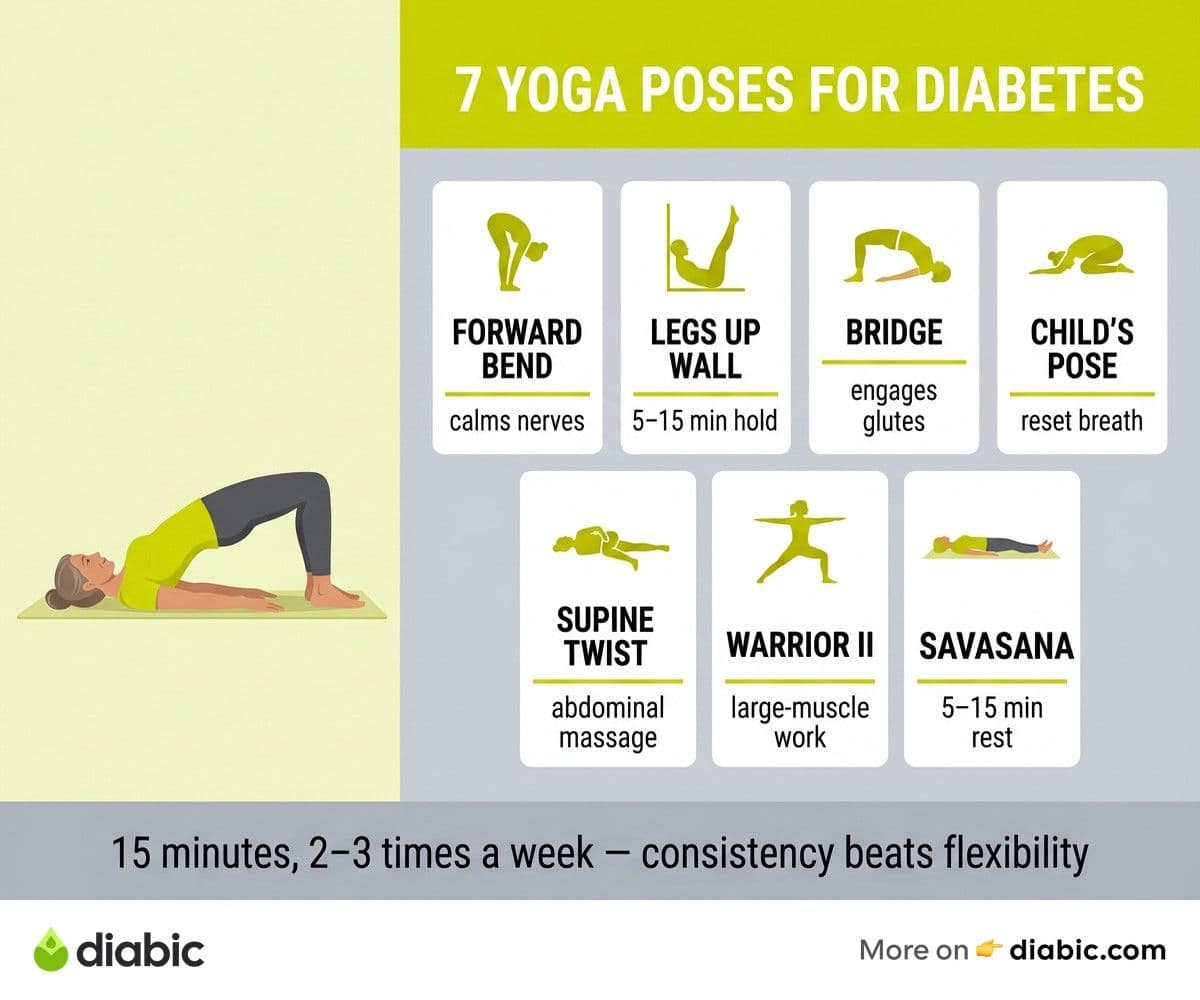
You do not need to do all seven poses every day. We recommend choosing three to four poses for a 15-minute weekday session, then practicing the full sequence two to three times per week as your schedule allows. Consistency matters more than intensity, especially in the first month, and your nervous system rewards routine.
Pair your practice with a blood sugar check before and after to learn how your body responds. Some people see modest drops after active sequences, while others notice the biggest benefit overnight in steadier morning numbers. Bring those observations to your next appointment so your healthcare team can fold them into your plan.
FAQ
What yoga poses help lower blood sugar?
Poses that engage large muscle groups (Bridge, Warrior II) support glucose uptake during the practice itself, while restorative poses (Child's Pose, Legs Up the Wall, Savasana) reduce cortisol and may help support blood sugar over time. A balanced routine includes both active and restorative poses, ideally three to five times per week. None of these poses replace medication or medical care, so talk to your doctor about how to fit them into your existing plan.
What are the best yoga poses for type 2 diabetes?
The best yoga poses for type 2 diabetes are the ones you will actually do. We recommend starting with the seven poses above because they cover strength (Bridge, Warrior II), flexibility (Seated Forward Bend, Supine Twist), and relaxation (Child's, Legs Up the Wall, Savasana). Twenty minutes a few days a week is enough to begin noticing changes in stress, sleep, and energy, which often show up in your numbers next.
The honest summary on yoga poses for diabetes is that the practice rewards consistency more than flexibility. Pick two or three poses that feel doable, fit them into the same time slot most days, and let your CGM or meter tell you which ones move your numbers. Small, repeatable habits stack into a real shift in how you feel and how you sleep, and that is where the biggest payoff usually lives.
Shahriar P. Shuvo is the founder of Diabic. He has lived with diabetes for over 14 years, and built Diabic to deliver the practical, evidence-based self-management tools he wished existed when he was first diagnosed. By trade, Shahriar is a senior design and frontend engineer with 6+ years shipping products at Agora, Timescale (now Tiger Data), and ShareTrip. He writes from the intersection of lived diabetes experience and product craft, focused on what works in daily management rather than what sounds good in a textbook.
Medically reviewed by
Dr. Shanto Arian is an internal medicine physician now specializing in clinical and aesthetic dermatology, with a parallel academic focus on epidemiology and public health. He holds an MBBS, MPH, MSc (UK), MRCP (UK), MRCPI (Ireland), Diploma in Dermatology (UK), and Diploma in Aesthetic Medicine (USA). Dr. Arian trained in internal medicine, including hospital work on hematology cases such as graft-versus-host disease, before moving toward dermatology. Skin is one of the earliest places diabetes shows itself, from acanthosis nigricans and diabetic dermopathy to slow foot wound healing, and that intersection is where his clinical and Diabic-review work meet. On Diabic, Dr. Arian medically reviews content on diabetes diagnosis, complications, dermatologic manifestations, and pharmacotherapy, ensuring every claim aligns with current ADA, NICE, and peer-reviewed literature.
More from Living with Diabetes
View all
A Gentle Chair Yoga Routine for people with diabetes
A gentle chair yoga for people with diabetes routine with safe poses, modifications for neuropathy, retinopathy, and joint pain, plus tips for older.

Shift Work and Diabetes: Managing Irregular Hours
Shift work and diabetes is a tough combination. Learn how to manage meals, sleep, medication, and blood sugar when your hours rotate or flip overnight.

Dating with Diabetes: When to Tell a New Partner
Dating with diabetes brings unique disclosure questions. Here is when to tell a new partner, what to say, and how to handle the conversation with.
Clinician-reviewed habits, plain-language guides, and honest answers - the small shifts that make living with diabetes feel lighter, every day.