6 Ways to Lower Blood Pressure Naturally with Diabetes
Learn six research-backed ways to lower blood pressure naturally diabetes care supports, from DASH-style eating to sleep, stress, and steady movement.

In this article(13)
Most people managing both conditions have heard the advice to lower blood pressure naturally diabetes friendly habits can support. The harder question is which strategies actually move the numbers, and which ones simply sound healthy. The good news: a handful of approaches have real research behind them, and most of them help your blood sugar at the same time.
These six strategies are not a substitute for the medication your provider prescribed. They are the everyday work that helps medication do its job and may, with time and consistency, reduce the dose you need. Pick one or two to start and build from there.
Why Lower Blood Pressure Naturally Diabetes Care Matters
Blood pressure diabetes care is bound together by the cardiovascular system. According to the American Diabetes Association Standards of Care, unmanaged blood pressure significantly raises the risk of heart attack, stroke, kidney disease, and eye complications in people with diabetes. The two conditions often appear together, and they amplify each other's effects.
When blood sugar runs high over time, it stiffens blood vessels and damages the kidneys, which can drive blood pressure up. When blood pressure stays high, it stresses those same vessels and accelerates kidney damage. The cycle is real, and so is the way out: managing both together yields better outcomes than focusing on either alone.
Lowering blood pressure even modestly can shift your long-term risk in a meaningful way. Research suggests that a sustained drop of 5 to 10 mmHg can reduce cardiovascular events. That is the size of effect work to lower blood pressure naturally diabetes friendly habits drive, often before medication doses change.
1. Adjust Your Diet for Both Conditions
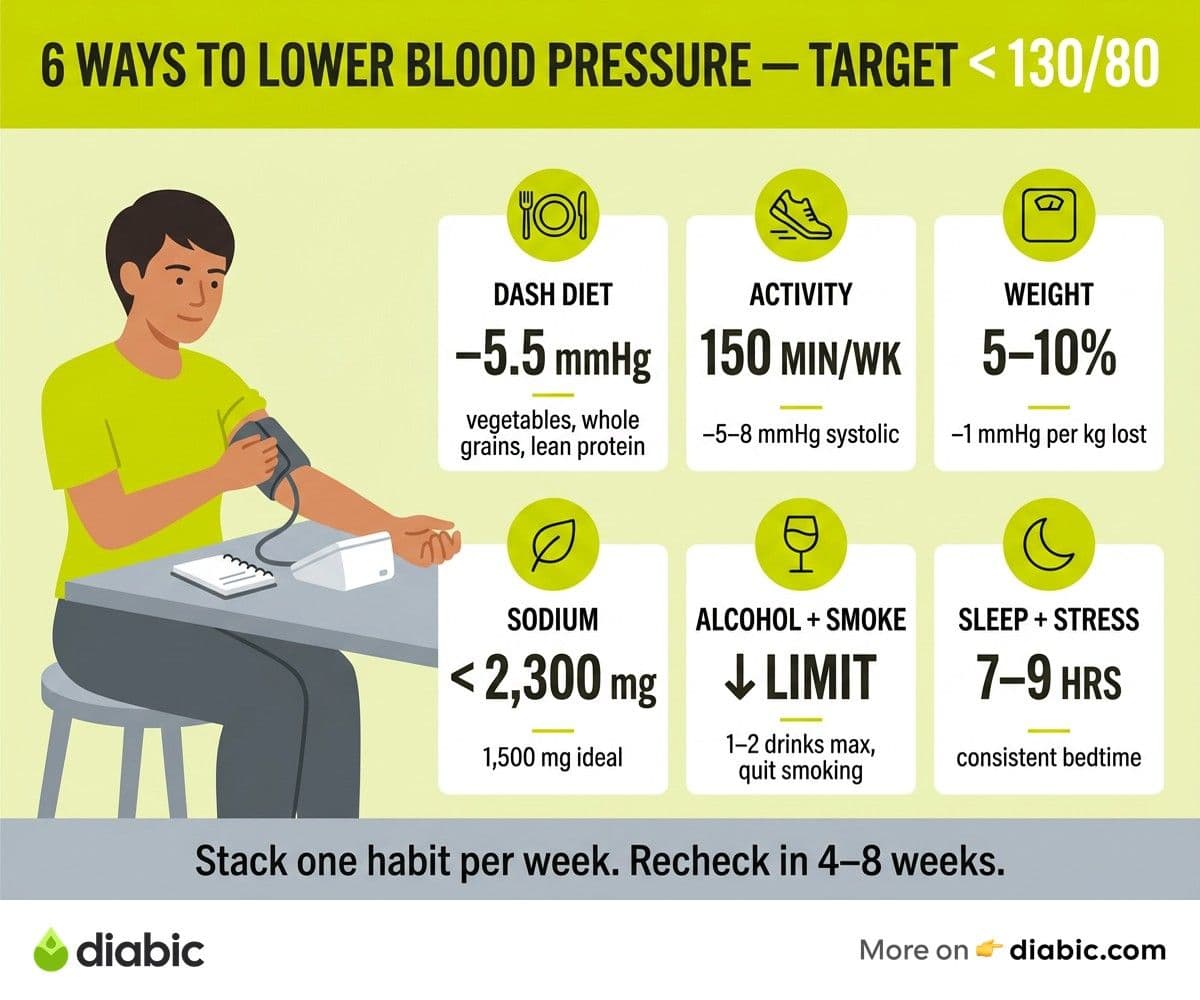
Diet is the single biggest lever for lowering blood pressure naturally. The DASH eating pattern, originally tested in a New England Journal of Medicine study, reduced systolic blood pressure by an average of 5.5 mmHg and diastolic by 3 mmHg in adults with hypertension. The diet emphasizes vegetables, fruit, whole grains, lean protein, and low-fat dairy while limiting saturated fat and added sugar.
DASH overlaps nicely with diabetes-friendly eating. Both prioritize fiber-rich vegetables and whole grains, both moderate red meat and processed foods, and both encourage cooking at home where you can manage sodium and portion sizes. For more on combining the two, our guide to the best diet for blood pressure and diabetes walks through specifics.
Sodium gets a lot of attention, and for good reason. The CDC notes that most adults eat far more sodium than recommended, often without realizing it. Aim for less than 2,300 mg per day, with many people benefiting from a target closer to 1,500 mg. Read labels on packaged foods, restaurant items, and condiments, since hidden sodium often outpaces the salt shaker.
2. Stay Physically Active
Regular movement lowers blood pressure independently of weight loss. The American Heart Association blood pressure guidance recommends at least 150 minutes per week of moderate aerobic activity, which can lower systolic blood pressure by 5 to 8 mmHg in adults with hypertension. Resistance training adds further benefit when combined with aerobic work.
Walking, swimming, cycling, and dancing all count. The activity does not need to be intense to produce results. Brisk walking five days a week, 30 minutes at a time, is a research-tested dose that fits real schedules. Splitting it into 10-minute blocks works just as well.
Exercise also improves insulin sensitivity, which supports blood sugar management. People with diabetes should check glucose before, during, and after activity, especially if they take insulin or sulfonylureas. Carry fast-acting carbs and stay hydrated. Talk to your doctor before starting a new program if you have heart disease, retinopathy, or peripheral neuropathy.
3. Manage Your Weight
Even modest weight loss makes a measurable difference. Research suggests that losing 5 to 10 percent of body weight may lower systolic blood pressure by roughly 1 mmHg per kilogram lost. The same drop also improves insulin sensitivity, which helps blood sugar work the way it should.
Sustainable change usually beats dramatic change. Crash diets often produce quick weight loss followed by quick regain, which can swing blood pressure and blood sugar in unhelpful ways. Steady, modest deficits paired with the dietary and activity habits above tend to hold better.
Weight is one factor among many, and it is not a moral marker. Your provider can help you set a goal that reflects your overall health, not a number on a chart. People with diabetes who use newer medications such as GLP-1 agonists may experience weight loss as part of their treatment, which can support blood pressure goals as well.
4. Reduce Sodium and Increase Potassium
Sodium and potassium work in opposition in your blood vessels. High sodium pulls water into circulation and raises pressure, while potassium helps blood vessels relax and supports the kidneys in clearing extra sodium. The CDC recommends adults consume 4,700 mg of potassium daily, though many people fall short.
Potassium-rich foods include leafy greens, beans, lentils, sweet potatoes, oranges, bananas, avocados, tomatoes, and yogurt. Most are diabetes-friendly when portioned thoughtfully and paired with protein. People with kidney disease need to talk to their doctor before increasing potassium, since the kidneys regulate this mineral and excess can be dangerous.
Reading labels for sodium becomes second nature with practice. Bread, deli meats, soups, sauces, and frozen meals are common sources. Look for "low sodium" or "no salt added" versions, rinse canned beans before using them, and lean on herbs, citrus, garlic, and vinegar to bring flavor without salt.
5. Limit Alcohol and Quit Smoking
Alcohol raises blood pressure in a dose-dependent way. Men who consistently drink more than two standard drinks per day, and women who drink more than one, often see higher blood pressure readings. Alcohol can also disrupt blood sugar, sometimes causing delayed lows in people who take insulin or sulfonylureas. Cutting back, even modestly, can help.
Smoking damages blood vessels and raises both blood pressure and cardiovascular risk. The CDC reports that quitting smoking is one of the most impactful changes a person with diabetes can make, with benefits showing up within weeks of stopping. Vascular function begins to improve quickly, and long-term cardiovascular risk drops significantly over time.
Support helps. The free smokefree.gov tools, nicotine replacement therapy, and prescription options are available, and combining them with counseling raises success rates. Talk to your doctor about a plan that fits your life. Many people need several attempts before quitting sticks, and that is normal, not failure.
6. Manage Stress and Prioritize Sleep
Stress and sleep affect blood pressure through cortisol, the body's main stress hormone. Chronic stress keeps cortisol elevated, which raises blood pressure and blood sugar. Poor sleep, especially less than six hours a night, is also linked to higher blood pressure and worse insulin sensitivity in research.
Stress reduction techniques do not need to be elaborate. A daily 10-minute walk outside, a few minutes of slow breathing, journaling, or a regular call with a friend can lower stress in measurable ways. Apps for guided meditation work well for some people, while others prefer movement-based practices like yoga or tai chi.
Sleep gets shortchanged easily. Aim for seven to nine hours, with a consistent bedtime and wake time. Screens before bed, late caffeine, and heavy late meals all disrupt sleep architecture. If you snore loudly or feel exhausted despite enough hours in bed, talk to your doctor about screening for sleep apnea, which is common in people with diabetes and contributes to high blood pressure. For more on the bigger picture, our guide to heart-healthy habits for diabetes explores the rest, recovery, and movement angle in detail.
From my experience: After fourteen years with type 1 diabetes, the change that surprised me most was sleep. When I started protecting a hard 11 p.m. bedtime, my morning glucose smoothed out and my blood pressure readings dropped by a few points within a month. Lifestyle is rarely flashy, but stacking small habits adds up.
Know Your Blood Pressure Target
Knowing where you are aiming makes the work above feel more concrete. The ADA recommends a blood pressure target below 130/80 mmHg for most adults with diabetes, though your provider may individualize that goal. Our guide on ideal blood pressure numbers for diabetes covers the targets and reasoning in more detail.
Talk to your provider about adjusting your plan if home readings stay above target despite consistent lifestyle work, if you experience side effects from medication, or if your blood sugar trends are also drifting. Adjustments made together produce better results than guesswork on either side.
Consistency matters more than perfection. A few high readings or off days will not undo the progress of a steady plan. The point of these six strategies is not to follow them flawlessly, but to keep them moving in the right direction over months and years.
FAQ
How to lower blood pressure naturally when you have diabetes?
Focus on a DASH-style eating pattern, regular physical activity, weight management when needed, reduced sodium and increased potassium intake, limited alcohol and no smoking, and consistent stress reduction and sleep. These work alongside, not as replacements for, your prescribed medications.
Can lifestyle changes lower blood pressure with diabetes?
Yes. Research suggests lifestyle changes can lower blood pressure by 5 to 15 mmHg, which can be significant when paired with medication and good blood sugar management. Some people may reduce their medication dose with their provider's guidance, though not everyone will be able to come off medication entirely.
How much does the DASH diet lower blood pressure?
The original DASH study showed an average drop of 5.5 mmHg systolic and 3 mmHg diastolic in adults with hypertension. Combining DASH with reduced sodium intake produced even larger reductions, especially in people with higher baseline blood pressure.
How long does it take for natural methods to lower blood pressure?
Many people see measurable changes within 4 to 8 weeks of consistent effort, though individual results vary. Sleep and stress changes can show up faster, while weight-related changes usually take longer. Tracking home readings helps you see progress between provider visits.
Pick one of these six strategies to focus on this week. Stack the next one when the first becomes routine. Talk to your doctor before making big changes, share your home readings at each visit, and remember that lower blood pressure naturally diabetes care is a long game played in small daily choices.
Shahriar P. Shuvo is the founder of Diabic. He has lived with diabetes for over 14 years, and built Diabic to deliver the practical, evidence-based self-management tools he wished existed when he was first diagnosed. By trade, Shahriar is a senior design and frontend engineer with 6+ years shipping products at Agora, Timescale (now Tiger Data), and ShareTrip. He writes from the intersection of lived diabetes experience and product craft, focused on what works in daily management rather than what sounds good in a textbook.
Medically reviewed by
Dr. Shanto Arian is an internal medicine physician now specializing in clinical and aesthetic dermatology, with a parallel academic focus on epidemiology and public health. He holds an MBBS, MPH, MSc (UK), MRCP (UK), MRCPI (Ireland), Diploma in Dermatology (UK), and Diploma in Aesthetic Medicine (USA). Dr. Arian trained in internal medicine, including hospital work on hematology cases such as graft-versus-host disease, before moving toward dermatology. Skin is one of the earliest places diabetes shows itself, from acanthosis nigricans and diabetic dermopathy to slow foot wound healing, and that intersection is where his clinical and Diabic-review work meet. On Diabic, Dr. Arian medically reviews content on diabetes diagnosis, complications, dermatologic manifestations, and pharmacotherapy, ensuring every claim aligns with current ADA, NICE, and peer-reviewed literature.
More from Health & Complications
View all
Diabetes and Dental Implants: What to Know First
Diabetes dental implants guide covering safety, A1C targets, recovery expectations, gum health prep, and what to ask your oral surgeon before surgery.

Burning Mouth Syndrome and Diabetes Explained
Burning mouth syndrome diabetes link explained, including neuropathy, dry mouth, and thrush causes plus treatment options that may bring real relief.

Dental Care for people with diabetes: Tips That Help
Practical dental care diabetics need, with real tips for protecting teeth and gums when diabetes raises your risk for oral health problems.
Clinician-reviewed habits, plain-language guides, and honest answers - the small shifts that make living with diabetes feel lighter, every day.