Diabetes Skin Infection: Causes and Prevention
Learn what causes a diabetes skin infection, how to spot bacterial vs fungal types, prevention habits that work, and when to see a doctor.

In this article(14)
A diabetes skin infection is more common than many people realize, but it is also one of the most preventable complications you can address with daily habits. When blood sugar stays elevated, the immune system runs less efficiently, the skin barrier weakens, and tissues become a more inviting environment for bacteria and fungi. The result is that small cuts, cracks, and irritated patches can turn into infections that would not develop in someone without diabetes.
The encouraging part is that prevention works. Steady blood sugar, gentle skin care, and a willingness to act on early symptoms cover most of the prevention plan. Here is a clear look at why these infections happen, how to recognize them, and what you can do to keep them from taking hold.
Why Diabetes Skin Infection Risk Runs Higher
Several factors stack up when you have diabetes, and together they shift the balance toward infection.
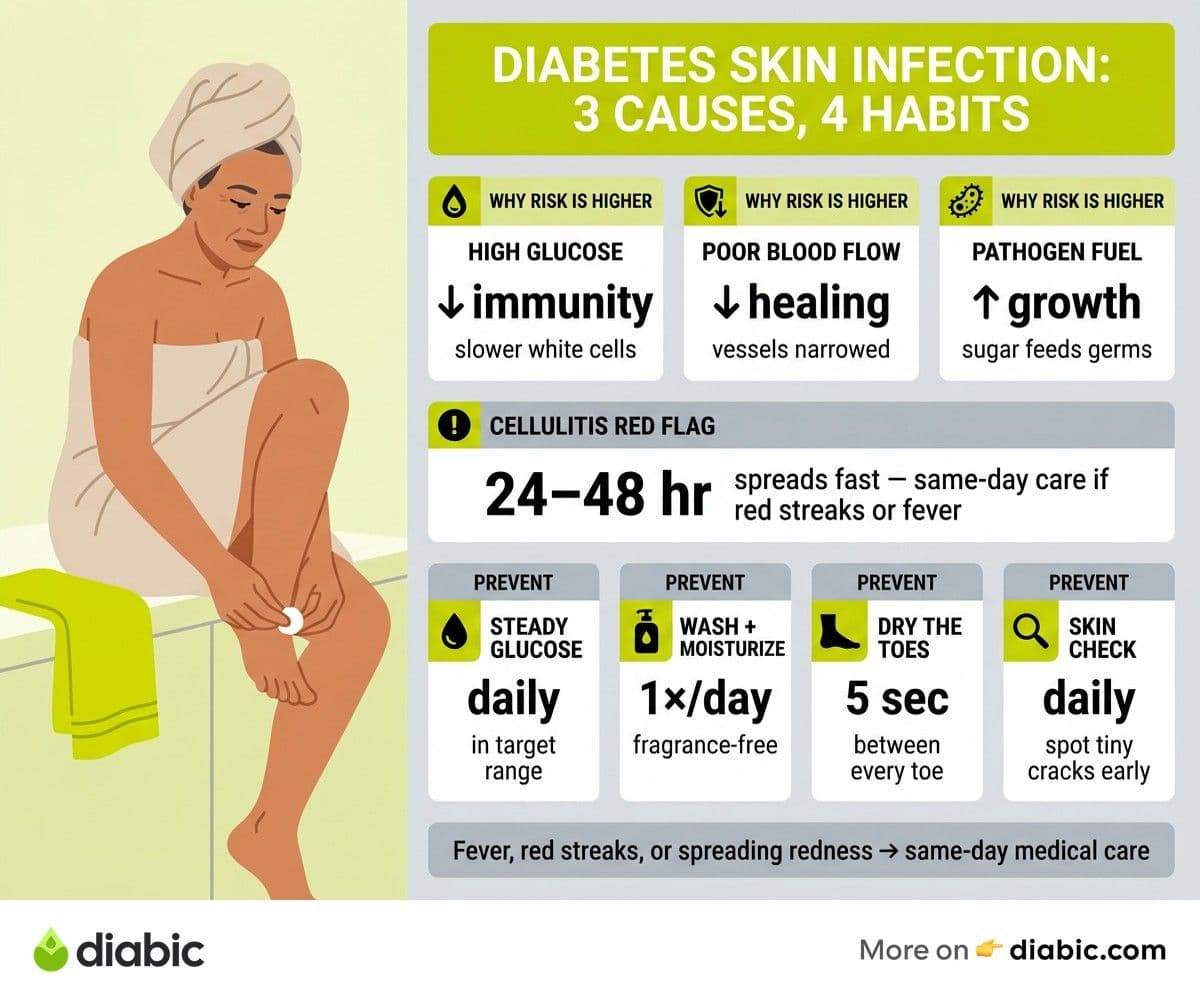
Elevated glucose weakens immune cell function. White blood cells, which are supposed to engulf and destroy bacteria, work more slowly when they swim in glucose-rich blood. The American Diabetes Association's overview of skin complications notes that this immune sluggishness is one reason infections progress more rapidly in people with diabetes than in those without.
Reduced blood flow is the second factor. Years of high blood sugar damage small blood vessels, slowing the delivery of immune cells to any site of injury. Excess glucose in tissues and on the skin's surface also gives bacteria and yeast a fuel source they would not otherwise have. Add in skin damage from dryness, neuropathy, or repeated friction, and you have entry points everywhere.
Peer-reviewed research published in the ADA's Diabetes Care journal on infection susceptibility found that people with diabetes have a meaningfully higher risk of bacterial and fungal skin infections compared with the general population. For a fuller picture of how diabetes affects the skin, our skin complications of diabetes overview walks through the full range of conditions you might encounter.
Common Types of Skin Infections with Diabetes
Skin infections come in two main flavors: bacterial and fungal. Each has a typical look, location, and treatment path.
Bacterial infections
Staphylococcus and Streptococcus are the usual bacterial culprits. They cause:
- Boils and styes: painful, raised, pus-filled bumps that often start at a hair follicle
- Cellulitis: a deep, spreading red area that feels warm and tender, often on the lower legs
- Impetigo: crusty, honey-colored sores that typically appear on the face
- Folliculitis: small red bumps where hair follicles become inflamed, especially after shaving or sweating
The NIDDK guide to diabetes and skin problems lists bacterial skin infections among the most frequent skin complications in adults with diabetes. Cellulitis, in particular, can move from a small red patch to a serious systemic infection within 24 to 48 hours, which is why prompt treatment matters.
Fungal infections
Candida (a yeast) is the most common fungal organism in skin infections related to diabetes. Tinea fungi cause athlete's foot, jock itch, and ringworm. Watch for:
- Candidiasis: itchy, red rashes in skin folds (under breasts, in the groin, between toes), sometimes with white patches
- Athlete's foot (tinea pedis): itchy, scaly skin between the toes, often with cracking
- Jock itch (tinea cruris): red, itchy rash in the groin and inner thighs
- Ringworm (tinea corporis): ring-shaped patches with raised edges anywhere on the body
- Nail fungus (onychomycosis): thick, discolored, brittle toenails
If you also struggle with persistent skin dryness that creates entry points for these organisms, our piece on dry skin and type 2 diabetes covers daily routines that strengthen the skin barrier.
Symptoms That May Indicate a Skin Infection
The earlier you spot an infection, the faster it resolves. Pay attention to any of these symptoms, especially when blood sugar has been running higher than usual.
Localized signs include redness, warmth, and swelling concentrated in one area. The skin may feel tender or painful to the touch. Pus, discharge, or yellow crusting at the edges suggests a bacterial infection. Persistent itching, especially in skin folds or between toes, often points to a fungal cause. The Mayo Clinic guide to staph and skin infections has photos that can help you compare what you are seeing.
Systemic symptoms are more serious and include fever, chills, fatigue, or feeling generally unwell. Red streaks moving outward from a wound or rash signal that the infection is spreading through the lymphatic system and need urgent attention. Anyone with diabetes who develops these systemic signs should seek same-day medical care.
For wounds that you are already managing, our guide on diabetic wound healing at home walks through the home care routine and the specific signs that mean an existing wound has become infected.
Prevention Strategies That Work
Prevention is the best treatment, and the strategies are straightforward, even if they require daily consistency.
Keep blood sugar within your target range. This is the single most effective infection prevention tool you have. Steady glucose levels keep immune cells working well, reduce the sugar fuel available to pathogens, and protect the skin's blood supply.
Build a daily skin care routine. Wash with mild, unscented soap, pat dry thoroughly (especially in folds and between toes), and apply a fragrance-free moisturizer to areas prone to dryness. Avoid hot showers, which strip the skin barrier. The CDC's general guidance on skin infection prevention emphasizes that good hygiene combined with prompt attention to small breaks in the skin prevents most everyday infections.
Inspect your skin daily. Check feet, lower legs, skin folds, and any area where clothing or shoes rub. Catching a tiny crack or blister on day one prevents an infection on day five.
Avoid scratching itchy areas. Scratching breaks the skin barrier and introduces bacteria from the fingernails. Use an over-the-counter anti-itch cream, a cool compress, or an oral antihistamine instead. If you wear closed shoes for long hours, choose breathable, moisture-wicking socks and let your feet air out when possible.
Habits that protect skin folds and toe webs
Yeast loves warm, moist places. Protecting these high-risk zones is worth a few extra seconds each day:
- Dry between toes thoroughly after every shower, including with a clean cotton ball if needed
- Wear cotton or moisture-wicking underwear and change out of damp clothes promptly
- Use a light dusting of antifungal powder in groin and breast folds during humid weather
- Change socks during the day if your feet sweat heavily
Treatment Options
Treatment depends on whether the infection is bacterial or fungal, and how severe it is.
Mild bacterial infections often respond to topical antibiotic ointments and proper wound care, especially when caught early. Larger or spreading infections usually require oral antibiotics prescribed by a clinician. Cellulitis, deep abscesses, and any infection that comes with fever may need IV antibiotics in a clinical setting. The Mayo Clinic guidance on skin infection treatment explains how cultures and bloodwork help guide antibiotic choice.
Fungal infections respond to antifungal creams (like clotrimazole or terbinafine), antifungal powders for moist areas, and oral antifungal medications for stubborn or widespread cases. Nail fungus often needs months of oral treatment because topical creams cannot penetrate the nail effectively.
Whatever the infection type, finish the full course of treatment your clinician prescribes, even if symptoms clear up earlier. Stopping antibiotics or antifungals too soon is a leading cause of recurrent infection and antibiotic resistance.
From my experience: In 14 years with type 1 diabetes, the infections that surprised me most were the small ones I almost ignored. A barely-noticeable crack between two toes turned into a stubborn fungal infection that took six weeks to clear because I waited too long. After that, I added a "between the toes" check to every shower, and I have not had a foot fungal infection since. The five-second habit is genuinely worth it.
When to See a Doctor
Knowing when home care stops being enough is essential. Schedule an appointment, or seek same-day care, for any of these:
- An infection that is spreading or has not improved after 2 to 3 days of home treatment
- Signs of systemic infection (fever, chills, red streaks, feeling unwell)
- Any infection on or near the foot
- Recurrent skin infections (a sign that blood sugar may need adjustment, or that an underlying issue is being missed)
- Deep, painful, or rapidly worsening lesions
- Any infection in someone with poor circulation, immunosuppression, or advanced kidney disease
Foot infections deserve special urgency. Our piece on diabetic foot infection symptoms walks through what to look for and why a podiatrist visit beats waiting it out. Our companion diabetic foot care guide covers the daily routine that helps prevent these infections in the first place.
What to Take Away
A diabetes skin infection is more about pathways than bad luck: high blood sugar, dry or cracked skin, neuropathy, and friction give bacteria and fungi the chance to take hold. The prevention plan is equally specific. Steady glucose, gentle daily skin care, prompt attention to small breaks, and a low threshold for professional help cover the vast majority of cases.
Talk to your doctor if you have noticed recurrent infections, persistent itching, or any spreading redness. Early treatment is almost always simpler and shorter than waiting it out, and the habits that prevent infection in the first place are the same habits that protect the rest of your skin year-round.
Frequently Asked Questions
What types of skin infections are common with diabetes?
The most common bacterial infections are boils, styes, cellulitis, impetigo, and folliculitis. Common fungal infections include candidiasis (yeast) in skin folds, athlete's foot, jock itch, ringworm, and toenail fungus. Both groups become more frequent and harder to treat when blood sugar is elevated.
How to prevent skin infections when you have diabetes?
Keep blood sugar in your target range, wash and moisturize daily with mild products, dry skin folds and between toes thoroughly, inspect your skin every day for cracks or redness, and address small breaks in the skin promptly. Wear breathable fabrics and avoid scratching itchy areas.
When does a diabetes skin infection need a doctor?
See a doctor for any infection that spreads, fails to improve in 2 to 3 days, or comes with fever, chills, or red streaks. Any infection on the foot warrants same-day evaluation, as does any infection in someone with poor circulation or recurrent skin issues.
Shahriar P. Shuvo is the founder of Diabic. He has lived with diabetes for over 14 years, and built Diabic to deliver the practical, evidence-based self-management tools he wished existed when he was first diagnosed. By trade, Shahriar is a senior design and frontend engineer with 6+ years shipping products at Agora, Timescale (now Tiger Data), and ShareTrip. He writes from the intersection of lived diabetes experience and product craft, focused on what works in daily management rather than what sounds good in a textbook.
Medically reviewed by
Dr. Shanto Arian is an internal medicine physician now specializing in clinical and aesthetic dermatology, with a parallel academic focus on epidemiology and public health. He holds an MBBS, MPH, MSc (UK), MRCP (UK), MRCPI (Ireland), Diploma in Dermatology (UK), and Diploma in Aesthetic Medicine (USA). Dr. Arian trained in internal medicine, including hospital work on hematology cases such as graft-versus-host disease, before moving toward dermatology. Skin is one of the earliest places diabetes shows itself, from acanthosis nigricans and diabetic dermopathy to slow foot wound healing, and that intersection is where his clinical and Diabic-review work meet. On Diabic, Dr. Arian medically reviews content on diabetes diagnosis, complications, dermatologic manifestations, and pharmacotherapy, ensuring every claim aligns with current ADA, NICE, and peer-reviewed literature.
More from Health & Complications
View all
Diabetes and Dental Implants: What to Know First
Diabetes dental implants guide covering safety, A1C targets, recovery expectations, gum health prep, and what to ask your oral surgeon before surgery.

Burning Mouth Syndrome and Diabetes Explained
Burning mouth syndrome diabetes link explained, including neuropathy, dry mouth, and thrush causes plus treatment options that may bring real relief.

Dental Care for people with diabetes: Tips That Help
Practical dental care diabetics need, with real tips for protecting teeth and gums when diabetes raises your risk for oral health problems.
Clinician-reviewed habits, plain-language guides, and honest answers - the small shifts that make living with diabetes feel lighter, every day.