Diabetic Neuropathy Foot Pain: Symptoms and Relief
Recognize symptoms of diabetic neuropathy foot pain and learn relief options including medications, footwear, capsaicin, lidocaine, and lifestyle changes.

In this article(16)
The first time someone describes the burning, the pins and needles, or the strange shock of a bedsheet brushing their toes, the words rarely come out clean. Symptoms of diabetic neuropathy foot pain are hard to put a frame around because they shift, often arrive at night, and rarely look like the foot pain other people talk about. The good news is that real relief exists, and most of it stacks rather than competing.
This guide walks through what the pain actually feels like, the symptoms to track over time, why nerves start sending wrong signals in the first place, and the medications, topicals, footwear, and daily habits that may help. We also cover when to bring in a pain specialist and what realistic expectations look like.
If you are at the start of this process, take a breath. Many people manage neuropathic foot pain well, and most reach a place where the pain no longer runs the day. The path is not always linear, but it is real.
What Does Diabetic Neuropathy Foot Pain Feel Like
Neuropathic pain rarely behaves like a sprained ankle or a stubbed toe. It is a nerve-signal problem, so the sensations are unusual and sometimes contradictory. People describe burning across the top of the foot, tingling that climbs from the toes, sharp stabbing that comes out of nowhere, and pins-and-needles that arrive without an obvious trigger.
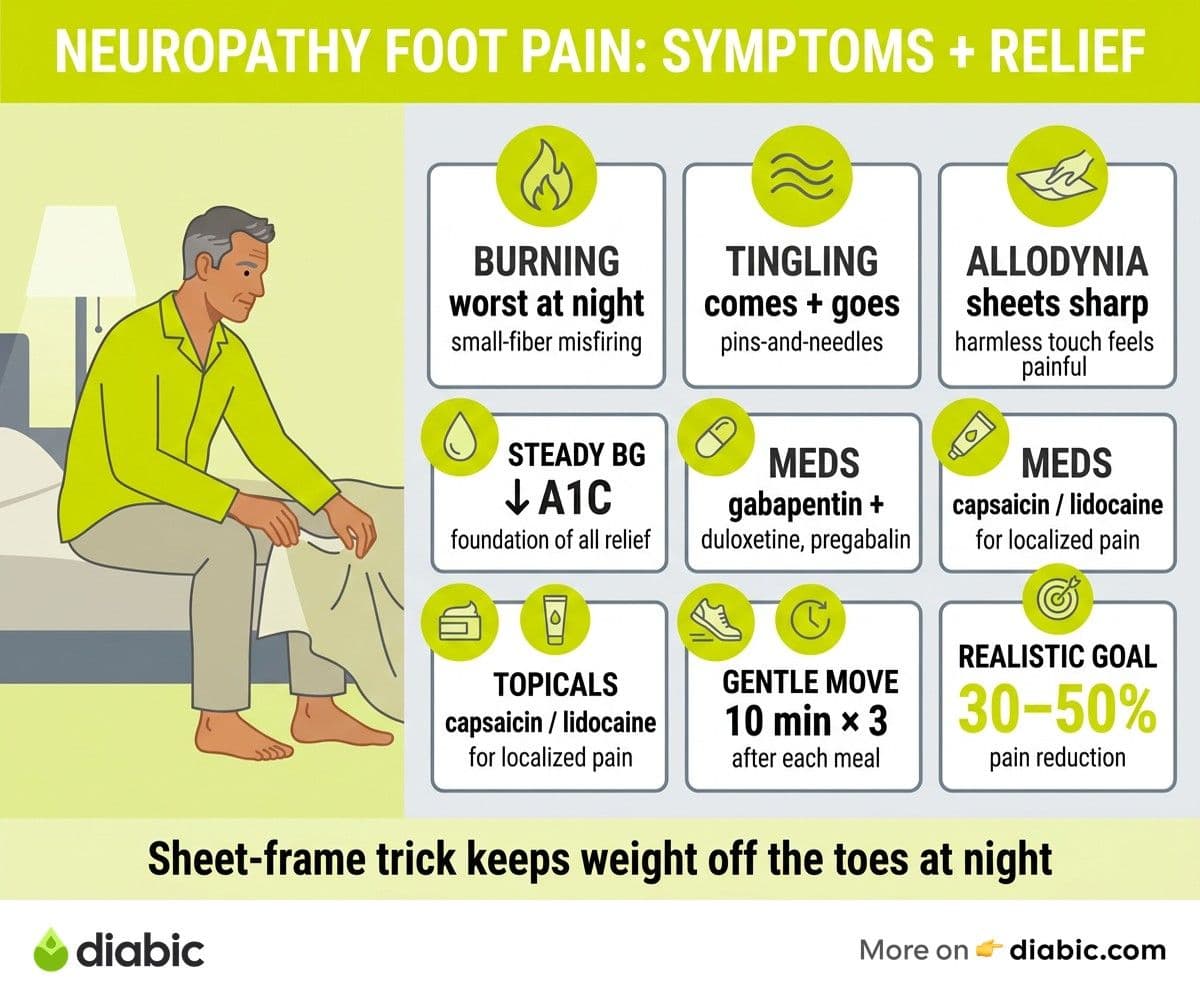
Sensitivity to light touch is one of the strangest symptoms. A sock seam, a sheet, or a soft slipper can feel sharp or hot. Doctors call this allodynia, where the nervous system reads harmless input as painful. It often coexists with numbness in the same foot, so a person may have a patch that feels nothing and another patch that feels too much.
Nighttime is when many people first realize this is more than tired feet. Pain often spikes after lying down, partly because there are fewer distractions and partly because the nerves seem to fire differently at rest. Shooting pains, throbbing, and a deep, restless ache that interrupts sleep are common patterns. If any of these sound familiar, it helps to learn about recognizing diabetic neuropathy in feet so you can track changes over time and bring specifics to your appointments.
Symptoms of Diabetic Neuropathy Foot Pain to Recognize Early
Diabetic foot pain symptoms tend to follow a slow arc. Catching them early gives you more options and better outcomes, so it is worth knowing what each stage commonly looks like.
Early symptoms are easy to dismiss. Occasional tingling after a long day, a brief pins-and-needles feeling when standing up, or feet that "fall asleep" more than they used to. Many people chalk this up to age, shoes, or fatigue. The NIDDK notes that these mild signs often appear years before a clear diagnosis, and they are a meaningful nudge to bring up with your provider.
Progressive symptoms show up when the nerves have been under stress longer. Burning becomes more frequent, especially in the evenings. Aching settles into the arch or the ball of the foot. Sensitivity to touch grows. Some people describe a feeling of walking on pebbles or wearing thick socks that are not actually there.
Advanced symptoms combine constant pain with numbness and balance changes. The skin may look or feel different, the toes may pull into a slight curl, and small wounds can go unnoticed because protective sensation is reduced. This stage is where falls, ulcers, and infections become real risks, which is why ongoing foot care visits matter.
The pattern that distinguishes neuropathic pain from other foot conditions is its symmetry and timing. Plantar fasciitis, bunions, and Achilles strain typically hurt with specific motions and improve with rest. Neuropathic pain often hurts at rest and sometimes eases with gentle movement, and it usually affects both feet in similar areas.
Neuropathy Foot Pain in Diabetes: Why It Happens
Neuropathy foot pain in diabetes traces back to long stretches of elevated blood glucose. High glucose damages the small blood vessels that feed peripheral nerves, and the nerve fibers themselves get caught in a process of oxidative stress and inflammation. Over time, signaling becomes erratic.
The longest nerves are the most vulnerable. Because the nerves running to the feet have to travel the farthest from the spinal cord, they take the brunt of metabolic stress and tend to show symptoms first. That is why hands usually follow feet, sometimes years later.
Small fiber neuropathy is the variant most often involved in painful symptoms. These are the thin nerve fibers that carry pain and temperature signals, and when they misfire, the brain receives incorrect data. A foot at room temperature might feel like it is in cold water. A light brush might feel like a burn. The signals are real to your nervous system, even though the trigger is harmless.
Inflammation amplifies the problem. Elevated cytokines and oxidative damage reduce nerve repair capacity, which is why blood sugar stability and lifestyle habits remain the foundation of any treatment plan. Reducing average glucose, smoothing out spikes, and protecting circulation give nerves their best chance to heal where they can. If foot numbness has been part of your picture, this same biology is usually at the root.
How to Relieve Neuropathy Pain in Feet from Diabetes
Relief from diabetic neuropathy foot pain almost always comes from stacking strategies rather than choosing one. The American Academy of Neurology guidelines describe a layered approach for painful diabetic neuropathy, and the American Diabetes Association backs a similar multimodal plan.
Blood Sugar Management as the Foundation
No medication or topical fully outpaces unstable glucose. Time in range, lower variability, and a healthier average blood sugar slow nerve damage and may reduce pain over time. This is why the first conversation with your provider is usually about your diabetes plan, not just your pain.
Prescription Medications
Several medications have evidence for painful diabetic neuropathy. Gabapentin and pregabalin are anticonvulsants that calm overactive nerve signaling. Duloxetine is an SNRI antidepressant that also dampens pain pathways. Amitriptyline, a tricyclic antidepressant, is sometimes used at low doses for nighttime pain. Each has trade-offs in side effects, drug interactions, and dosing, so talk to your doctor about which fits your situation. Avoid using opioids as a long-term plan, since they carry significant risks and tend to lose effectiveness for nerve pain.
Topical Treatments
Topicals avoid systemic side effects and can help with localized pain. Capsaicin cream, made from chili pepper compounds, may reduce pain signaling when used consistently for several weeks. Lidocaine patches numb a defined area for hours and are useful when pain is worst in a specific spot, like the top of the foot or a single toe. Both can sting at first, especially capsaicin, so start with a small area.
Physical Therapy and Gentle Exercise
Movement is medicine for nerves. Walking, stationary cycling, swimming, and structured balance work support circulation and may retrain a hypersensitive nervous system. A physical therapist with neuropathy experience can build a program that respects your symptoms. Many people find that pairing PT with their other treatments gives the most reliable results.
Complementary Approaches
Acupuncture has small but encouraging evidence for diabetic neuropathy pain. TENS units, which deliver mild electrical pulses through the skin, can help during flare-ups and are inexpensive enough to try with provider guidance. Mindfulness, meditation, and cognitive behavioral therapy for chronic pain do not change nerve damage, but they often change how much pain interferes with daily life.
Diabetic Neuropathy Treatment: What Works Best
Diabetic neuropathy treatment works best when several pieces are layered intentionally, not stacked at random. Most people land on a combination of glucose management, one prescription medication, a topical for breakthrough pain, a movement plan, and a sleep strategy.
Setting realistic expectations is part of the work. A common goal is a 30 to 50 percent reduction in pain, not zero pain. That sounds modest, but it can be the difference between dreading evenings and getting through them. Tracking pain on a 0 to 10 scale before and after each new strategy helps you and your provider see what is actually working. Learn more about the full landscape of diabetic neuropathy treatment options so you can have a more informed conversation at your next visit.
When first-line medications and lifestyle changes are not enough, a referral to a pain specialist or neurologist is appropriate. They can consider higher-tier options like spinal cord stimulation, infusion therapies, or clinical trials. Trials are more accessible than many people expect and sometimes provide access to emerging treatments at no cost.
From my experience: I have managed type 1 diabetes for 14 years, and the year my feet started burning at night was a hard one. What helped was not one fix. It was a quieter dinner blood sugar, a gabapentin trial that I eventually tapered off, lidocaine patches on the worst nights, swimming twice a week, and a pair of shoes I would have called overpriced before I tried them. The pain did not vanish. It moved into the background, which was enough to get my evenings back.
Daily Strategies for Living with Neuropathic Foot Pain
Symptoms of diabetic neuropathy foot pain show up in the smallest moments of the day, so the most useful strategies are the ones that fit those moments.
Footwear matters more than people expect. Shoes with a wide toe box, a cushioned but firm sole, and a slight rocker shape often reduce pressure on sensitive areas. Seamless socks, soft seamless slippers, and avoiding tight elastics around the ankle help with allodynia. The American Orthopaedic Foot and Ankle Society has helpful guidance on shoe fit and inserts. Pair smart footwear with daily foot checks for any redness, blisters, or wounds that you might not feel.
Sleep often takes the biggest hit, so worth attacking directly. A loose top sheet draped over a small frame at the foot of the bed keeps weight off the toes. Cool room temperatures help some people, while a warm pad on the calves (never directly on the feet, due to burn risk) helps others. A consistent bedtime, less screen time, and treating co-existing conditions like restless legs or sleep apnea all add up.
Temperature therapy can be tricky because nerve damage reduces your ability to detect heat. Never soak feet in water you have not tested with a thermometer or your elbow first. A warm soak with a measured temperature around 92 to 95 degrees Fahrenheit may ease evening pain, but skip soaking entirely if you have any open skin or an active wound.
Activity patterns work best when they match your pain. Many people feel better with shorter, more frequent movement than one long workout. A ten-minute walk after each meal often beats one 30-minute session, both for pain and for blood sugar. Build a strong foot care and prevention routine around these habits to catch small issues early.
A Realistic Picture of Relief
The symptoms of diabetic neuropathy foot pain are real, but they are not a fixed sentence. With a layered plan, most people meaningfully reduce their pain and reclaim parts of the day pain had taken from them. Progress is uneven. Some weeks the burning is louder, some weeks quieter. The trend that matters is the one over months.
Bring specifics to your next appointment. Note when pain peaks, what makes it worse, and what helps even a little. Ask about medications, topicals, and a referral if you have not had one yet. Talk to your doctor before adding supplements or trying new treatments, especially if you take medications that interact. Small, steady choices stack quickly when you give them a chance.
FAQ
What does diabetic neuropathy foot pain feel like?
It commonly presents as burning, tingling, stabbing, or shooting pain in the feet. Many people describe sensitivity to touch, pain that worsens at night, and alternating sensations of numbness and pain. The experience varies widely from person to person.
How to relieve neuropathy pain in feet from diabetes?
The most effective approach combines blood sugar management with pain-specific treatments like gabapentin or pregabalin, topical treatments such as capsaicin cream or lidocaine patches, gentle exercise, and supportive footwear. Your healthcare provider can help build a personalized pain management plan.
When should I see a specialist for neuropathic foot pain?
If first-line medications and lifestyle changes are not bringing your pain to a manageable level after several months, ask your doctor about a referral to a neurologist or pain specialist. Sudden changes, new wounds, or rapid progression of numbness should prompt a same-week call to your provider.
The point of taking the symptoms of diabetic neuropathy foot pain seriously is not to let them define your week. It is to give your care team enough detail to help you build a layered plan that fits your life. Track what you feel, share it plainly at appointments, and revisit the plan every few months. The pain may not vanish, but the role it plays in your day can shrink considerably with the right combination of treatments.
Shahriar P. Shuvo is the founder of Diabic. He has lived with diabetes for over 14 years, and built Diabic to deliver the practical, evidence-based self-management tools he wished existed when he was first diagnosed. By trade, Shahriar is a senior design and frontend engineer with 6+ years shipping products at Agora, Timescale (now Tiger Data), and ShareTrip. He writes from the intersection of lived diabetes experience and product craft, focused on what works in daily management rather than what sounds good in a textbook.
Medically reviewed by
Dr. Shanto Arian is an internal medicine physician now specializing in clinical and aesthetic dermatology, with a parallel academic focus on epidemiology and public health. He holds an MBBS, MPH, MSc (UK), MRCP (UK), MRCPI (Ireland), Diploma in Dermatology (UK), and Diploma in Aesthetic Medicine (USA). Dr. Arian trained in internal medicine, including hospital work on hematology cases such as graft-versus-host disease, before moving toward dermatology. Skin is one of the earliest places diabetes shows itself, from acanthosis nigricans and diabetic dermopathy to slow foot wound healing, and that intersection is where his clinical and Diabic-review work meet. On Diabic, Dr. Arian medically reviews content on diabetes diagnosis, complications, dermatologic manifestations, and pharmacotherapy, ensuring every claim aligns with current ADA, NICE, and peer-reviewed literature.
More from Health & Complications
View all
Diabetes and Dental Implants: What to Know First
Diabetes dental implants guide covering safety, A1C targets, recovery expectations, gum health prep, and what to ask your oral surgeon before surgery.

Burning Mouth Syndrome and Diabetes Explained
Burning mouth syndrome diabetes link explained, including neuropathy, dry mouth, and thrush causes plus treatment options that may bring real relief.

Dental Care for people with diabetes: Tips That Help
Practical dental care diabetics need, with real tips for protecting teeth and gums when diabetes raises your risk for oral health problems.
Clinician-reviewed habits, plain-language guides, and honest answers - the small shifts that make living with diabetes feel lighter, every day.