Diabetic Foot Care Routine: Daily Checklist
A simple diabetic foot care routine you can do in five minutes a day to prevent ulcers, infections, and serious complications down the line.

In this article(22)
A consistent diabetic foot care routine is one of the most effective ways to prevent serious foot complications. The daily checklist takes just a few minutes, but it can protect you from ulcers, infections, and the kind of issues that lead to hospital visits. If you are newly diagnosed or have been managing diabetes for years, these steps are worth building into every day.
Foot care often feels like one more thing on a long list, and we get that. The reward is meaningful, though. Five quiet minutes after your morning shower or before bed can shift the odds in your favor for years to come.
We will walk through what the daily checklist actually looks like, how to inspect your feet properly, why this matters more for people with diabetes, and when to call a professional. Each section is short on purpose, so you can come back and use it as a checklist.
What Should a Daily Diabetic Foot Care Routine Include
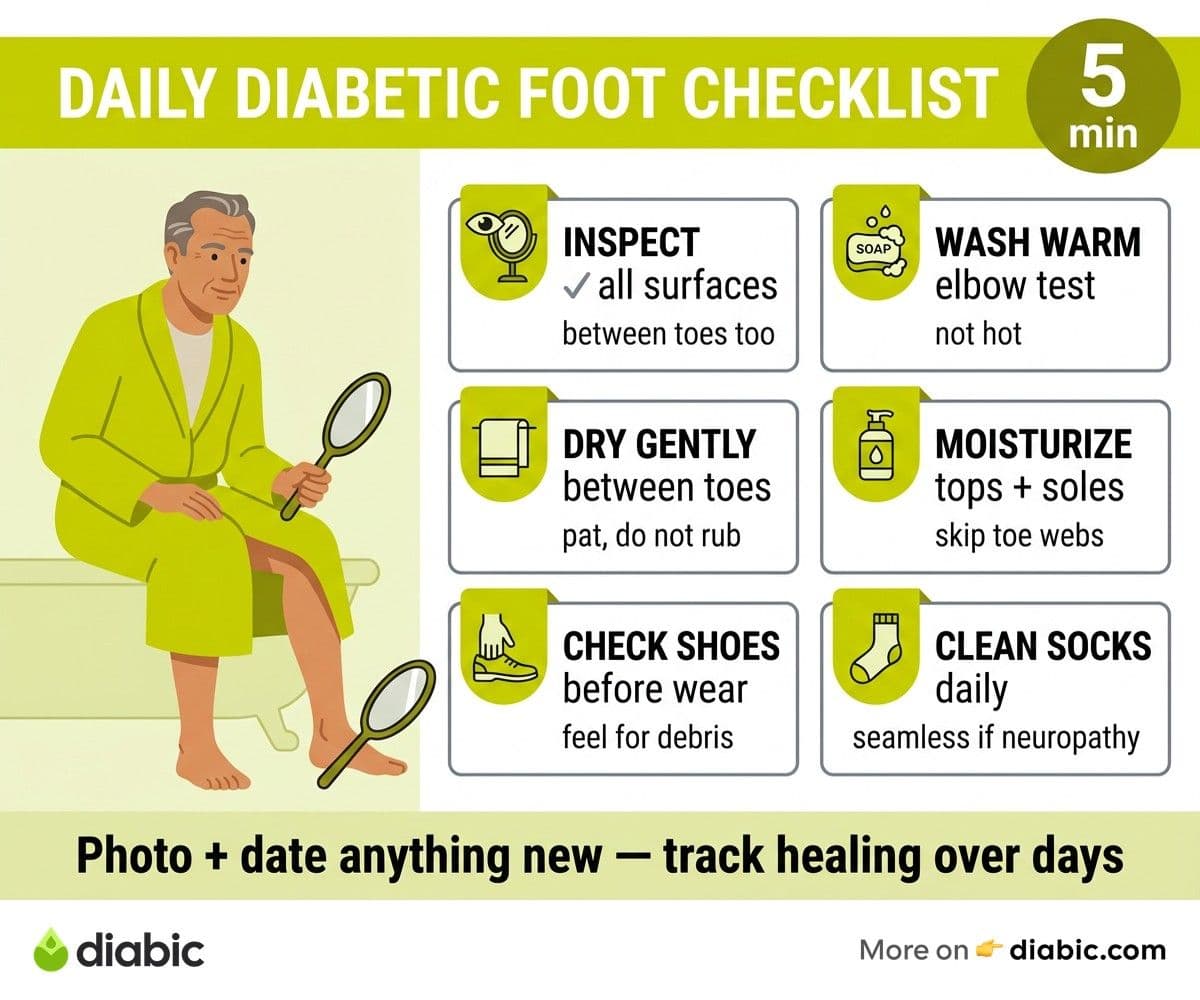
The full checklist has six small steps. None of them require special tools beyond a mirror, a clean towel, and an unscented moisturizer. The American Diabetes Association recommends a similar approach, and most certified diabetes care and education specialists teach a version of this same checklist.
Here is the short version you can save:
- Inspect your feet on all surfaces, including between the toes
- Wash with warm (not hot) water using mild soap
- Dry thoroughly, especially between toes, by patting (not rubbing)
- Moisturize the tops and soles, but skip the spaces between toes
- Check inside your shoes for pebbles, seams, or worn lining before putting them on
- Wear clean, dry, well-fitting socks every day
That is the whole routine. The rest of this guide explains how to do each step well and what changes to look out for over time.
Inspect, then wash
We list inspection first because it is the step people skip most often. Looking comes before washing, because clean feet sometimes hide what dry feet show. Stand or sit in good light, and give yourself thirty seconds per foot.
Wash with warm water that feels comfortable on the inside of your wrist. Hot water can scald skin you cannot fully feel, especially if you have any nerve damage. Avoid long soaks, which soften skin and make small cracks more likely.
Dry, moisturize, and dress your feet
Drying matters more than people realize. Damp skin between the toes encourages fungal growth, which becomes an entry point for bacteria. Pat the skin dry, then check the webbed areas one more time before you move on.
Apply a fragrance-free moisturizer to the tops and soles to prevent cracking heels. Skip the spaces between toes. Finish with clean socks and shoes you have already inspected.
How to Check Your Feet Daily with Diabetes
Knowing how to check your feet daily with diabetes makes the difference between catching a problem at day one or day fourteen. The goal is to spot anything new before it becomes a wound. Most people get faster at this than they expect.
Sit on the edge of your bed or in a chair where you can comfortably reach your feet. If bending forward is hard, prop a long-handled mirror on the floor or use your phone's camera in selfie mode. The bathroom mirror works too, with one foot up on the counter.
What to look for
Run your eyes across each foot the same way every time, so nothing gets skipped. We suggest top, sides, sole, heel, and finally between the toes. Compare one foot to the other if you are unsure whether something is new.
Pay attention to:
- Cuts, scratches, or punctures of any size
- Blisters, pressure spots, or new calluses
- Redness, warmth, or swelling that was not there yesterday
- Color changes, including pale, blue, dark, or unusually flushed skin
- Cracks in the heels or peeling between the toes
- Ingrown toenails or changes in nail color and thickness
If you notice anything that looks new, take a photo with your phone and date it. Photos help you track whether something is healing, holding steady, or getting worse over the next few days.
When sensation is reduced
When you cannot feel your feet well, your eyes have to do the job your nerves used to. That sounds harsh, but it is the practical truth of diabetes foot numbness. A blister you would normally feel after one mile can grow silently for an entire afternoon.
Visual checks become non-negotiable when sensation is reduced. We recommend a quick second look especially after long walks, new shoes, or any activity that made your feet hot. Keep a small notebook or note on your phone to log changes you see.
The Diabetic Foot: Why Daily Care Matters
The diabetic foot is more vulnerable than people realize, and not because the foot itself is different. The vulnerability comes from two background processes that diabetes can set in motion: nerve damage and reduced circulation. Together they remove the warning system and slow the repair crew.
Peripheral neuropathy can blunt the pain signals that normally make you stop walking on a blister or shake a pebble out of your shoe. According to the NIDDK, nerve damage is one of the leading reasons foot wounds go unnoticed in people with diabetes. Reduced blood flow then slows healing once a wound is present.
Small problems become serious faster in this environment. A scrape that heals in two days for someone without diabetes might take two weeks, and an unnoticed blister can deepen into an ulcer in that same window. Daily care closes the gap between what your nerves miss and what your eyes catch.
The good news, and we want to emphasize this, is that consistent self-checks meaningfully reduce complication rates. Studies cited by major diabetes organizations show that people who do daily foot inspections experience fewer ulcers and fewer hospital admissions over time. You do not need perfect numbers to benefit, just consistent attention.
You can read more about prevention strategies in our diabetic foot care and prevention guide.
Diabetic Foot Care Beyond the Basics
Once the daily checklist feels automatic, a few extra habits round out the practice. These are the small choices that protect you over months and years rather than minutes.
Trimming nails the right way
Trim toenails straight across, not curved, and leave them slightly longer than your toe pad. Cutting too short or rounding the corners can cause ingrown nails, which become entry points for infection. Use clean clippers and finish with a gentle file rather than aggressive cutting.
If your eyesight, flexibility, or grip make trimming difficult, this is a job for a podiatrist. Most insurance plans, including Medicare, cover routine foot care for people with diabetes when nerve damage or circulation issues are documented. Ask your provider what is covered.
Calluses and corns
Calluses build up where pressure repeats, often under the ball of the foot or along the side of the big toe. Soak briefly, then smooth gently with a pumice stone after showering. Never use razors, blades, or chemical corn removers, which can cut deeper than intended on skin you cannot fully feel.
If a callus keeps coming back in the same spot, that area of your shoe or your gait is doing something your foot is paying for. A podiatrist can recommend offloading insoles or shoe modifications, and the American Podiatric Medical Association has helpful patient resources on these adjustments.
Indoor and outdoor protection
Walking barefoot is a habit worth retiring, even at home. Hardwood splinters, dropped objects, and bathroom temperature differences all become real risks when sensation is reduced. We recommend slip-on house shoes or hospital-grade slippers with a closed toe.
Outdoors, choose closed, supportive footwear over sandals or flip flops, especially in unfamiliar terrain. Sand on a beach or hot pavement at a pool deck can burn skin you do not feel until much later.
From my experience: I have lived with type 1 diabetes for fourteen years, and the change that paid off most was making foot inspection part of my evening shower instead of a separate task. I dry off, sit on the edge of the tub, and look at each foot for thirty seconds before pajamas go on. That single shift took the routine from "something I should do" to "something I just do," and I have caught small blisters from new running shoes twice that I would have missed otherwise.
Choosing the Right Shoes and Socks
Footwear is the silent partner in any daily checklist. Even perfect daily inspection cannot offset shoes that pinch, rub, or trap moisture. Investing in the right pair is a form of prevention.
Look for shoes with a wide toe box, soft seamless interiors, sturdy heel support, and adjustable closures like laces or velcro. The American Orthopaedic Foot and Ankle Society notes that shoe-related friction is one of the most common starting points for diabetic foot ulcers. We dive deeper into specifics in our roundup of the best shoes for people with diabetes in 2026, and our piece on diabetic foot infection symptoms to watch for covers the warning signs that should send you to a clinic the same week.
Why socks deserve attention
Socks sit between your skin and your shoes for hours every day, so their construction matters. Choose seamless or low-seam diabetic socks made from moisture-wicking fibers like merino wool or bamboo. Avoid tight elastic bands at the top, which can restrict circulation in calves that already have reduced flow.
Change socks every day, and switch midday if your feet have been sweating. Dampness is the friend of fungus and the enemy of skin integrity.
Replacing worn footwear
Shoes wear out from the inside long before the outside looks bad. Once the insole is compressed or the heel counter loses its shape, support drops and pressure points multiply. Most people with diabetes do well replacing primary walking shoes every six to twelve months, depending on activity.
Check inside your shoes once a week as part of your routine. Run a hand along the insole and inner lining to feel for wrinkles, cracks, or hidden objects.
When to Seek Medical Attention
Most foot issues you find during daily checks will be small and manageable at home with clean dressings and watchful waiting. Some, though, need a professional eye within twenty-four to forty-eight hours. Knowing the line between the two saves time and tissue.
Call your healthcare provider or podiatrist if you notice:
- An open wound, blister, or crack that is not healing within a few days
- Redness or warmth spreading outward from a wound
- Drainage, pus, or an odor from a sore
- A foot that suddenly looks paler, darker, or feels colder than the other
- Fever, chills, or feeling unwell along with any foot finding
- A sudden change in foot shape, swelling, or the appearance of a "rocker bottom"
The last point can signal Charcot foot, a serious condition that needs urgent evaluation. When in doubt, the safer move is to call. A short phone consult costs nothing in time compared to what an unaddressed infection can cost. Our deeper guide on diabetic foot ulcer treatment and prevention covers what professional care looks like once a wound is in play.
What to expect at a podiatry visit
A diabetes-aware podiatrist will inspect your feet, check sensation with a monofilament test, examine pulses, and review your nail and skin care. They may also assess your shoes and recommend custom inserts. Most adults with diabetes benefit from a comprehensive foot exam at least once a year, and more often if neuropathy or any wound history is present.
Bring a list of recent changes you have noticed, the photos you have taken, and the shoes you wear most often. The visit is more useful when the provider can see all three.
A Quick Closing Thought
A daily diabetic foot care routine is small in time but large in payoff. Five minutes of looking, washing, drying, and dressing your feet reduces the chance of ulcers, infections, and the cascade of complications that can follow. Build it into a habit you already do, like brushing your teeth or showering, and let consistency carry the weight.
If you would like to keep going, we put together a related read on managing the sensory side of foot care if you live with reduced feeling. Tell us in the comments what tripped you up most when starting your routine, and we will work it into a future post.
FAQ
What should a daily diabetic foot care routine include?
Inspect your feet for cuts, blisters, redness, and color changes; wash with warm water and mild soap; dry thoroughly, especially between toes; moisturize the tops and soles while skipping the toe webs; check inside your shoes for debris; and wear clean, well-fitting socks. The routine takes about five minutes and reduces complication risk significantly when done daily.
How to check your feet daily with diabetes?
Sit in good light and examine all surfaces of each foot, including the top, sides, sole, heel, and between the toes. Use a long-handled mirror or your phone camera to see hard-to-reach areas, and ask a family member for help if needed. Look for new cuts, blisters, redness, swelling, calluses, or color changes, and photograph anything unusual to track over the next few days.
How often should a person with diabetes see a podiatrist?
Most adults with diabetes benefit from a professional foot exam at least once a year. People with neuropathy, circulation issues, prior ulcers, or foot deformities often need visits every three to six months. Talk to your doctor about a schedule that fits your situation.
Can I trim my own toenails with diabetes?
Yes, if you can see clearly, reach comfortably, and have steady hands. Trim straight across, not too short, and finish with a gentle file. If any of those conditions are not met, ask a podiatrist to handle nail care as part of your diabetic foot care routine; many insurance plans cover routine trimming for people with diabetes.
Shahriar P. Shuvo is the founder of Diabic. He has lived with diabetes for over 14 years, and built Diabic to deliver the practical, evidence-based self-management tools he wished existed when he was first diagnosed. By trade, Shahriar is a senior design and frontend engineer with 6+ years shipping products at Agora, Timescale (now Tiger Data), and ShareTrip. He writes from the intersection of lived diabetes experience and product craft, focused on what works in daily management rather than what sounds good in a textbook.
Medically reviewed by
Dr. Rezwana Parvin Rumpa is an obstetrics and gynaecology specialist with clinical focus on gestational diabetes, PCOS, and fertility. She holds the MRCOG (Final Part) from the Royal College of Obstetricians and Gynaecologists in London, the MRCPI (Final Part) from the Royal College of Physicians of Ireland, and an MBBS from Shaheed Monsur Ali Medical College under Dhaka University. Dr. Rumpa serves as a Senior Medical Officer in the Obs and Gynae department at BRB Hospitals Ltd, where she has spent three years managing prenatal care, emergency obstetric cases, and women's-health surgery. On Diabic, she medically reviews content for women living with diabetes, with particular attention to pregnancy, PCOS, and reproductive-health intersections.
More from Health & Complications
View all
Diabetes and Dental Implants: What to Know First
Diabetes dental implants guide covering safety, A1C targets, recovery expectations, gum health prep, and what to ask your oral surgeon before surgery.

Burning Mouth Syndrome and Diabetes Explained
Burning mouth syndrome diabetes link explained, including neuropathy, dry mouth, and thrush causes plus treatment options that may bring real relief.

Dental Care for people with diabetes: Tips That Help
Practical dental care diabetics need, with real tips for protecting teeth and gums when diabetes raises your risk for oral health problems.
Clinician-reviewed habits, plain-language guides, and honest answers - the small shifts that make living with diabetes feel lighter, every day.