Diabetic Foot Care and Prevention Guide
A practical diabetic foot care guide with daily routines, footwear tips, and prevention strategies to keep your feet healthy and complication-free.

In this article(24)
Your feet do an enormous amount of work every day, and when you live with diabetes, they ask for a little more attention in return. The good news is that diabetic foot health is largely about consistent habits rather than complicated medical interventions. A few minutes of daily care can prevent the kinds of problems that lead to hospital visits, lost mobility, or worse.
Foot complications remain one of the leading reasons people with diabetes are admitted to the hospital, according to the Centers for Disease Control and Prevention. Yet most of these complications are preventable with the right routine. This guide walks you through the why, the how, and the small habits that protect your feet for the long haul.
We will cover the biology behind foot risk, the daily inspection routine that catches problems early, footwear that actually helps, and the warning signs that mean it is time to call your provider. None of this requires special equipment or hours of your day. It just needs steady attention.
Why Foot Care Matters So Much with Diabetes
The reason foot care sits at the top of every diabetes care plan comes down to two biological realities. High blood sugar over time can damage the small nerves in the feet, a condition called peripheral neuropathy. When those nerves are dulled, you may not feel a blister, a pebble in your shoe, or a small cut until it has already become a bigger problem.
The second reality is circulation. Diabetes can narrow and stiffen blood vessels, which slows the delivery of oxygen and immune cells to your feet. That means wounds heal more slowly, and minor infections have more time to grow. The American Diabetes Association notes in its Standards of Care that comprehensive foot evaluation should be part of routine diabetes management for this reason.
Here is the reassuring side of the story. Most serious foot complications, including ulcers and amputations, are preventable when caught early. Daily inspection, the right footwear, and a working relationship with a podiatrist do most of the heavy lifting. You do not need to be a medical professional to protect your feet. You just need a system you actually follow.
Common Diabetes Foot Problems
Several distinct issues show up more often in people with diabetes, and recognizing them early changes outcomes. Understanding what each one looks like helps you act quickly when something seems off. The National Institute of Diabetes and Digestive and Kidney Diseases outlines these as the most common foot concerns to watch.
Peripheral Neuropathy
Neuropathy is the loss or alteration of nerve signaling in the feet. It can feel like numbness, pins and needles, burning, or sharp shooting pains, and it often starts in the toes before moving up. The tricky part is that neuropathy can also progress quietly, leaving you with reduced sensation that you barely notice until something is wrong. If you suspect changes in feeling, our guide on recognizing diabetic neuropathy in feet with pictures walks through the visual and sensory clues.
Foot Ulcers and Slow-Healing Wounds
A foot ulcer in someone with diabetes is an open sore that does not heal at the expected pace. They often start as something minor like a blister from a new shoe or a small crack in dry skin. Because circulation and immune response are blunted, what would heal in a week on someone without diabetes can stretch into months. Our deep dive on diabetic foot ulcer treatment covers what active care looks like.
Calluses and Corns
Calluses are thickened patches of skin that form where pressure is repeated, usually on the ball of the foot or the heel. With diabetes, calluses are more than a cosmetic issue. The hardened skin can crack and create an entry point for infection, or pressure underneath the callus can break down deeper tissue. Trimming or filing calluses at home with diabetes is risky, which is why podiatrists handle this work in their offices.
Fungal Infections
Athlete's foot and toenail fungus thrive in warm, moist environments. Damp socks, sweaty shoes, and skipping the towel between toes give fungi a comfortable home. While not as immediately dangerous as ulcers, untreated fungal infections can cause skin breakdown that opens the door to bacterial infection.
Structural Changes
Charcot foot is a serious condition where bones in the foot weaken and fracture, often without obvious pain because of neuropathy. The foot can change shape, sometimes dramatically, leading to a rocker-bottom appearance. Hammertoes and bunions, while common in the general population, can pose more risk in someone with diabetes because of the pressure points they create.
Your Daily Diabetic Foot Care Routine
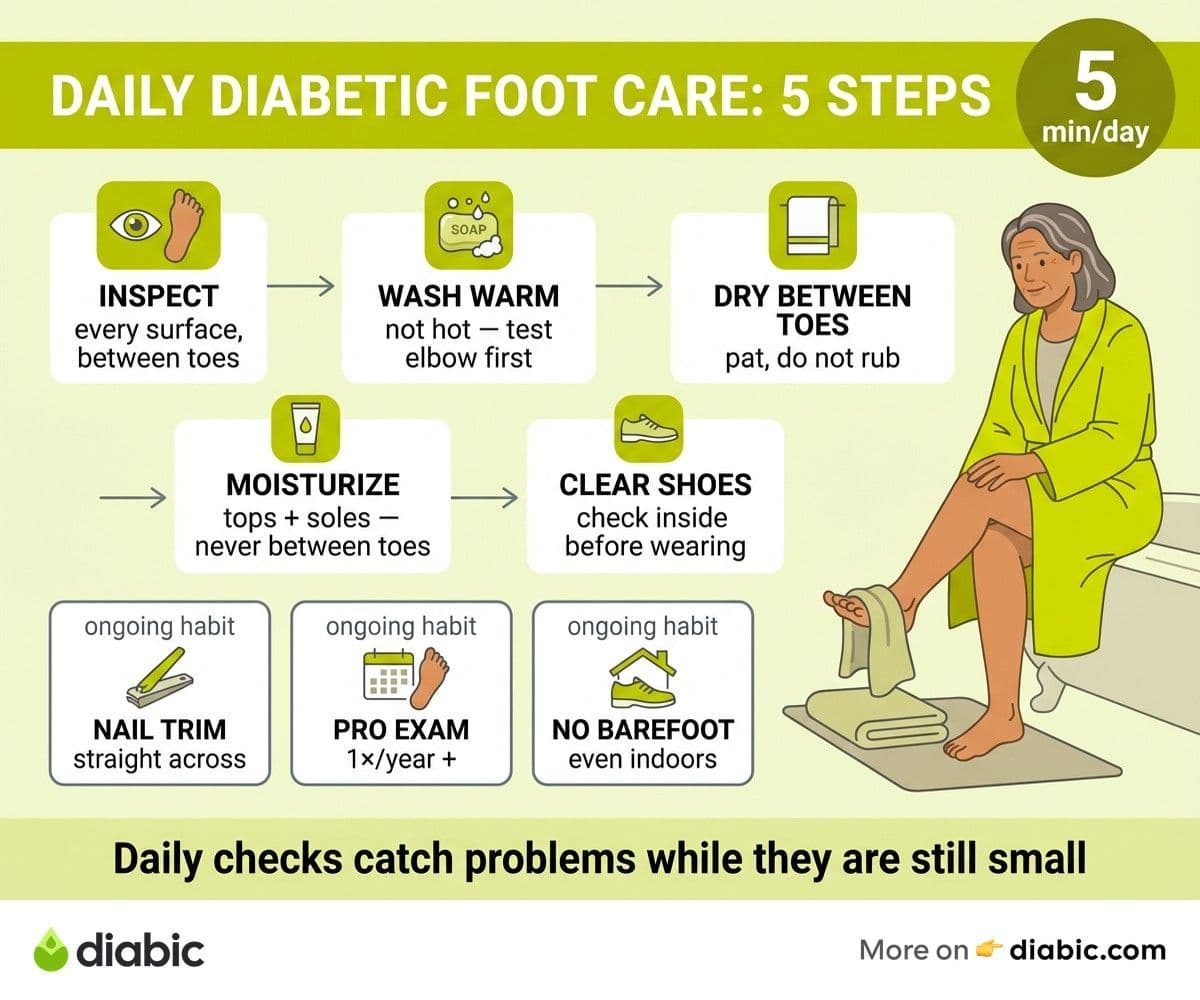
A daily inspection is the single most powerful habit in this routine. It takes two to three minutes and catches problems while they are still small. The Mayo Clinic recommends checking your feet every single day, even on days when nothing feels wrong.
What to Look For
Run your eyes and hands over every surface of each foot. That means the tops, the bottoms, the sides, the heels, and the spaces between every toe. You are watching for cuts, scrapes, blisters, redness, swelling, areas of unusual warmth or coolness, new calluses, color changes, and any wound that was not there yesterday.
Temperature changes matter more than people realize. A spot that feels warmer than the surrounding skin can be an early sign of inflammation or infection brewing underneath. A cool spot might suggest reduced blood flow. You do not need a thermometer. The back of your hand against the skin gives you a baseline you can compare day to day.
Tools That Make Inspection Easier
If reaching your feet is difficult, a long-handled mirror placed on the floor lets you see the soles without bending. A bright lamp helps with cracks between toes that are easy to miss. If a partner or family member is willing to do a weekly check on the spots you cannot see well, that second pair of eyes adds a layer of safety.
A printable foot care routine checklist can take the guesswork out of building the habit. Stick it on the bathroom door or next to where you put on your socks.
Making It a Habit
The trick to making any health habit stick is pairing it with something you already do. Check your feet right after your evening shower, while you brush your teeth in the morning, or as you put on your socks. Linking inspection to a moment you would not skip means you stop relying on willpower and start relying on rhythm.
From my experience: I have lived with type 1 diabetes for fourteen years, and the foot check is the habit I underestimated the longest. For years I told myself my numbers were good enough that my feet would be fine. Then one summer I caught a small blister from a new pair of sandals two days in, treated it cleanly, and watched it heal in a week. Without that early catch, I am genuinely not sure how that story would have ended.
Washing, Drying, and Moisturizing
The way you handle your feet in the bathroom matters more than most people think. Hot water can burn feet that have neuropathy without you realizing it, so test water temperature with your elbow or a thermometer. Lukewarm water with a mild, non-drying soap is the safe range.
Drying is where small mistakes become big ones. Pat your feet dry gently and pay particular attention to the spaces between your toes. Trapped moisture between toes is one of the top causes of skin breakdown and fungal growth. A soft towel or even a dry corner of a washcloth pushed gently between each toe handles this.
Moisturize the tops, bottoms, and sides of your feet daily, especially the heels, which are prone to cracking. Skip the area between your toes when you moisturize. Keeping that space dry is one of the simplest infection-prevention moves you can make.
Choosing the Right Footwear
Footwear is where prevention either works or quietly fails. The wrong shoes generate the pressure points, friction, and hidden injuries that lead to most foot problems in diabetes. The American Podiatric Medical Association publishes guidance on diabetes footwear that aligns with what most podiatrists recommend in clinic.
Features That Matter
Look for a wide, deep toe box that lets your toes splay naturally without crowding. A cushioned sole absorbs impact and reduces pressure on the ball of the foot. Breathable materials like leather and mesh help moisture escape, which keeps fungal growth in check. Seamless interiors prevent the friction points that turn into blisters.
A common mistake is buying shoes that feel snug at first because they will "stretch out." With diabetes, that breaking-in period is exactly when blisters form. Shoes should fit comfortably from the moment you put them on. If you want a starting list, our roundup of the [best shoes for people with diabetes](/foot-care/best-shoes-for-people with diabetes-in-2026) covers options across budgets and styles.
Why Going Barefoot Is Risky
Walking barefoot, even at home, exposes feet to splinters, dropped objects, hot floors, and small sharp items you would never feel coming with reduced sensation. House shoes or supportive slippers worn from morning to bedtime is the safer default. If you swim or use a pool deck, water shoes prevent both injury and fungal exposure.
Custom Diabetic Shoes and Orthotics
If you have neuropathy, structural foot changes, or a history of ulcers, your podiatrist may recommend custom diabetic shoes or orthotics. These are often covered by Medicare and many private insurance plans through what is sometimes called the "Therapeutic Shoe Bill." Your podiatrist or primary care provider can write the prescription if you qualify.
The Inside-the-Shoe Check
Before you slide your foot in, look and feel inside every shoe. A pebble, a curled-up sock, a torn lining, or a sharp edge can do real damage to a foot that cannot fully feel it. This check takes three seconds and prevents wounds you would otherwise discover hours later.
Nail Care Best Practices
Trimming your toenails sounds simple, and most days it is. With diabetes, the technique matters because small mistakes can lead to ingrown nails or cuts that are slow to heal. Trim straight across rather than rounding the corners, and leave the nail just slightly long rather than cutting it down to the skin.
After trimming, file any sharp edges gently with an emery board so the corner does not snag on socks. If your nails are thick, brittle, or hard to manage, a podiatrist can handle the trimming for you. Many people with diabetes see a podiatrist every six to eight weeks just for nail care, and it is one of the better uses of preventive medical time.
Skip any home surgery on calluses, corns, or ingrown nails. Cutting at thickened skin or trying to dig out an ingrown nail with diabetes is one of the fastest paths to infection. Our guide on diabetes nail problems covers the full picture of what to handle yourself versus what to leave to a professional.
When to See a Doctor About Your Feet
Knowing when to escalate is part of good foot care. Most issues that warrant a call to your provider fall into a few categories, and acting on them early is almost always better than waiting.
A wound that is not noticeably healing within one to two weeks deserves attention. Signs of infection include increasing redness, warmth around the wound, swelling, drainage of any kind, or a bad smell. Fever or chills along with a foot wound is an urgent situation that should not wait for a routine appointment.
New numbness, tingling, burning, or pain in your feet may indicate progressing neuropathy and is worth discussing with your provider. Changes in the shape of your foot, sudden swelling without injury, or a foot that feels hot when compared to the other one can be signs of Charcot foot or other structural problems that need imaging to evaluate.
Even when nothing seems wrong, the American Podiatric Medical Association and ADA recommend a comprehensive foot exam at least once a year if you have diabetes, and more often if you have neuropathy, vascular disease, or a history of foot problems. Many primary care offices include this exam in your annual visit, but you may need to ask for it specifically.
Building Foot Care into Your Diabetes Routine
The goal is to make foot care as automatic as checking your blood sugar or taking your morning medications. That means setting up your environment so the habit happens whether or not you are thinking about it. A small basket in the bathroom with a hand mirror, moisturizer, nail file, and a pack of clean cotton socks puts everything in one place.
Your care team can help you stay on track. Mention foot care at every diabetes appointment, even if nothing seems wrong. Ask your provider to take your shoes and socks off and look at your feet during your visit. A good provider will do this without being asked, but plenty of busy clinics skip this step unless you bring it up.
If you live with someone who can help, a weekly check together turns a chore into a quick shared moment. Caregivers and family members who understand the basics of foot inspection add a meaningful safety net, especially as vision or flexibility changes over time.
FAQ
How do you take care of diabetic feet?
Daily foot care for someone with diabetes starts with a visual and tactile inspection of every surface of both feet, looking for cuts, blisters, redness, swelling, calluses, and temperature changes. Wash with lukewarm water and mild soap, dry thoroughly between toes, and moisturize the tops and bottoms while skipping the spaces between toes. Wear well-fitting, supportive shoes with seamless interiors and check inside them before putting them on. See a podiatrist regularly for nail trimming and any concerning skin changes, and call your provider for any wound that is not healing in one to two weeks.
What foot problems are caused by diabetes?
The most common foot problems linked to diabetes are peripheral neuropathy (numbness, tingling, or pain), foot ulcers and slow-healing wounds, calluses and corns, fungal infections such as athlete's foot and toenail fungus, and structural changes including Charcot foot, hammertoes, and bunions. These issues stem from the combined effects of nerve damage and reduced circulation. Most are preventable with daily inspection, proper footwear, and regular care from your provider and podiatrist.
How often should people with diabetes have foot exams?
A comprehensive professional foot exam should happen at least once a year for everyone with diabetes, according to ADA Standards of Care. People with peripheral neuropathy, peripheral artery disease, foot deformities, or a history of foot ulcers should be examined more often, sometimes every three to six months. In addition to professional exams, daily self-inspection at home is the cornerstone of diabetic foot care.
Shahriar P. Shuvo is the founder of Diabic. He has lived with diabetes for over 14 years, and built Diabic to deliver the practical, evidence-based self-management tools he wished existed when he was first diagnosed. By trade, Shahriar is a senior design and frontend engineer with 6+ years shipping products at Agora, Timescale (now Tiger Data), and ShareTrip. He writes from the intersection of lived diabetes experience and product craft, focused on what works in daily management rather than what sounds good in a textbook.
Medically reviewed by
Dr. Shanto Arian is an internal medicine physician now specializing in clinical and aesthetic dermatology, with a parallel academic focus on epidemiology and public health. He holds an MBBS, MPH, MSc (UK), MRCP (UK), MRCPI (Ireland), Diploma in Dermatology (UK), and Diploma in Aesthetic Medicine (USA). Dr. Arian trained in internal medicine, including hospital work on hematology cases such as graft-versus-host disease, before moving toward dermatology. Skin is one of the earliest places diabetes shows itself, from acanthosis nigricans and diabetic dermopathy to slow foot wound healing, and that intersection is where his clinical and Diabic-review work meet. On Diabic, Dr. Arian medically reviews content on diabetes diagnosis, complications, dermatologic manifestations, and pharmacotherapy, ensuring every claim aligns with current ADA, NICE, and peer-reviewed literature.
More from Health & Complications
View all
Diabetes and Dental Implants: What to Know First
Diabetes dental implants guide covering safety, A1C targets, recovery expectations, gum health prep, and what to ask your oral surgeon before surgery.

Burning Mouth Syndrome and Diabetes Explained
Burning mouth syndrome diabetes link explained, including neuropathy, dry mouth, and thrush causes plus treatment options that may bring real relief.

Dental Care for people with diabetes: Tips That Help
Practical dental care diabetics need, with real tips for protecting teeth and gums when diabetes raises your risk for oral health problems.
Clinician-reviewed habits, plain-language guides, and honest answers - the small shifts that make living with diabetes feel lighter, every day.