DKA Symptoms: 5 Red Flags You Must Act On
DKA symptoms can turn life-threatening within hours. Learn the 5 red flags of diabetic ketoacidosis, who is at risk, and exactly when to call for help.

In this article(8)
DKA symptoms can escalate from uncomfortable to life-threatening in a matter of hours. Diabetic ketoacidosis is one of the most serious diabetes emergencies, and knowing which warning signs demand immediate action can save your life or the life of someone you care about.
The hard part is that the early signs of DKA can look like the flu, food poisoning, or just a rough day. Nausea. Stomach pain. Tiredness. By the time the more obvious red flags appear, the chemistry inside the body has already shifted dangerously. Catching the pattern early is what makes the difference.
The 5 DKA Symptoms That Signal Danger
These are the high blood sugar symptoms that should never be brushed off when they appear together. According to the American Diabetes Association, DKA accounts for hundreds of thousands of hospitalizations every year in the United States, and most cases follow a recognizable pattern.
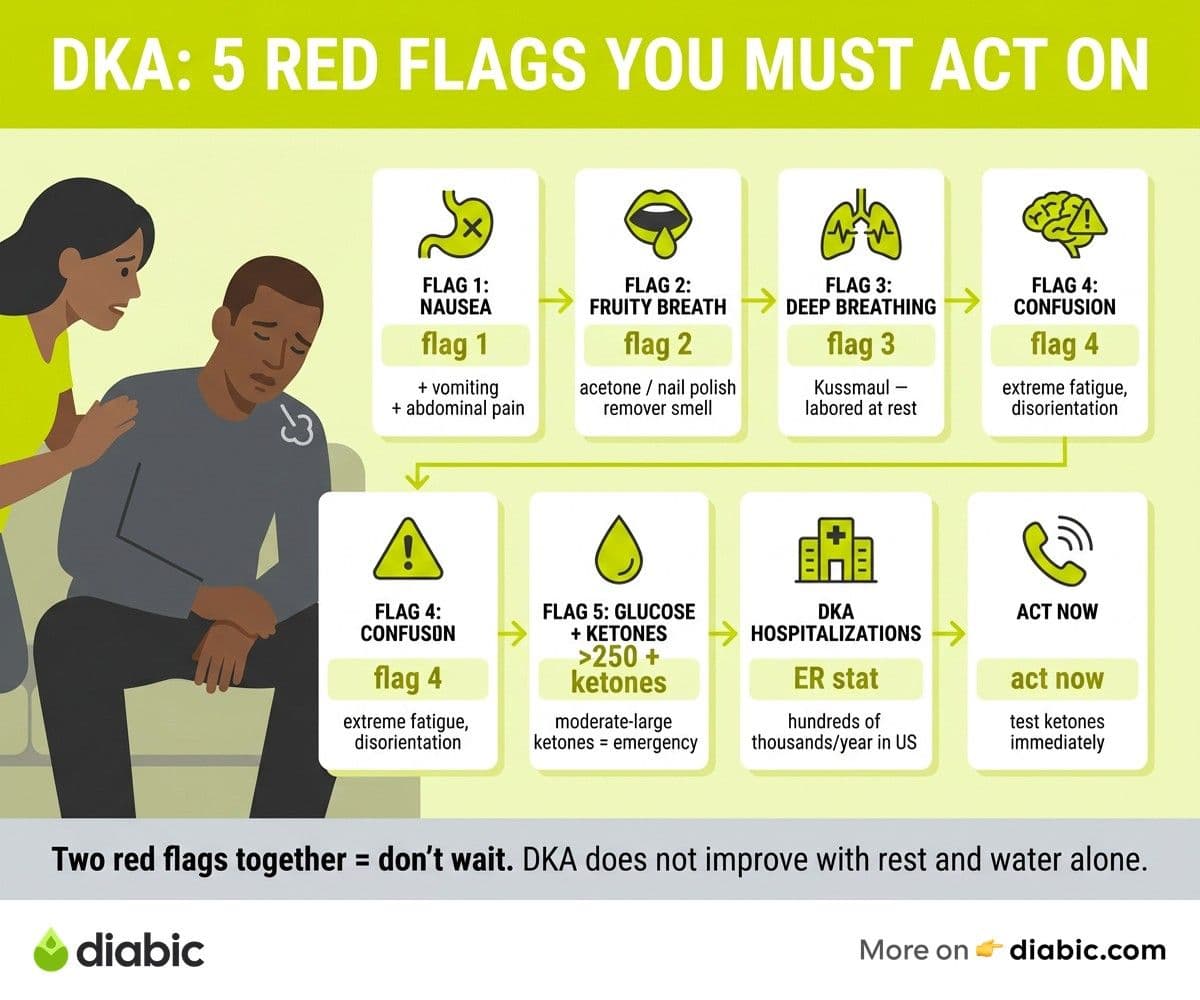
1. Nausea, vomiting, and abdominal pain. Persistent stomach upset that does not match anything you ate is one of the earliest red flags. Many people mistake this for a stomach bug. The difference is that DKA-related nausea worsens steadily and is often paired with high blood sugar readings. Vomiting also makes it harder to keep fluids down, which speeds up dehydration.
2. Fruity or acetone-smelling breath. As the body burns fat for fuel without insulin, it produces ketones, including one called acetone. The smell is sweet and slightly chemical, sometimes compared to nail polish remover or overripe fruit. A family member or friend may notice it before you do.
3. Rapid, deep breathing (Kussmaul breathing). This is the body's attempt to blow off excess acid by exhaling more carbon dioxide. It looks like deliberate, heavy panting that does not slow down even at rest. According to Mayo Clinic, Kussmaul breathing is a sign that DKA has progressed and needs emergency care.
4. Extreme fatigue and confusion. Severe dehydration combined with rising acidity in the blood affects brain function. People in DKA can seem foggy, slow to answer questions, sleepy, or just not themselves. In later stages, this can progress to a loss of consciousness.
5. Blood sugar above 250 mg/dL with positive ketones. This is the chemistry-level red flag. A glucose meter reading of 250 or higher paired with moderate or large ketones on a urine strip or blood ketone meter is a classic DKA pattern. If you cannot get the number down within a few hours despite hydration and correction insulin, it is time to seek care.
If you notice any combination of these signs, do not wait. DKA is one of the high blood sugar symptoms that does not improve with rest and water alone, and our broader guide on high blood sugar symptoms covers more of the early picture.
How DKA Relates to Broader Diabetes Symptoms
DKA does not appear out of nowhere. It is the end stage of a chain of diabetes symptoms that begins with too little insulin and ends with the body running on the wrong fuel.
Insulin's main job is to let glucose into cells for energy. When there is not enough insulin in the system, glucose stays trapped in the bloodstream. Cells starve and switch to burning fat for fuel. That fat-burning process produces ketones as a byproduct. A few ketones are normal. A flood of them turns the blood acidic, and that acidity is what makes DKA dangerous.
DKA is most common in type 1 diabetes because people with type 1 produce little to no insulin of their own. A missed dose, a faulty insulin pump, or the autoimmune onset of type 1 itself can all push the body into ketoacidosis. Our piece on diabetes symptoms overview covers the broader picture, but DKA is the version that needs the fastest response.
Although less common, DKA can also occur in type 2 diabetes. Severe illness, infection, certain medications, and a condition called euglycemic DKA (where blood sugar is only mildly elevated but ketones are still high) are all possibilities. People taking SGLT2 inhibitors, in particular, should learn the warning signs even if they do not use insulin daily.
The chain reaction is what makes DKA feel like it accelerates. Mild thirst becomes constant. Nausea becomes vomiting. Tiredness becomes confusion. Each step compounds the dehydration and the acidity. The earlier you intervene, the easier it is to break the cycle at home or in an outpatient setting.
Who Is Most at Risk for DKA
Some hyperglycemia symptoms tip into DKA more often than others. According to the CDC, the highest-risk groups share a few common patterns.
People with undiagnosed type 1 diabetes are a major group. About one in three new type 1 diagnoses in the United States happens in the emergency room because DKA is what brings the person in. The signs of type 1 diabetes symptoms often build over weeks before the body finally tips into a crisis.
Those who miss insulin doses or have pump malfunctions are the next most common group. Even a few hours without basal insulin can start the process. Pump users may not realize a kink in the tubing or a failed cannula has cut off delivery until ketones are already rising.
Illness, infection, and surgery are powerful DKA triggers. The body produces stress hormones during these events, which raise blood sugar and increase insulin needs. A person who normally manages well can be caught off guard by how much extra insulin a fever or stomach virus demands.
Emotional stress, alcohol use, and skipping meals when on insulin can also tip the scale. Eating disorders involving insulin restriction (sometimes called diabulimia) carry a particularly high DKA risk and need specialized care.
From my experience: I have lived with type 1 diabetes for 14 years and have ended up in the hospital twice with DKA. The first time was during the flu in my early twenties. I had been throwing up, could not keep insulin and food matched, and assumed I was just sick. The second time was a pump site that failed silently overnight. Both times the warning signs were there: deep breathing, that strange fruity smell my partner caught before I did, abdominal pain that did not match anything I ate. Trust the people around you when they say something seems off.
What to Do When You Suspect DKA
If two or more red flags above are present, the action plan is straightforward. Test blood sugar and ketones immediately. Use a urine ketone strip or, ideally, a blood ketone meter, which is more accurate during a developing episode. Trace ketones may resolve with hydration. Moderate to large ketones with high blood sugar are an emergency.
Do not wait for symptoms to improve on their own. DKA does not self-correct without insulin and fluids. If you are vomiting, cannot keep water down, or feel confused, those are signals to escalate care now rather than later.
Call 911 if you have rapid deep breathing, severe confusion, chest pain, or cannot stay awake. Drive to the emergency room (or have someone drive you) if blood sugar is above 250 mg/dL with moderate to large ketones, persistent vomiting, or symptoms that are not improving with home correction. Do not drive yourself if you feel impaired in any way.
At the hospital, expect IV fluids first. Most people in DKA are several liters dehydrated. You will likely receive IV insulin (separate from your usual doses), potassium replacement, and frequent blood draws to monitor blood gases and electrolytes. Most cases resolve in 12 to 24 hours, though severe episodes can require an ICU stay.
It also helps to know what hypoglycemia looks like in contrast, since DKA care can sometimes overcorrect. Our piece on low blood sugar symptoms covers the other end of the spectrum and what to watch for during recovery.
Preventing Future DKA Episodes
A first DKA episode is often a warning shot. The goal after recovery is to build a system that catches the next risk early. According to the NIDDK, most repeat DKA admissions involve preventable triggers.
Sick-day management rules are non-negotiable for insulin-dependent diabetes. The basics include never stopping basal insulin (even when not eating), checking blood sugar every two to four hours when ill, testing ketones whenever blood sugar runs above 240 for more than two readings in a row, and sipping fluids steadily even when nauseated. Our overview of insulin therapy for type 1 walks through how basal needs shift during illness.
Keep ketone strips or a blood ketone meter at home and check the expiration dates. Strips lose accuracy over time and are not reliable past their date. A meter is more useful during a real episode and gives a number you can act on.
Work with your care team to write down a personal sick-day plan. The plan should include thresholds (when to test ketones, when to take correction insulin, when to call), names and numbers of who to contact, and a list of medications and dosages. Print it and put it on the fridge so anyone in the household can find it fast.
Anyone close to you should know the early signs of DKA. A partner, parent, or roommate who knows what fruity breath smells like and what Kussmaul breathing looks like can be the difference between a quick correction and an ICU admission.
FAQ
What are the signs of diabetic ketoacidosis?
The signs of DKA include persistent nausea and vomiting, fruity or acetone-smelling breath, rapid and deep breathing (Kussmaul breathing), confusion or extreme drowsiness, and very high blood sugar paired with moderate or large ketones in the urine or blood. Abdominal pain that does not match a recent meal, severe thirst, and frequent urination are common early signs. These symptoms together require emergency medical care, especially if you cannot keep fluids down or are losing alertness.
When to go to the ER for DKA?
Go to the ER immediately if you have blood sugar above 250 mg/dL with moderate to large ketones, persistent vomiting that prevents you from keeping fluids down, confusion or difficulty staying awake, rapid labored breathing, or chest pain. Call 911 rather than drive yourself if you feel impaired or are alone. DKA can progress to a coma if left untreated, and earlier treatment generally means a shorter hospital stay and better recovery.
The most useful frame for DKA symptoms is to treat them as a cluster, not a checklist. Any two of the red flags above showing up together, especially alongside high blood sugar and ketones, is enough reason to act. Save the DKA symptoms list somewhere your household can find it, because the moments these decisions matter most are also the moments your own thinking may be the cloudiest.
Shahriar P. Shuvo is the founder of Diabic. He has lived with diabetes for over 14 years, and built Diabic to deliver the practical, evidence-based self-management tools he wished existed when he was first diagnosed. By trade, Shahriar is a senior design and frontend engineer with 6+ years shipping products at Agora, Timescale (now Tiger Data), and ShareTrip. He writes from the intersection of lived diabetes experience and product craft, focused on what works in daily management rather than what sounds good in a textbook.
Medically reviewed by
Dr. Shanto Arian is an internal medicine physician now specializing in clinical and aesthetic dermatology, with a parallel academic focus on epidemiology and public health. He holds an MBBS, MPH, MSc (UK), MRCP (UK), MRCPI (Ireland), Diploma in Dermatology (UK), and Diploma in Aesthetic Medicine (USA). Dr. Arian trained in internal medicine, including hospital work on hematology cases such as graft-versus-host disease, before moving toward dermatology. Skin is one of the earliest places diabetes shows itself, from acanthosis nigricans and diabetic dermopathy to slow foot wound healing, and that intersection is where his clinical and Diabic-review work meet. On Diabic, Dr. Arian medically reviews content on diabetes diagnosis, complications, dermatologic manifestations, and pharmacotherapy, ensuring every claim aligns with current ADA, NICE, and peer-reviewed literature.
More from Diabetes Knowledge
View all
6 Safe Dessert for Gestational Diabetes Recipes You Can
Six dessert for gestational diabetes recipes that satisfy your sweet tooth without spiking blood sugar, with carb counts and pairing tips you can use.

8 High Fiber Foods That Help with Prediabetes
Add these 8 high fiber foods for prediabetes to slow glucose absorption, support steady blood sugar, and meet the daily fiber target most people miss.

Mediterranean Diet for Prediabetes: A Practical Guide
The mediterranean diet for prediabetes is one of the best-studied eating patterns for prevention. Here is what to eat, what to avoid, and how to start.
Clinician-reviewed habits, plain-language guides, and honest answers - the small shifts that make living with diabetes feel lighter, every day.