Type 1 Diabetes Symptoms That Come On Fast
Type 1 diabetes symptoms can escalate in weeks. Learn the fast-onset signs in adults and children, why they happen, and what to do if you suspect T1D.

In this article(8)
Type 1 diabetes symptoms can go from zero to urgent in a matter of weeks. Unlike type 2, which develops gradually, type 1 often announces itself with rapid weight loss, extreme thirst, and a sudden crash in energy. Recognizing these fast-moving symptoms can prevent a dangerous emergency like diabetic ketoacidosis.
That speed is part of what makes type 1 so easy to miss until it is severe. People feel a little run-down. They drink more water. They lose a few pounds and credit it to a busy stretch. Two or three weeks later, they cannot get out of bed. The pattern is predictable once you know what to look for.
Type 1 Diabetes Symptoms That Appear Quickly
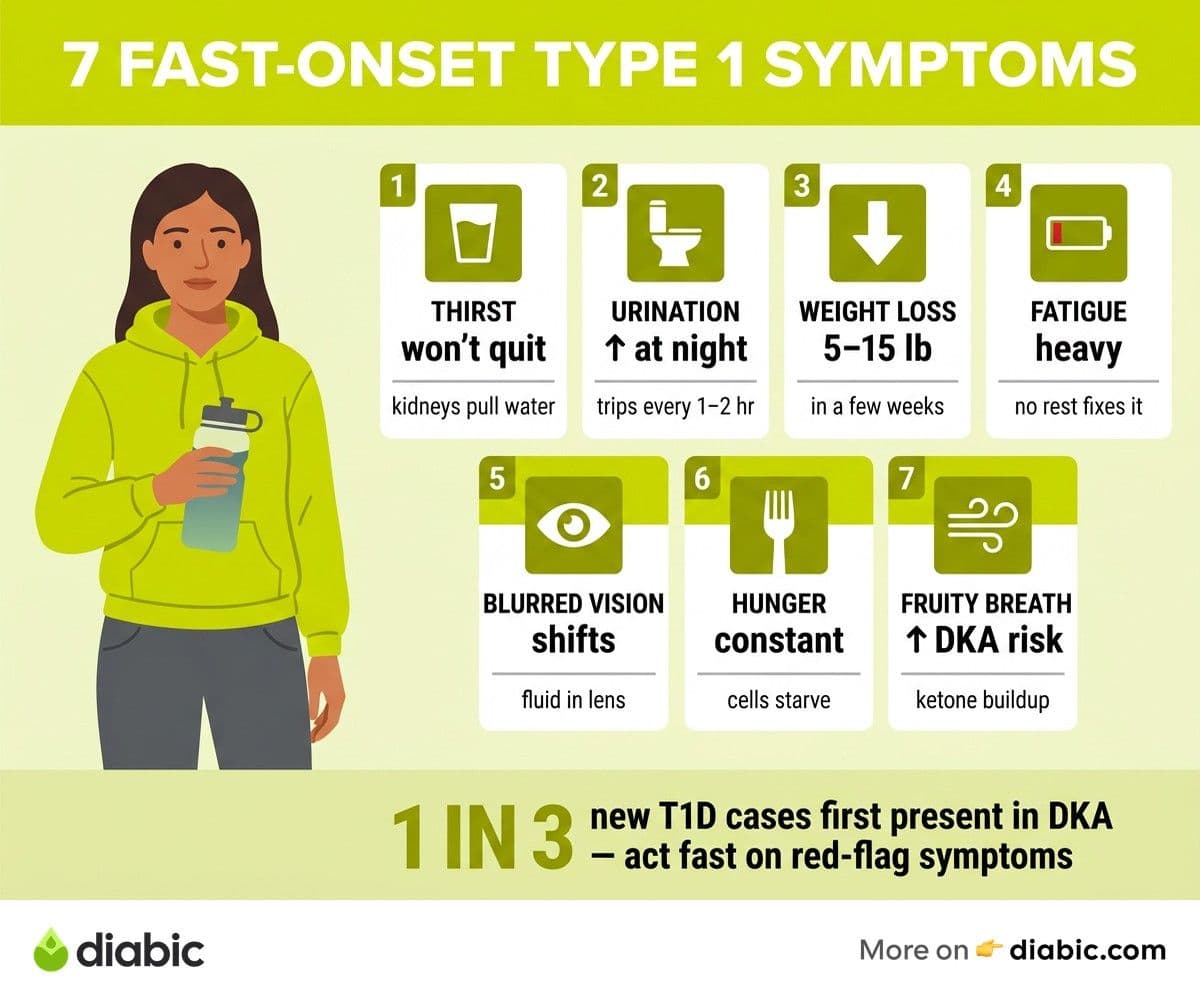
These are the symptoms of type 1 diabetes that most often appear in the days or weeks before diagnosis. According to the American Diabetes Association, the classic cluster is thirst, urination, weight loss, and fatigue, with several supporting signs.
Extreme thirst and frequent urination. When blood sugar runs high, the kidneys pull water from cells to flush out excess glucose. The result is a thirst that does not quit and trips to the bathroom every hour or two, including overnight. Many people describe carrying a water bottle constantly and still waking up dry-mouthed.
Rapid, unexplained weight loss. Without enough insulin, cells cannot use glucose for energy. The body starts breaking down fat and muscle to fuel itself. Five, ten, fifteen pounds can come off in a few weeks without any change in eating habits. This is one of the most distinctive signs of type 1 and a key contrast with type 2.
Constant hunger despite eating. Cells are starving even when blood is full of glucose, which sends powerful hunger signals to the brain. People often eat more than usual and still lose weight, which feels confusing and contradictory until the underlying issue becomes clear.
Severe fatigue and weakness. When the body cannot use its main fuel source, energy crashes hard. This is not the kind of tiredness that improves with a good night of sleep. It is heavy, persistent, and gets worse over time.
Blurred vision. High blood sugar pulls fluid out of the lens of the eye and changes its shape. Vision can shift over a matter of days. Some people get a new glasses prescription right before diagnosis, only to find their vision returns to baseline once blood sugar is treated.
Fruity-smelling breath. This is a sign that ketones are building up. As the body burns fat for fuel without insulin, it produces ketones, including acetone, which has a sweet chemical smell. Fruity breath in someone with severe thirst and weight loss is a major red flag for impending DKA.
For a side-by-side look at how the symptoms differ from type 2, our piece on type 1 vs type 2 differences covers the contrast in detail.
Signs in Different Ages
Early warning signs can look slightly different depending on age, even though the underlying mechanism is the same. According to Mayo Clinic, age affects both how fast symptoms develop and which ones get noticed first.
In children and adolescents. The classic fast-onset cluster is most common here. Parents often notice a child suddenly drinking water nonstop, asking to go to the bathroom in class, losing weight despite a normal appetite, and becoming unusually irritable or tired. Bedwetting in a child who has been dry at night is a particularly important early clue and one of the most overlooked. Mood and behavior changes can precede the more obvious physical signs.
In adults. The same symptoms appear, but the timeline can be slightly slower. Adult-onset type 1, sometimes called LADA (latent autoimmune diabetes in adults), can develop over months rather than weeks. This is why some adults are initially misdiagnosed with type 2 diabetes and only later identified as type 1 when oral medications stop working. Symptoms in adults often include the classic cluster plus unexplained nausea, recurrent thrush or urinary infections, and a feeling of being mentally foggy that does not lift.
Why age affects how quickly symptoms develop. Children have less metabolic reserve. Once enough beta cells are destroyed, blood sugar climbs faster and DKA risk rises sooner. Adults can sometimes coast longer on residual insulin production, which is why LADA cases are often misclassified at first.
For a full breakdown of what the disease looks like in the body, our piece on what is type 1 diabetes walks through the autoimmune process and what insulin therapy involves.
Why Type 1 Diabetes and Symptoms Hit So Fast
The reason type 1 diabetes and symptoms appear so quickly comes down to what is happening inside the pancreas.
Type 1 is an autoimmune disease. The immune system, for reasons researchers are still unraveling, mistakenly identifies the insulin-producing beta cells in the pancreas as a threat and destroys them over months or years. Most of this destruction happens silently. Beta cells have spare capacity, so the body can produce enough insulin even after a significant percentage are gone.
The tipping point comes when too few beta cells remain to keep up. Once roughly 80 to 90 percent of insulin production is lost, blood sugar starts climbing fast. There is no longer enough insulin to move glucose into cells, and the chain reaction of thirst, urination, weight loss, and fatigue begins.
Without intervention, the body switches to burning fat for fuel, producing ketones as a byproduct. As ketones build up, the blood becomes acidic. This is diabetic ketoacidosis, and it is the most common reason new type 1 cases end up in the emergency room. Our guide on DKA symptoms covers the red flags that signal this stage.
About one in three new type 1 diagnoses in the United States happens during a DKA episode. That number is far too high. Most of those episodes could have been prevented with earlier recognition of the warning signs. The autoimmune process itself cannot be paused with current medicine, but the dangerous tipping point can almost always be caught in time.
How Type 1 Is Diagnosed
If type 1 diabetes is suspected, diagnosis is usually fast and uses a few specific tests. According to Breakthrough T1D, the standard workup confirms not just diabetes but the type.
Blood glucose tests. A random blood glucose above 200 mg/dL with classic symptoms is enough to diagnose diabetes. Fasting glucose above 126 mg/dL on two readings or an A1C of 6.5 percent or higher also confirm it. These tell you that diabetes is present but do not specify the type.
Autoantibody tests. This is what distinguishes type 1 from type 2. The most common autoantibodies tested are GAD, IA-2, ZnT8, and insulin autoantibodies. The presence of one or more confirms an autoimmune process and points to type 1 (or LADA in adults). A negative panel does not fully rule out type 1, but a positive panel rules it in.
C-peptide testing. C-peptide is released alongside insulin, so measuring it shows how much insulin the body is producing on its own. Low or undetectable C-peptide supports a type 1 diagnosis. A normal or high C-peptide suggests type 2.
If your provider has not run autoantibody or C-peptide testing and you have any doubt about whether you were correctly classified, ask. Adults misclassified as type 2 sometimes go years without insulin they actually need. Our breakdown of type 1 diabetes causes covers risk factors that should prompt a closer look.
What to Do if You Suspect Type 1 Diabetes
If the symptoms above are present, especially if they have appeared in days or weeks, do not wait. Type 1 is one of the few conditions where speed of diagnosis genuinely changes outcomes.
Seek medical attention the same day if symptoms are severe. Severe means blood sugar above 250 mg/dL on a home meter, persistent vomiting, fruity breath, deep rapid breathing, confusion, or extreme fatigue. The emergency room is the right destination if any of these are present, especially in children.
Do not wait to see if symptoms resolve on their own. They will not. Type 1 does not improve without insulin. Every day of delay raises the risk of DKA, dehydration, and complications that are entirely preventable with timely treatment.
At the emergency room or urgent care, expect a finger stick blood glucose first, then a urine or blood ketone check. If glucose is high and ketones are present, IV fluids and insulin will likely follow. Most new type 1 diagnoses spend two to four days in the hospital while blood sugar is stabilized and basic insulin training begins.
Beginning insulin therapy is the immediate next step after diagnosis. This usually involves both a long-acting basal insulin and a rapid-acting mealtime insulin, delivered by injection or insulin pump. The first weeks are the steepest learning curve. A diabetes educator and an endocrinologist will be central to your care team. For a broader sense of what other diabetes signs look like, our piece on diabetes symptoms that sneak up on you covers the wider symptom landscape.
From my experience: I was diagnosed with type 1 at 18, and I remember every detail of the three weeks before. I had lost twelve pounds without trying. I was drinking a gallon of water a day and still parched. I fell asleep at my desk in the middle of an exam. My mother smelled the fruity breath and drove me to the hospital that night. My blood sugar was 487. I was hours, maybe a day, from full DKA. Fourteen years later, I tell every parent and partner I know what those signs feel like. The difference between catching it on day 14 and day 21 can be the difference between an outpatient diagnosis and an ICU stay.
FAQ
What are the first signs of type 1 diabetes?
The first signs of type 1 diabetes typically include sudden and intense thirst, frequent urination (often including nighttime trips), rapid unexplained weight loss, and persistent fatigue. Many people also notice blurry vision, increased appetite, and a fruity smell on the breath. In children, bedwetting after being reliably dry at night is one of the most overlooked early clues. These symptoms can develop within just a few weeks, which is why prompt evaluation matters when several appear together.
How quickly do these signs appear?
Type 1 diabetes symptoms typically develop over a period of days to weeks, though the underlying autoimmune destruction of insulin-producing beta cells may have been happening silently for months or years. Once enough beta cells are destroyed, symptoms tend to escalate rapidly because there is no longer enough insulin to manage blood sugar. In adults with LADA, the timeline can be slower, sometimes months. Seeking prompt medical evaluation is important because delayed diagnosis can lead to diabetic ketoacidosis, which is a life-threatening emergency.
Shahriar P. Shuvo is the founder of Diabic. He has lived with diabetes for over 14 years, and built Diabic to deliver the practical, evidence-based self-management tools he wished existed when he was first diagnosed. By trade, Shahriar is a senior design and frontend engineer with 6+ years shipping products at Agora, Timescale (now Tiger Data), and ShareTrip. He writes from the intersection of lived diabetes experience and product craft, focused on what works in daily management rather than what sounds good in a textbook.
Medically reviewed by
Dr. Rezwana Parvin Rumpa is an obstetrics and gynaecology specialist with clinical focus on gestational diabetes, PCOS, and fertility. She holds the MRCOG (Final Part) from the Royal College of Obstetricians and Gynaecologists in London, the MRCPI (Final Part) from the Royal College of Physicians of Ireland, and an MBBS from Shaheed Monsur Ali Medical College under Dhaka University. Dr. Rumpa serves as a Senior Medical Officer in the Obs and Gynae department at BRB Hospitals Ltd, where she has spent three years managing prenatal care, emergency obstetric cases, and women's-health surgery. On Diabic, she medically reviews content for women living with diabetes, with particular attention to pregnancy, PCOS, and reproductive-health intersections.
More from Diabetes Knowledge
View all
6 Safe Dessert for Gestational Diabetes Recipes You Can
Six dessert for gestational diabetes recipes that satisfy your sweet tooth without spiking blood sugar, with carb counts and pairing tips you can use.

8 High Fiber Foods That Help with Prediabetes
Add these 8 high fiber foods for prediabetes to slow glucose absorption, support steady blood sugar, and meet the daily fiber target most people miss.

Mediterranean Diet for Prediabetes: A Practical Guide
The mediterranean diet for prediabetes is one of the best-studied eating patterns for prevention. Here is what to eat, what to avoid, and how to start.
Clinician-reviewed habits, plain-language guides, and honest answers - the small shifts that make living with diabetes feel lighter, every day.