High Blood Sugar Symptoms You Shouldn't Ignore
High blood sugar symptoms build quietly. Learn what to watch for, when it becomes an emergency, and how to act before complications start.

In this article(10)
High blood sugar symptoms tend to build quietly, making it tempting to brush them off as just feeling a little off. But when hyperglycemia goes unchecked, it can lead to serious complications faster than most people expect. Here is what your body is trying to tell you.
The tricky part is that mild high blood sugar can feel almost like nothing. A bit more thirst. A few extra trips to the bathroom. Some afternoon brain fog. Each on its own seems manageable. Together they form a pattern worth paying attention to.
Common High Blood Sugar Symptoms to Watch For
Hyperglycemia symptoms often follow a predictable order. The body tries to flush extra glucose by pulling water from your cells into your bloodstream, then sending it out through urine. The downstream effects show up across the body.
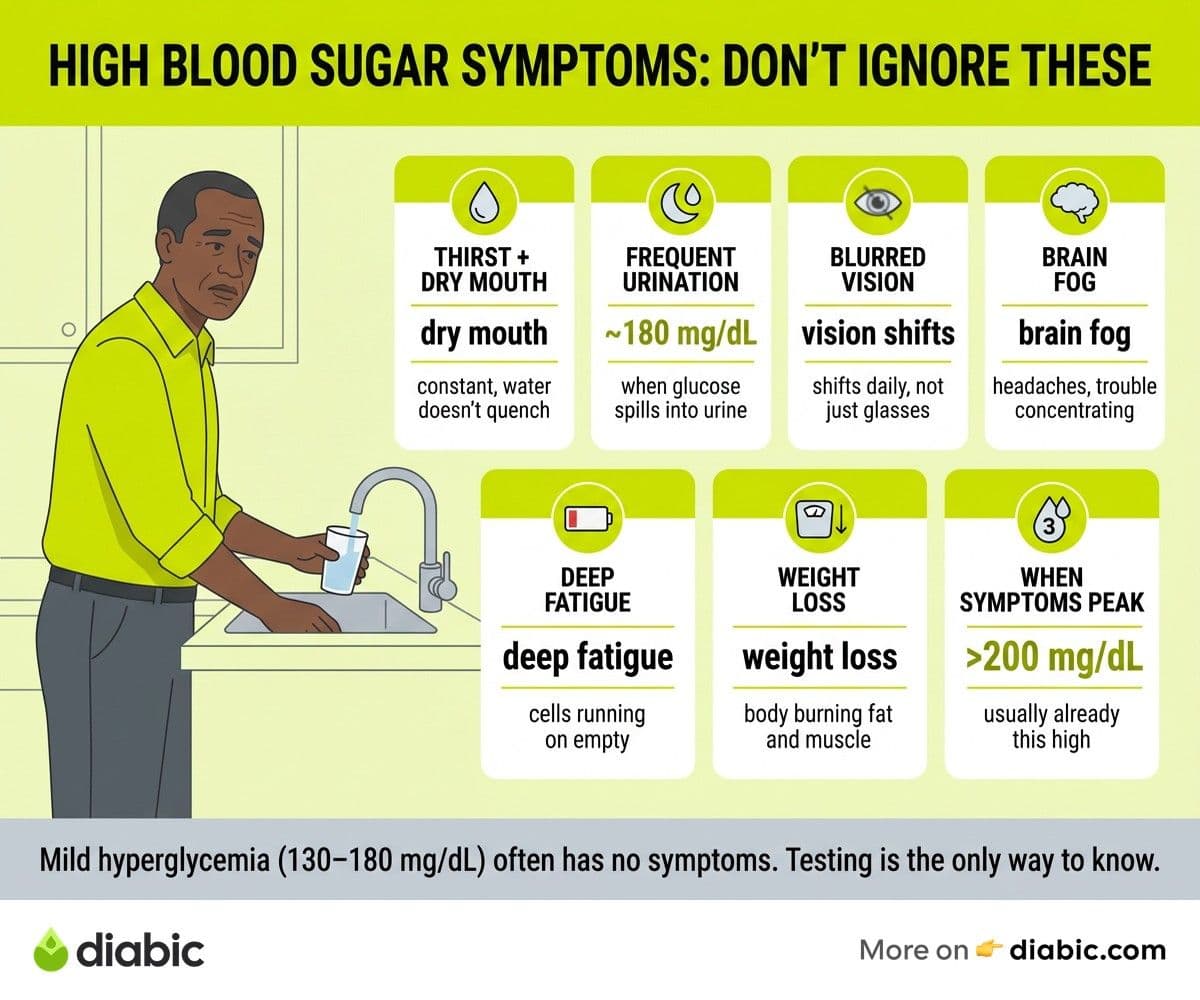
Increased thirst and dry mouth. As your body sends more glucose-laden water through the kidneys, you become dehydrated. Thirst feels constant, and your mouth dries quickly even after drinking.
Frequent urination, especially at night. The kidneys can only handle so much glucose. Once levels rise above the renal threshold (around 180 mg/dL), the excess spills into urine, pulling water with it. Many people notice they are getting up two or three times a night.
Blurred or worsening vision. High glucose pulls fluid out of the lens of the eye, distorting its shape and your vision. This effect can change day to day depending on blood sugar levels. Many people get a new glasses prescription, only to need another one a few months later.
Headaches and difficulty concentrating. Brain function suffers when blood sugar runs high or fluctuates wildly. Headaches, brain fog, and trouble focusing on tasks can all be signs.
Fatigue that does not improve with rest. When your cells cannot use glucose efficiently (either from insulin resistance or insulin deficiency), they run on empty. The result is a heavy, persistent tiredness that no amount of sleep fully resolves.
Unexplained weight loss. When the body cannot pull glucose into cells for energy, it starts breaking down fat and muscle instead. Sudden weight loss without dietary change is a particularly common early sign of type 1 diabetes and can also occur with severe type 2.
Other diabetes symptoms that sneak up include slow wound healing, recurring infections (especially yeast and urinary), tingling in the feet, and dry, itchy skin. Our diabetes symptoms that sneak up guide covers more of these in detail.
How Diabetes Symptoms of High Blood Sugar Develop
Diabetes symptoms vary depending on how high your blood sugar is, how fast it rose, and what kind of diabetes you have.
In the body, glucose is the main fuel for cells. Insulin acts like a key that lets glucose into cells to be used for energy. When insulin is missing or not working properly, glucose accumulates in the blood while the cells stay starved.
In type 2 diabetes, the most common pattern is insulin resistance. The pancreas still produces insulin, sometimes even more than normal, but the body's cells respond poorly. Over time the pancreas may also produce less. Symptoms tend to appear gradually, sometimes over years.
In type 1 diabetes, the immune system has destroyed most or all of the insulin-producing beta cells. There is little to no insulin available, so blood sugar can rise rapidly. Symptoms often develop over days to weeks and can become severe quickly.
In both types, the symptom pattern reflects the body trying to compensate. Excess glucose pulls water through the kidneys (causing thirst and frequent urination). Cells unable to use glucose burn fat and muscle instead (causing weight loss and fatigue). Vision blurs as glucose disrupts the eye's fluid balance.
Subtle elevations (say, fasting glucose in the 130-180 range) often produce mild or no symptoms. By the time symptoms become hard to ignore, blood sugar is usually well above 200 mg/dL. This is why people can have undiagnosed diabetes for years. For more on the metabolic pattern that often comes first, our piece on insulin resistance symptoms covers what to watch for.
When hyperglycemia is paired with hypoglycemia (rapid swings in either direction), the symptom picture gets confusing. Knowing the contrast helps. Our guide to low blood sugar symptoms explains what hypoglycemia feels like and how to tell the two apart.
When High Blood Sugar Becomes Dangerous
Most cases of mildly elevated blood sugar can be managed at home with hydration, movement, and medication adjustments. Severe hyperglycemia is a different matter.
Above 250 mg/dL. Test for ketones if you have type 1 diabetes or are on insulin. Drink water steadily, avoid carbs, and contact your provider if levels stay elevated for more than a few hours.
Diabetic ketoacidosis (DKA). A medical emergency that develops when the body breaks down fat for fuel because it cannot use glucose, producing toxic acids called ketones. Most common in type 1 but possible in type 2. Symptoms include nausea, vomiting, abdominal pain, fruity-smelling breath, deep rapid breathing, and confusion. Blood sugar is usually above 250 mg/dL with moderate-to-large ketones present. Our piece on DKA symptoms and red flags covers what to watch for and when to call 911.
Hyperglycemic hyperosmolar syndrome (HHS). More common in older adults with type 2 diabetes. Blood sugar climbs extremely high (often above 600 mg/dL) without significant ketones. Severe dehydration, confusion, seizures, and coma can result. HHS develops over days to weeks and requires emergency treatment.
When to call your doctor vs. head to the ER. Call your doctor for sustained high readings (above 250 mg/dL for several hours), persistent symptoms despite usual treatment, mild dehydration, or recurring patterns. Go to the ER for blood sugar above 400 mg/dL, vomiting that prevents fluid intake, signs of DKA (fruity breath, deep breathing, confusion), severe abdominal pain, or any change in alertness.
If you are unsure whether your symptoms warrant emergency care, err on the side of going. The cost of being checked is far smaller than the cost of waiting too long.
What to Do When Your Blood Sugar Is High
Most cases of moderately high blood sugar respond to a few simple steps. The American Diabetes Association outlines a basic approach you can take at home.
Check your blood sugar (and ketones if applicable). Confirm the reading. If you are on insulin or have type 1 diabetes, test for urine ketones whenever your blood sugar is above 240 mg/dL.
Drink water steadily. Hyperglycemia dehydrates you. Plain water is best. Avoid sugary drinks, fruit juice, and sweetened sports drinks.
Move your body if you feel well enough. A 15 to 30 minute walk can lower blood sugar by helping muscles pull glucose out of the bloodstream. Skip exercise if ketones are present, since exercise can raise blood sugar further in that situation.
Review what happened. Look at recent meals, missed medications, illness, stress, or poor sleep. Patterns matter more than single readings. Note what may have triggered the high so you can adjust next time.
Adjust insulin only with provider guidance. If you have a sliding scale or pre-arranged correction dose protocol, follow it. Do not improvise with extra insulin without your provider's instruction. Stacking corrections is one of the fastest paths to severe hypoglycemia.
From my experience: A 250 reading after a heavy carb meal is annoying but not an emergency. A 250 reading combined with vomiting, confusion, or heavy breathing is. Learning to read the pattern, not just the number, is one of the most useful skills you can develop with this condition.
Long-Term Risks of Ignoring Hyperglycemia
The reason high blood sugar symptoms matter is not the symptoms themselves. It is what happens when you ignore them for years. The CDC lists the major complications driven by chronic hyperglycemia, all of which develop quietly until they cannot be reversed.
Nerve damage (neuropathy). Often starts in the feet as tingling, numbness, or burning. Can progress to loss of sensation, foot ulcers, and in severe cases, amputation.
Kidney damage (nephropathy). Tiny blood vessels in the kidneys are damaged by elevated glucose. Early stages produce no symptoms. Late stages can lead to kidney failure and the need for dialysis or transplant.
Eye damage (retinopathy). Blood vessels in the retina weaken and leak. Can cause vision changes, floaters, and ultimately blindness if untreated. Annual dilated eye exams catch it early.
Cardiovascular complications. Diabetes roughly doubles the risk of heart attack and stroke. The damage is silent until something acute happens.
Slow wound healing and infections. Even small foot wounds can become serious if not treated promptly. Diabetes-related foot complications are a leading cause of hospitalization.
The good news is that consistent monitoring and treatment dramatically reduce these risks. Maintaining A1C close to your target, blood pressure under control, and regular checkups for kidneys, eyes, and feet can prevent or significantly delay most long-term complications. The NIDDK covers these screening protocols in detail. Anyone managing type 2 diabetes symptoms should also build a regular monitoring routine.
FAQ
What does high blood sugar feel like?
High blood sugar often feels like unrelenting thirst paired with frequent bathroom trips. Many people also experience headaches, brain fog, and a heavy kind of fatigue. In more pronounced cases, vision becomes blurry and nausea can set in. The feelings tend to build gradually rather than hitting all at once.
When is high blood sugar an emergency?
High blood sugar becomes an emergency when levels exceed 300 mg/dL and are accompanied by symptoms such as vomiting, fruity-smelling breath, confusion, or difficulty breathing. These can indicate DKA or hyperglycemic hyperosmolar syndrome, both of which require immediate medical attention.
How quickly should I act on high blood sugar?
Mild elevations (180-250 mg/dL) can usually be addressed with water, light activity, and your usual treatment plan. Sustained readings above 250 for several hours warrant a call to your provider. Anything above 400 mg/dL or paired with severe symptoms calls for emergency care.
Can stress cause high blood sugar?
Yes. Stress hormones like cortisol and adrenaline raise blood sugar by signaling the liver to release glucose. Acute stress, illness, surgery, and even poor sleep can all push numbers higher than usual. This is why blood sugar can rise on days when you have not changed your diet or medication.
Recognizing high blood sugar symptoms early is the difference between a manageable adjustment and a crisis you didn't see coming. Pay attention to the patterns, not just the spikes, and your numbers will tell you what your body needs.
Shahriar P. Shuvo is the founder of Diabic. He has lived with diabetes for over 14 years, and built Diabic to deliver the practical, evidence-based self-management tools he wished existed when he was first diagnosed. By trade, Shahriar is a senior design and frontend engineer with 6+ years shipping products at Agora, Timescale (now Tiger Data), and ShareTrip. He writes from the intersection of lived diabetes experience and product craft, focused on what works in daily management rather than what sounds good in a textbook.
Medically reviewed by
Dr. Rezwana Parvin Rumpa is an obstetrics and gynaecology specialist with clinical focus on gestational diabetes, PCOS, and fertility. She holds the MRCOG (Final Part) from the Royal College of Obstetricians and Gynaecologists in London, the MRCPI (Final Part) from the Royal College of Physicians of Ireland, and an MBBS from Shaheed Monsur Ali Medical College under Dhaka University. Dr. Rumpa serves as a Senior Medical Officer in the Obs and Gynae department at BRB Hospitals Ltd, where she has spent three years managing prenatal care, emergency obstetric cases, and women's-health surgery. On Diabic, she medically reviews content for women living with diabetes, with particular attention to pregnancy, PCOS, and reproductive-health intersections.
More from Diabetes Knowledge
View all
6 Safe Dessert for Gestational Diabetes Recipes You Can
Six dessert for gestational diabetes recipes that satisfy your sweet tooth without spiking blood sugar, with carb counts and pairing tips you can use.

8 High Fiber Foods That Help with Prediabetes
Add these 8 high fiber foods for prediabetes to slow glucose absorption, support steady blood sugar, and meet the daily fiber target most people miss.

Mediterranean Diet for Prediabetes: A Practical Guide
The mediterranean diet for prediabetes is one of the best-studied eating patterns for prevention. Here is what to eat, what to avoid, and how to start.
Clinician-reviewed habits, plain-language guides, and honest answers - the small shifts that make living with diabetes feel lighter, every day.