6 Type 2 Diabetes Symptoms That Creep Up Slowly
Type 2 diabetes symptoms build so gradually most people miss them for years. Here are six signs to watch for and what to do if they sound familiar.

In this article(8)
Type 2 diabetes symptoms do not arrive with a bang. They build so gradually that most people chalk them up to getting older, sleeping poorly, or just having a stressful stretch. By the time the picture becomes clear, blood sugar may have been elevated for years.
The frustrating part is that the body is good at hiding the problem. The pancreas works overtime to push out extra insulin, keeping blood sugar in a borderline range that does not feel like much. You feel a little tired, a little thirstier, a little blurry, and you keep going. Six common signs are worth slowing down for.
The 6 Type 2 Diabetes Symptoms That Develop Gradually
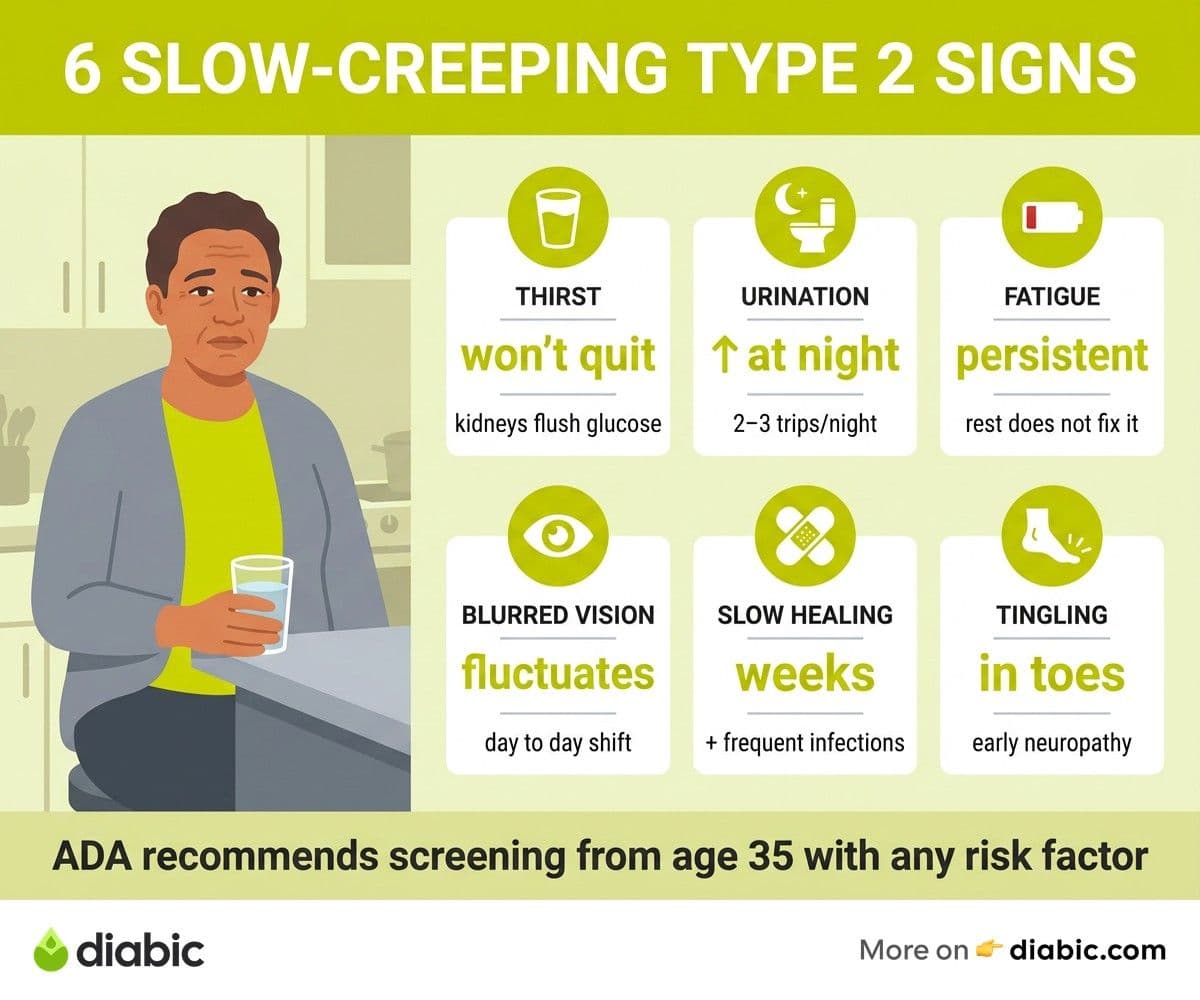
These signs of type 2 diabetes rarely appear all at once. Most people notice one or two, dismiss them, and only piece things together later. According to the American Diabetes Association, millions of adults have type 2 without knowing it because the early signals are so easy to miss.
Increased thirst that never fully goes away. When blood sugar runs high, the kidneys pull water from your cells to flush out extra glucose. You feel parched, drink more, and still wake up dry-mouthed. Many people describe carrying a water bottle everywhere and still feeling like it is not enough.
Frequent urination, especially at night. All that extra fluid has to go somewhere. Two or three trips to the bathroom in the middle of the night is a pattern worth paying attention to, especially if it is new for you.
Fatigue that persists despite adequate rest. When cells cannot use glucose efficiently, they run on empty. The result is a heavy tiredness that does not lift after a full night of sleep, a long weekend, or a vacation.
Blurred vision that fluctuates. High glucose pulls fluid out of the lens of the eye and distorts its shape. Vision can shift day to day, which is why some people get a new glasses prescription only to need another one a few months later.
Slow-healing wounds and frequent infections. Elevated blood sugar slows circulation and weakens the immune response. A cut on the foot that lingers for weeks, a urinary tract infection that keeps coming back, or recurring yeast infections all fit this pattern.
Tingling or numbness in the hands and feet. Persistent high blood sugar damages small nerves over time. Early diabetic neuropathy can feel like pins and needles, a faint burning, or a strange numbness, often starting in the toes.
If two or more of these sound familiar, it may be time to ask your doctor about screening. Our piece on early signs of diabetes you might not expect covers a few more subtle clues that often get missed.
Why Symptoms for Type 2 Diabetes Are So Subtle
Symptoms for type 2 diabetes feel mild for the same reason the disease takes so long to diagnose. The body compensates well, until it cannot.
In the early stages, the cells of the body stop responding to insulin properly. This is called insulin resistance. The pancreas notices and starts pumping out more insulin to make up the difference. For years, blood sugar stays close to normal because the extra insulin is doing the heavy lifting. Our guide on insulin resistance symptoms covers what this stage feels like, since many people sit in it long before a diabetes diagnosis.
Over time, the pancreas tires out. Insulin production drops, blood sugar climbs, and the symptoms above start to surface. According to Mayo Clinic, this gradual rise rarely triggers sudden distress. There is no single dramatic moment to point to.
There is also significant overlap with normal aging, stress, perimenopause, and a long list of other conditions. Tired and thirsty? That could be a hundred things. Blurry vision? Probably need new glasses. The signs of type 2 diabetes hide in plain sight.
For more context on what the disease actually does inside the body, our explainer on what is type 2 diabetes walks through the mechanism in plain language. A surprising number of people are diagnosed during routine blood work, not because they noticed anything was wrong.
Type 2 Diabetes Symptoms vs. Type 1
The same symptoms can show up in both type 1 and type 2 diabetes, but the timing and intensity tell very different stories. Knowing the difference matters because treatment is not the same.
Symptoms of type 2 diabetes develop over months to years. Thirst, fatigue, and frequent urination ramp up so slowly that they feel like a baseline. Weight changes are often gradual or absent. Many people are diagnosed in their forties, fifties, or sixties after a routine check-up.
Type 1 diabetes follows a much faster timeline. According to the NIDDK, type 1 results from an autoimmune attack on the insulin-producing beta cells of the pancreas. Once enough cells are destroyed, blood sugar climbs in a matter of weeks. Sudden weight loss, intense thirst, and rapid fatigue are common. If you want a side-by-side comparison, our piece on diabetes symptoms that sneak up covers the overlap and where the two paths split.
Both share the core trio of thirst, urination, and fatigue. Both can include blurred vision and slow healing. Where they part ways is speed and severity. Type 1 often presents in a crisis. Type 2 mostly presents in a routine lab.
Correctly identifying the type changes everything about treatment. Type 1 always requires insulin from day one. Type 2 may begin with lifestyle changes and oral medications, with insulin added later if needed. Misclassification can delay the right care for months.
From my experience: Living with type 1 diabetes for 14 years has given me a strong sense of how fast things can shift, but I also see the opposite pattern in my family. My uncle was diagnosed with type 2 at 58 after years of brushing off the same symptoms I felt over six weeks. He kept saying it was age. His fasting glucose was 240 the day he finally tested. The slow burn version is just as real, and just as worth catching.
What to Do if These Symptoms Sound Familiar
If you have noticed a few of these signs, the next step is simple and inexpensive. Schedule a fasting blood glucose test or an A1C test through your primary care provider. Both are routine, covered by most insurance plans, and give a clear picture within days.
It helps to track your symptoms before the appointment. Note when you first noticed each one, how often it happens, and any patterns you have spotted (like nighttime thirst or afternoon fatigue). A short list of dates and details makes the conversation more useful and helps your doctor decide which tests to run.
Resist the urge to dismiss the signs as normal aging. The earlier type 2 diabetes is caught, the more options you have. Lifestyle changes, weight loss, and certain medications can sometimes return blood sugar to a healthy range, especially in the prediabetes window. Our breakdown of type 2 diabetes causes explains the risk picture in more depth.
If your test results come back elevated, it is not a failure. It is information. A clear number gives you something to work with, and a starting point that is much better than guessing.
Risk Factors That Make These Symptoms More Likely
Not everyone with these symptoms has type 2 diabetes, but certain risk factors make it more likely. The CDC lists the following as the strongest predictors.
Family history matters. Having a parent, sibling, or close relative with type 2 diabetes raises your risk substantially. Genetics influences how the body handles insulin and where fat tends to be stored.
Carrying extra weight, especially around the midsection, is one of the most consistent risk factors. Visceral fat (the deep belly fat around organs) is metabolically active and contributes to insulin resistance more than fat stored elsewhere on the body.
A sedentary lifestyle, poor sleep quality, and chronic stress all reduce insulin sensitivity. Movement helps muscle cells absorb glucose without needing as much insulin. Sleep and stress regulate the hormones that influence blood sugar.
A history of gestational diabetes, polycystic ovary syndrome (PCOS), or prediabetes are all early warning systems. Each one points to underlying insulin resistance and significantly raises the long-term risk of type 2.
Age over 45 used to be the threshold for routine screening, but type 2 is rising steadily in younger adults. The ADA now recommends screening starting at age 35 for adults with any risk factors, and earlier for those with multiple risks.
If three or more of these apply to you, talk to your doctor about a baseline blood sugar test, even if you feel fine. Catching prediabetes is easier than reversing diabetes.
FAQ
What are the warning signs of type 2 diabetes?
Warning signs include persistent thirst, frequent urination (especially at night), unexplained fatigue, blurred vision, slow wound healing, and numbness or tingling in the extremities. Recurring infections and unexpected skin changes can also be clues. Because type 2 diabetes develops gradually, these signs often appear mild and are easy to dismiss as something else. Routine blood sugar testing is the most reliable way to catch type 2 diabetes early, particularly if you have any risk factors.
Can you have type 2 diabetes and not know it?
Yes. Research from the CDC suggests that millions of people in the United States have undiagnosed type 2 diabetes because symptoms develop so slowly they blend into everyday life. Many people are diagnosed only when a routine blood test reveals elevated blood sugar, sometimes years after the disease started. This is why regular screening is recommended, especially for people with risk factors like family history, excess weight, or a history of gestational diabetes.
The whole reason type 2 diabetes symptoms are worth taking seriously is that catching them early gives you the most options. A fasting glucose or A1C test costs little, returns within days, and can change the next decade of your health. If two or three of the signs above sound familiar, write them down with rough dates, bring the list to your provider, and ask for the test by name. The earlier the picture is clear, the easier it is to act on.
Shahriar P. Shuvo is the founder of Diabic. He has lived with diabetes for over 14 years, and built Diabic to deliver the practical, evidence-based self-management tools he wished existed when he was first diagnosed. By trade, Shahriar is a senior design and frontend engineer with 6+ years shipping products at Agora, Timescale (now Tiger Data), and ShareTrip. He writes from the intersection of lived diabetes experience and product craft, focused on what works in daily management rather than what sounds good in a textbook.
Medically reviewed by
Dr. Shanto Arian is an internal medicine physician now specializing in clinical and aesthetic dermatology, with a parallel academic focus on epidemiology and public health. He holds an MBBS, MPH, MSc (UK), MRCP (UK), MRCPI (Ireland), Diploma in Dermatology (UK), and Diploma in Aesthetic Medicine (USA). Dr. Arian trained in internal medicine, including hospital work on hematology cases such as graft-versus-host disease, before moving toward dermatology. Skin is one of the earliest places diabetes shows itself, from acanthosis nigricans and diabetic dermopathy to slow foot wound healing, and that intersection is where his clinical and Diabic-review work meet. On Diabic, Dr. Arian medically reviews content on diabetes diagnosis, complications, dermatologic manifestations, and pharmacotherapy, ensuring every claim aligns with current ADA, NICE, and peer-reviewed literature.
More from Diabetes Knowledge
View all
6 Safe Dessert for Gestational Diabetes Recipes You Can
Six dessert for gestational diabetes recipes that satisfy your sweet tooth without spiking blood sugar, with carb counts and pairing tips you can use.

8 High Fiber Foods That Help with Prediabetes
Add these 8 high fiber foods for prediabetes to slow glucose absorption, support steady blood sugar, and meet the daily fiber target most people miss.

Mediterranean Diet for Prediabetes: A Practical Guide
The mediterranean diet for prediabetes is one of the best-studied eating patterns for prevention. Here is what to eat, what to avoid, and how to start.
Clinician-reviewed habits, plain-language guides, and honest answers - the small shifts that make living with diabetes feel lighter, every day.