Recognizing Symptoms of Graves Disease With Diabetes
Learn how to recognize symptoms of Graves disease when you have diabetes, including blood sugar clues, autoimmune links, and when to ask for thyroid.

In this article(12)
- What Are the Symptoms of Graves Disease
- Graves Disease Symptoms in people with diabetes: What Looks Different
- Signs of Graves Disease to Watch For Over Time
- Is There a Connection Between Graves Disease and Diabetes
- Thyrotoxicosis Symptoms and Their Effect on Blood Sugar
- Thyroid and Blood Sugar: Getting the Right Diagnosis
- Practical Next Steps If You Suspect Graves Disease
Recognizing the symptoms of Graves disease when you also live with diabetes can be tricky because the two conditions share so many overlapping signs. A racing heart, sudden weight changes, and unexplained fatigue could just as easily be blamed on a busy week or a rough stretch with blood sugar. Yet untreated thyroid trouble can quietly sabotage your diabetes management for months before anyone connects the dots.
Graves disease speeds up your metabolism in ways that ripple straight into glucose control. For someone managing type 1 or type 2 diabetes, that ripple often shows up first as numbers that no longer make sense. Catching the pattern early is the difference between weeks of frustration and a clear path forward with your provider.
This guide walks through the classic warning signs, the patterns that look different in people with diabetes, and the testing that helps your healthcare team sort out what is going on. We will also share what the research suggests about why these two autoimmune conditions so often travel together.
What Are the Symptoms of Graves Disease
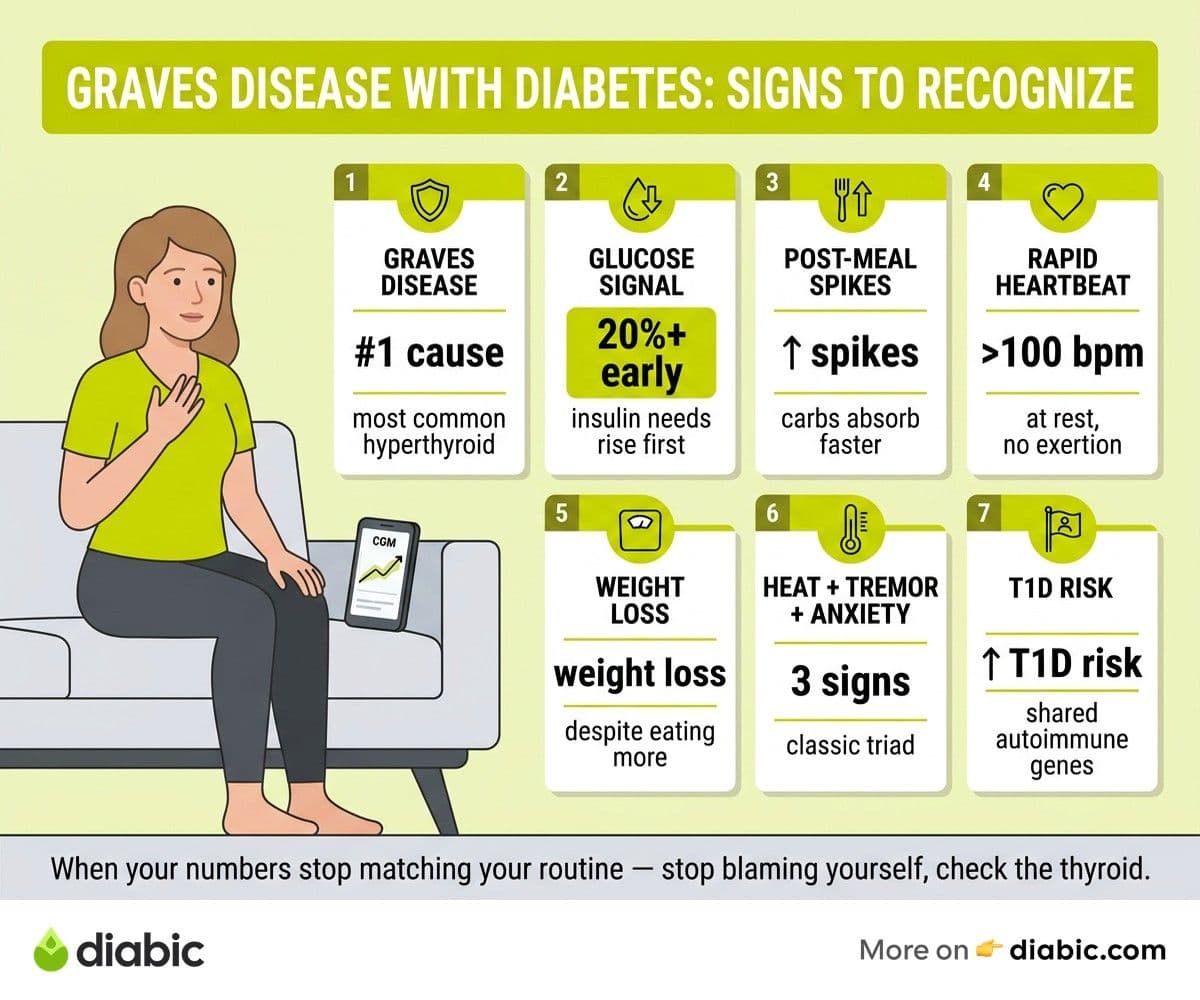
Graves disease is the most common cause of an overactive thyroid, also called hyperthyroidism. According to the American Thyroid Association, it happens when the immune system makes antibodies that tell the thyroid gland to pump out far more hormone than the body needs. The result is a metabolism running in overdrive.
The classic symptoms tend to show up across several body systems at once. Many people describe feeling wired, hot, and exhausted all at the same time, which is a clue that something hormonal is at play.
Common warning signs include:
- Unexplained weight loss despite a normal or even larger appetite
- A rapid, pounding, or irregular heartbeat, sometimes felt in the chest at rest
- Anxiety, irritability, restlessness, and fine tremors in the hands or fingers
- Heat intolerance and sweating that feels disproportionate to the room temperature
- Bulging or gritty-feeling eyes, a hallmark called Graves ophthalmopathy
- Persistent fatigue and muscle weakness, especially in the thighs and upper arms
- Frequent bowel movements, lighter periods, and trouble sleeping
Not everyone develops every symptom. Some people notice only two or three, and the picture can shift over weeks. That gradual buildup is part of why Graves disease is often missed early on, especially when other health conditions are already taking up attention at appointments.
Graves Disease Symptoms in people with diabetes: What Looks Different
When you live with diabetes, the symptom picture gets murkier. Anxiety and shakiness can mimic a low. Sudden weight loss can look like uncontrolled high blood sugar. Fatigue is the universal background noise of chronic disease. The skill is learning which patterns point toward thyroid trouble specifically.
The clearest signal is often glucose itself. Excess thyroid hormone speeds up how quickly food converts to glucose and how much glucose the liver releases. People with type 1 or type 2 diabetes commonly see higher post-meal spikes, more frequent unexplained highs, and a creeping rise in insulin needs that does not match any change in eating or activity. Research published in Diabetes Care has linked hyperthyroidism to worsening glycemic patterns and higher A1C in people with established diabetes.
A few patterns are worth flagging to your provider:
- Insulin doses or oral medications that suddenly feel underpowered with no clear lifestyle change
- Weight loss when your blood sugar is actually running closer to target than usual
- A resting heart rate that has crept up over weeks, even on familiar medications
- Anxiety or tremors that do not resolve after treating a low
- Heat intolerance that is new this season, not just the usual summer discomfort
People with diabetes already do a lot of self-monitoring. That data, especially CGM trends or daily logs, is often the first place a thyroid problem leaves fingerprints. If your numbers feel like they belong to someone else lately, that is information worth bringing to a visit.
From my experience: After 14 years with type 1 diabetes, I have learned that my CGM tells stories my body is too busy to notice. A few years ago my time in range slid steadily over about six weeks while my basal needs climbed almost 20 percent. I assumed it was stress until my endocrinologist ran a thyroid panel. The takeaway I carry forward is simple. When the numbers stop matching the life I am living, I stop blaming myself and start asking what else might have changed.
Signs of Graves Disease to Watch For Over Time
The signs of Graves disease usually develop gradually, often over several months. Early on, the symptoms can feel like ordinary stress or a busier-than-usual stretch of life. That is part of why many people do not seek care until the changes feel undeniable.
Subtle early signs often include slightly faster pulse on a smartwatch, a new sensitivity to warm rooms, and shorter or lighter menstrual periods. Sleep can become lighter and more fragmented even when nothing else has changed. Hand tremors might first appear when holding a phone or steadying a coffee cup.
More advanced signs tend to be harder to ignore. Significant weight loss without trying, persistent palpitations, eye changes such as redness or a feeling of pressure, and noticeable muscle weakness on stairs or while standing from a chair are common. Some people develop a swelling at the base of the neck called a goiter, which a clinician can usually feel during a routine exam.
Pay attention to clusters rather than single symptoms. A racing heart on its own could be coffee or anxiety. A racing heart paired with weight loss, heat intolerance, and erratic blood sugar is a different story. When two or three of these patterns show up at once, that is the moment to call your healthcare provider rather than wait for the next scheduled visit.
Is There a Connection Between Graves Disease and Diabetes
Yes, and the connection is most pronounced for people with type 1 diabetes. Both Graves disease and type 1 diabetes are autoimmune conditions, meaning the immune system mistakenly attacks the body's own tissues. They also share several genetic risk markers, which is why they often cluster in the same person and the same family.
The Endocrine Society notes that autoimmune thyroid disease is the most common condition that co-occurs with type 1 diabetes. Some research suggests that 15 to 30 percent of people with type 1 will develop a thyroid condition at some point in their lives, with Graves disease and Hashimoto's thyroiditis being the two most common. You can read more about the Hashimoto's autoimmune link in our companion post.
For some people, multiple autoimmune conditions appear together as part of what doctors call autoimmune polyendocrine syndrome. This grouping can include type 1 diabetes, Graves disease, Addison's disease, and vitiligo, among others. Knowing this pattern matters because being diagnosed with one autoimmune condition raises the odds of developing another, and that information can shape how often your provider screens you.
People with type 2 diabetes also have a slightly higher rate of thyroid disease than the general population, although the autoimmune driver is less direct. Shared metabolic and inflammatory pathways may play a role. Either way, thyroid screening deserves a place in your regular diabetes care, especially if symptoms appear.
Thyrotoxicosis Symptoms and Their Effect on Blood Sugar
Thyrotoxicosis is the medical term for the state of having too much thyroid hormone in circulation, which is what Graves disease causes. The thyrotoxicosis symptoms most relevant to diabetes are the metabolic ones, because they directly disrupt the careful balance you work to maintain every day.
Excess thyroid hormone has three blood-sugar-raising effects working at the same time. It speeds up how quickly carbohydrates absorb from the gut, increases how much glucose the liver releases between meals, and boosts insulin breakdown so that the insulin you take or make does not last as long. The Mayo Clinic explains that this combination can drive blood sugar levels higher even when nothing about your diet, exercise, or medication has changed.
For people with type 1 diabetes, untreated thyrotoxicosis raises the risk of diabetic ketoacidosis. The body's faster metabolism, paired with reduced insulin effectiveness, can tip the system toward DKA more quickly than usual. For people with type 2 diabetes, the more common pattern is a stubborn rise in A1C and a need to escalate medications without clear cause. Our deeper dive into thyrotoxicosis symptoms and diabetes walks through what to expect during evaluation and treatment.
Recognizing this connection can change how a clinic visit goes. Instead of focusing only on adjusting insulin or oral medications, your provider can investigate whether thyroid function is part of the picture. Treating the thyroid often allows the diabetes plan that worked before to start working again.
Thyroid and Blood Sugar: Getting the Right Diagnosis
Confirming Graves disease is straightforward once your healthcare provider considers it. The first step is usually a thyroid panel, which measures TSH (thyroid-stimulating hormone), free T4, and free T3 in the blood. In Graves disease, TSH is suppressed, often very low, while T4 and T3 are elevated. The pattern is distinctive and easy to recognize on lab results.
Beyond the basic panel, providers often order thyroid antibody testing to confirm the autoimmune cause. Thyroid-stimulating immunoglobulin, or TSI, is the antibody most specific to Graves disease. Thyroid peroxidase antibodies (TPO) and thyroglobulin antibodies may also be measured. Elevated TSI antibodies in the setting of high thyroid hormone strongly suggests Graves disease rather than another cause of hyperthyroidism, according to the National Institute of Diabetes and Digestive and Kidney Diseases.
Imaging tests, such as a radioactive iodine uptake scan, may follow to confirm the diagnosis and rule out alternative causes like a thyroid nodule. Your provider will choose the right combination based on your symptoms and lab results.
If your blood sugar has become erratic for no clear reason, request a thyroid panel. The test is simple, widely available, and relatively inexpensive. The American Diabetes Association recommends thyroid screening at diagnosis for people with type 1 diabetes, with periodic rechecks afterward. For people with type 2 diabetes, screening is less routine, which means symptoms become the main trigger for testing. You can learn more about how thyroid affects blood sugar in our companion guide.
Once Graves disease is confirmed, treatment options include antithyroid medications, radioactive iodine therapy, and in some cases surgery. The right choice depends on your age, severity of symptoms, eye involvement, and personal preference. Your endocrinologist will walk through the trade-offs with you. Most people see significant improvement in both thyroid symptoms and blood sugar stability within weeks of starting effective treatment.
Practical Next Steps If You Suspect Graves Disease
If something feels off, write it down before your next appointment. A short list of changes you have noticed over the past one to three months gives your provider concrete data to work with. Include sleep, heart rate, weight, mood, and any glucose patterns you can pull from your meter or CGM.
Ask directly about thyroid testing. You can say something like, "My blood sugar has been more variable than usual and I have noticed [specific symptoms]. Could we run a thyroid panel?" Most clinicians will agree readily, especially when symptoms align. If you live with type 1 diabetes, mention any family history of thyroid disease.
While you wait for results, keep your usual diabetes routine and avoid making big medication changes on your own. If you are seeing high blood sugars that resist correction, contact your care team rather than escalating doses without guidance. The treatment for Graves disease will likely shift your medication needs again once it begins, so coordination is more useful than improvisation.
Frequently Asked Questions
Which warning signs matter most in people with diabetes?
Look for unexplained weight loss, a rapid or irregular heartbeat, anxiety, heat intolerance, hand tremors, and suddenly erratic blood sugar levels that do not respond to your usual management. Rising insulin needs without lifestyle changes, or a creeping A1C despite consistent effort, can be early clues. These signs together warrant thyroid function testing through your provider.
Is there a connection between Graves disease and diabetes?
Yes. Both Graves disease and type 1 diabetes are autoimmune conditions, and they share genetic risk factors. People with type 1 diabetes have a higher lifetime risk of developing Graves disease, and both can be part of autoimmune polyendocrine syndrome. Type 2 diabetes is also associated with a modestly higher rate of thyroid disease through shared inflammatory and metabolic pathways.
How quickly do symptoms of Graves disease appear?
Symptoms usually develop gradually over weeks to months. Some people notice subtle changes such as a slightly faster heart rate or new heat intolerance long before more obvious symptoms like weight loss or tremors appear. Tracking patterns over time, especially with help from a CGM or daily log, can help you and your provider catch the pattern earlier.
What test confirms Graves disease?
A thyroid panel showing low TSH and high T4 and T3, combined with elevated thyroid-stimulating immunoglobulin (TSI) antibodies, confirms Graves disease in most cases. Your provider may add imaging or further antibody tests depending on your situation. Talk to your doctor about which tests make sense for you.
Shahriar P. Shuvo is the founder of Diabic. He has lived with diabetes for over 14 years, and built Diabic to deliver the practical, evidence-based self-management tools he wished existed when he was first diagnosed. By trade, Shahriar is a senior design and frontend engineer with 6+ years shipping products at Agora, Timescale (now Tiger Data), and ShareTrip. He writes from the intersection of lived diabetes experience and product craft, focused on what works in daily management rather than what sounds good in a textbook.
Medically reviewed by
Dr. Shanto Arian is an internal medicine physician now specializing in clinical and aesthetic dermatology, with a parallel academic focus on epidemiology and public health. He holds an MBBS, MPH, MSc (UK), MRCP (UK), MRCPI (Ireland), Diploma in Dermatology (UK), and Diploma in Aesthetic Medicine (USA). Dr. Arian trained in internal medicine, including hospital work on hematology cases such as graft-versus-host disease, before moving toward dermatology. Skin is one of the earliest places diabetes shows itself, from acanthosis nigricans and diabetic dermopathy to slow foot wound healing, and that intersection is where his clinical and Diabic-review work meet. On Diabic, Dr. Arian medically reviews content on diabetes diagnosis, complications, dermatologic manifestations, and pharmacotherapy, ensuring every claim aligns with current ADA, NICE, and peer-reviewed literature.
More from Health & Complications
View all
Diabetes and Dental Implants: What to Know First
Diabetes dental implants guide covering safety, A1C targets, recovery expectations, gum health prep, and what to ask your oral surgeon before surgery.

Burning Mouth Syndrome and Diabetes Explained
Burning mouth syndrome diabetes link explained, including neuropathy, dry mouth, and thrush causes plus treatment options that may bring real relief.

Dental Care for people with diabetes: Tips That Help
Practical dental care diabetics need, with real tips for protecting teeth and gums when diabetes raises your risk for oral health problems.
Clinician-reviewed habits, plain-language guides, and honest answers - the small shifts that make living with diabetes feel lighter, every day.