Best Shoes for people with diabetes in 2026
Best shoes for people with diabetes in 2026: top picks from New Balance, Orthofeet, Brooks, Propet, Drew, and Apex with key features and Medicare coverage.
In this article(14)
A good pair of shoes is one of the quietest, most underrated tools in diabetes care. The best shoes for people with diabetes do not just feel good; they protect the parts of your feet you cannot always feel, redistribute pressure away from vulnerable spots, and lower the chance that a small irritation turns into something bigger. Choosing the best shoes for people with diabetes in 2026 means knowing what to look for, which brands consistently deliver, and how Medicare coverage can offset cost.
This guide walks through the features that matter, top brand picks across walking, athletic, casual, and dress categories, and how diabetic and orthopedic shoes overlap. The recommendations here lean on long-running brands that podiatrists tend to trust: New Balance, Orthofeet, Brooks, Propet, Drew, and Apex. None of this replaces a fitting with your own podiatrist, who knows your foot shape and history.
What Should people with diabetes Look for in Shoes
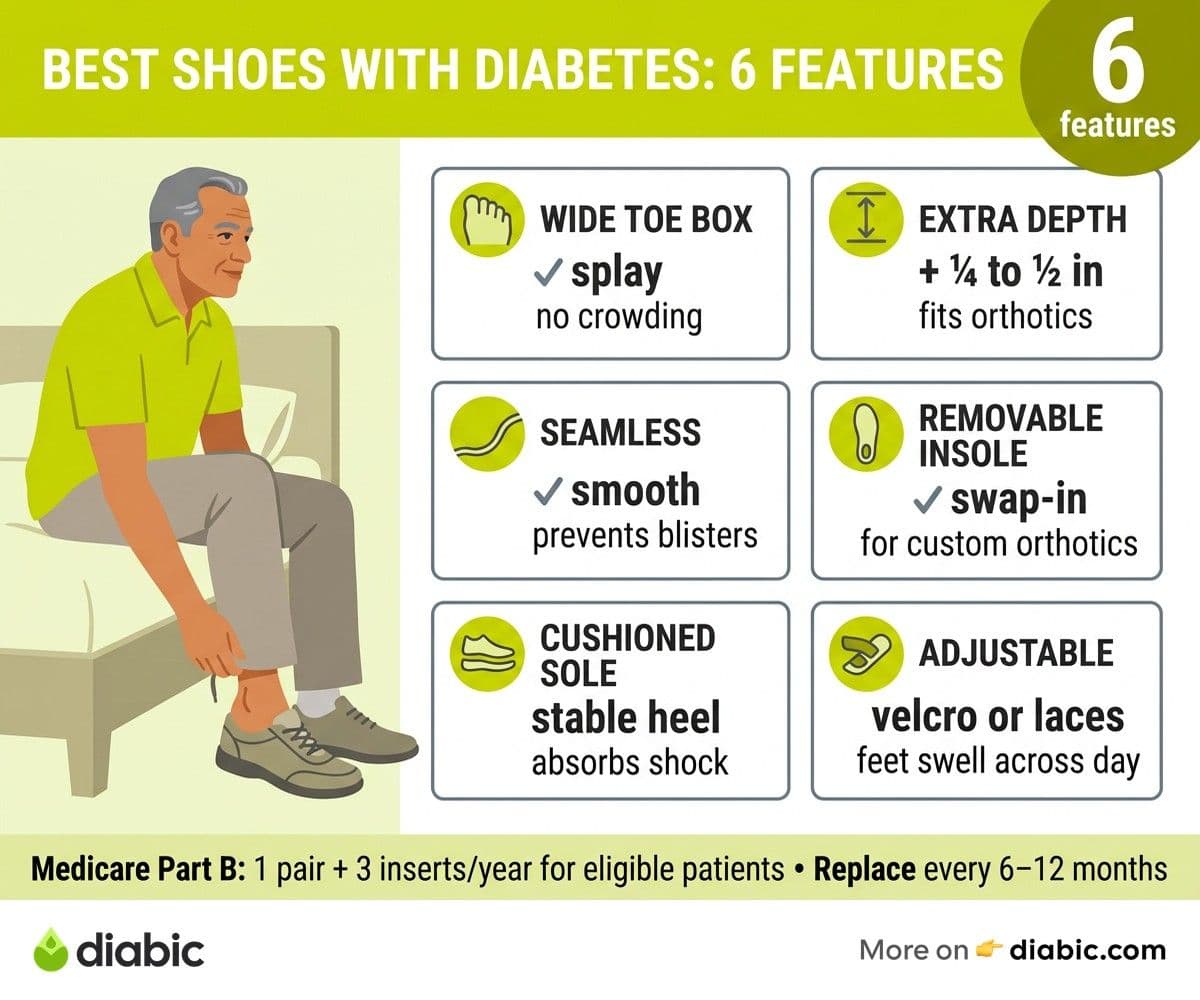
A wide toe box is the first feature to check. Your toes should sit flat with room to wiggle, never pressed together or curled. The ADA's footwear recommendations emphasize avoiding tight, pointed-toe shoes because they create pressure points that can become ulcers, especially when paired with neuropathy. Pair a wide toe box with extra depth, which gives room for custom orthotics and accommodates hammertoes or bunions without rubbing.
The interior matters as much as the exterior. Look for a seamless or minimally seamed lining, since interior seams are a frequent cause of blisters in feet with reduced sensation. The insole should be removable so you can swap in custom orthotics if your podiatrist prescribes them. A firm, cushioned outsole absorbs shock and supports the arch, while a stable heel counter (the back part of the shoe that wraps your heel) keeps your foot from sliding.
Adjustability and breathability round out the list. Velcro straps or laces let you fine-tune fit through the day, since feet swell. Mesh or perforated leather uppers let moisture escape, lowering the chance of fungal growth. Try shoes on later in the day when your feet are slightly swollen, wear the socks you would normally wear, and walk for at least a few minutes before deciding. If you have neuropathy, our notes on diabetic neuropathy foot pain relief cover how shoes interact with nerve symptoms.
Best Shoes for People With Diabetes by Category
Here is how the leading brands compare across the categories covered below:
Best Walking Shoes for People With Diabetes
For everyday walking, New Balance 928v3 remains a podiatrist favorite. It offers extra depth, a roomy toe box, leather upper, removable insole, and rollbar stability technology that helps with motion control. It is also approved for the Medicare therapeutic shoe program through participating providers.
Orthofeet Coral and Lava lines are designed specifically with diabetes in mind. They feature a stretchable seam-free upper, ergonomic sole, and a multi-layer orthotic insole with arch support. Orthofeet offers a 60-day wear test, which makes the buying decision lower-risk. Propet Stability Walker is another strong pick, with a strap closure for adjustable fit, removable insole, and Medicare A5500 approval.
Best Athletic Shoes for People With Diabetes
Brooks Addiction Walker 2 and Brooks Beast 20 lead the running and athletic category for people with diabetes. Both come in extra-wide widths, have plush cushioning, and provide motion control for overpronators. The Beast 20 is heavier but supportive, while the Addiction Walker is built for steady walking and standing.
New Balance 1540v3 is another standout for athletic and walking use, with extra depth, ENCAP midsole cushioning, and approval for the Medicare therapeutic shoe program. People with high arches, flat feet, or significant pronation tend to do well in this model. Skip minimalist running shoes and racing flats; they are not designed to protect insensate feet.
Best Casual and Everyday Shoes for people with diabetes
Drew Moonwalk and Drew Flare are casual options with the depth and seamless interior of medical-grade footwear without looking clinical. Apex Ambulator and Apex Boss handle wider feet and orthotics well, with leather uppers and adjustable closures. Both Drew and Apex are common picks within the Medicare therapeutic shoe program, which can reduce out-of-pocket cost significantly for eligible patients.
Orthofeet Avery Island offers a slip-on style with a stretch upper for those who struggle with bending or laces. For sandals in summer, Propet TravelActiv and Orthofeet Naot Kayla give adjustable straps and contoured footbeds. House shoes count too: a structured indoor slipper from Orthofeet or Propet beats walking barefoot at home, where many small foot injuries actually happen.
Best Dress Shoes for people with diabetes
Drew Park for men and Drew Rose for women are dress oxfords with extra depth and removable insoles, designed to look like standard dress shoes. Apex Lexington is a leather oxford with a wider toe box than typical dress shoes. For women, Orthofeet Vienna and Coco offer dressier styles with the same protective interior. None of these are stilettos, and that is the point. The APMA shoe selection guidance for diabetes recommends avoiding high heels, narrow toes, and stiff materials for daily wear.
Diabetic Footwear: What Makes It Different
Diabetic shoes differ from regular shoes in three ways: extra depth (typically 1/4 to 1/2 inch more interior space), a seamless or low-profile interior, and accommodations for custom orthotics. Many also use stretch fabric across the toe box to relieve pressure on bunions or hammertoes. They are designed to protect feet that cannot always signal pain, while reducing pressure on common ulcer locations.
The Medicare therapeutic shoe program, established under Medicare Part B, covers one pair of therapeutic shoes plus three pairs of inserts each calendar year for eligible patients with diabetes who meet specific criteria. Eligibility requires a diabetes diagnosis, at least one qualifying complication (such as neuropathy, history of ulcers, foot deformity, or poor circulation), and a prescription from the doctor managing your diabetes. The shoes themselves must be fitted by a podiatrist, pedorthist, or other qualified provider participating in Medicare. Documentation matters; many patients miss out simply because the paperwork was never started.
Custom orthotics and inserts are worth considering when off-the-shelf cushioning is not enough. They are molded to your foot and redistribute pressure away from high-risk spots. Costs vary widely, but Medicare covers prefabricated inserts as part of the therapeutic shoe benefit. Custom orthotics may have additional cost depending on your plan. Talk to your podiatrist about which combination makes sense for your foot shape, weight, and activity level.
Are Orthopedic Shoes Good for people with diabetes
Yes, often. Orthopedic shoes overlap heavily with diabetic shoes; both prioritize a wide toe box, stable sole, and accommodation for orthotics. Orthopedic shoes are typically prescribed for foot deformities (severe bunions, hammertoes, claw toes), arthritis, or post-surgical recovery, while diabetic shoes are prescribed for diabetes-related risk factors. A person with diabetes plus a deformity often benefits from a shoe that does both jobs.
Orthopedic shoes are most clearly recommended when standard diabetic footwear cannot accommodate your feet, when you have severe deformities, when previous ulcers have changed the shape of your foot, or when your podiatrist identifies a specific structural issue. Brands like Drew, Apex, and Orthofeet sit at the intersection of orthopedic and diabetic footwear, which is why they appear so often in podiatrist recommendations.
Getting fitted properly matters more than the brand name on the box. Visit a pedorthist or podiatrist for a fitting, especially if you have foot deformities or have had ulcers in the past. Bring the orthotics or inserts you currently wear so the shoe can be matched correctly. Insist on walking, not just standing, in the shoe before purchase.
Diabetic Foot Care and Shoe Selection
Even the best shoes work better when paired with daily foot habits. Inspect your feet each evening, look inside your shoes before putting them on (a pebble or a folded sock liner can cause damage in feet with reduced sensation), and rotate between two pairs so each pair has time to dry out fully. Replace shoes when the cushioning packs down, which is usually every 300 to 500 miles for athletic shoes or every 6 to 12 months for daily wear. Pair this with the rest of your diabetic foot care and prevention guide for the strongest protection.
Avoid certain styles for daily wear. Flip-flops leave too much foot exposed, offer no support, and can cause friction blisters between toes. Pointed toes squeeze the toe box and create pressure spots. High heels shift weight onto the ball of the foot, a common ulcer location. Backless mules and slip-on shoes that cannot be tightened tend to cause heel slippage and friction.
Break in new shoes carefully. Wear them for an hour or two on the first day, inspect your feet immediately after, and increase the wearing time gradually over a week. Look for any pink spots or pressure marks, which are early signals that something inside the shoe needs adjusting. If you have neuropathy and cannot feel pressure clearly, this visual check is doubly important.
Protecting Your Foot Health with Daily Foot Care
For people with neuropathy, foot protection is the whole point. Reduced sensation means a small problem can become a large one before you notice. Shoes act as a physical barrier and a pressure manager, so wearing them indoors and outdoors, including supportive house shoes, is part of preventive care, not just style. The NIDDK's diabetes and foot problems guide outlines why properly fitted shoes are central to preventing ulcers and amputations in people with diabetes.
Shoes prevent ulcers in two main ways: by removing direct pressure from bony prominences and by providing a barrier against punctures, hot surfaces, and rough terrain. Pair that with a regular daily diabetic foot care routine of inspection, washing, drying, and moisturizing, and the protective system becomes layered.
Check shoes before each wearing. Run your hand inside to feel for foreign objects, worn lining, or rough patches. Look at the soles for cracks or worn tread that could let water in. Replace insoles when they flatten. These small habits, repeated daily, are how the right footwear actually delivers on its promise.
From my experience: After 14 years with type 1 diabetes, my feet have outlasted plenty of trends I tried in my 20s. The pair of New Balance 928s I bought after my podiatrist insisted have honestly been the most worthwhile investment in my foot care kit. They are not flashy. They show up every morning, and they have helped me avoid the early callus pattern I used to fight every winter.
Frequently Asked Questions
What should people with diabetes look for in shoes?
Look for a wide toe box, seamless or minimally seamed interior, removable insoles, cushioned and stable sole, adjustable closures, and breathable upper materials. Try them on later in the day with your usual socks, and walk in them before buying. The shoe should feel supportive without any tight spots.
Are orthopedic shoes good for people with diabetes?
Orthopedic shoes can be excellent for people with diabetes, especially those with foot deformities, severe neuropathy, or a history of ulcers. Many diabetic-specific shoes from brands like Drew, Apex, and Orthofeet already incorporate orthopedic features. Your podiatrist can help decide whether a standard diabetic shoe or an orthopedic option fits your needs better.
Does Medicare cover diabetic shoes?
Yes, Medicare Part B covers one pair of therapeutic shoes and three pairs of inserts per calendar year for eligible patients. You need a diabetes diagnosis, a qualifying complication such as neuropathy or a history of ulcers, and a prescription from your treating physician. The shoes must be fitted by a participating podiatrist, pedorthist, or qualified supplier.
If you want to take the next step, our diabetic foot care and prevention guide walks through the daily habits that pair with good footwear.
The best shoes for people with diabetes do quiet work, year after year, and the brands above are the ones podiatrists keep recommending because they hold up to that test. Pick one pair to start with, get a proper fitting, and pair the shoes with daily inspections so the protection they offer actually translates into the foot health you want a decade from now.
Shahriar P. Shuvo is the founder of Diabic. He has lived with diabetes for over 14 years, and built Diabic to deliver the practical, evidence-based self-management tools he wished existed when he was first diagnosed. By trade, Shahriar is a senior design and frontend engineer with 6+ years shipping products at Agora, Timescale (now Tiger Data), and ShareTrip. He writes from the intersection of lived diabetes experience and product craft, focused on what works in daily management rather than what sounds good in a textbook.
Medically reviewed by
Dr. Shanto Arian is an internal medicine physician now specializing in clinical and aesthetic dermatology, with a parallel academic focus on epidemiology and public health. He holds an MBBS, MPH, MSc (UK), MRCP (UK), MRCPI (Ireland), Diploma in Dermatology (UK), and Diploma in Aesthetic Medicine (USA). Dr. Arian trained in internal medicine, including hospital work on hematology cases such as graft-versus-host disease, before moving toward dermatology. Skin is one of the earliest places diabetes shows itself, from acanthosis nigricans and diabetic dermopathy to slow foot wound healing, and that intersection is where his clinical and Diabic-review work meet. On Diabic, Dr. Arian medically reviews content on diabetes diagnosis, complications, dermatologic manifestations, and pharmacotherapy, ensuring every claim aligns with current ADA, NICE, and peer-reviewed literature.
More from Health & Complications
View all
Diabetes and Dental Implants: What to Know First
Diabetes dental implants guide covering safety, A1C targets, recovery expectations, gum health prep, and what to ask your oral surgeon before surgery.

Burning Mouth Syndrome and Diabetes Explained
Burning mouth syndrome diabetes link explained, including neuropathy, dry mouth, and thrush causes plus treatment options that may bring real relief.

Dental Care for people with diabetes: Tips That Help
Practical dental care diabetics need, with real tips for protecting teeth and gums when diabetes raises your risk for oral health problems.
Clinician-reviewed habits, plain-language guides, and honest answers - the small shifts that make living with diabetes feel lighter, every day.