Pregnancy With Type 2 Diabetes
Pregnancy with type 2 diabetes calls for medication changes, tighter targets, and closer monitoring. Here is what to expect and how to plan ahead.

In this article(9)
If you are thinking about pregnancy with type 2 diabetes, or you have just seen those two pink lines, your head is probably full of questions. Will the baby be okay? Do you need to stop your pills? Is this going to feel like a part-time job on top of an already full life? We hear you, and we want to be honest with you from the start: this kind of pregnancy takes more planning than most, and it is also entirely possible to have a healthy one.
The picture for women with type 2 diabetes has shifted in real ways over the past decade. More of us are entering pregnancy with prediabetes or undiagnosed insulin resistance, which is why the prep work matters so much. With a strong care team, clearer targets, and the right adjustments to your routine, you can move through each trimester with confidence rather than dread. We will walk you through what to expect, where the surprises usually show up, and how to make the months ahead feel a little less overwhelming.
How Pregnancy With Type 2 Diabetes Differs From Other Diabetes Pregnancies
Pregnancy with type 2 diabetes sits in its own category, and it helps to understand why. Gestational diabetes shows up during pregnancy and usually resolves after birth, while pregnancy with type 1 diabetes involves managing autoimmune insulin deficiency from day one. Type 2 pregnancy combines features of both: you may have lived with insulin resistance for years, possibly without realizing it, and now you need pregnancy-tight targets layered on top.
The biggest practical difference is medication. Many of the oral drugs that work well outside of pregnancy are not first-choice options once you conceive, which means a switch to insulin is common. Weight management adds another layer, because pregnancy is not the time for weight loss but it is also not a free pass to gain unchecked. Pre-existing complications like retinopathy, kidney changes, or high blood pressure deserve attention before and during pregnancy, since pregnancy can speed up some of these issues if they are not watched closely. According to the CDC's guidance on preexisting diabetes and pregnancy, planning ahead measurably reduces the risk of complications for both mom and baby.
The targets themselves are tighter than the numbers you may be used to outside pregnancy. Your fasting and post-meal goals will look more like the ones used for type 1 pregnancy, and your team will likely ask you to check more often. None of this is meant to scare you. It is simply how modern obstetric care for type 2 diabetes is set up to give your baby the best start.
Medication Changes During Pregnancy
If you are on oral diabetes medications, the conversation with your provider needs to happen before conception whenever possible. Most oral drugs were not designed with pregnancy in mind, and the safety data on newer classes is still limited. The American College of Obstetricians and Gynecologists recommends that women with type 2 diabetes work through a preconception medication review with their care team so changes can happen on a planned timeline rather than a panicked one.
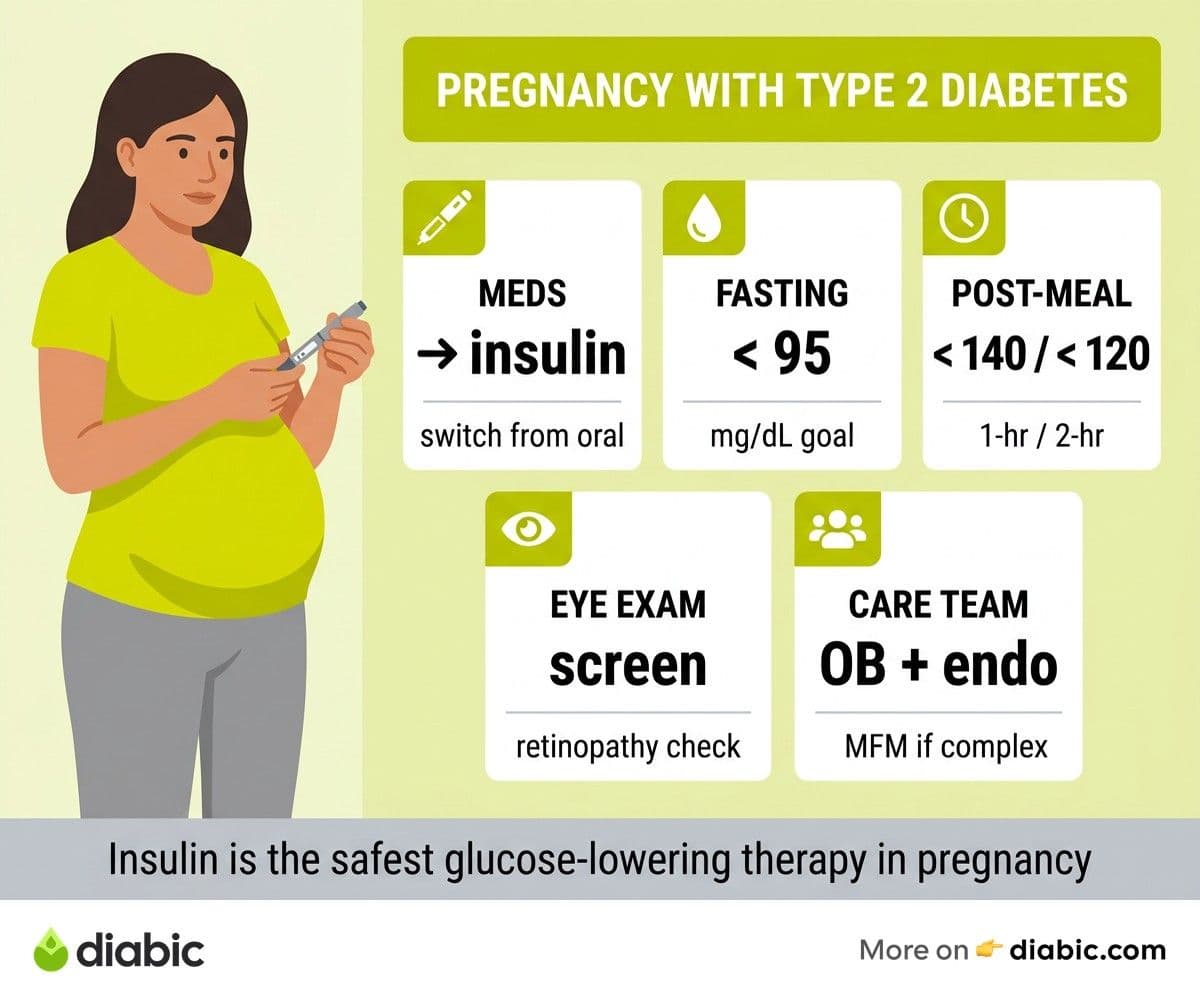
Insulin is the preferred treatment when blood sugar needs medication during pregnancy. It does not cross the placenta in meaningful amounts and has the longest safety record of any glucose-lowering therapy in pregnancy. Many women feel anxious about starting injections, especially if they have spent years avoiding them, and that reaction is completely understandable. The good news is that insulin in pregnancy is usually temporary, and modern pens and pumps are far easier to use than the syringes you may remember from a relative's experience years ago.
Metformin sits in a more nuanced category. Some providers continue it in early pregnancy, particularly for women who have struggled to conceive or who have polycystic ovary syndrome alongside type 2 diabetes. Other providers prefer to stop it once pregnancy is confirmed. The decision depends on your specific situation, your fasting numbers, and how your provider weighs the available evidence. A solid preconception planning conversation is the right place to sort this out.
GLP-1 receptor agonists like semaglutide and tirzepatide, along with SGLT2 inhibitors, are not used during pregnancy. The Endocrine Society's clinical guidance suggests stopping these medications well before trying to conceive, since some have a long half-life and lingering effects. If you are on one of these and pregnancy is on your radar, plan for at least a few weeks of transition before you start trying.
Blood Sugar Targets and Daily Management
Pregnancy targets are tight, and there is a reason for that. The placenta is exquisitely sensitive to maternal glucose, and high numbers in the second and third trimesters drive the baby to grow larger than is healthy, a pattern called large for gestational age, or LGA. To prevent this, the American Diabetes Association's Standards of Care suggest fasting glucose below 95 mg/dL, one-hour post-meal below 140 mg/dL, and two-hour post-meal below 120 mg/dL.
You will likely be asked to check your blood sugar four to seven times a day if you are using fingersticks. Many women find a continuous glucose monitor a much gentler way to hit those numbers, since it shows trends and reduces the testing burden. CGM is not yet standard for every type 2 pregnancy, but it is increasingly common, and it pairs well with the meal-by-meal feedback you need during these months. Talk to your endocrinologist or maternal-fetal medicine specialist about whether one fits your plan.
Food matters more than ever during pregnancy, but not in a punishing way. The principles that guide a gestational diabetes diet work just as well for type 2: spread carbs across the day, pair them with protein and fat, prioritize fiber, and pay attention to how your own body responds. Morning sickness and food aversions can scramble your usual routine in the first trimester, so flexibility helps. If toast is the only thing that stays down, eat the toast and check your number an hour later rather than skipping the meal.
A1C remains a useful checkpoint and your team will likely repeat it every four to six weeks during pregnancy. The number you are aiming for is generally below 6%, though some providers accept slightly higher if hypoglycemia is a real risk. We want to flag that perfectionism here can backfire, because frequent lows are not a sign of good management.
Monitoring, Delivery, and What Comes After
The third trimester brings more appointments, and that is by design. Expect growth scans every few weeks to track the baby's size, along with non-stress tests starting around 32 weeks to confirm the baby is tolerating the pregnancy well. Blood pressure monitoring becomes more frequent because women with type 2 diabetes face a higher risk of preeclampsia, especially if you have any baseline hypertension or kidney involvement.
Induction is often discussed around 39 weeks. The reasoning is straightforward: the placenta of a pregnancy with diabetes can age faster, and continuing past 40 weeks has been linked to higher rates of stillbirth and shoulder dystocia. Induction is not automatic, and a vaginal delivery is very possible, but most providers do not recommend going past your due date. Discuss your preferences early so the conversation in the third trimester feels collaborative rather than rushed.
After delivery, your insulin needs drop quickly, often within hours. Some women can return to oral medications, while others stay on insulin for a few weeks before transitioning. If you breastfeed, your numbers may run lower than expected, particularly during long nursing sessions, so keeping fast-acting carbs nearby is wise. The postpartum recovery guide we put together covers the first few months in more detail, including sleep, mental health, and getting back into a sustainable routine.
We also want to gently mention that postpartum is when many women fall through the cracks of follow-up care. You will be focused on the baby, your appointments will feel less urgent, and the system is not set up to chase you down. Book your six-week postpartum endocrinology visit before you leave the hospital if you can.
Frequently Asked Questions
How does type 2 diabetes affect pregnancy?
Type 2 diabetes affects pregnancy in several ways. Higher glucose levels can cross the placenta and cause the baby to grow larger than normal, increase the risk of preeclampsia and preterm birth, and raise the chance of neonatal hypoglycemia after delivery. Strong glycemic management before and during pregnancy reduces these risks substantially, which is why early planning matters so much.
What is different about pregnancy with type 2 diabetes?
Pregnancy with type 2 diabetes differs from gestational diabetes because you are starting with elevated insulin resistance from the first day, rather than developing it mid-pregnancy. It differs from type 1 pregnancy because you may need to switch from oral medications to insulin, and you often have other features like higher BMI or hypertension that need parallel attention. The blood sugar targets are similar to type 1 pregnancy, but the medication landscape and the path to those targets look quite different.
Can I keep taking metformin during pregnancy?
Sometimes, yes. Some providers continue metformin in early pregnancy, particularly for women with PCOS or those who responded well to it before conception. Other providers prefer insulin alone. This is a conversation to have with your endocrinologist and obstetrician together, ideally before you conceive.
Will I need a C-section?
Not automatically. Many women with type 2 diabetes have vaginal deliveries. C-section rates are higher than in the general population, mostly because of larger babies and induction-related factors, but a vaginal birth is a reasonable goal to discuss with your provider.
Dr. Rezwana Parvin Rumpa is an obstetrics and gynaecology specialist with clinical focus on gestational diabetes, PCOS, and fertility. She holds the MRCOG (Final Part) from the Royal College of Obstetricians and Gynaecologists in London, the MRCPI (Final Part) from the Royal College of Physicians of Ireland, and an MBBS from Shaheed Monsur Ali Medical College under Dhaka University. Dr. Rumpa serves as a Senior Medical Officer in the Obs and Gynae department at BRB Hospitals Ltd, where she has spent three years managing prenatal care, emergency obstetric cases, and women's-health surgery. On Diabic, she medically reviews content for women living with diabetes, with particular attention to pregnancy, PCOS, and reproductive-health intersections.
Medically reviewed by
Dr. Shanto Arian is an internal medicine physician now specializing in clinical and aesthetic dermatology, with a parallel academic focus on epidemiology and public health. He holds an MBBS, MPH, MSc (UK), MRCP (UK), MRCPI (Ireland), Diploma in Dermatology (UK), and Diploma in Aesthetic Medicine (USA). Dr. Arian trained in internal medicine, including hospital work on hematology cases such as graft-versus-host disease, before moving toward dermatology. Skin is one of the earliest places diabetes shows itself, from acanthosis nigricans and diabetic dermopathy to slow foot wound healing, and that intersection is where his clinical and Diabic-review work meet. On Diabic, Dr. Arian medically reviews content on diabetes diagnosis, complications, dermatologic manifestations, and pharmacotherapy, ensuring every claim aligns with current ADA, NICE, and peer-reviewed literature.
More from Living with Diabetes
View all
A Gentle Chair Yoga Routine for people with diabetes
A gentle chair yoga for people with diabetes routine with safe poses, modifications for neuropathy, retinopathy, and joint pain, plus tips for older.

Shift Work and Diabetes: Managing Irregular Hours
Shift work and diabetes is a tough combination. Learn how to manage meals, sleep, medication, and blood sugar when your hours rotate or flip overnight.

Dating with Diabetes: When to Tell a New Partner
Dating with diabetes brings unique disclosure questions. Here is when to tell a new partner, what to say, and how to handle the conversation with.
Clinician-reviewed habits, plain-language guides, and honest answers - the small shifts that make living with diabetes feel lighter, every day.