Managing Triglycerides and Diabetes Risks Safely
Triglycerides and diabetes risks often overlap. Learn safe, evidence-based ways to lower triglycerides, protect your heart, and read your lipid panel.

In this article(10)
High triglycerides and diabetes risks often go hand in hand, yet triglycerides rarely get the attention they deserve compared to cholesterol. If your last blood panel flagged elevated triglycerides, you are not alone. With the right adjustments, bringing those numbers down is very achievable.
The link between triglycerides and diabetes risks is rooted in how your body processes carbohydrates and stores energy. When insulin signaling is impaired, the liver makes more triglycerides, and the bloodstream clears them more slowly. That mismatch shows up on your lipid panel, often before any symptoms appear.
This guide walks through what triglycerides are, why they tend to rise alongside diabetes, and the practical steps you can take to bring them down safely.
What Are Triglycerides and Why Do They Matter?
Triglycerides are a type of fat circulating in your blood. After you eat, your body converts any calories it does not need right away into triglycerides and stores them in fat cells. Hormones later release them between meals for energy, which is a normal and useful system.
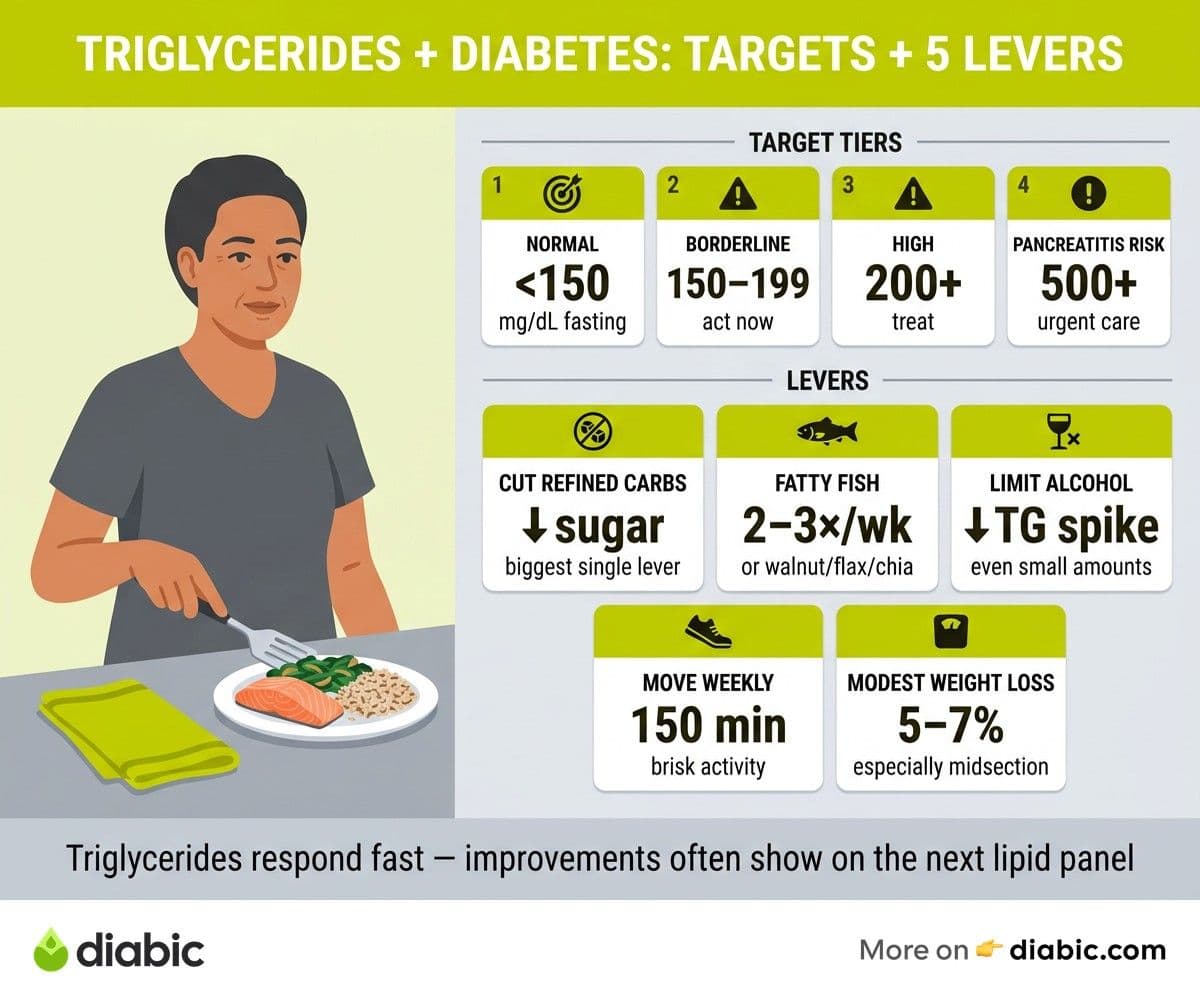
The trouble starts when triglyceride levels stay elevated in the blood for too long. The American Diabetes Association Standards of Care lists fasting triglycerides under 150 mg/dL as the general goal for adults, with anything above 200 mg/dL classified as high. Levels above 500 mg/dL move into a higher-risk zone for pancreatitis.
Triglycerides are not the same as cholesterol, even though both appear on a lipid panel. Cholesterol is a waxy substance used to build cell membranes and hormones, while triglycerides are pure fat for energy storage. Both matter for heart health, but they respond to different food and lifestyle changes, which is part of why your doctor reviews them as a set rather than in isolation. The NIDDK overview on high blood triglycerides is a useful starting point if you want a deeper read.
Why Triglycerides Rise with Diabetes
Insulin resistance is the engine behind most diabetes-related triglyceride problems. When cells stop responding well to insulin, the liver receives confusing signals about how much fat to package and release. The result is more very-low-density lipoprotein, or VLDL, traveling through the blood loaded with triglycerides.
High blood sugar adds to the load. Excess glucose that the body cannot use for immediate energy gets converted into triglycerides in the liver. This is one reason why people with fatty liver disease and diabetes link often have elevated triglycerides as well, since the liver is essentially the central hub for both problems.
Three patterns commonly drive the rise:
- Frequent intake of refined carbs and added sugars, which spike glucose and insulin
- Lower physical activity, which slows the muscle uptake of triglycerides for fuel
- Excess body fat around the midsection, which worsens insulin resistance
The good news is that these same factors are the most responsive to change. Even modest improvements in any one of them can move triglycerides down within weeks.
Triglycerides and Diabetes Risks: What's at Stake
Elevated triglycerides do not cause symptoms on their own, which is part of why they get overlooked. The risk shows up over time in the form of cardiovascular disease and, at very high levels, pancreatitis. The CDC notes that adults with diabetes are about twice as likely to have heart disease as those without, and elevated triglycerides are a meaningful contributor.
The combination most concerning for heart health is sometimes called atherogenic dyslipidemia. It involves high triglycerides, low HDL cholesterol, and small dense LDL particles. Each piece is a risk factor on its own, and together they accelerate plaque buildup in arteries. The Mayo Clinic describes how this triad raises the odds of heart attack and stroke even when total cholesterol looks acceptable.
There is also a less common but serious risk at very high levels. When triglycerides climb above roughly 500 mg/dL, the pancreas can become inflamed, leading to acute pancreatitis. That kind of attack often requires hospitalization. For most readers this will not apply, but it is one reason your doctor pays attention even if you feel fine.
How to Lower Triglycerides Safely with Diabetes
The dietary changes that lower triglycerides are similar to those that improve blood sugar, which is helpful. You are not juggling two competing plans. Smaller, sustained shifts tend to outperform short bursts of strict dieting.
Start with carbohydrates. Refined carbs and added sugars raise triglycerides quickly because the liver converts excess glucose into fat. Cutting back on sweetened drinks, white bread, pastries, and sugary cereals often produces measurable changes within a few weeks. The DASH diet for diabetes and blood pressure is one structured approach that lowers triglycerides as a side benefit.
Add omega-3-rich foods deliberately. Fatty fish like salmon, sardines, and mackerel two to three times per week can lower triglycerides meaningfully. Walnuts, ground flaxseed, and chia seeds offer plant-based options. These also pair well with the principles in our guide on lowering high cholesterol with diabetes.
A few more practical levers:
- Limit alcohol, since even small amounts can spike triglycerides in some people
- Move your body most days, even brisk walking, which improves how muscles clear triglycerides
- Aim for gradual weight loss if appropriate, since losing 5 to 10 percent of body weight often drops triglycerides noticeably
For more on building a cardiovascular foundation, see our overview of heart healthy habits for diabetes.
From my experience: When my triglycerides crept up in my late twenties, my first instinct was to cut fat. That barely moved the number. What actually worked, after a conversation with my endocrinologist, was reducing added sugars and adding two to three salmon dinners a week. Within three months my triglycerides dropped by nearly a third. The lesson I keep coming back to: with type 1 diabetes, sugar matters more than fat for this particular number.
Medications That May Help
Lifestyle is the foundation, but medications can play an important role when triglycerides remain stubbornly high. Your provider may consider adding therapy if levels stay above 200 mg/dL despite consistent lifestyle changes, or sooner if your overall cardiovascular risk is elevated.
Several medication classes are commonly used. Fibrates such as fenofibrate primarily target triglycerides and can lower them substantially. High-dose prescription omega-3 products, including icosapent ethyl, have shown cardiovascular benefit in adults with diabetes and elevated triglycerides in trials published in Diabetes Care. Some diabetes medications, including certain GLP-1 receptor agonists, also improve triglyceride numbers as part of their broader metabolic effects.
It is worth noting that statin medications for diabetes primarily target LDL cholesterol but may modestly lower triglycerides as well. If your provider recommends a statin, the goal is usually overall cardiovascular risk reduction rather than triglycerides alone. Talk to your doctor about which combination fits your full lipid profile, kidney function, and other health factors.
Monitoring and Staying on Track
Most adults with diabetes get a lipid panel at least annually, and more often if numbers are being actively managed. Your doctor may ask you to fast for 9 to 12 hours before the draw, since recent meals can artificially raise triglycerides. Non-fasting panels are increasingly common, but for triglycerides specifically, fasting still gives a cleaner read.
Read your lipid panel as a story rather than a single grade. Triglycerides, HDL, LDL, and total cholesterol all interact. A small drop in triglycerides paired with a rise in HDL is genuine progress, even if total cholesterol barely moved. Bring your lipid panel to appointments and ask your provider to walk through the changes since your last test.
Set goals you can actually hit. Aiming to lower triglycerides by 50 mg/dL over six months is more sustainable than aiming for a perfect number on the next test. Pair lab visits with one or two lifestyle adjustments rather than overhauling everything at once. That rhythm, small change followed by feedback, tends to keep people moving forward year after year.
FAQ
Why are triglycerides high with diabetes?
Insulin resistance and elevated blood sugar both push the liver to produce more triglycerides while slowing how the body clears them. Refined carbs, added sugars, and excess weight around the midsection amplify the effect. This pattern is common in type 2 diabetes and can also appear in type 1 when control slips.
How to lower triglycerides when you have diabetes?
Reducing refined carbs and added sugars usually produces the fastest drop. Adding omega-3-rich foods, moving your body most days, limiting alcohol, and pursuing gradual weight loss when appropriate all help. If levels stay high despite consistent effort, talk to your doctor about fibrates, prescription omega-3s, or adjustments to your diabetes medications.
What is a safe triglyceride level for someone with diabetes?
Most guidelines, including those from the ADA, set fasting triglycerides under 150 mg/dL as the general goal. Levels between 150 and 199 mg/dL are borderline high, 200 to 499 mg/dL is high, and above 500 mg/dL is very high and raises pancreatitis risk. Your personal target may vary based on your full cardiovascular risk profile.
Bringing triglycerides and diabetes risks under control is rarely about heroics. It is about a few honest changes you can keep. Reducing added sugar and refined carbs, moving most days, eating fish more often, and reviewing the lab every six to twelve months with your provider all stack up. The numbers respond to consistency, and the heart benefits compound over years.
Shahriar P. Shuvo is the founder of Diabic. He has lived with diabetes for over 14 years, and built Diabic to deliver the practical, evidence-based self-management tools he wished existed when he was first diagnosed. By trade, Shahriar is a senior design and frontend engineer with 6+ years shipping products at Agora, Timescale (now Tiger Data), and ShareTrip. He writes from the intersection of lived diabetes experience and product craft, focused on what works in daily management rather than what sounds good in a textbook.
Medically reviewed by
Dr. Rezwana Parvin Rumpa is an obstetrics and gynaecology specialist with clinical focus on gestational diabetes, PCOS, and fertility. She holds the MRCOG (Final Part) from the Royal College of Obstetricians and Gynaecologists in London, the MRCPI (Final Part) from the Royal College of Physicians of Ireland, and an MBBS from Shaheed Monsur Ali Medical College under Dhaka University. Dr. Rumpa serves as a Senior Medical Officer in the Obs and Gynae department at BRB Hospitals Ltd, where she has spent three years managing prenatal care, emergency obstetric cases, and women's-health surgery. On Diabic, she medically reviews content for women living with diabetes, with particular attention to pregnancy, PCOS, and reproductive-health intersections.
More from Health & Complications
View all
Diabetes and Dental Implants: What to Know First
Diabetes dental implants guide covering safety, A1C targets, recovery expectations, gum health prep, and what to ask your oral surgeon before surgery.

Burning Mouth Syndrome and Diabetes Explained
Burning mouth syndrome diabetes link explained, including neuropathy, dry mouth, and thrush causes plus treatment options that may bring real relief.

Dental Care for people with diabetes: Tips That Help
Practical dental care diabetics need, with real tips for protecting teeth and gums when diabetes raises your risk for oral health problems.
Clinician-reviewed habits, plain-language guides, and honest answers - the small shifts that make living with diabetes feel lighter, every day.