Best Diet for High Blood Pressure and Diabetes
Find the best diet for high blood pressure when you also have diabetes. Compare DASH and Mediterranean approaches, food lists, and practical meal ideas.

In this article(11)
The best diet for high blood pressure when you also have diabetes is the one that works for both conditions at once, and the good news is that those needs overlap more than they conflict. The same plate that lowers blood pressure tends to steady blood sugar, and the same foods that worsen one usually worsen the other.
Around 75% of adults with type 2 diabetes also have high blood pressure, according to the American Diabetes Association, so building an eating pattern that supports both is a practical priority for most people managing diabetes. There is no single "diabetes and hypertension diet," but two well-researched approaches stand out: the DASH diet and the Mediterranean diet. Both are evidence-based and flexible enough to fit different cuisines, budgets, and lifestyles.
This guide walks through what the research supports, which foods deserve more space on your plate, which to limit, and how to put the principles into a real weekly routine. We will also cover when working with a registered dietitian can speed up your progress.
What Is the Best Diet for High Blood Pressure and Diabetes
The best diet for high blood pressure when diabetes is part of the picture is not a single named plan but a pattern. The pattern is rich in vegetables, fruits, whole grains, lean proteins, legumes, nuts, and healthy fats, and low in sodium, added sugars, refined carbohydrates, and processed meats. The two most studied versions of this pattern are the DASH diet and the Mediterranean diet.
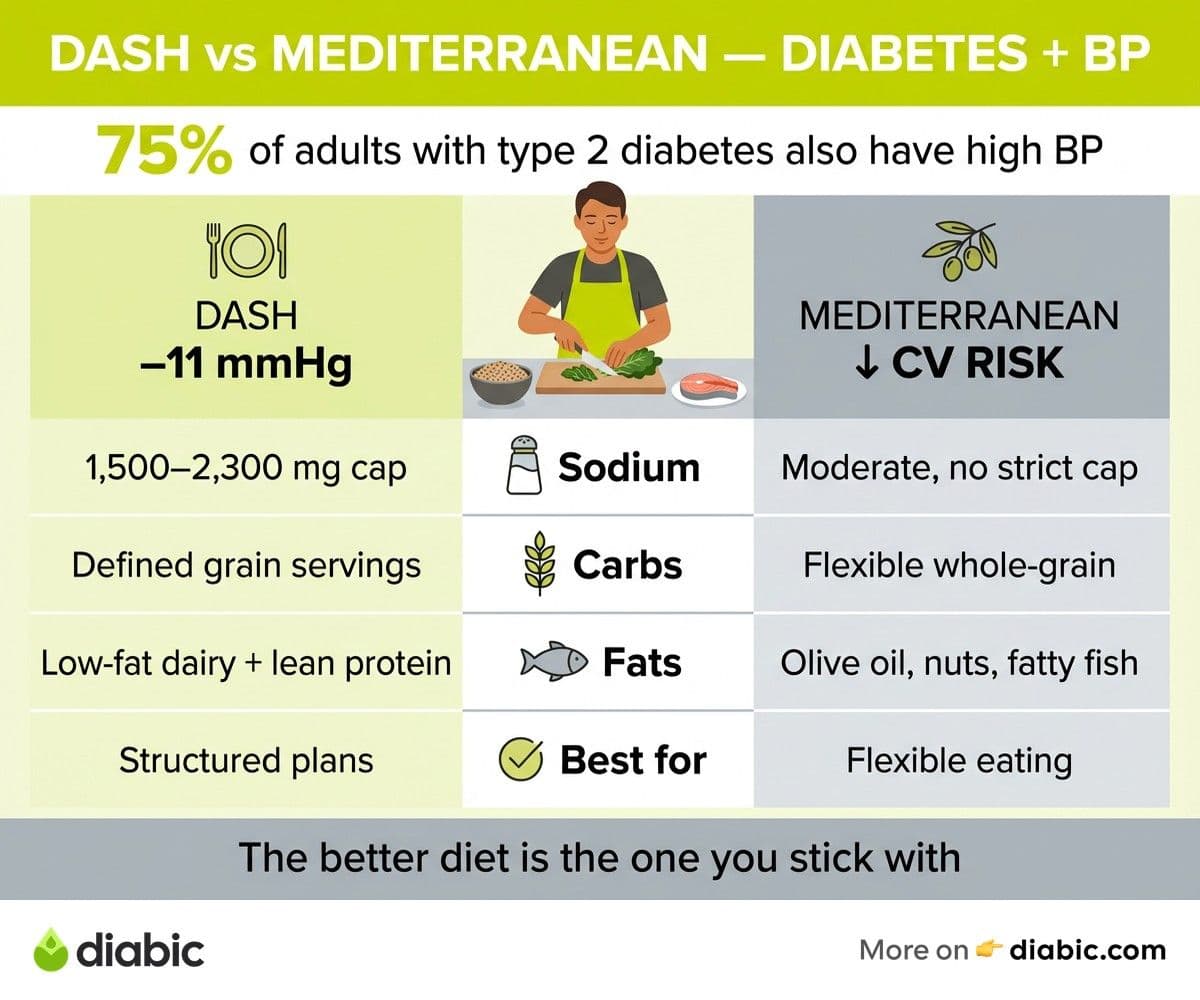
The DASH diet (Dietary Approaches to Stop Hypertension) was specifically designed to lower blood pressure and consistently delivers measurable reductions within a few weeks. The original DASH trial published in the New England Journal of Medicine showed drops of up to 11 mmHg systolic in people with hypertension. Subsequent research has shown DASH also improves insulin sensitivity and A1C in people with type 2 diabetes.
The Mediterranean diet emphasizes olive oil, fish, vegetables, fruits, legumes, nuts, and moderate amounts of whole grains and dairy. It draws on the traditional eating patterns of countries bordering the Mediterranean Sea and has strong evidence for reducing cardiovascular events, including in people with diabetes. The American Heart Association endorses both DASH and Mediterranean approaches as heart-healthy choices.
Both plans share more similarities than differences. They both prioritize plants, healthy fats, and minimally processed foods, while limiting sodium, added sugars, and ultra-processed items. The choice between them often comes down to personal preference, cooking style, and which foods you actually enjoy.
At a glance, here is how the two approaches compare for someone managing both conditions:
Both approaches earn endorsement from major heart and diabetes organizations, so the better diet is usually the one you will actually stick with for the long run.
The DASH Diet and Diabetes
The DASH diet's structure makes it especially useful for people managing both conditions. It provides daily and weekly serving targets across food groups, which gives a clear framework without strict calorie counting or banned foods. For a deeper look at the plan and how to adapt the carbohydrate portions, our guide on the DASH diet for diabetes covers servings, swaps, and sample meals.
DASH lowers blood pressure through a combination of mechanisms. Sodium intake drops to 1,500 to 2,300 mg per day, well below the average American intake. Potassium, magnesium, and calcium intake go up through generous servings of vegetables, fruits, beans, and low-fat dairy. The result is better fluid balance, more relaxed blood vessel walls, and lower pressure over time.
For blood sugar, the high fiber content (especially soluble fiber from oats, beans, and certain fruits) slows carbohydrate absorption and softens post-meal glucose spikes. The plan also displaces refined grains and added sugars almost automatically when followed consistently.
The standard DASH plan recommends 6 to 8 servings of grains per day, which is too many carbohydrates for many people with diabetes. A reasonable adaptation is to reduce grain servings, choose lower-glycemic options like steel-cut oats and barley, and let vegetables, lean proteins, and healthy fats fill the rest of the plate. The American Diabetes Association nutrition guidance supports this kind of individualized adjustment.
Which Foods Lower Blood Pressure When You Have Diabetes
Several specific foods do extra work for both blood pressure and blood sugar, and getting more of them onto your plate is a high-value habit.
Leafy greens (spinach, kale, Swiss chard, collards, arugula) are at the top of the list. They are packed with potassium and magnesium, both of which help lower blood pressure, and they have minimal effect on blood glucose. A simple goal of two cups of leafy greens per day moves the needle on both conditions.
Fatty fish like salmon, sardines, mackerel, and trout deliver omega-3 fatty acids that may help lower blood pressure and support heart health. Two servings per week is the commonly cited target. People who do not eat fish can get omega-3s from walnuts, flaxseed, chia seeds, and algae-based supplements.
Berries and other lower-glycemic fruits offer antioxidants and fiber without large blood sugar spikes. Blueberries in particular have research suggesting they may support healthy blood pressure. Apples, pears, oranges, and stone fruits are similarly good choices.
Nuts and seeds provide healthy fats, fiber, plant protein, and minerals. A small daily serving of almonds, walnuts, pistachios, or pumpkin seeds may help with both blood pressure and blood sugar. Watch portion sizes since they are calorie-dense.
Beans, lentils, and chickpeas deserve a permanent spot in your weekly meals. They are high in fiber, plant protein, and resistant starch, and they have a lower glycemic impact than most grains. Adding a half cup of beans to a salad or soup is one of the easiest dietary upgrades available.
Low-fat dairy (plain Greek yogurt, kefir, milk) and whole grains in measured portions round out the foundation. For ongoing support, pairing this approach with natural ways to lower blood pressure with diabetes like regular activity, stress management, and adequate sleep makes the dietary changes work better.
Foods to Limit for Blood Pressure and Blood Sugar
Some foods drive both blood pressure and blood sugar in the wrong direction, and reducing them is just as important as adding the helpful ones.
High-sodium processed foods are the biggest culprit for blood pressure. Deli meats, bacon, sausages, canned soups, frozen meals, salty snacks, and most restaurant food carry sodium loads that quickly exceed daily targets. Reading labels is essential, since sodium hides in foods that do not even taste salty (bread, breakfast cereals, sauces, and condiments).
Sugar-sweetened beverages are at the top of the "limit" list for blood sugar. Soda, sweetened tea, sports drinks, and fruit juices deliver concentrated sugar without the fiber that would slow its absorption. Sparkling water, unsweetened tea, and water with citrus are easy substitutes that take some adjustment but quickly become preferred.
Refined carbohydrates (white bread, pastries, white rice, instant grains, breakfast cereals with low fiber) raise blood sugar more sharply than whole-grain alternatives and offer little nutritional benefit. They do not directly raise blood pressure, but the rapid glucose spikes they cause add stress to the cardiovascular system over time.
Excess alcohol raises blood pressure and can disrupt blood sugar in unpredictable ways. The current general guidance is no more than one drink per day for women and two for men, and many people with diabetes do better at less. Talk to your doctor about what level fits your medications and overall health.
Trans fats and excess saturated fats from fried foods, baked goods, and fatty cuts of red meat affect cholesterol and cardiovascular risk. The kidney connection matters here too. Our guide on kidney-friendly eating with diabetes covers additional adjustments worth knowing about, especially if your provider has flagged any kidney concerns.
Practical Meal Planning for Blood Pressure and Blood Sugar
Building a daily eating pattern that supports both conditions does not require a chef's kitchen or hours of meal prep. A few simple templates make it manageable.
A working breakfast template might be plain Greek yogurt with berries and a small handful of nuts, or steel-cut oats with sliced apple and walnuts, or two eggs with sautéed spinach and a slice of whole-grain toast with avocado. Each option provides protein, fiber, and healthy fats, with carbohydrate amounts that you can match to your blood sugar goals.
For lunch, a generous salad with leafy greens, vegetables, beans or grilled chicken, olive oil and vinegar, and a few nuts or seeds covers most of the DASH and Mediterranean priorities. Pair it with a small portion of whole grain (a quarter cup of quinoa or a half slice of whole-grain bread) if your hunger or energy needs more fuel.
Dinner often works best with a half plate of non-starchy vegetables, a quarter plate of lean protein (fish, poultry, tofu, beans), and a quarter plate of whole grains or starchy vegetables (sweet potato, quinoa, brown rice). Cooking with olive oil, herbs, and spices instead of butter and salt keeps sodium in check while adding flavor.
Snacks that support both goals include apple slices with peanut butter, a small handful of nuts, plain Greek yogurt, hummus with vegetables, or hard-boiled eggs. Each delivers protein, fiber, or healthy fat without spiking blood sugar.
Eating out is the situation most people find hardest. Helpful habits include scanning the menu before going, asking for sauces and dressings on the side, requesting steamed or grilled rather than fried preparations, and planning to take half the meal home if portions are large. Salads with grilled protein, broth-based soups, and grilled fish with vegetables tend to fit well at most restaurants.
From my experience: After 14 years of managing type 1 diabetes, the single biggest meal-planning lesson I learned was to stop chasing perfect and start chasing predictable. A repeatable breakfast and lunch let me pay more attention to dinners, social meals, and travel days where things get less controlled. That kind of consistency also showed up in my blood pressure readings, which steadied as my eating pattern did.
Working With a Registered Dietitian
Some changes are easier to make on your own. Others move faster with professional support. A registered dietitian (RD) or certified diabetes care and education specialist (CDCES) can review your specific medical history, medications, lab results, and lifestyle, then build a plan that fits your real life.
A typical first visit covers your current eating patterns, blood sugar and blood pressure data, food preferences, cultural background, and goals. From there, the dietitian helps prioritize changes and provides specific guidance on portion sizes, meal timing, and food choices. Follow-up visits track progress and adjust the plan.
Many insurance plans cover medical nutrition therapy for people with diabetes, often with several visits per year. Medicare covers up to 10 hours of diabetes self-management education in the first year and 2 hours annually after that. The American Association of Diabetes Care and Education Specialists has a directory of qualified professionals if your provider does not have one to refer.
Diabetes self-management education programs (DSMES) are another option, often offered through hospitals and clinics. These programs combine nutrition guidance with broader diabetes education and can be a good fit for newly diagnosed patients or anyone wanting a refresher.
FAQ
What is the best diet for high blood pressure and diabetes?
The DASH diet and Mediterranean diet are both well-supported by research for managing high blood pressure and diabetes together. Both emphasize vegetables, fruits, whole grains, lean proteins, legumes, nuts, and healthy fats while limiting sodium and added sugars. Either approach can be adapted to support your specific blood sugar goals.
Which foods lower blood pressure when you have diabetes?
Leafy greens, fatty fish, berries, beans, nuts, seeds, and low-fat dairy support both blood pressure and blood sugar. These foods provide potassium, magnesium, fiber, and omega-3 fatty acids, all of which help with one or both conditions. The best diet for high blood pressure with diabetes makes these foods staples rather than occasional add-ons.
How quickly can diet changes lower blood pressure?
Research on the DASH diet suggests measurable blood pressure reductions can show up within two weeks of starting the eating pattern, with continued improvement over the following months. Blood sugar improvements often follow over four to eight weeks. Individual responses vary based on starting numbers, medications, and other lifestyle factors.
Should I take supplements for blood pressure and diabetes?
Most people get the nutrients they need from food, and supplements are not a replacement for an eating pattern that supports both conditions. Some people benefit from specific supplements (vitamin D, magnesium, omega-3s) based on their lab results, but the choice should be made with your healthcare provider, especially if you are taking blood pressure or diabetes medications.
Shahriar P. Shuvo is the founder of Diabic. He has lived with diabetes for over 14 years, and built Diabic to deliver the practical, evidence-based self-management tools he wished existed when he was first diagnosed. By trade, Shahriar is a senior design and frontend engineer with 6+ years shipping products at Agora, Timescale (now Tiger Data), and ShareTrip. He writes from the intersection of lived diabetes experience and product craft, focused on what works in daily management rather than what sounds good in a textbook.
Medically reviewed by
Dr. Rezwana Parvin Rumpa is an obstetrics and gynaecology specialist with clinical focus on gestational diabetes, PCOS, and fertility. She holds the MRCOG (Final Part) from the Royal College of Obstetricians and Gynaecologists in London, the MRCPI (Final Part) from the Royal College of Physicians of Ireland, and an MBBS from Shaheed Monsur Ali Medical College under Dhaka University. Dr. Rumpa serves as a Senior Medical Officer in the Obs and Gynae department at BRB Hospitals Ltd, where she has spent three years managing prenatal care, emergency obstetric cases, and women's-health surgery. On Diabic, she medically reviews content for women living with diabetes, with particular attention to pregnancy, PCOS, and reproductive-health intersections.
More from Health & Complications
View all
Diabetes and Dental Implants: What to Know First
Diabetes dental implants guide covering safety, A1C targets, recovery expectations, gum health prep, and what to ask your oral surgeon before surgery.

Burning Mouth Syndrome and Diabetes Explained
Burning mouth syndrome diabetes link explained, including neuropathy, dry mouth, and thrush causes plus treatment options that may bring real relief.

Dental Care for people with diabetes: Tips That Help
Practical dental care diabetics need, with real tips for protecting teeth and gums when diabetes raises your risk for oral health problems.
Clinician-reviewed habits, plain-language guides, and honest answers - the small shifts that make living with diabetes feel lighter, every day.