DASH Diet to Lower Blood Pressure: A Diabetes Guide
Use the DASH diet to lower blood pressure while managing diabetes. Get servings, food swaps, and practical adaptations for steady blood sugar.

In this article(10)
The DASH diet was originally built to help lower blood pressure, but the same pattern turns out to be one of the most diabetes-friendly approaches we have. Anyone searching for a simple DASH diet lower blood pressure framework has likely already noticed how much overlap there is with general diabetes nutrition. If you are managing both high blood pressure and diabetes, you do not have to follow two competing nutrition plans. The same vegetables, whole grains, lean proteins, and low-sodium meals that bring down blood pressure also support steadier blood sugar.
That overlap is not a coincidence. High blood pressure and diabetes share many of the same drivers, including excess sodium, low potassium intake, refined carbohydrates, and low fiber. The DASH framework targets all of those at once, which is why it consistently shows up at the top of expert diet rankings year after year.
This guide walks through what the DASH diet looks like, why it works for both conditions, how to set up your daily servings, and how to adapt it for blood sugar management. We will also cover practical swaps, sample meals, and a starting plan that does not require overhauling your kitchen on day one.
What Is the DASH Diet
The DASH diet, short for Dietary Approaches to Stop Hypertension, was developed in the 1990s through clinical trials funded by the National Heart, Lung, and Blood Institute. The plan was built specifically to lower blood pressure through food, without medications. The original DASH research from the NHLBI found that people following the eating pattern saw measurable drops in blood pressure within just two weeks.
At its core, DASH emphasizes vegetables, fruits, whole grains, lean proteins, and low-fat dairy, while limiting sodium, added sugars, red meat, and saturated fat. There is no calorie tracking, no banned food groups, and no exotic ingredients. It is designed to be sustainable for ordinary households on ordinary budgets.
DASH consistently ranks at the top of lists from organizations like the NIDDK and U.S. News, both for heart health and overall nutrition. Many providers recommend it as a first-line lifestyle intervention for people with high blood pressure, prediabetes, or type 2 diabetes.
What makes DASH especially appealing for people managing two conditions is its flexibility. The plan offers a daily serving framework rather than rigid rules, which gives you room to match your own carbohydrate goals and food preferences.
Why the DASH Diet Lower Blood Pressure Plan Helps Blood Sugar Too
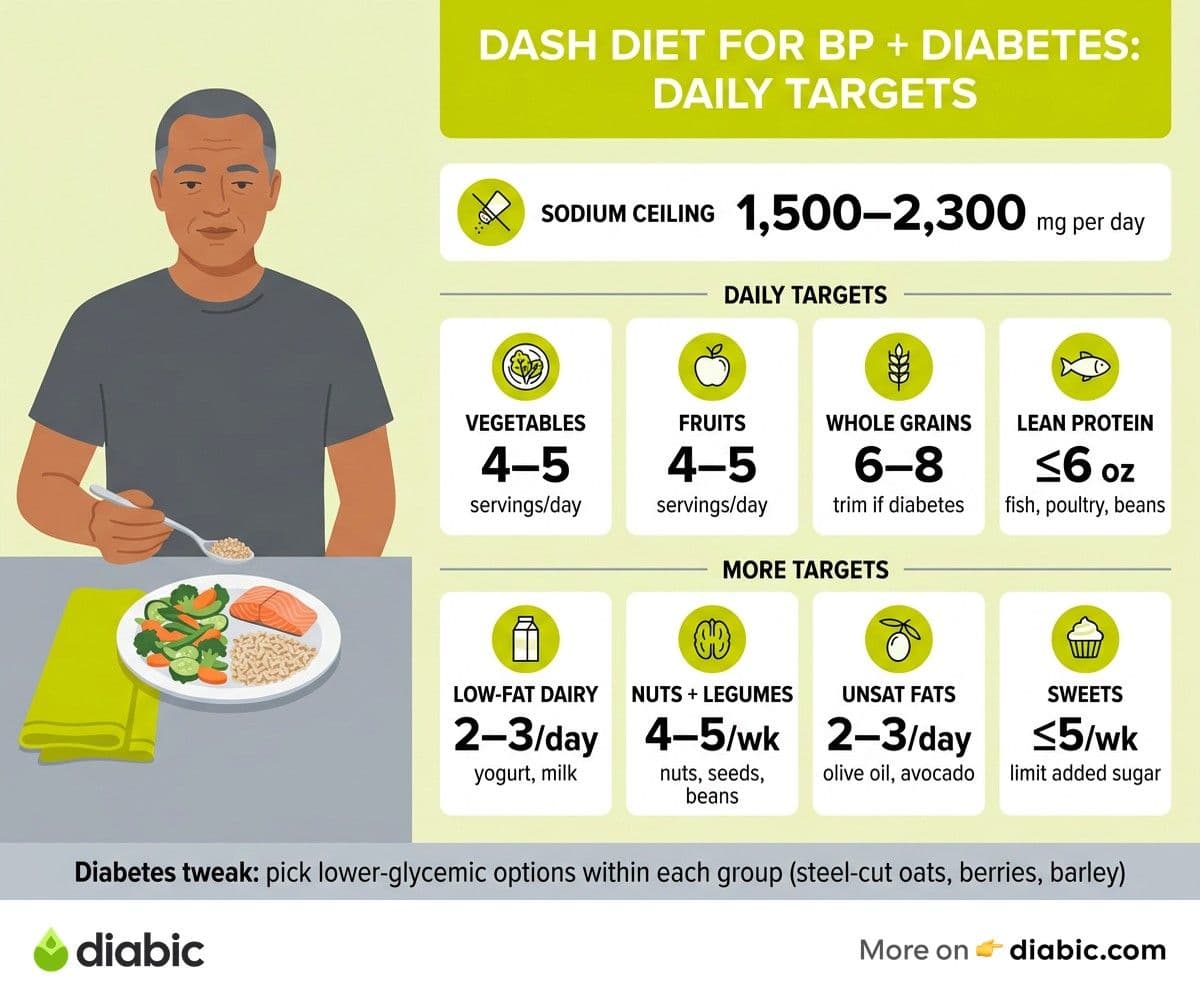
Two nutrients do most of the heavy lifting when it comes to DASH and blood pressure: sodium and potassium. By cutting back on processed and packaged foods, the average DASH eater takes in 1,500 to 2,300 mg of sodium per day, well below the standard American intake. At the same time, the plan emphasizes potassium-rich produce, which helps the kidneys excrete sodium and relax blood vessel walls.
Magnesium and calcium also play a role. The combination of leafy greens, beans, nuts, and low-fat dairy delivers a mineral profile that supports healthy blood pressure regulation. Research published in Diabetes Care, the journal of the American Diabetes Association, has shown that people with type 2 diabetes who follow DASH-style eating tend to see meaningful improvements in both blood pressure and A1C.
The blood sugar benefit comes from a different mechanism. DASH is naturally high in fiber, particularly soluble fiber from vegetables, fruits, oats, and legumes. Soluble fiber slows down carbohydrate absorption, which softens post-meal glucose spikes and helps insulin work more efficiently.
DASH also displaces refined carbohydrates and added sugars almost automatically. When your plate fills up with vegetables, beans, and whole grains, there is less room for the white bread, sugary drinks, and packaged snacks that drive blood sugar swings. Reading our guide on the best diet for high blood pressure and diabetes gives more context on how dietary patterns compare for dual-condition management.
DASH Diet Food Groups and Daily Servings
The DASH plan organizes food into groups with daily or weekly serving targets, based on a 2,000-calorie reference diet. The numbers are easy to scale up or down to fit your needs.
- Vegetables: 4 to 5 servings per day. One serving is one cup raw leafy greens or a half cup cooked vegetables.
- Fruits: 4 to 5 servings per day. One serving is one medium piece of fruit, a half cup chopped, or a quarter cup dried.
- Whole grains: 6 to 8 servings per day. One serving is one slice of bread, a half cup cooked grain, or one ounce of dry cereal.
- Lean proteins: 6 ounces or less per day. Includes poultry, fish, eggs, and lean cuts of meat.
- Low-fat dairy: 2 to 3 servings per day. One serving is one cup of milk or yogurt, or 1.5 ounces of cheese.
- Nuts, seeds, and legumes: 4 to 5 servings per week. One serving is a third cup of nuts or a half cup cooked beans.
- Fats and oils: 2 to 3 servings per day, with an emphasis on olive oil and other unsaturated sources.
- Sweets and added sugars: 5 or fewer servings per week.
For people with diabetes, the carbohydrate-containing groups (grains, fruits, dairy, legumes) deserve a closer look. The total servings recommended by DASH may be higher than what fits your blood sugar goals. The Mayo Clinic DASH guide suggests adjusting carbohydrate portions based on individual needs, which lines up with how registered dietitians typically modify the plan for diabetes.
A simple sample day might include oatmeal with berries and walnuts for breakfast, a large salad with grilled chicken and chickpeas for lunch, baked salmon with roasted vegetables and a small portion of brown rice for dinner, and Greek yogurt with sliced almonds for a snack.
Adapting the DASH Diet When You Have Diabetes
Standard DASH recommends 6 to 8 servings of grains per day, which translates to roughly 200 to 280 grams of carbohydrate. That is more than many people with diabetes can comfortably eat without significant glucose excursions. A few simple adjustments make DASH work much better for blood sugar.
The first adjustment is choosing lower-glycemic options within each food group. Steel-cut or rolled oats, barley, quinoa, and farro raise blood sugar more gently than instant oats or refined cereals. Berries, apples, pears, and stone fruits affect glucose less aggressively than tropical fruits or fruit juices. The American Diabetes Association nutrition guidance supports this pattern across all dietary approaches.
The second adjustment is matching grain servings to your individual carbohydrate goals. If your healthcare team has set a target of around 45 grams of carbohydrate per meal, that may translate to 1 or 2 grain servings rather than 2 or 3. The other DASH food groups (vegetables, lean proteins, healthy fats) fill the rest of the plate.
Pairing carbohydrates with protein, fiber, and fat is the third habit that makes DASH work for diabetes. Eating an apple with peanut butter rather than alone, or topping a slice of whole-grain toast with avocado and an egg, slows the rise in glucose and keeps you fuller longer. For ongoing kidney concerns, our kidney friendly diet for diabetes post covers additional adjustments worth knowing about.
Tracking blood sugar response to new meal patterns is the most useful step you can take in the first few weeks. A finger stick or CGM reading two hours after eating tells you whether a particular meal is working for your body or whether the portion sizes need to shift.
Foods to Enjoy and Foods to Limit
The "yes" list on DASH is generous. Leafy greens like spinach and kale top the list, along with cruciferous vegetables (broccoli, cauliflower, Brussels sprouts), bell peppers, and tomatoes. Berries, citrus fruits, apples, and pears bring antioxidants and fiber without large blood sugar spikes. Salmon, sardines, and other fatty fish provide omega-3 fats that support both heart and brain health.
Beans, lentils, and chickpeas deserve a special mention. These foods are high in fiber, plant protein, and resistant starch, all of which help with blood sugar and blood pressure. Nuts, seeds, and olive oil round out the healthy fat sources. Plain Greek yogurt and kefir are the dairy choices that tend to work best for both conditions.
The "limit" list focuses on items that drive both blood pressure and blood sugar in the wrong direction:
- Processed and cured meats (bacon, hot dogs, deli meats) for their high sodium content
- Sugar-sweetened beverages and fruit juices
- Refined carbohydrates like white bread, pastries, and instant rice
- Full-fat cheese in large quantities and butter as a primary cooking fat
- Salty snacks like chips, pretzels, and salted nuts
- Excess alcohol, which can affect both blood pressure and glucose control
Practical swaps make the transition easier. Try roasted chickpeas instead of pretzels, sparkling water with citrus instead of soda, plain Greek yogurt instead of sour cream, and herbs and spices instead of added salt. For more ideas on heart-supportive eating, our guide on lowering high cholesterol with diabetes pairs well with DASH principles.
Reading nutrition labels is the underrated DASH skill. Sodium hides in places like bread, canned soups, condiments, and sauces. A jar of pasta sauce can pack 600 mg of sodium per serving, while a similar homemade version uses almost none.
Getting Started With the DASH Diet
The biggest mistake people make with any new eating pattern is trying to change everything at once. DASH is meant to be approached gradually, with one or two shifts each week. That pace is far more sustainable than a complete kitchen overhaul on Monday morning.
A reasonable starting plan might look like this. In week one, add one extra serving of vegetables to two meals per day. In week two, swap refined grains for whole grains in your most common meals. In week three, replace one or two processed snacks with fresh fruit, nuts, or yogurt. By the end of a month, your daily eating pattern looks dramatically different, and the changes feel like habits rather than restrictions.
Tracking matters during this phase. Keep a simple log of your blood pressure (morning and evening, when possible) and your blood sugar (fasting and post-meal) for the first few weeks. The numbers help you see what is working and where adjustments are needed. Many people see blood pressure improvements within two to three weeks, with blood sugar changes following over the next month or two.
From my experience: When I shifted toward a DASH-style pattern after years with type 1 diabetes, the blood sugar wins did not show up overnight. What changed first was how predictable my numbers became. Meals that mixed plenty of vegetables, lean protein, and a measured portion of whole grains gave me far fewer surprise spikes than the protein-and-carb plates I had been eating before. Stability often arrives before any dramatic improvement does.
Meal prepping helps make the plan work on busy weeks. Cooking a batch of grain on Sunday, washing and chopping vegetables for the week, and pre-portioning nuts or homemade trail mix takes less than an hour and pays off every weekday. Grocery shopping with a DASH-friendly list also reduces decision fatigue at the store.
Finally, revisit your plan with your healthcare provider after about six to eight weeks. Bring your blood pressure log, your glucose data, and any questions about how the diet is fitting with your medications. Some people find their blood pressure or diabetes medications need adjustment as the diet starts working, particularly if they were close to their target numbers before starting. For broader lifestyle support, our roundup of heart healthy habits for diabetes and lower blood pressure naturally with diabetes tips works well alongside DASH.
FAQ
Can the DASH diet lower blood pressure with diabetes?
Yes. The DASH diet to lower blood pressure has been studied in people with type 2 diabetes, with research showing improvements in both blood pressure and A1C when followed consistently. The fiber, potassium, and magnesium content support both conditions at the same time.
What foods are in the DASH diet for people with diabetes?
The diabetes-adapted DASH plate includes leafy greens, non-starchy vegetables, berries and other lower-glycemic fruits, fatty fish, beans, lentils, nuts, seeds, plain Greek yogurt, and measured portions of whole grains like oats, quinoa, and barley. Sodium-heavy and sugary foods are limited.
Is the DASH diet safe for people on blood pressure medication?
DASH is generally safe alongside blood pressure medications, but the diet itself can lower blood pressure significantly. Some people find their medications need to be adjusted as the eating plan takes effect. Talk to your doctor before starting and check your blood pressure regularly during the first few weeks.
Shahriar P. Shuvo is the founder of Diabic. He has lived with diabetes for over 14 years, and built Diabic to deliver the practical, evidence-based self-management tools he wished existed when he was first diagnosed. By trade, Shahriar is a senior design and frontend engineer with 6+ years shipping products at Agora, Timescale (now Tiger Data), and ShareTrip. He writes from the intersection of lived diabetes experience and product craft, focused on what works in daily management rather than what sounds good in a textbook.
Medically reviewed by
Dr. Shanto Arian is an internal medicine physician now specializing in clinical and aesthetic dermatology, with a parallel academic focus on epidemiology and public health. He holds an MBBS, MPH, MSc (UK), MRCP (UK), MRCPI (Ireland), Diploma in Dermatology (UK), and Diploma in Aesthetic Medicine (USA). Dr. Arian trained in internal medicine, including hospital work on hematology cases such as graft-versus-host disease, before moving toward dermatology. Skin is one of the earliest places diabetes shows itself, from acanthosis nigricans and diabetic dermopathy to slow foot wound healing, and that intersection is where his clinical and Diabic-review work meet. On Diabic, Dr. Arian medically reviews content on diabetes diagnosis, complications, dermatologic manifestations, and pharmacotherapy, ensuring every claim aligns with current ADA, NICE, and peer-reviewed literature.
More from Health & Complications
View all
Diabetes and Dental Implants: What to Know First
Diabetes dental implants guide covering safety, A1C targets, recovery expectations, gum health prep, and what to ask your oral surgeon before surgery.

Burning Mouth Syndrome and Diabetes Explained
Burning mouth syndrome diabetes link explained, including neuropathy, dry mouth, and thrush causes plus treatment options that may bring real relief.

Dental Care for people with diabetes: Tips That Help
Practical dental care diabetics need, with real tips for protecting teeth and gums when diabetes raises your risk for oral health problems.
Clinician-reviewed habits, plain-language guides, and honest answers - the small shifts that make living with diabetes feel lighter, every day.