5 Ways to Lower High Cholesterol with Diabetes
High cholesterol with diabetes is common but manageable. Five evidence-based ways to lower LDL, raise HDL, and protect your heart starting today.

In this article(11)
- Why High Cholesterol and Diabetes Often Travel Together
- Way 1: Adjust Your Eating Habits for Better Cholesterol
- Way 2: Build a Consistent Movement Routine
- Way 3: Talk to Your Doctor About Statin Medications
- Way 4: Manage Your Weight and Waist Circumference
- Way 5: Track Your Numbers and Stay Consistent
- What to Expect When You Start Making Changes
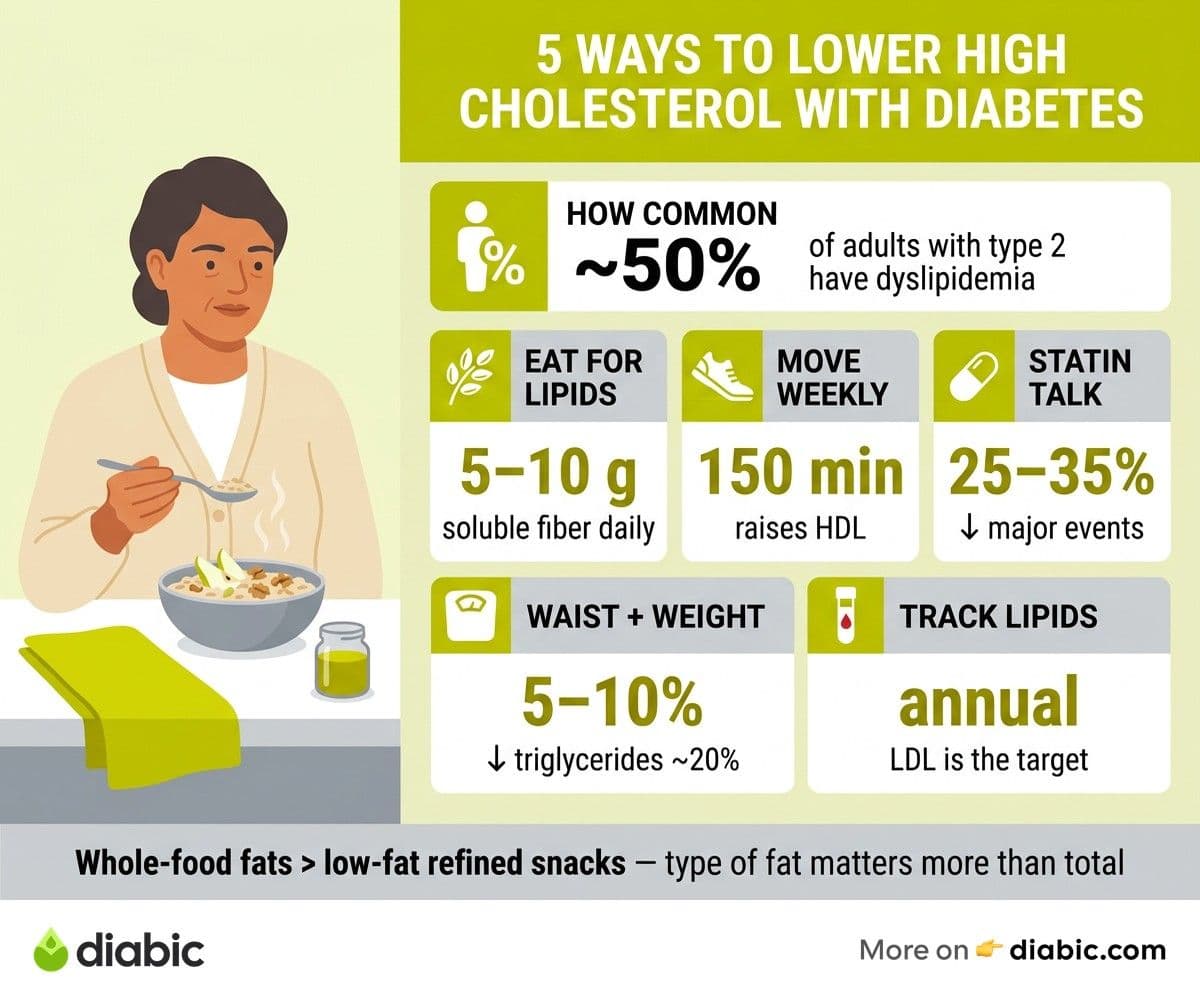
High cholesterol affects roughly half of all adults living with type 2 diabetes, according to the CDC's data on cholesterol and diabetes. That overlap is not random. The same insulin resistance that drives diabetes also nudges your liver into producing more LDL particles and fewer protective HDL ones. The good news is that small, consistent changes to your daily routine can move those numbers in a meaningful direction within a few months.
This post walks through five strategies that work alongside your diabetes plan, not against it. None of them require a perfect overhaul. They simply ask you to pick a place to start.
Why High Cholesterol and Diabetes Often Travel Together
Insulin resistance disrupts the way your body processes fats. When cells stop responding well to insulin, your liver receives more free fatty acids and responds by producing more triglycerides and very-low-density lipoprotein (VLDL) particles. Those particles eventually convert into the small, dense LDL cholesterol that researchers consider especially harmful to artery walls.
This pattern, called diabetic dyslipidemia, typically shows up as three things at once: higher LDL, higher triglycerides, and lower HDL. The American Diabetes Association Standards of Care describe this triad as a major contributor to cardiovascular risk, which is why your provider monitors a lipid panel even when your A1C looks reasonable. The NIDDK overview of diabetes, heart disease, and stroke notes that adults with diabetes are roughly twice as likely to have heart disease or a stroke as those without it.
Blood sugar plays a direct role here too. Chronically elevated glucose triggers inflammation in the lining of blood vessels, which makes cholesterol deposits more likely to stick. That is why managing both numbers matters more than treating either one alone.
Way 1: Adjust Your Eating Habits for Better Cholesterol
Food is the lever you control three or more times a day, and it shifts both blood sugar and cholesterol at the same time. The most useful change for many people with high cholesterol and diabetes is adding soluble fiber to most meals. Soluble fiber binds cholesterol in the gut so less of it gets reabsorbed.
Oats, beans, lentils, barley, apples, pears, and psyllium husk are reliable sources. The Mayo Clinic guidance on lowering cholesterol with diet suggests aiming for 5 to 10 grams of soluble fiber daily. A bowl of oatmeal with a chopped pear delivers about half of that before you even leave the kitchen.
The second shift is swapping saturated fat for unsaturated fat. That means choosing olive oil over butter for cooking, snacking on a small handful of walnuts or almonds instead of cheese crackers, and adding avocado to a sandwich in place of mayonnaise. Trans fats deserve a hard pass when you can spot them on labels. These swaps reduce LDL while keeping meals satisfying enough that you stick with them.
From my experience: when I was first told to "eat less fat," my cholesterol barely budged because I was eating low-fat snacks loaded with refined carbs that spiked my glucose and triglycerides. The shift that actually moved my numbers was eating more whole-food fats (olive oil, nuts, fatty fish) while cutting refined starches. After 14 years of living with type 1 diabetes, I have learned that the type of fat matters far more than the total amount.
There is also a quiet bonus here. Many of these foods, especially fiber-rich legumes and oats, slow how quickly carbs hit your bloodstream. That means steadier glucose, fewer post-meal spikes, and less of the metabolic stress that drives cholesterol up in the first place. A diet that is good for your heart almost always supports better blood sugar too, which is why we cover the fatty liver disease and diabetes connection in a related post.
Way 2: Build a Consistent Movement Routine
Exercise is one of the few interventions that raises HDL cholesterol meaningfully. The American Heart Association recommends at least 150 minutes of moderate aerobic activity per week, broken up however fits your life. Brisk walking, cycling, swimming, dancing, and hiking all count.
Movement also improves insulin sensitivity, which directly affects the lipid problem at its source. When muscles use glucose efficiently, your liver has less surplus to convert into triglycerides and VLDL. Over weeks and months this lowers LDL and raises HDL together, an effect that medication alone struggles to replicate.
The trick is starting at a level you can repeat. Five short walks a week beat two ambitious gym sessions you abandon by month two. If you take insulin or sulfonylureas, check your blood sugar before and after new types of activity to learn how your body responds. Some people see lows during longer walks; others see brief rises during weight training. Keeping a small log for two weeks teaches you more than any general guideline. We dig deeper into this in our piece on heart healthy habits for diabetes.
Way 3: Talk to Your Doctor About Statin Medications
For many adults with diabetes, lifestyle changes alone do not bring LDL down to where it needs to be. That is where statins come in. The ADA recommends statin therapy for most adults with diabetes over 40, and for younger adults with additional cardiovascular risk factors, based on data from large meta-analyses published in Diabetes Care and the Lancet's Cholesterol Treatment Trialists collaboration.
Statins work by reducing how much cholesterol your liver produces. The cardiovascular benefit is well documented: roughly a 25 to 35 percent reduction in major cardiovascular events for people at elevated risk. There are real side effects to discuss, including muscle aches and a small effect on blood sugar in some people, but for most adults with diabetes the benefits substantially outweigh the risks.
This is a conversation worth having with your healthcare team rather than a decision to make based on a single article or social media post. We cover the full picture, including the controversy around blood sugar effects, in our deeper guide to statin medications for diabetes. Bring your most recent lipid panel, your A1C, and your questions to your next appointment.
Way 4: Manage Your Weight and Waist Circumference
Even modest weight loss has a measurable effect on cholesterol. Research summarized by the ADA suggests that losing 5 to 10 percent of body weight can reduce triglycerides by up to 20 percent and modestly improve LDL and HDL. The improvement also tends to make blood sugar easier to manage, which compounds the benefit.
Waist circumference is often a more useful day-to-day marker than the number on the scale. Visceral fat (the fat that wraps around organs) drives insulin resistance and lipid abnormalities more than subcutaneous fat. A measuring tape around your waist at the level of your belly button, taken at the same time of day once a month, gives you a practical signal. The general goal is under 40 inches for men and under 35 inches for women, though your doctor may set different targets based on your overall picture.
Sustainable approaches almost always beat crash diets here. Skipping meals or cutting calories aggressively often backfires for people with diabetes by causing lows or rebound highs. A modest calorie deficit, more vegetables, more protein, and consistent movement tends to produce slow but lasting changes. Celebrate the half-inch off your waist or the five fewer post-meal spikes per week, not just the scale.
Way 5: Track Your Numbers and Stay Consistent
You cannot manage what you do not measure. The ADA recommends a fasting lipid panel at diagnosis and at least every five years for adults with diabetes, with more frequent testing if you are starting therapy or making meaningful changes. In practice, many providers test annually because the information is so useful.
A standard lipid panel gives you four numbers worth understanding:
- Total cholesterol is the broad summary number but tells you little on its own.
- LDL cholesterol is the primary target for treatment in most adults with diabetes.
- HDL cholesterol is protective, with higher numbers generally being better.
- Triglycerides are sensitive to recent eating, alcohol, and blood sugar swings, so a true fasting reading matters.
For more on this, we cover managing triglycerides safely with diabetes in detail, including the targets your doctor is most likely to use.
Set realistic goals together with your provider. For many adults with diabetes, an LDL under 70 mg/dL is the goal if you have established cardiovascular disease, and under 100 mg/dL otherwise. Triglycerides under 150 mg/dL and HDL above 40 (men) or 50 (women) are common targets. These are starting points, not absolutes. What matters most is the trend over time and how the numbers fit with the rest of your health picture.
What to Expect When You Start Making Changes
Dietary changes typically begin showing up on a lipid panel within 4 to 12 weeks. LDL responds first, often within a month. HDL moves more slowly and usually requires consistent exercise over 2 to 3 months. Triglycerides can shift quickly with reduced sugar and alcohol intake, sometimes within weeks.
Consistency outperforms intensity here. Eating well for five days then ordering takeout for two will still move your numbers in the right direction. Going extreme for two weeks and then giving up will not. Think of it as a long, steady project rather than a sprint.
Your doctor may adjust your plan as numbers improve or plateau. Sometimes that means adding a statin, sometimes increasing one already prescribed, and sometimes scaling back if your lipids reach target on lifestyle alone. Regular check-ins (every 3 to 6 months early on, then annually) keep your plan responsive to what your body is actually doing rather than what the protocol says it should be doing.
Frequently Asked Questions
How do you lower high cholesterol with diabetes?
The most effective approach combines four things: a diet rich in soluble fiber and unsaturated fats, regular aerobic exercise, weight management with a focus on visceral fat, and statin therapy when your doctor recommends it. Tracking your lipid panel every 3 to 12 months helps you see what is working and adjust as needed.
What does high cholesterol mean for people with diabetes?
It means your cardiovascular risk is higher than diabetes alone would predict. The combination of high LDL, high triglycerides, and low HDL (called diabetic dyslipidemia) accelerates damage to artery walls. The condition is treatable with lifestyle changes and medication, and addressing it is one of the most impactful things you can do to lower your long-term risk of heart attack and stroke.
Can diet alone lower cholesterol if you have diabetes?
For some people, yes. For others, dietary changes get part of the way and medication closes the gap. Genetics, the duration of your diabetes, and your starting numbers all influence how much diet can shift. The honest answer is that you will know by testing. Make consistent changes for 12 weeks, repeat your lipid panel, and decide next steps with your provider.
If you want to keep building on what you have read here, our guide to heart healthy habits for diabetes is a natural next step. Pick one change from this list, give it three months, and let the numbers tell you what to do next.
Shahriar P. Shuvo is the founder of Diabic. He has lived with diabetes for over 14 years, and built Diabic to deliver the practical, evidence-based self-management tools he wished existed when he was first diagnosed. By trade, Shahriar is a senior design and frontend engineer with 6+ years shipping products at Agora, Timescale (now Tiger Data), and ShareTrip. He writes from the intersection of lived diabetes experience and product craft, focused on what works in daily management rather than what sounds good in a textbook.
Medically reviewed by
Dr. Rezwana Parvin Rumpa is an obstetrics and gynaecology specialist with clinical focus on gestational diabetes, PCOS, and fertility. She holds the MRCOG (Final Part) from the Royal College of Obstetricians and Gynaecologists in London, the MRCPI (Final Part) from the Royal College of Physicians of Ireland, and an MBBS from Shaheed Monsur Ali Medical College under Dhaka University. Dr. Rumpa serves as a Senior Medical Officer in the Obs and Gynae department at BRB Hospitals Ltd, where she has spent three years managing prenatal care, emergency obstetric cases, and women's-health surgery. On Diabic, she medically reviews content for women living with diabetes, with particular attention to pregnancy, PCOS, and reproductive-health intersections.
More from Health & Complications
View all
Diabetes and Dental Implants: What to Know First
Diabetes dental implants guide covering safety, A1C targets, recovery expectations, gum health prep, and what to ask your oral surgeon before surgery.

Burning Mouth Syndrome and Diabetes Explained
Burning mouth syndrome diabetes link explained, including neuropathy, dry mouth, and thrush causes plus treatment options that may bring real relief.

Dental Care for people with diabetes: Tips That Help
Practical dental care diabetics need, with real tips for protecting teeth and gums when diabetes raises your risk for oral health problems.
Clinician-reviewed habits, plain-language guides, and honest answers - the small shifts that make living with diabetes feel lighter, every day.