Blood Sugar Management During Long Meetings
Smart strategies for blood sugar management during meetings, from pre-meeting prep and discreet snacks to CGM checks and handling lows in your seat.

In this article(10)
You glance at the conference room clock and the agenda still has forty minutes left. Your stomach is rumbling, your watch buzzed twice with a downward arrow, and the presenter just opened a new slide deck. Blood sugar management during meetings is one of the quieter struggles of working life with diabetes, and the longer the meeting, the more variables stack against you. We will walk you through what actually helps when you cannot get up and walk to the kitchen.
Why Blood Sugar Management During Meetings Is Challenging
Long meetings combine three things that nudge glucose in unhelpful directions. The first is prolonged sitting, which research published in the Journal of Occupational Health links to reduced insulin sensitivity and slower glucose clearance after meals. Even thirty to sixty minutes of uninterrupted sitting can blunt the muscle-driven uptake of glucose that normally helps stabilize post-meal numbers, so the same lunch can land very differently before a stand-up versus before a four-hour budget review.
The second factor is the stress response. High-stakes presentations, reviews, and tense client calls trigger cortisol and adrenaline, hormones that the American Diabetes Association notes can raise blood glucose by prompting the liver to release stored sugar. If you live with type 1, you may see swings in either direction depending on whether stress hits before or after a bolus. People managing type 2 often notice stressful meetings make their numbers more stubborn than usual, even when the food has not changed.
The third challenge is logistical. You cannot always pull out a meter, unwrap a granola bar, or stand up for a lap when a vice president is mid-sentence. ADA workplace guidance confirms that reasonable breaks for diabetes care are protected, but most of us still want strategies that do not require flagging our condition every time we sit. That gap between what is allowed and what feels socially comfortable is where most meeting-day glucose problems live.
Pre-Meeting Preparation Strategies
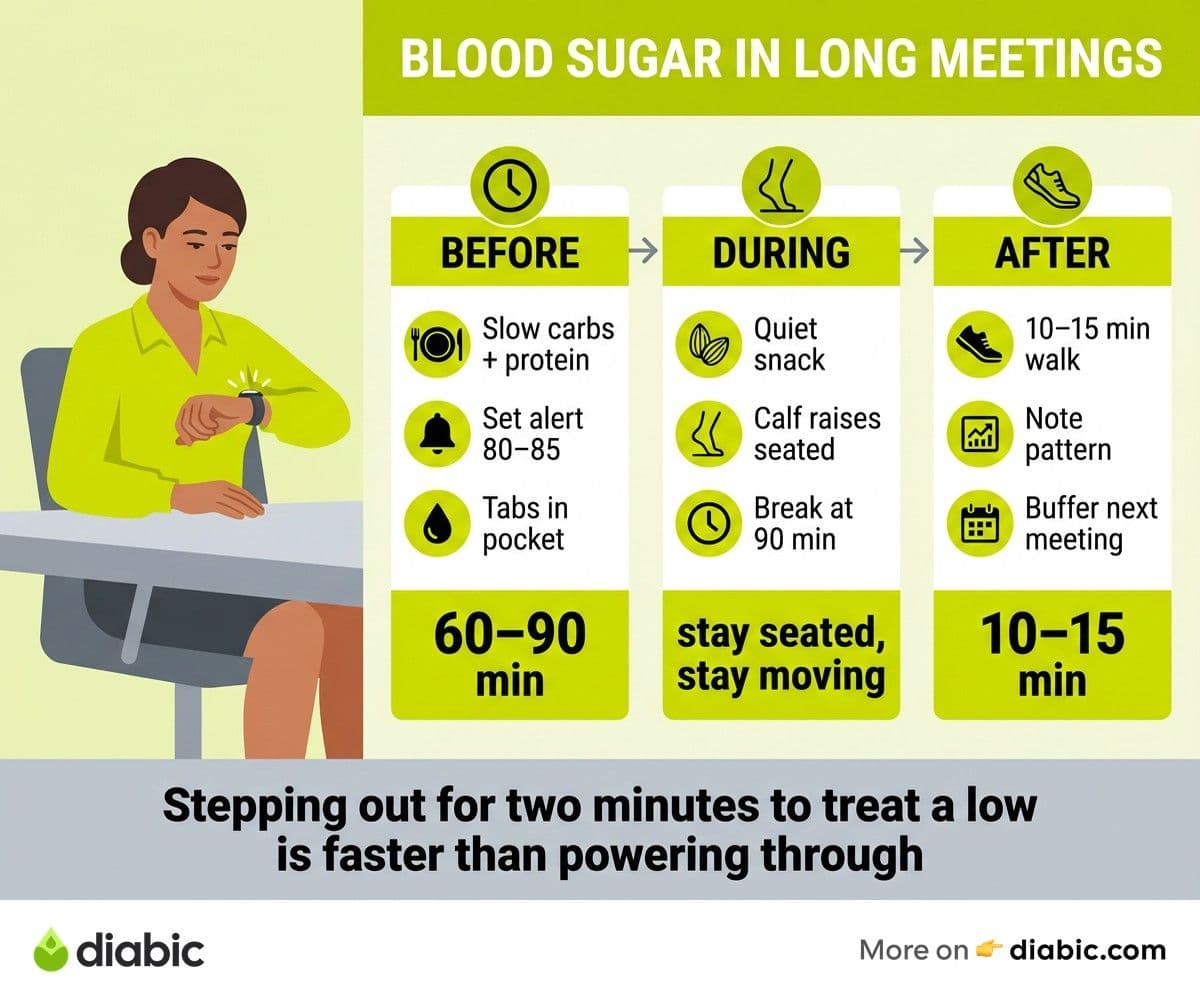
Good meetings start an hour or two before they begin. We think about three layers of prep: what you eat, what you check, and what you carry. For food, aim for slow carbs, protein, and a little fat about sixty to ninety minutes ahead. A turkey wrap on whole grain, eggs with avocado toast, or Greek yogurt with berries and nuts gives you a flatter curve than juice and a pastry, which tend to spike and crash right around minute forty-five. The NIDDK has solid plate-method guidance if you want a framework rather than a strict meal plan.
Checking before you sit down matters just as much. Look at your fingerstick or continuous glucose monitor trend before you walk in, not the number alone. A flat 110 mg/dL is a different starting point than 110 with a double-down arrow. If you wear a CGM, set your low alert higher than usual, perhaps 80 or 85 mg/dL, so you get warning before you are scrambling under the table. Pump users can preset a temporary basal reduction if the meeting tends to send them low, though we recommend confirming pump adjustments with your care team first.
The third layer is what you carry. We pack a small zipped pouch with glucose tabs, a juice box or gel, a protein bar, and a backup battery for whatever device matters most. A quiet snack like cheese cubes or almonds tucks easily into a notebook sleeve. Our guide to practical strategies for managing diabetes at work covers how to set up your desk and calendar so meeting prep becomes a habit. A quick note to the organizer asking for a short break midway through is also fair game, and you do not need to disclose a medical reason to make that request.
Smart Snacking During Meetings
The right meeting snack is quiet, dry, and easy to chew without commentary. Hard cheeses, roasted chickpeas, plain almonds, and protein bars without crinkly wrappers do the job for most people. We avoid anything that smells strong, leaves crumbs, or requires two hands and a napkin. If you need carbs to prevent a slow drift down, a few whole-grain crackers or half a banana eaten before the meeting works better than managing carbs mid-session.
Glucose tabs are the exception to the quiet rule, because when you need them, speed matters more than discretion. Keep a tube in a jacket pocket, laptop sleeve, or the front of your bag where you can reach without standing. Some people transfer tabs into a small mints tin to skip the foil rustle. Our roundup of the [best office snacks for people with diabetes](/diabetes-at-work/best-office-snacks-for-people with diabetes) sorts options by how messy and noticeable they are.
Hydration deserves its own line. Mild dehydration can nudge readings up and make you feel sluggish in ways often blamed on the meeting itself. Bring a water bottle, sip steadily, and skip the fourth coffee if your numbers climb every time you reach for the carafe. If catered food shows up, scan the table once and pick the option closest to your usual plate: protein, vegetables, a small portion of starch. Grabbing fruit to pair with your own snack is always a reasonable move.
Desk Exercises and Movement Breaks
Movement is the lever most people underuse during meetings, and small amounts help. The CDC's guidance on physical activity at work suggests breaking up sitting every thirty minutes when possible. In a meeting, that can mean ankle circles, calf raises under the table, seated marches, or squeezing your glutes for ten seconds at a time. None of this looks dramatic on camera or in person, and the cumulative effect on glucose uptake is real.
When you can stand, stand. Many conference rooms have a back wall where one or two people leaning is unremarkable, and hybrid setups often allow you to step to the back of the room for a video call. Asking for a five-minute break at the ninety-minute mark is a normal request in meetings that run two hours or longer. Frame it neutrally: "Could we take five so people can stretch?" usually lands well. Our piece on desk exercises for blood sugar walks through movements you can string together in under five minutes.
A short post-meeting walk is one of the highest-yield habits we know. Ten to fifteen minutes of easy walking after a long sitting block can shave meaningful points off a post-meal spike, and it doubles as a mental reset. If the weather does not cooperate, a few flights of stairs or a lap of the floor counts. We schedule buffers between back-to-back meetings, and on days that fails, two minutes of standing at your desk beats nothing.
From my experience: After fourteen years with type 1 and more long meetings than I can count, the single change that helped most was setting my CGM low alert at 85 mg/dL instead of 70. That cushion is the difference between calmly opening a tab tin and explaining a sweaty, shaky moment to stakeholders. The other habit that earns its keep is a five-minute walk between every meeting longer than an hour, even if that means joining the next call from a hallway.
Managing Blood Sugar at Work Events and Conferences
Multi-day conferences amplify everything that makes regular meetings tricky. Sleep gets short, meals run late, walking miles between sessions burns through basal insulin, and the buffet is rarely built around your glucose curve. We treat conferences as a separate planning exercise, not just a longer meeting. That means scoping the agenda the night before, noting which sessions overlap with meals, and packing snacks that survive a full day in a bag.
Buffet meals reward a quick scan before you serve yourself. Walk the line once, then build a plate that looks like your usual lunch with protein, non-starchy vegetables, and a measured portion of starch. Save dessert for a moment when you can pair it with movement, or split it. Networking events with appetizers and alcohol need a slightly different playbook. Eat something substantial beforehand, sip water between drinks, and remember that alcohol can cause delayed lows hours later, especially overnight, as the NIDDK notes in its guidance on alcohol and diabetes.
Travel adds variables. Time zones shift basal needs, airport food skews salty and starchy, and stress eats into self-care routines. We pack double the supplies we expect to need, keep them in a carry-on, and book hotels close enough for a midday return if a sensor fails. None of this is glamorous, but a three-day conference then does not become a week of glucose recovery at home.
Using Technology Discreetly
CGMs and smart pumps have made meeting management quieter. A glance at your watch or a smart ring buzz tells you what you need to know without unzipping a meter case. Research summarized in Diabetes Technology and Therapeutics shows that CGM use improves time in range and reduces hypoglycemia, and a meeting room is where that quiet feedback loop pays off most.
Set your alerts before the meeting, not during it. We like a low alert at 80 to 85 mg/dL, a high alert around 200 mg/dL, and a predictive alert if your device offers one. Silence your phone but keep haptics on. Pump users can pre-program adjustments for the duration of the meeting, and closed-loop systems tracked in diabetesjournals.org studies often handle steady sitting better than manual dosing once they have learned your patterns.
Know when to step out. If your number is dropping fast and a few tabs have not turned it around, leave. A polite "I need a quick break, back in two" is rarely questioned, and treating a low properly beats powering through. Smart blood sugar management during meetings is not about hiding diabetes, it is about having enough small tools in place that you rarely need a dramatic intervention.
Frequently Asked Questions
How can you manage blood sugar during long meetings?
Eat a balanced meal sixty to ninety minutes before, check your trend rather than just the number, and set your CGM low alert higher than usual. Pack discreet snacks and glucose tabs within easy reach, sip water steadily, and use small seated movements to break up sitting. If you need to check or treat, step out briefly rather than managing a real low in your seat.
What tips help with handling diabetes at work events?
Scout the food before you serve yourself, eat a protein-rich snack before networking starts, and keep fast-acting glucose in a pocket you can reach without your bag. Stay hydrated, limit alcohol or pair it with food, and remember that delayed lows can show up hours later, especially overnight. You are never obligated to eat or drink what everyone else is having.
Should I tell coworkers I have diabetes?
That is your call, and you do not owe anyone a disclosure to take a break or eat a snack. Some people tell one trusted colleague who can grab juice if needed, while others prefer to keep it private. ADA workplace accommodations do not require sharing details with peers, only with HR if you formally request them.
Steady blood sugar management during meetings comes down to a few small, repeatable habits rather than one big plan. Set your alerts higher, eat the kind of meal that does not betray you ninety minutes later, and keep a quiet snack within reach. The goal is not to hide diabetes from the room, it is to make the room a non-event for your numbers.
Shahriar P. Shuvo is the founder of Diabic. He has lived with diabetes for over 14 years, and built Diabic to deliver the practical, evidence-based self-management tools he wished existed when he was first diagnosed. By trade, Shahriar is a senior design and frontend engineer with 6+ years shipping products at Agora, Timescale (now Tiger Data), and ShareTrip. He writes from the intersection of lived diabetes experience and product craft, focused on what works in daily management rather than what sounds good in a textbook.
Medically reviewed by
Dr. Rezwana Parvin Rumpa is an obstetrics and gynaecology specialist with clinical focus on gestational diabetes, PCOS, and fertility. She holds the MRCOG (Final Part) from the Royal College of Obstetricians and Gynaecologists in London, the MRCPI (Final Part) from the Royal College of Physicians of Ireland, and an MBBS from Shaheed Monsur Ali Medical College under Dhaka University. Dr. Rumpa serves as a Senior Medical Officer in the Obs and Gynae department at BRB Hospitals Ltd, where she has spent three years managing prenatal care, emergency obstetric cases, and women's-health surgery. On Diabic, she medically reviews content for women living with diabetes, with particular attention to pregnancy, PCOS, and reproductive-health intersections.
More from Living with Diabetes
View all
A Gentle Chair Yoga Routine for people with diabetes
A gentle chair yoga for people with diabetes routine with safe poses, modifications for neuropathy, retinopathy, and joint pain, plus tips for older.

Shift Work and Diabetes: Managing Irregular Hours
Shift work and diabetes is a tough combination. Learn how to manage meals, sleep, medication, and blood sugar when your hours rotate or flip overnight.

Dating with Diabetes: When to Tell a New Partner
Dating with diabetes brings unique disclosure questions. Here is when to tell a new partner, what to say, and how to handle the conversation with.
Clinician-reviewed habits, plain-language guides, and honest answers - the small shifts that make living with diabetes feel lighter, every day.