Diabetes Symptoms Women Often Overlook
Learn which diabetes symptoms women miss most often, from recurring yeast infections to mood shifts, and when to ask your doctor for testing.

In this article(16)
Diabetes symptoms women experience can look different from the textbook list of thirst, fatigue, and frequent urination. Some of the most telling signs, like recurring yeast infections, vaginal dryness, or stubborn mood shifts, are exactly the ones that get filed under stress, perimenopause, or simply a busy life. By the time the bigger picture comes into focus, blood sugar has often been quietly elevated for years.
Women also tend to be socialized to push through low-grade symptoms rather than name them out loud at appointments. That habit, combined with research that historically centered men's bodies, means subtle clues get talked about less and tested for later. The point of this article is not to alarm you, but to help you connect dots your provider may not connect on their first pass.
We will walk through why these signs get missed, which symptoms are more common or more pronounced in women, and what to bring up with your doctor if any of this sounds familiar. The goal is a calmer, more informed conversation at your next visit, not a panic spiral after a single late-night search.
Why Diabetes Symptoms in Women Get Missed
Many of the early diabetes symptoms women notice overlap neatly with other common life events. Fatigue, irritability, and weight changes can fit perimenopause, a stressful season at work, postpartum recovery, or thyroid shifts just as easily as they fit blood sugar trouble. When a symptom has five plausible explanations, the metabolic one rarely gets named first.
There is also a long-standing research gap. According to the CDC's data on women and diabetes, more than 15 million women in the United States are living with diabetes, yet for decades cardiovascular and metabolic studies leaned heavily on male participants. The result is a clinical playbook that under-describes how diabetes can present in female bodies, especially around hormones and reproductive health. You may want to start by reviewing the early clues of diabetes that apply across the board, then layer the women-specific signs on top.
Self-advocacy fills part of that gap. Bringing a short, written list of symptoms to your appointment, including the ones that feel "too small" to mention, makes it more likely your provider will order screening rather than wait for the next visit. Women are often praised for being low-maintenance patients, and that praise sometimes costs them earlier diagnoses.
How Hormonal Cycles Complicate the Picture
Estrogen and progesterone shift insulin sensitivity throughout the menstrual cycle, pregnancy, and menopause. A 2020 review in Diabetes Care noted that hormonal transitions can mask or mimic glucose symptoms, which is one reason women's blood sugar patterns can look different from cycle to cycle. If you track your cycle, mentioning when symptoms worsen, before periods, mid-cycle, or in the perimenopausal window, gives your provider useful context.
This is also why a single fasting glucose draw on a random Tuesday may not tell the whole story. A1C, which reflects two to three months of average blood sugar, often catches what a single morning lab misses.
Diabetes Symptoms Women Notice First
Some signs of diabetes show up almost exclusively in women because they involve the urinary tract, vagina, or reproductive hormones. These are the symptoms most likely to be dismissed as "just one of those things" until they happen repeatedly.
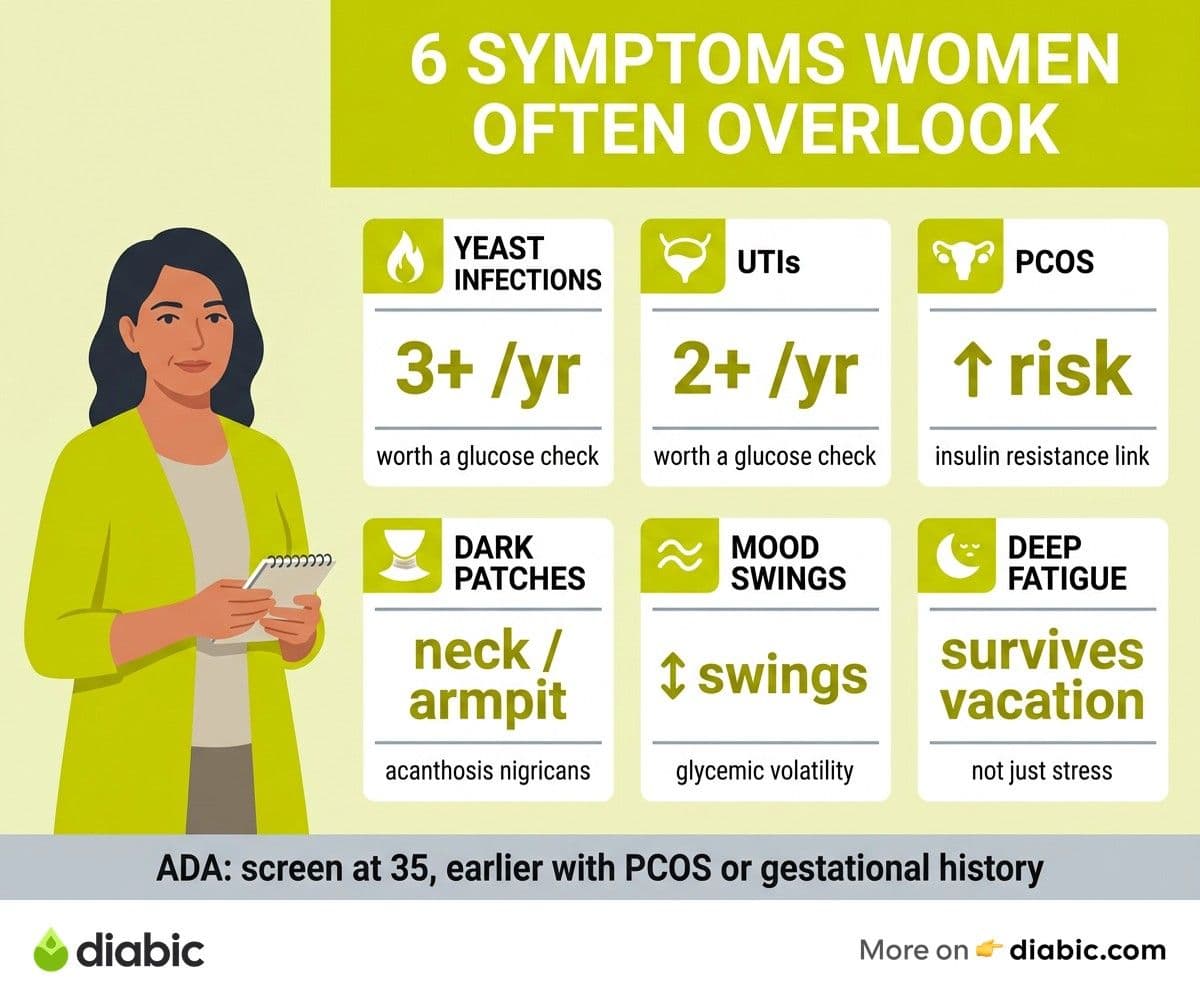
Recurring urinary tract infections and vaginal yeast infections are near the top of the list. The Office on Women's Health notes that high blood glucose feeds yeast and bacteria, making these infections more frequent and harder to clear in women with undiagnosed or poorly managed diabetes. If you have had three or more yeast infections in a year, or two or more UTIs, that pattern alone is worth a glucose check.
Vaginal dryness and discomfort during sex are less talked about but equally telling. Elevated glucose damages the small blood vessels and nerves that support vaginal tissue, which can lower lubrication and sensation. Many women attribute this to age or stress and never connect it to metabolic health, even when it appears years before menopause.
PCOS as an Early Signal
Polycystic ovary syndrome (PCOS) and type 2 diabetes share insulin resistance as a root mechanism. The Endocrine Society's PCOS guideline recommends screening women with PCOS for impaired glucose tolerance, because their lifetime risk of type 2 diabetes is substantially higher than the general population's. If you have been told you have PCOS, irregular cycles, or unexplained acne and hair growth, your A1C should be part of routine bloodwork.
For women already navigating PCOS, metformin for PCOS is a common medication conversation that ties insulin resistance, fertility, and metabolic risk together. Talking to your doctor about whether to add A1C monitoring alongside PCOS care is reasonable even if you do not yet meet diabetes criteria.
Cycle Changes and Sexual Health
Persistent shifts in cycle length, heavier or lighter bleeding, and new fertility difficulties can also be quiet flags. Insulin resistance disrupts ovulation, and the resulting cycle changes are easy to chalk up to stress or aging. Lower libido and pain during sex round out the reproductive symptom picture, particularly when they appear alongside fatigue and weight changes.
These signs alone do not diagnose diabetes. Together with classic symptoms or family history, they justify pushing for a fasting glucose, A1C, or oral glucose tolerance test rather than waiting another year.
Shared Symptoms That Show Up Differently in Women
The classic signs of diabetes still apply to women, but the texture is often different. Studies in Diabetes Care on sex-based differences have shown that women tend to report fatigue, mood changes, and pain symptoms more than men do, while men tend to report thirst and urinary symptoms first. That reporting gap matters because providers sometimes screen based on the most "classic" complaint.
Fatigue in women with elevated blood sugar tends to feel deeper, more persistent, and less responsive to a good night's sleep. It is the kind of tired that survives a vacation. When fatigue is paired with abdominal weight gain that resists the same diet and exercise that used to work, insulin resistance is worth ruling out rather than assuming the problem is willpower.
Skin changes are another quiet clue. Acanthosis nigricans, the velvety dark patches that show up at the back of the neck, armpits, or groin, is a visible sign of insulin resistance. Skin tags around the neck, slow-healing cuts, and persistent itching also fall in this category. Many women see a dermatologist for these without ever being referred for metabolic testing.
Mood, Anxiety, and the Brain-Glucose Loop
Blood sugar swings affect mood through measurable changes in cortisol, adrenaline, and brain glucose supply. When sugar spikes and then crashes, irritability, anxiety, and tearfulness can follow within an hour. Women who already navigate hormonal mood shifts may experience this layer as "just PMS getting worse" or "I am more anxious than I used to be," when the underlying driver is glycemic volatility.
From my experience: I have lived with type 1 diabetes for 14 years, and the mood-glucose link still surprises me. A 60 mg/dL crash at 4 p.m. feels almost identical to a stressful work moment until I check my CGM. Helping the women in my family notice that pattern in their own bodies, even without diabetes, has made it easier for them to ask their doctors better questions.
Tingling, Numbness, and Nerve Symptoms
Peripheral neuropathy can begin years before a diabetes diagnosis. Tingling, burning, or numbness in the feet and hands, especially at night, deserves attention. Women sometimes attribute these sensations to footwear, hormonal changes, or vitamin deficiencies, all of which are possible, but a glucose check is a cheap and fast way to rule diabetes in or out.
When to Talk to Your Doctor About Testing
The American Diabetes Association currently recommends screening adults starting at age 35, and earlier if you have risk factors. Risk factors that disproportionately affect women include a history of gestational diabetes, PCOS, family history of type 2 diabetes, and being from Black, Hispanic, Indigenous, Asian American, or Pacific Islander communities. The ADA Standards of Care lay out these thresholds in detail and update them annually.
If you had gestational diabetes during pregnancy, your lifetime risk of type 2 diabetes rises significantly, and screening every one to three years is reasonable rather than waiting for symptoms. The same is true if you have PCOS or have ever had an A1C in the prediabetes range. Asking your provider to add an A1C to your annual labs is a small request that frequently changes care decisions later.
When you go in, ask about three tests by name. The fasting plasma glucose, the A1C, and the oral glucose tolerance test each measure something slightly different, and your provider can pick the most appropriate one based on your history. Knowing what your A1C number means before your appointment helps you read the result rather than wait for a follow-up call to interpret it.
How to Prepare for the Conversation
Bring three things to the visit. A list of symptoms with rough timelines, including the ones that feel embarrassing or minor. Your menstrual or menopausal pattern over the past year. And any family history of diabetes, gestational diabetes, or heart disease. A focused, written summary respects your provider's time and helps them order the right tests on the first visit.
If your provider dismisses concerns without testing, it is reasonable to ask, "What threshold would I need to meet for you to order an A1C?" That single question often reframes the conversation toward action.
Taking Charge of Your Health
Catching diabetes or prediabetes early genuinely changes the trajectory. The Diabetes Prevention Program research, funded by NIDDK, showed that modest lifestyle changes reduced progression from prediabetes to type 2 diabetes by 58% over three years, with even larger benefits in women over 60. The earlier you know, the more room you have to act.
Building a care team that listens is part of the work. That can mean a primary care doctor who orders labs without a fight, an endocrinologist for nuanced cases, a registered dietitian who understands your food culture, and a therapist if mood and stress are entangled with your blood sugar. You do not need all four at once, but knowing who to call when something shifts saves time later.
Lifestyle adjustments that support both hormonal and metabolic health tend to overlap. Regular strength training improves insulin sensitivity and supports bone density during perimenopause. A protein-forward breakfast can blunt morning glucose spikes and stabilize energy through the day. Prioritizing sleep, especially during high-stress weeks, lowers cortisol-driven blood sugar swings. None of this requires a perfect overhaul to start.
Community and Continued Learning
Connecting with other women navigating the same questions makes the daily work less isolating. Online communities, in-person diabetes education classes, and peer support groups offer practical wisdom that does not always make it into clinical visits. Learning what prediabetes really means for your future risk, rather than treating it as a vague warning, is a useful first step if your A1C lands in that range.
You do not have to act on every symptom in this article tonight. You do have to take the ones that feel familiar seriously enough to mention them at your next visit.
FAQ
What are the early signs of diabetes in women?
Beyond the classic symptoms like increased thirst and frequent urination, women may notice recurring yeast infections, repeated urinary tract infections, vaginal dryness, changes in their menstrual cycle, deeper fatigue, and unexplained mood shifts. Skin changes such as dark patches at the neck or skin tags can also appear. These signs are often attributed to stress, hormones, or aging, which is why awareness and screening matter, especially if you have a family history of type 2 diabetes or PCOS.
Can diabetes symptoms differ between men and women?
Yes. While both men and women experience increased thirst, fatigue, and frequent urination, women are more likely to develop genital yeast infections, UTIs, hormonal cycle disruptions, and PCOS-related insulin resistance as early signs of diabetes. Research published in Diabetes Care also suggests women report mood and pain symptoms more often than men, while men tend to report classic thirst symptoms first. These differences influence which symptoms get mentioned in appointments and which get tested for early.
Does PCOS mean I will get type 2 diabetes?
PCOS does not guarantee type 2 diabetes, but it does raise your lifetime risk because both conditions involve insulin resistance. The Endocrine Society recommends regular glucose screening for women with PCOS rather than waiting for symptoms. Many women with PCOS never develop diabetes, especially when insulin resistance is addressed early through nutrition, movement, sleep, and, when appropriate, medication. Talk to your doctor about how often your A1C should be checked.
The diabetes symptoms women miss most often are the ones that overlap with hormones, stress, and ordinary life. If two or three signs in this article sound familiar, consider asking your doctor for an A1C at your next visit and bringing a short written list of symptoms with you. Research suggests early detection meaningfully changes long-term outcomes, and a 10-minute conversation today is the simplest place to start.
Dr. Rezwana Parvin Rumpa is an obstetrics and gynaecology specialist with clinical focus on gestational diabetes, PCOS, and fertility. She holds the MRCOG (Final Part) from the Royal College of Obstetricians and Gynaecologists in London, the MRCPI (Final Part) from the Royal College of Physicians of Ireland, and an MBBS from Shaheed Monsur Ali Medical College under Dhaka University. Dr. Rumpa serves as a Senior Medical Officer in the Obs and Gynae department at BRB Hospitals Ltd, where she has spent three years managing prenatal care, emergency obstetric cases, and women's-health surgery. On Diabic, she medically reviews content for women living with diabetes, with particular attention to pregnancy, PCOS, and reproductive-health intersections.
Medically reviewed by
Dr. Shanto Arian is an internal medicine physician now specializing in clinical and aesthetic dermatology, with a parallel academic focus on epidemiology and public health. He holds an MBBS, MPH, MSc (UK), MRCP (UK), MRCPI (Ireland), Diploma in Dermatology (UK), and Diploma in Aesthetic Medicine (USA). Dr. Arian trained in internal medicine, including hospital work on hematology cases such as graft-versus-host disease, before moving toward dermatology. Skin is one of the earliest places diabetes shows itself, from acanthosis nigricans and diabetic dermopathy to slow foot wound healing, and that intersection is where his clinical and Diabic-review work meet. On Diabic, Dr. Arian medically reviews content on diabetes diagnosis, complications, dermatologic manifestations, and pharmacotherapy, ensuring every claim aligns with current ADA, NICE, and peer-reviewed literature.
More from Treatment & Medication
View all
Recognizing Diabetic Coma Warning Signs Early
Learn to spot diabetic coma warning signs early. We cover DKA, HHS, and severe hypoglycemia symptoms, plus when to call 911 for immediate help.

Switching to Injectable Diabetes Medication: What to Expect
Switching to injectable diabetes medication can feel daunting. Learn what to expect, how to manage side effects, and why this step is progression, not.

Hyperglycemic Hyperosmolar Syndrome: Warning Signs to Know
Hyperglycemic hyperosmolar syndrome is a serious type 2 diabetes emergency. Learn the warning signs, triggers, and when to call 911 for HHS care.
Clinician-reviewed habits, plain-language guides, and honest answers - the small shifts that make living with diabetes feel lighter, every day.