How to Know If You Have Diabetes: Early Clues
Wondering how to know if you have diabetes? Learn the early signs, common symptoms, diagnostic tests, and risk factors so you can act before complications.

In this article(14)
Wondering how to know if you have diabetes can feel unsettling, especially when you are noticing small changes in your body that seem hard to explain. The good news is that early clues often show up well before a formal diagnosis, and recognizing them can make a real difference in your long-term health. We hear from readers all the time who say they brushed off the same handful of symptoms for months before finally booking a blood test.
Diabetes rarely arrives with a single dramatic warning sign. It tends to whisper through everyday changes that look like ordinary fatigue, stress, or aging until the pattern becomes hard to ignore. According to the World Health Organization, more than 800 million adults worldwide are living with diabetes, and a significant portion remain undiagnosed at any given time. That gap is exactly why learning to recognize early clues matters so much.
This guide walks through the symptoms that most often surface first, the tests your provider may order, the risk factors that raise your odds, and what to do if your gut is telling you something is off. We are not here to diagnose anything. We are here to help you arrive at your next appointment informed and ready to ask the right questions.
Early Signs of Diabetes Most People Miss
The earliest signs of diabetes are usually subtle, and they tend to creep in over weeks or months rather than appear overnight. Because each clue can be explained away by a busy life or a poor night of sleep, the cluster matters more than any single symptom. When two or three of these show up together, it is worth paying closer attention.
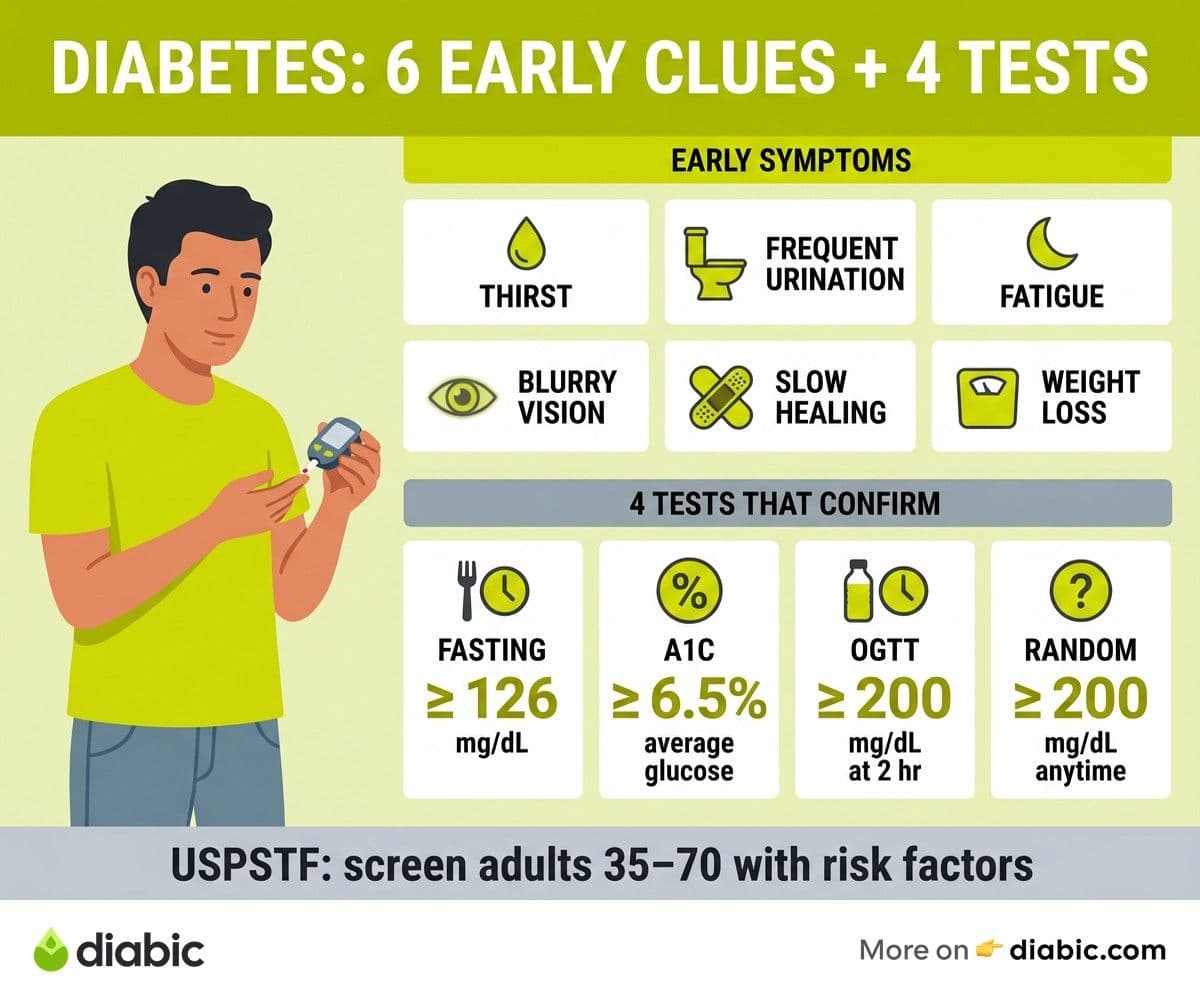
Increased thirst and a persistently dry mouth are often the first hints. When blood sugar runs higher than your kidneys can comfortably filter, your body pulls extra water from your tissues to dilute and excrete the excess glucose. You feel that as relentless thirst, even after a tall glass of water, and it can be especially noticeable in the morning or during the night.
Frequent urination usually shows up alongside the thirst, particularly the kind that wakes you up two or three times overnight. Unexplained fatigue is another common early clue, since your cells are not getting the fuel they need when insulin is not working efficiently. Many people also describe blurry vision that comes and goes as fluid shifts inside the eye, or slow-healing cuts and recurring skin or yeast infections that take longer than usual to clear.
When Symptoms Move Faster
For some people, especially those developing type 1 diabetes, these early signs can escalate quickly into something more serious. If thirst and urination become extreme, and you start to feel nauseated, fruity-smelling breath, deep fatigue, or sharp belly pain, those can be warning signs of diabetic ketoacidosis. The NIDDK overview of diabetes symptoms treats these signs as a reason to seek care urgently rather than wait for a routine appointment.
You can read more about recognizing ketoacidosis symptoms if you want a fuller picture of how that pattern looks and feels. The short version is that any rapid worsening of diabetes-style symptoms deserves a call to your provider or a trip to urgent care, not a wait-and-see week.
Common Diabetes Symptoms You Should Watch For
Beyond the early whispers, there is a second tier of diabetes symptoms that tends to show up as the condition progresses. These often overlap with the early signs but can feel more pronounced, and noticing them is one of the clearest signals that a blood test is overdue.
Unintended weight loss is a classic example, and it is more common in type 1 diabetes but can happen in type 2 as well. When your body cannot use glucose for energy, it starts breaking down fat and muscle, which shows up on the scale even though your appetite may be increasing. That combination of eating more while losing weight is one of the more telling symptoms of diabetes that often pushes people to finally call their doctor.
Increased hunger, even shortly after meals, can also be a sign that glucose is not making it into your cells the way it should. Tingling or numbness in the hands and feet may appear as nerves start to feel the effects of higher blood sugar over time. Some people, particularly those developing type 2 diabetes, notice dark velvety patches of skin on the back of the neck, in the armpits, or around the groin. That pattern, called acanthosis nigricans, often points to insulin resistance.
Mood, Sleep, and the Hidden Symptoms
Mood changes and irritability deserve their own mention because they are easy to dismiss. When blood sugar swings between high and low, your brain feels it, and that can show up as a short fuse, brain fog, or unusual anxiety. Women may also notice symptoms that overlap with cycle changes or perimenopause, which is why we wrote a separate piece on symptoms women often overlook.
The takeaway is simple. If you are noticing several of these signs together, especially across more than a couple of weeks, it is reasonable to ask your provider for a basic screening. A single blood draw can settle a lot of uncertainty.
How Diabetes Is Diagnosed
There is no way to confirm diabetes from symptoms alone, which is why a diabetes test is the only honest answer to the question of whether you have it. The good news is that the standard diagnostic tests are well established, widely available, and usually inexpensive. The ADA Standards of Care 2025 outline four main tests that providers rely on, each with its own strengths.
The fasting plasma glucose test measures your blood sugar after at least eight hours without food. A reading under 100 mg/dL is considered normal, 100 to 125 mg/dL falls into the prediabetes range, and 126 mg/dL or higher on two separate tests points to diabetes. The A1C test, which is one of the most useful diagnostic tools, reflects your average blood sugar over the past two to three months. You can read more about what your A1C result means if you want a deeper walkthrough of the numbers.
The oral glucose tolerance test, or OGTT, involves drinking a sweet liquid and having your blood drawn at intervals to see how your body handles the sugar load. A random plasma glucose test, drawn at any time of day, is sometimes used when symptoms are dramatic and your provider wants a fast answer. Each of these maps to a clear cutoff, and most clinicians will repeat the test on a second day or pair two different tests before confirming the diagnosis.
Why Two Tests Are Often Better Than One
Lab values fluctuate. A cold, a stressful week, or a recent steroid course can push numbers around enough to muddy a single result. That is why guidelines generally recommend either repeating the same test or pairing two different tests before locking in a diagnosis. If you are also curious how your numbers compare to typical ranges, our blood sugar levels by age chart breaks down the standard cutoffs in plain language.
Your provider may also order a C-peptide test or autoantibody panel if they want to distinguish between type 1 and type 2 diabetes. These extra tests are not always needed, but they can be useful when the picture is not obvious from clinical signs alone.
Risk Factors That Increase Your Chances
Symptoms tell part of the story. Risk factors fill in the rest. The CDC diabetes risk factors page summarizes the strongest predictors for type 2 diabetes, and many of them are easy to check against your own life.
Family history is one of the biggest. If a parent or sibling has type 1 or type 2 diabetes, your risk goes up, and that is true even if your own weight, diet, and activity levels are in good shape. Body weight matters too, particularly excess weight carried around the abdomen, which is closely linked to insulin resistance in type 2 diabetes. Age plays a role as well, with type 2 risk climbing meaningfully after 45.
A history of gestational diabetes during pregnancy raises lifetime risk for type 2 diabetes, as does polycystic ovary syndrome. Sedentary lifestyles, certain ethnic backgrounds (including Black, Hispanic, Native American, Asian American, and Pacific Islander communities), and conditions like high blood pressure or abnormal cholesterol all add to the picture. Understanding what prediabetes means for you is also worth your time, because catching things at that stage opens the door to slowing or reversing the trajectory.
When Risk Factors Should Trigger a Test
The US Preventive Services Task Force recommends that adults aged 35 to 70 who are overweight or obese be screened for prediabetes and type 2 diabetes, even without symptoms. If you have multiple risk factors, an annual check is reasonable. If you have one strong risk factor like a first-degree relative with diabetes, talking to your doctor about a baseline test is a sensible move.
From my experience: I have lived with type 1 diabetes for 14 years, and I still remember how easy it was to dismiss the symptoms in the weeks before my diagnosis. The thirst was relentless, the weight loss was strange, and I told myself it was stress. A simple finger-stick at urgent care made the diagnosis in under five minutes. If something feels off, the test is faster than the worry.
How to Know If You Have Diabetes and What to Do Next
If you have been reading along nodding at several symptoms and seeing your own risk factors in the list, the practical answer to how to know if you have diabetes is to stop guessing and book a test. Schedule an appointment with your primary care provider and ask specifically for diabetes screening. Most clinics can run a fasting glucose, an A1C, or both during a routine visit, and results often come back within a day or two.
When you book the appointment, be specific about what you are noticing. A note like "I have had increased thirst and frequent urination for six weeks and a family history of type 2 diabetes" gives your provider what they need to order the right tests on the first visit. Bring a short written list if it helps, including how long each symptom has been going on and anything that seems to make it better or worse.
Expect a basic exam, a discussion of your medical and family history, and likely a blood draw. Your provider may also check your blood pressure, cholesterol, kidney function, and weight, since these tend to travel together with diabetes risk. If results come back normal but symptoms continue, ask about repeat testing or an OGTT, since some early-stage cases are missed by a single fasting test alone.
After the Test, Whatever the Result
If the test is normal, you have a useful baseline and a clearer sense of which lifestyle changes might lower your risk. If you fall into the prediabetes range, that is a real opportunity. Research suggests that modest weight loss, regular movement, and dietary adjustments can significantly delay or prevent progression to type 2 diabetes. If the result is diabetes, take a breath. The diagnosis is the start of a manageable path, not the end of the road.
A few resources can help on day one. Diabetes educators are often covered by insurance and can walk you through nutrition, monitoring, and medication basics in plain language. Online communities, including ours, give you a place to ask the small questions that never quite fit into a 15-minute appointment. And your provider can refer you to an endocrinologist if your case is complex or if you need help fine-tuning a treatment plan.
Frequently Asked Questions
What are the first signs of diabetes in adults?
The earliest signs in adults often include increased thirst, frequent urination (especially at night), unexplained fatigue, and blurry vision that comes and goes. Some people also notice slow-healing cuts, recurring yeast or skin infections, increased hunger, or unintended weight loss. Because these symptoms develop gradually and can mimic stress or aging, they are easy to overlook until several appear together.
Can you have diabetes and not know it?
Yes, and it is more common than people think. Many cases of type 2 diabetes go undiagnosed for years because the symptoms develop slowly and can be mistaken for normal aging, stress, or perimenopause. The CDC estimates that nearly one in five adults with diabetes in the US is unaware of the diagnosis. Regular screening is especially important if you have risk factors like family history, excess weight, or a history of gestational diabetes.
How do doctors confirm a diabetes diagnosis?
Doctors confirm diabetes using one or more of four standard tests: fasting plasma glucose, A1C, oral glucose tolerance test, or random plasma glucose. Most providers will repeat the same test on a different day or pair two different tests before making a final diagnosis, since lab values can shift with illness, stress, or recent meals. Results are usually available within a day or two of the blood draw.
Knowing how to know if you have diabetes really comes down to two things. Pay attention to the patterns your body is showing you, and be willing to spend ten minutes on a blood test when something feels off. Talk to your doctor about the symptoms and risk factors that apply to you, and bring this list with you so the conversation moves quickly. If you want to keep exploring, our diagnosis and lab testing collection is a good next stop, and our community is always open if you want to compare notes with people who have walked this same first step.
Shahriar P. Shuvo is the founder of Diabic. He has lived with diabetes for over 14 years, and built Diabic to deliver the practical, evidence-based self-management tools he wished existed when he was first diagnosed. By trade, Shahriar is a senior design and frontend engineer with 6+ years shipping products at Agora, Timescale (now Tiger Data), and ShareTrip. He writes from the intersection of lived diabetes experience and product craft, focused on what works in daily management rather than what sounds good in a textbook.
Medically reviewed by
Dr. Shanto Arian is an internal medicine physician now specializing in clinical and aesthetic dermatology, with a parallel academic focus on epidemiology and public health. He holds an MBBS, MPH, MSc (UK), MRCP (UK), MRCPI (Ireland), Diploma in Dermatology (UK), and Diploma in Aesthetic Medicine (USA). Dr. Arian trained in internal medicine, including hospital work on hematology cases such as graft-versus-host disease, before moving toward dermatology. Skin is one of the earliest places diabetes shows itself, from acanthosis nigricans and diabetic dermopathy to slow foot wound healing, and that intersection is where his clinical and Diabic-review work meet. On Diabic, Dr. Arian medically reviews content on diabetes diagnosis, complications, dermatologic manifestations, and pharmacotherapy, ensuring every claim aligns with current ADA, NICE, and peer-reviewed literature.
More from Treatment & Medication
View all
Recognizing Diabetic Coma Warning Signs Early
Learn to spot diabetic coma warning signs early. We cover DKA, HHS, and severe hypoglycemia symptoms, plus when to call 911 for immediate help.

Switching to Injectable Diabetes Medication: What to Expect
Switching to injectable diabetes medication can feel daunting. Learn what to expect, how to manage side effects, and why this step is progression, not.

Hyperglycemic Hyperosmolar Syndrome: Warning Signs to Know
Hyperglycemic hyperosmolar syndrome is a serious type 2 diabetes emergency. Learn the warning signs, triggers, and when to call 911 for HHS care.
Clinician-reviewed habits, plain-language guides, and honest answers - the small shifts that make living with diabetes feel lighter, every day.