Why Diabetes Nail Problems Happen and How to Help
Diabetes nail problems like fungal infections and thickening happen for specific reasons. Learn why they occur and what helps protect your nail health.

In this article(9)
You glance down at your toenails and notice one looks thicker than it used to, maybe with a yellow tint or a strange ridge. That moment of recognition can be unsettling, especially when you live with diabetes and already keep a mental list of things to watch. Diabetes nail problems are common, often quiet in their early stages, and worth understanding before they become harder to treat.
Nails reflect what is happening deeper in the body. The same circulation, immune, and blood sugar shifts that affect your skin also reach the small structures at the ends of your fingers and toes. Knowing the why behind nail changes makes the daily steps that follow feel less like guesswork and more like care that actually works.
Why Diabetes Causes Nail Problems
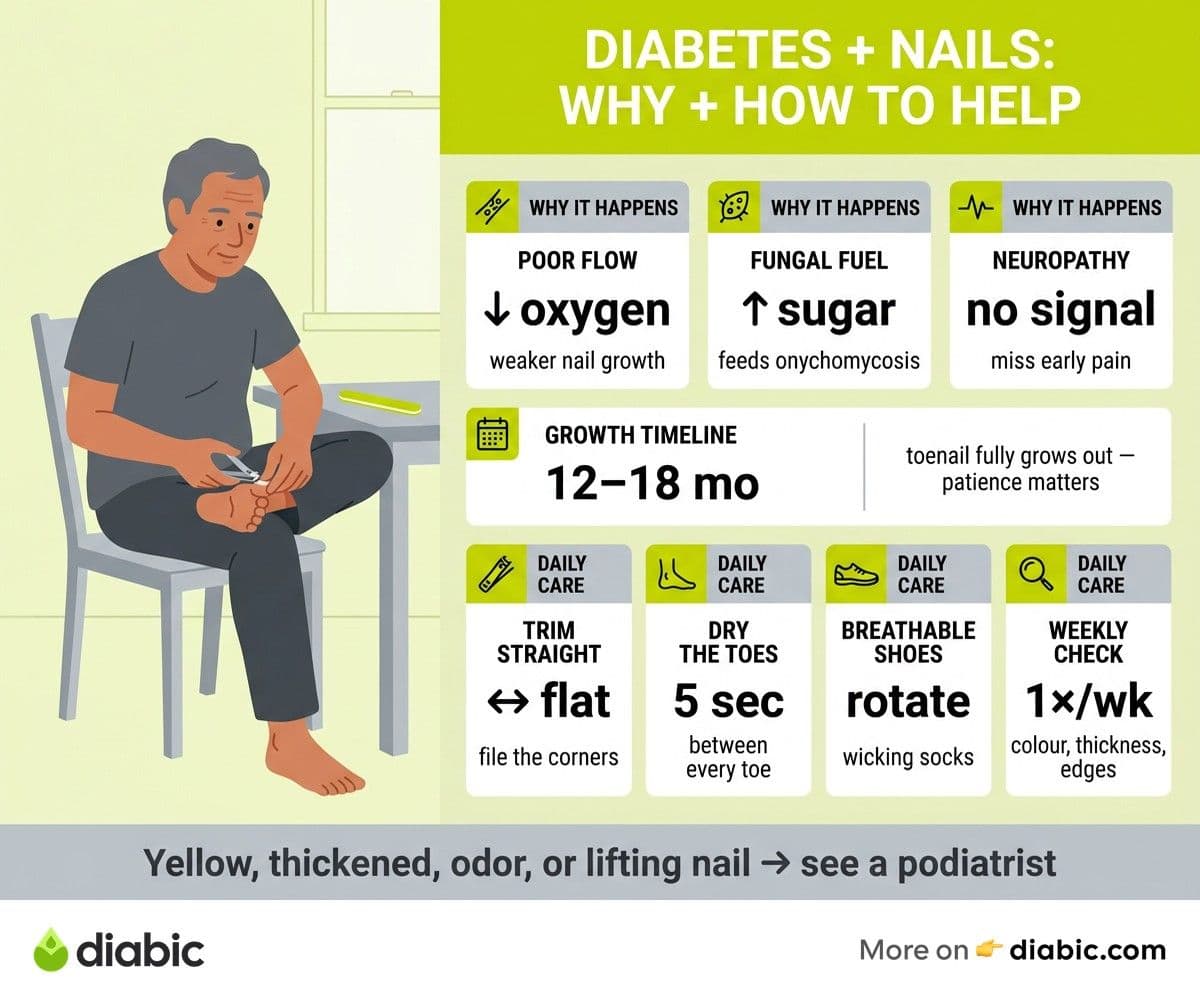
The link between diabetes and nail health starts with circulation. When blood sugar runs high over time, the small vessels that feed your nail beds narrow and stiffen. According to the NIDDK guidance on diabetes and foot health, reduced blood flow limits the oxygen and nutrients your nails need to grow strong, smooth, and evenly colored.
High glucose levels also create a hospitable environment for fungi and bacteria. Sugar in sweat and skin secretions feeds organisms that would otherwise stay in check. Research published in the ADA's Diabetes Care journal has documented higher rates of onychomycosis (fungal nail infection) in people with diabetes compared to the general population, especially when blood sugar trends upward.
Nerve changes add another layer. Peripheral neuropathy can dull the small signals that normally tell you something is wrong, like a hangnail catching on a sock or a fungal infection starting between toes. You may not feel the early discomfort that would prompt someone else to act. Combined with immune system shifts that slow the body's response to invaders, nails become more vulnerable and slower to bounce back. This connection is part of the broader picture of skin complications of diabetes, which often show up alongside nail issues.
Common Diabetes Nail Problems
Onychomycosis, the medical name for fungal nail infection, tops the list. The American Academy of Dermatology's guide to nail fungus describes the classic signs: thickened nails, yellow or brown discoloration, brittle or crumbly edges, and sometimes a faint odor. Toenails are affected far more often than fingernails because feet spend hours inside warm, moist shoes where fungi flourish.
Ingrown toenails show up more often too, especially on the big toe. Poor circulation and changes in nail shape make the corner of a nail more likely to press into the surrounding skin. What begins as mild tenderness can progress to redness, swelling, and infection if it goes unnoticed, which is one reason early diabetes skin infection prevention habits matter so much.
Discoloration and ridging happen for several reasons, including circulation issues, nutrient gaps, and old injuries that the nail bed never fully repaired. You might see darker streaks, white spots, or fine vertical lines. Paronychia, an infection of the soft tissue around the nail, can develop after a small cut from clipping or picking at a hangnail. In people with diabetes, that small entry point can swell, warm up, and produce pus more quickly than expected.
How to Recognize Nail Problems Early With Skin Complications Diabetes Awareness
Catching nail issues early gives treatment a real chance to work. Look for changes in color (yellow, brown, white, or green tints), thickness (one nail noticeably bulkier than the others), and texture (crumbling, pitting, or peeling). Any of these can signal a fungal infection or another underlying issue worth checking.
Pay attention to the nail bed and the skin around it. A nail that lifts or separates from its bed (onycholysis) often points to fungus or trauma. Redness, warmth, swelling, or tenderness at the nail edge suggests infection. A foul odor near a thickened nail is another reliable clue, even before pain shows up.
If you have neuropathy, build a regular inspection routine because feeling alone will not catch every problem. Check your nails and the skin between your toes once a day, ideally at the same time you do your foot check. A handheld mirror or a phone camera helps you see the bottoms and sides of your toes, and connecting nail awareness with recognizing diabetic neuropathy in feet makes the whole inspection feel more purposeful.
Treatment Options
Mild fungal nail infections sometimes respond to topical antifungal lacquers or solutions painted on the nail daily. The Mayo Clinic overview of nail fungus notes that topicals work best on early, surface-level infections and require months of consistent use to be effective. They are usually a reasonable first step when only one or two nails are affected and the infection has not reached the nail bed deeply.
Stubborn or widespread infections often need oral antifungal medication, prescribed and monitored by a clinician. These drugs reach the nail through the bloodstream and can clear infections that topicals cannot. They also require liver function checks and a conversation about interactions with other diabetes medications, which is why your healthcare provider should lead this decision.
Professional nail care from a podiatrist makes a real difference, particularly when nails are too thick to trim safely at home. Podiatrists can grind down thickened nails, address ingrown corners, and treat early infections before they spread. Set expectations on timing: a toenail takes 12 to 18 months to fully grow out, so treatment success is measured in patience, not weeks. Finishing the full course of medication, even when the nail looks better, gives you the best shot at a lasting result.
From my experience: After 14 years with type 1 diabetes, I learned the hard way that a discolored big toenail is not something to wait out. I assumed it was an old running injury for almost a year. By the time I saw a podiatrist, the fungus had reached most of the nail bed, and treatment took 14 months of patience. Now I check my nails every Sunday during my weekly foot care routine, and I treat any color change as a reason to ask, not assume.
Prevention and Daily Nail Care
Prevention starts with how you trim. Cut nails straight across rather than rounded at the corners, and keep them flush with the tip of the toe rather than too short. The ADA's foot and nail care guidance recommends filing sharp edges with an emery board so nothing catches on socks or skin. Avoid cutting cuticles or pushing them back aggressively, since the cuticle is a barrier against bacteria and yeast.
Dry your feet thoroughly after every shower, paying special attention to the spaces between toes. Damp skin is where fungi settle and multiply. Choose breathable footwear, rotate your shoes so each pair has time to dry between wears, and reach for moisture-wicking socks instead of pure cotton when you sweat a lot or live somewhere humid.
Blood sugar management is the foundation under everything else. The closer your numbers stay to your target range, the less fuel infections have and the faster your nail bed can repair small injuries. Pair that with a consistent diabetic foot care guide and a diabetic foot care routine checklist so nail care becomes one piece of a larger habit rather than something you only think about when a problem shows up. See a podiatrist instead of handling nails yourself if you cannot see your feet clearly, if your nails are very thick, if you have neuropathy or vision changes, or if anything looks suspicious.
Frequently Asked Questions
Why does diabetes cause nail fungal infections?
High blood sugar feeds fungi, reduced circulation slows the immune response in your toes, and neuropathy can hide early signs. Together these factors make fungal infections more common and harder to clear in people with diabetes than in the general population.
How to treat nail problems when you have diabetes?
Mild infections may respond to topical antifungals applied daily for several months. More stubborn cases often need oral antifungal medication prescribed by your provider. A podiatrist can safely trim thickened nails, address ingrown edges, and follow your progress over the long timeline that nails require.
Should people with diabetes see a podiatrist for nail care?
In many cases, yes. A podiatrist can trim thickened nails safely, identify early infections, and address ingrown corners before they cause problems. Regular podiatry visits are especially important if you have neuropathy, vision changes, or trouble reaching your feet.
If you found this useful, our community shares small wins and questions about diabetic foot care every week. You are welcome to read along and join in. Most diabetes nail problems are easier to handle when you catch them early, so a quick weekly look at your toes is one of the simpler protective habits you can build.
Shahriar P. Shuvo is the founder of Diabic. He has lived with diabetes for over 14 years, and built Diabic to deliver the practical, evidence-based self-management tools he wished existed when he was first diagnosed. By trade, Shahriar is a senior design and frontend engineer with 6+ years shipping products at Agora, Timescale (now Tiger Data), and ShareTrip. He writes from the intersection of lived diabetes experience and product craft, focused on what works in daily management rather than what sounds good in a textbook.
Medically reviewed by
Dr. Rezwana Parvin Rumpa is an obstetrics and gynaecology specialist with clinical focus on gestational diabetes, PCOS, and fertility. She holds the MRCOG (Final Part) from the Royal College of Obstetricians and Gynaecologists in London, the MRCPI (Final Part) from the Royal College of Physicians of Ireland, and an MBBS from Shaheed Monsur Ali Medical College under Dhaka University. Dr. Rumpa serves as a Senior Medical Officer in the Obs and Gynae department at BRB Hospitals Ltd, where she has spent three years managing prenatal care, emergency obstetric cases, and women's-health surgery. On Diabic, she medically reviews content for women living with diabetes, with particular attention to pregnancy, PCOS, and reproductive-health intersections.
More from Health & Complications
View all
Diabetes and Dental Implants: What to Know First
Diabetes dental implants guide covering safety, A1C targets, recovery expectations, gum health prep, and what to ask your oral surgeon before surgery.

Burning Mouth Syndrome and Diabetes Explained
Burning mouth syndrome diabetes link explained, including neuropathy, dry mouth, and thrush causes plus treatment options that may bring real relief.

Dental Care for people with diabetes: Tips That Help
Practical dental care diabetics need, with real tips for protecting teeth and gums when diabetes raises your risk for oral health problems.
Clinician-reviewed habits, plain-language guides, and honest answers - the small shifts that make living with diabetes feel lighter, every day.