Statin Medications for Diabetes: Benefits and Risks
Are statin medications safe for diabetes? Explore the cardiovascular benefits, side effect risks, and what the research really says about statins and.

In this article(15)
If you live with diabetes, the topic of statin medications has likely come up more than once. Statin medications diabetes patients hear about most often, the ones recommended by major guidelines for most adults over 40, are prescribed because cardiovascular disease is the leading cause of death for people with diabetes, and statins reduce that risk meaningfully.
That recommendation, while well-supported, often raises legitimate questions. What about side effects? Can statins really raise blood sugar? Is the cardiovascular benefit worth the trade-offs for someone whose diabetes is already well managed? These questions deserve thoughtful answers, not blanket reassurance.
This guide covers what statins actually do, why they matter so much for people with diabetes, the side effects worth knowing about, and how to have a more informed conversation with your provider. We will keep the medical jargon to a minimum and stick to what the research actually shows.
What Are Statin Medications and How Do They Work
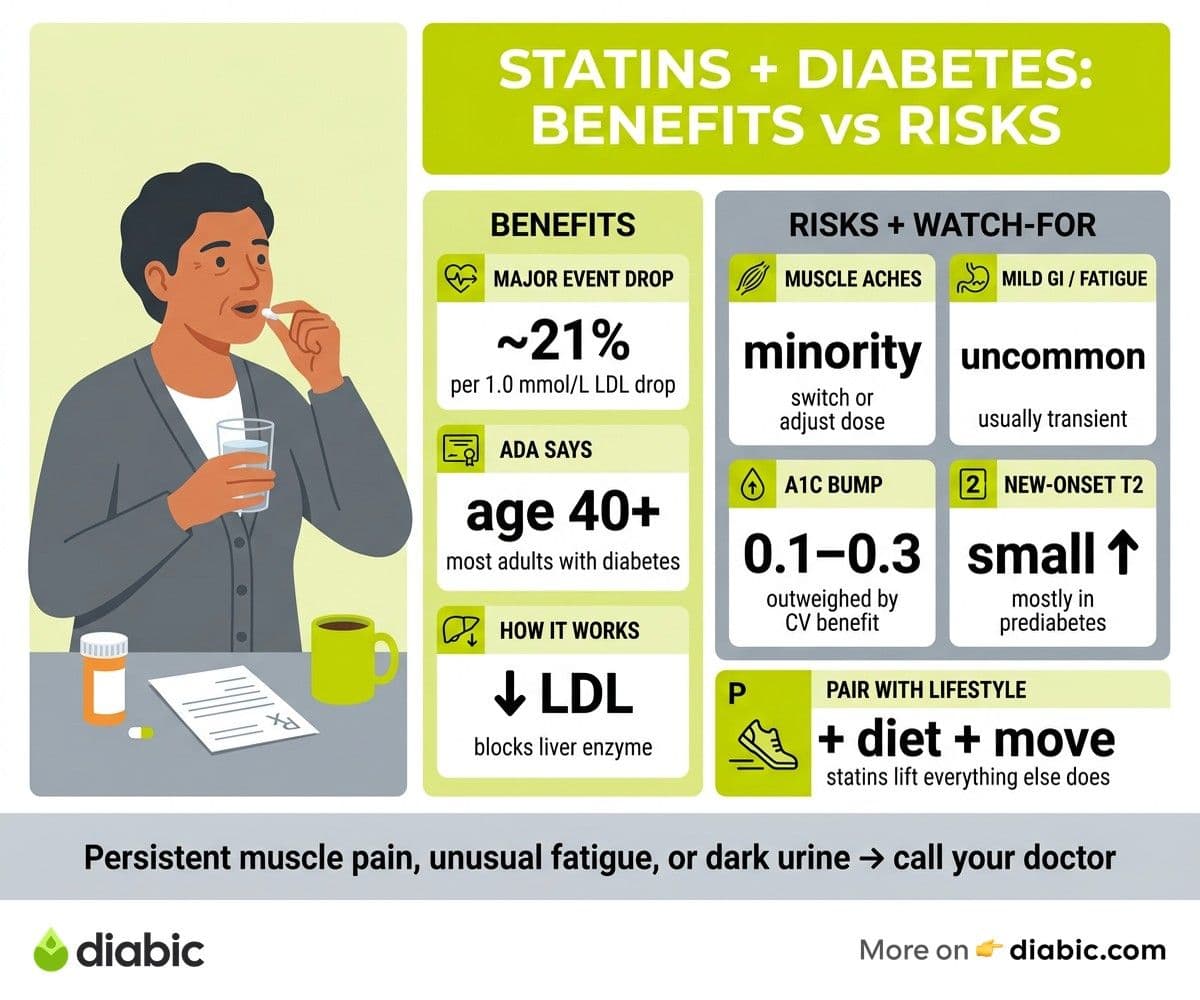
Statins are a class of drugs that lower LDL cholesterol, often called "bad" cholesterol, by blocking an enzyme your liver uses to make it. With less LDL circulating in the blood, fewer cholesterol particles deposit in artery walls, and the slow process of plaque buildup is slowed or partially reversed. The CDC notes that statins remain the most studied and most effective cholesterol-lowering class available.
The most commonly prescribed statins include atorvastatin (Lipitor), rosuvastatin (Crestor), simvastatin (Zocor), pravastatin (Pravachol), and lovastatin (Mevacor). They differ in potency, how they are metabolized, and how they interact with other medications, but they all work through the same fundamental mechanism. Your provider chooses among them based on your cholesterol targets, other conditions, and any medications you are already on.
For people with diabetes, statins are not just about cholesterol numbers on a lab report. They are about reducing the long-term risk of heart attack, stroke, and other cardiovascular events. That is why the American Diabetes Association Standards of Care recommends statins for most adults with diabetes who are 40 or older, even those with cholesterol numbers that look reasonable on paper.
Benefits of Statin Medications Diabetes Patients Should Understand
The case for statins in diabetes rests on a substantial body of evidence built over more than two decades. The Cholesterol Treatment Trialists (CTT) Collaboration, a large meta-analysis published in The Lancet, pooled data from dozens of trials and found that statin therapy reduced major vascular events by about 21% for every 1.0 mmol/L reduction in LDL cholesterol. The benefit was consistent across people with and without diabetes, but because people with diabetes start at higher baseline risk, the absolute benefit tends to be larger.
That translates into fewer heart attacks, fewer strokes, fewer cardiovascular deaths, and fewer procedures like stenting and bypass surgery. For someone juggling reducing heart attack risk with diabetes as part of a broader plan, statins are usually the medication that does the heaviest lifting.
Why ADA Recommends Statins for Most Adults Over 40
The reasoning behind the age-40 threshold is statistical. By the time someone with diabetes reaches their forties, the cumulative damage of insulin resistance and elevated blood sugar on blood vessel walls has typically been working in the background for years. Plaque formation, vessel stiffness, and inflammation are often further along than a routine exam would suggest. Starting a statin earlier in this trajectory has more time to work and prevents events that are otherwise harder to undo.
The ADA recommendation is not absolute. People with very low cardiovascular risk, certain medication intolerances, or specific contraindications may not be candidates. But the default position has shifted over the years toward earlier and broader use, because the data keeps showing benefit.
How Statins Fit Alongside Other Strategies
Statins work best alongside, not in place of, lifestyle changes. Diet, physical activity, weight management, and not smoking each contribute to cardiovascular risk reduction in their own right. Our guide on ways to lower high cholesterol with diabetes covers the lifestyle side in depth.
Some people also need additional medications like ezetimibe or PCSK9 inhibitors when statins alone do not get LDL to target. For those whose triglycerides are the bigger problem, managing triglycerides with diabetes involves a different set of strategies, sometimes including fibrates or omega-3 medications. Statins, however, are usually the foundation everything else builds on. Research published in Diabetes Care continues to refine our understanding of optimal cholesterol management in diabetes populations.
Potential Risks and Side Effects
Statins are generally well tolerated, but no medication is without trade-offs. Understanding the actual risk profile helps you separate genuine concerns from internet-amplified fears.
Common Side Effects
The Mayo Clinic lists muscle pain, digestive symptoms, and mild fatigue as the most commonly reported side effects. Muscle aches affect a meaningful minority of statin users, ranging from mild soreness to more uncomfortable discomfort that interferes with daily activity. Most muscle complaints resolve when the statin is stopped, switched, or the dose is adjusted.
Rare but more serious muscle problems, including a condition called rhabdomyolysis, can occur but are uncommon. Liver enzyme elevations show up occasionally on blood tests, but clinically significant liver injury from statins is rare. Older guidance that required regular liver enzyme monitoring has been relaxed in light of newer evidence.
The Statin and Blood Sugar Question
The most diabetes-specific concern is whether statins can raise blood sugar. The honest answer is yes, slightly, in some people. Research suggests that statin therapy is associated with a small increase in the risk of new-onset type 2 diabetes, particularly in people who already have prediabetes or other risk factors. For people who already have diabetes, statins can produce modest increases in A1C, often in the range of 0.1 to 0.3 percentage points.
Here is the important context. The cardiovascular benefit of statins has been shown to far outweigh this small effect on blood sugar in nearly every population studied, especially in people with existing diabetes. A 0.2 increase in A1C is not nothing, but it is much smaller than the reduction in heart attack and stroke risk the same medication provides. This is the kind of trade-off that often gets distorted in casual conversation but looks much more favorable when the numbers are laid out.
Other Considerations
Some statins interact with medications metabolized through the same liver enzymes, which is why your provider asks about your full medication list before prescribing. Grapefruit juice can raise blood levels of certain statins (notably simvastatin and lovastatin) and is worth limiting if you are on those. Pregnancy is a contraindication for statins, so women of childbearing age should discuss contraception and pregnancy planning with their provider.
Should You Take Statins with Diabetes
This is where the conversation moves from general guideline to personal decision. The cardiovascular benefit is well established, but the right answer depends on your specific situation, values, and risk tolerance.
Factors that tip the scale toward statin therapy include being over 40, existing cardiovascular disease (any prior heart attack, stroke, or stent), elevated LDL cholesterol, high blood pressure, smoking history, family history of early heart disease, and chronic kidney disease. The more of these that apply, the stronger the case for statins.
Factors that may complicate the decision include a history of statin intolerance, certain liver or muscle conditions, pregnancy, and very low baseline cardiovascular risk. None of these are absolute disqualifiers in most cases, but they shift the conversation toward different options or different statins.
The decision is genuinely personal, and a good provider will treat it that way. Bringing your priorities into the discussion (longevity, quality of life, minimizing medications, optimizing performance, peace of mind) helps your provider tailor the recommendation. Statins are a tool, not a mandate, and the best decisions come from honest two-way conversation.
Working with Your Doctor on Statin Decisions
How you approach the conversation matters as much as the medication itself. Walk in with specific questions rather than general reassurance-seeking. What is my actual cardiovascular risk over the next ten years? What is my LDL goal given my situation? Which statin do you recommend and why? What side effects should I watch for? When will we recheck?
If you have already been on a statin and felt side effects, that is information your provider needs. Switching to a different statin (often a more hydrophilic one like rosuvastatin or pravastatin) resolves muscle complaints for many people. Lowering the dose, taking it every other day, or pairing it with coenzyme Q10 are options some providers consider, though the evidence for CoQ10 is mixed.
From my experience: I have lived with type 1 diabetes for fourteen years, and the statin conversation took me longer than it should have to embrace. I had read the same internet warnings everyone reads, and I pushed back on the recommendation for years. What changed my mind was an honest conversation with my endocrinologist who walked me through my actual risk numbers, what the medication does, and what the alternatives looked like. The decision still felt like mine, but it was finally an informed one.
Monitoring and Follow-Up
After starting a statin, your provider will typically recheck cholesterol and liver enzymes within a few months. A1C may shift slightly, and your provider should track that too. If side effects appear, do not just stop the medication on your own. Call the office and discuss adjustments. Many statin "intolerances" resolve with a different drug or a dose change rather than abandoning the class entirely.
Lifestyle changes still matter alongside statin therapy. Diet, movement, sleep, stress management, and not smoking continue to compound the cardiovascular benefit. Our overview of heart healthy habits for diabetes lays out the supporting habits that pair well with medication. If you also take blood pressure medications, our guide on blood pressure medication interactions with diabetes covers questions worth asking when multiple medications are in play.
FAQ
Should people with diabetes take statins?
Most adults with diabetes who are 40 or older are recommended to take statins by current ADA guidelines, due to the substantially elevated cardiovascular risk associated with diabetes. The decision is individual and depends on factors including age, cholesterol levels, blood pressure, smoking history, and family history of heart disease. People with existing cardiovascular disease, regardless of age, are typically strongly recommended to take statins. Talk to your doctor about whether the benefits outweigh the risks for your specific situation.
Are statin medications safe for people with diabetes?
Statin medications are generally considered safe for people with diabetes, with the cardiovascular benefits substantially outweighing the risks for most patients. Side effects can include muscle pain, digestive issues, and a small increase in blood sugar, but serious side effects are uncommon. Switching statins or adjusting doses often resolves intolerance. As with any medication, your provider should monitor cholesterol, liver enzymes, and A1C periodically.
Can statins raise blood sugar?
Yes, statin therapy is associated with a small increase in blood sugar and a slightly higher risk of developing type 2 diabetes, particularly in people who already have prediabetes or other risk factors. For people with existing diabetes, the increase in A1C is typically small (around 0.1 to 0.3 percentage points). Research consistently shows that the cardiovascular benefits of statins far outweigh this modest effect on blood sugar for nearly all people with diabetes.
The honest case for statin medications diabetes patients can take to their next appointment is this: the cardiovascular protection has been studied for decades, the side effect profile is well understood, and most issues are manageable with a switch in drug or dose. Combine the right statin with the lifestyle pieces we cover throughout the heart health section, and you give your heart its best long-term odds.
Shahriar P. Shuvo is the founder of Diabic. He has lived with diabetes for over 14 years, and built Diabic to deliver the practical, evidence-based self-management tools he wished existed when he was first diagnosed. By trade, Shahriar is a senior design and frontend engineer with 6+ years shipping products at Agora, Timescale (now Tiger Data), and ShareTrip. He writes from the intersection of lived diabetes experience and product craft, focused on what works in daily management rather than what sounds good in a textbook.
Medically reviewed by
Dr. Shanto Arian is an internal medicine physician now specializing in clinical and aesthetic dermatology, with a parallel academic focus on epidemiology and public health. He holds an MBBS, MPH, MSc (UK), MRCP (UK), MRCPI (Ireland), Diploma in Dermatology (UK), and Diploma in Aesthetic Medicine (USA). Dr. Arian trained in internal medicine, including hospital work on hematology cases such as graft-versus-host disease, before moving toward dermatology. Skin is one of the earliest places diabetes shows itself, from acanthosis nigricans and diabetic dermopathy to slow foot wound healing, and that intersection is where his clinical and Diabic-review work meet. On Diabic, Dr. Arian medically reviews content on diabetes diagnosis, complications, dermatologic manifestations, and pharmacotherapy, ensuring every claim aligns with current ADA, NICE, and peer-reviewed literature.
More from Health & Complications
View all
Diabetes and Dental Implants: What to Know First
Diabetes dental implants guide covering safety, A1C targets, recovery expectations, gum health prep, and what to ask your oral surgeon before surgery.

Burning Mouth Syndrome and Diabetes Explained
Burning mouth syndrome diabetes link explained, including neuropathy, dry mouth, and thrush causes plus treatment options that may bring real relief.

Dental Care for people with diabetes: Tips That Help
Practical dental care diabetics need, with real tips for protecting teeth and gums when diabetes raises your risk for oral health problems.
Clinician-reviewed habits, plain-language guides, and honest answers - the small shifts that make living with diabetes feel lighter, every day.