Diabetes and Intimacy Challenges: How to Adapt
Diabetes and intimacy challenges go beyond the bedroom. Here is how diabetes affects physical and emotional closeness, and how to adapt with your partner.

In this article(9)
The hardest part of intimacy with diabetes is rarely the diabetes itself. It is the silence around it, the stack of unspoken worries about pump tubing in the way, a low at the worst possible moment, or a partner who has stopped initiating because they are afraid of getting it wrong. Diabetes and intimacy challenges show up in bodies, but they live in conversations that never quite happen.
We hear from readers all the time who say their relationship feels closer in some ways and more distant in others since diabetes entered the picture. That mix is normal. The condition reshapes energy, sensation, mood, and confidence, and it asks couples to renegotiate things they used to take for granted. The good news is that small adjustments, named openly, can return a lot of warmth without making sex feel clinical or scheduled.
This piece is not about pretending diabetes is invisible in your love life. It is about treating intimacy as something you can plan for and adapt around, the way you already plan around meals, meds, and movement. We will walk through the physical side, the emotional side, the practical workarounds couples actually use, and the moment to bring in a professional.
From my experience: The first time my Dexcom alarm went off mid-evening with my partner, I felt that hot, awkward flush of "this is the thing I never wanted to be in the room." We muted the watch, treated the low with juice, laughed about it ten minutes later, and learned to put glucose tabs on the nightstand the next morning. Naming the small logistics out loud took the charge out of them, and our connection got easier, not more clinical.
Diabetes and Intimacy Challenges in the Body
Bodies on insulin or oral meds work hard, and that effort sometimes shows up in the bedroom. Neuropathy, the nerve damage that can develop after years of high glucose, may dull sensation in the hands, feet, or genitals, which changes what feels good and what does not register at all. Vaginal dryness, more common after years of fluctuating glucose, can make penetration painful, and recurrent yeast or urinary tract infections add another layer of discomfort that lingers past the infection itself. According to the American Diabetes Association, sexual health concerns affect a substantial portion of adults with diabetes, and the rates climb with age and duration of the condition.
Erectile dysfunction is one of the better studied issues, with research published in Diabetes Care showing it affects roughly half of men with type 2 diabetes at some point. The mechanism is partly vascular and partly neurological, which means the same processes that affect circulation in your feet can affect circulation elsewhere. This is not a moral failing or a sign of fading attraction. It is a physical effect of the condition, and it deserves the same matter-of-fact attention you give to your A1C.
Then there is fatigue, which gets less airtime but probably costs couples more nights than any other single factor. Managing diabetes is a part-time job that runs in the background of every meal, every workout, every stressful day at work. By the time the kids are in bed, your phone has buzzed with three glucose alerts, and you have already done the mental math on tomorrow's basal needs, the energy reserves you need for connection can be running low. Your partner is not imagining the shift, and neither are you.
Glucose itself plays a direct role too. A high before sex can leave you sluggish and irritable, while a low can stop everything cold and turn a tender moment into a juice box and a recovery wait. Both extremes train the nervous system to associate intimacy with risk, and that association tends to dampen desire even when numbers are stable. We talk more about this loop in our piece on libido and blood sugar, because the link runs deeper than most people realize.
The Emotional and Psychological Layer
Sex and diabetes is not only a physical conversation. The emotional weight of a chronic condition has its own gravity, and it pulls on intimacy in ways that surprise people. Body image often shifts, especially around weight changes, injection sites that bruise, scars from pump infusion sets, or a continuous glucose monitor stuck somewhere visible. Even people who feel confident in their own skin can flinch the first time a partner reaches for a spot that has a sensor on it.
There is also the quieter fear of being seen as sick. Many people with diabetes work hard to keep the condition from defining them, and the bedroom is one place where that effort can collapse. If you have to pause to treat a low, check a number, or reposition a pump, it can feel like you are dragging the condition into a space that was supposed to be a break from it. Partners pick up on that tension and sometimes pull back, not out of disinterest but out of a wish to protect you from feeling exposed.
Guilt runs the other direction too. We hear from partners who feel selfish for wanting more spontaneity, or who worry that bringing up sex will sound like pressure. The result is a standoff where both people are waiting for the other to lead, and neither one does. The ADA's psychosocial care guidelines note that diabetes distress affects relationships across the board, and intimacy is one of the first places it shows up. None of this means your relationship is broken. It means it is carrying real weight, and it deserves real conversation. Our guide on diabetes and relationships digs into how couples can rebuild that footing.
Adapting and Reconnecting Without Losing the Spark
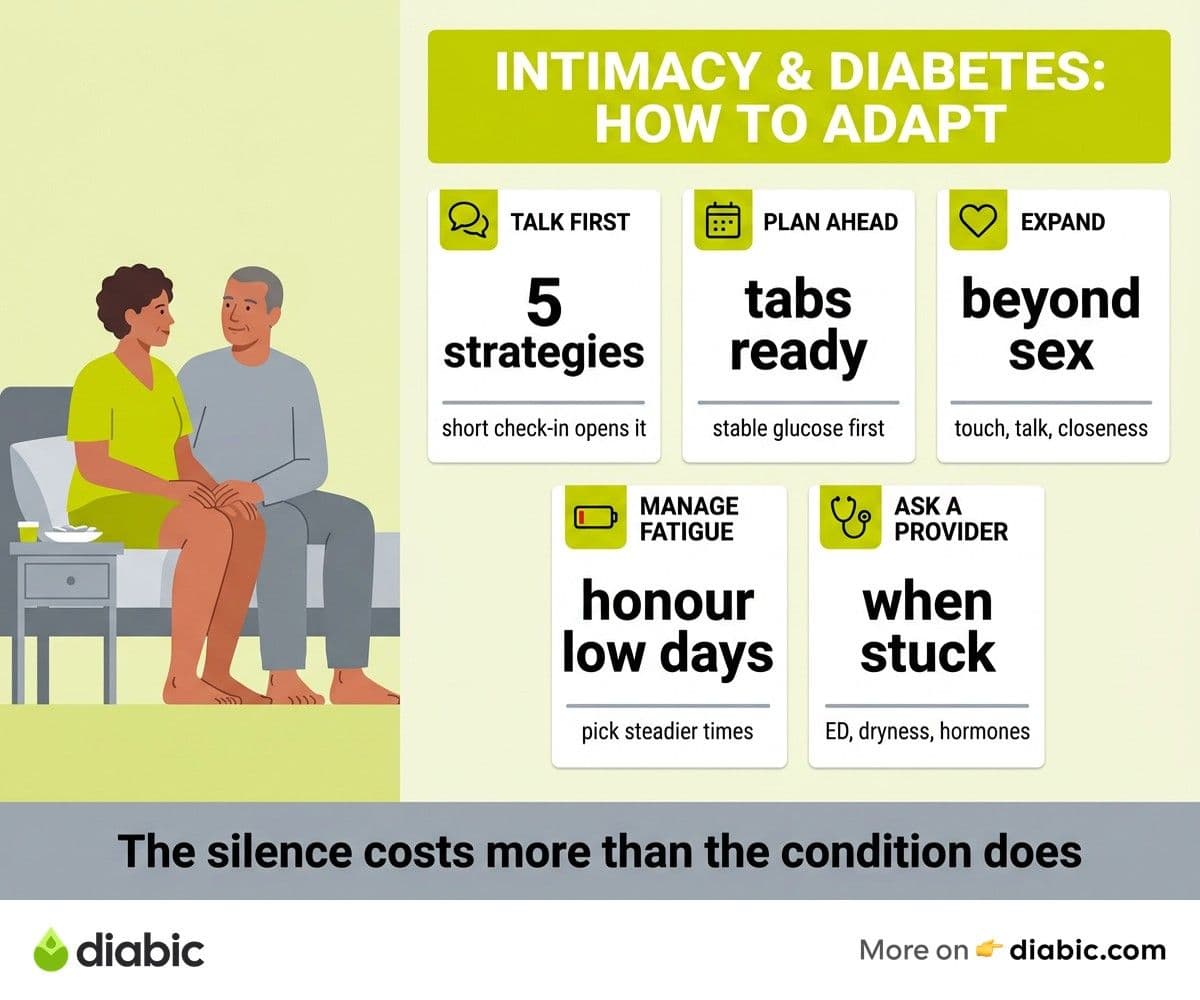
The couples who navigate this best treat intimacy the way athletes treat performance. They prepare for it, they talk about it, and they do not assume it will just happen. That sounds unromantic on paper, and yet the people who do it report feeling closer than they did before. Preparation is what removes the static so the connection can come through.
Communication is where it starts, and it does not have to be a heavy conversation in a quiet room. A short check-in works. You might say, "My numbers have been weird this week and I have low energy, but I still want to be close. Can we just lie down together tonight?" That sentence does more than schedule a moment. It tells your partner you still want them, names the obstacle, and offers an alternative that keeps the door open. Most partners are relieved when the unspoken finally gets words.
Planning ahead is the other half. Check your glucose before you start, keep fast-acting carbs on the nightstand, and pick a time of day when your numbers tend to be steadier. If you wear a pump or CGM, decide together where the device will sit so it is not in the way, and give yourself permission to disconnect a pump briefly if your care team has said that is fine for short windows. Couples who normalize these small logistics report less anxiety in the moment, because the variables they used to dread have already been handled.
Expanding what counts as intimacy helps too. Penetrative sex is one form of closeness, not the whole map. Massage, long showers together, slow undressing, kissing without an agenda, and simply holding each other while you fall asleep all build the same connective tissue. On nights when fatigue or pain is high, leaning into those forms can keep the relationship warm without anyone feeling like they failed at sex. This is the kind of practical reframing we cover in sex and diabetes, with more specific suggestions for different situations.
When Hormonal Changes and Health Issues Need a Provider
Some intimacy problems will not yield to communication alone, and that is when the medical side of the conversation matters. Hormonal changes diabetes can drive, including lower testosterone in men and shifts in estrogen patterns in women, are measurable and treatable. If desire has dropped sharply, if arousal feels physically blocked, or if pain during sex is recurrent, those are signals to bring to your primary care provider or endocrinologist rather than file under "just life."
Several treatable conditions hide behind the label of low libido. Men with diabetes have higher rates of low testosterone, and a simple morning blood test can flag it. Women in perimenopause or menopause with diabetes face a double layer of vaginal dryness and changing sensation, and topical estrogen, lubricants, or pelvic floor therapy can make a meaningful difference. For men dealing with erectile dysfunction, oral medications, vacuum devices, and other options have strong evidence behind them, and most providers are comfortable discussing them once you raise the topic.
Mental health support belongs in this list too. A therapist who understands chronic illness, or a couples counselor trained in sex therapy, can hold space for the parts of intimacy that medication will not touch. The American Association of Sexuality Educators, Counselors and Therapists maintains a directory of certified sex therapists, and many work with couples managing health conditions. Asking for that help is not an admission of failure. It is an investment in a part of life that matters, and you deserve a fulfilling intimate life regardless of how long you have lived with diabetes.
FAQ
How does diabetes affect intimacy in a relationship?
Diabetes affects intimacy through both physical and emotional channels. Physically, it can cause neuropathy, vaginal dryness, erectile dysfunction, fatigue, and glucose swings that interrupt sex. Emotionally, body image concerns, fear of being seen as sick, and the mental load of management can lower desire for both partners. The relationship itself often absorbs strain when the condition becomes hard to talk about openly.
What are practical ways to improve intimacy when you have diabetes?
Start with a short conversation about what has changed and what would help. Plan around your glucose, keep treatment supplies nearby, and choose times when your numbers are steadier. Expand your definition of intimacy to include touch, massage, and closeness that does not center on intercourse. If physical issues persist, talk with your provider about hormone testing, medication options, or pelvic floor therapy.
Can high or low blood sugar affect sex drive?
Yes, both extremes can dampen libido and arousal. Highs leave many people feeling sluggish, irritable, and disconnected from their bodies, while lows trigger anxiety and physical symptoms that override desire. Repeated glucose swings train the nervous system to associate intimacy with stress, which is why steadier ranges often lead to a quieter return of interest over time.
Should we tell our partner about diabetes-related sexual issues?
In almost every case, yes. Partners often imagine worse explanations than the truth, including loss of attraction or relationship problems that have nothing to do with the actual cause. Naming what is happening, even briefly, removes that fog and lets you problem-solve as a team rather than carry the weight alone.
Most diabetes and intimacy challenges look smaller once they have words around them. Bring up the physical pieces with your provider, bring up the emotional pieces with your partner, and give the relationship the same patience you give every other part of diabetes care. The closeness comes back when both of you are working from the same map.
Shahriar P. Shuvo is the founder of Diabic. He has lived with diabetes for over 14 years, and built Diabic to deliver the practical, evidence-based self-management tools he wished existed when he was first diagnosed. By trade, Shahriar is a senior design and frontend engineer with 6+ years shipping products at Agora, Timescale (now Tiger Data), and ShareTrip. He writes from the intersection of lived diabetes experience and product craft, focused on what works in daily management rather than what sounds good in a textbook.
Medically reviewed by
Dr. Rezwana Parvin Rumpa is an obstetrics and gynaecology specialist with clinical focus on gestational diabetes, PCOS, and fertility. She holds the MRCOG (Final Part) from the Royal College of Obstetricians and Gynaecologists in London, the MRCPI (Final Part) from the Royal College of Physicians of Ireland, and an MBBS from Shaheed Monsur Ali Medical College under Dhaka University. Dr. Rumpa serves as a Senior Medical Officer in the Obs and Gynae department at BRB Hospitals Ltd, where she has spent three years managing prenatal care, emergency obstetric cases, and women's-health surgery. On Diabic, she medically reviews content for women living with diabetes, with particular attention to pregnancy, PCOS, and reproductive-health intersections.
More from Living with Diabetes
View all
A Gentle Chair Yoga Routine for people with diabetes
A gentle chair yoga for people with diabetes routine with safe poses, modifications for neuropathy, retinopathy, and joint pain, plus tips for older.

Shift Work and Diabetes: Managing Irregular Hours
Shift work and diabetes is a tough combination. Learn how to manage meals, sleep, medication, and blood sugar when your hours rotate or flip overnight.

Dating with Diabetes: When to Tell a New Partner
Dating with diabetes brings unique disclosure questions. Here is when to tell a new partner, what to say, and how to handle the conversation with.
Clinician-reviewed habits, plain-language guides, and honest answers - the small shifts that make living with diabetes feel lighter, every day.