Diabetes and Relationships: Advice for Couples
Practical diabetes and relationships advice for couples: communication, support without controlling, intimacy, caregiver burnout, and when to seek help.

In this article(10)
When one partner lives with diabetes, both partners live with it in some way. The most useful diabetes and relationships advice we can offer starts with that quiet truth, because pretending otherwise is what tends to wear couples down over time. The pump alarms, the meal timing, the 3 a.m. low, the appointments, the worries you do not say out loud all happen inside the same home and the same partnership.
We talk to a lot of couples in our community, and the patterns rhyme across very different relationships. The partner with diabetes often feels watched, judged, or guilty for being a complication. The partner without diabetes often feels worried, helpless, or quietly resentful about the mental load they did not sign up for. None of that means the relationship is broken. It means you are managing a real chronic condition together, and that takes its own set of skills.
From my experience: I have lived with type 1 for 14 years and have been with my partner through the entire CGM era of my care. The hardest moment for us was not a scary low at all, it was a Saturday morning around 2022 when my Dexcom G6 alarmed during breakfast and she reflexively asked, "what did you eat," before either of us was fully awake. Neither of us was wrong, but it took a calm conversation later that week to agree on what kind of involvement actually felt like support versus what felt like surveillance. We still revisit that line every few months.
How Diabetes Affects Relationships
The day-to-day of diabetes adds friction in places that other couples never have to think about. Mealtimes become negotiations about timing, carbs, and whether tonight is a good night for that restaurant. Travel requires planning around supplies, time zones, and snacks. Sleep gets interrupted by lows, alarms, or the partner without diabetes lying awake listening for them. None of these are dramatic on their own, but they accumulate.
Emotional weight is often the heavier load. The non-diabetic partner may feel helpless watching a high blood sugar that no quick fix will solve. They may worry about long-term complications that the person with diabetes has chosen not to dwell on. The person with diabetes, meanwhile, may feel constantly observed, especially when every food choice draws a glance. According to Diabetes UK, partners of people with diabetes report meaningful rates of anxiety and feeling underprepared, even years into a relationship.
Intimacy is part of this conversation, and it deserves more honesty than it usually gets. Fatigue from blood sugar swings, medication side effects, hormonal shifts, and body image worries all affect desire and comfort. Sometimes the issue is physical, sometimes it is emotional, and most often it is both. We dig into the mechanics in our guide to intimacy challenges, but the relational piece is just as important. Couples who can talk plainly about sex tend to navigate diabetes-related changes with much less hurt.
Communication Strategies and Diabetes and Relationships Advice That Works
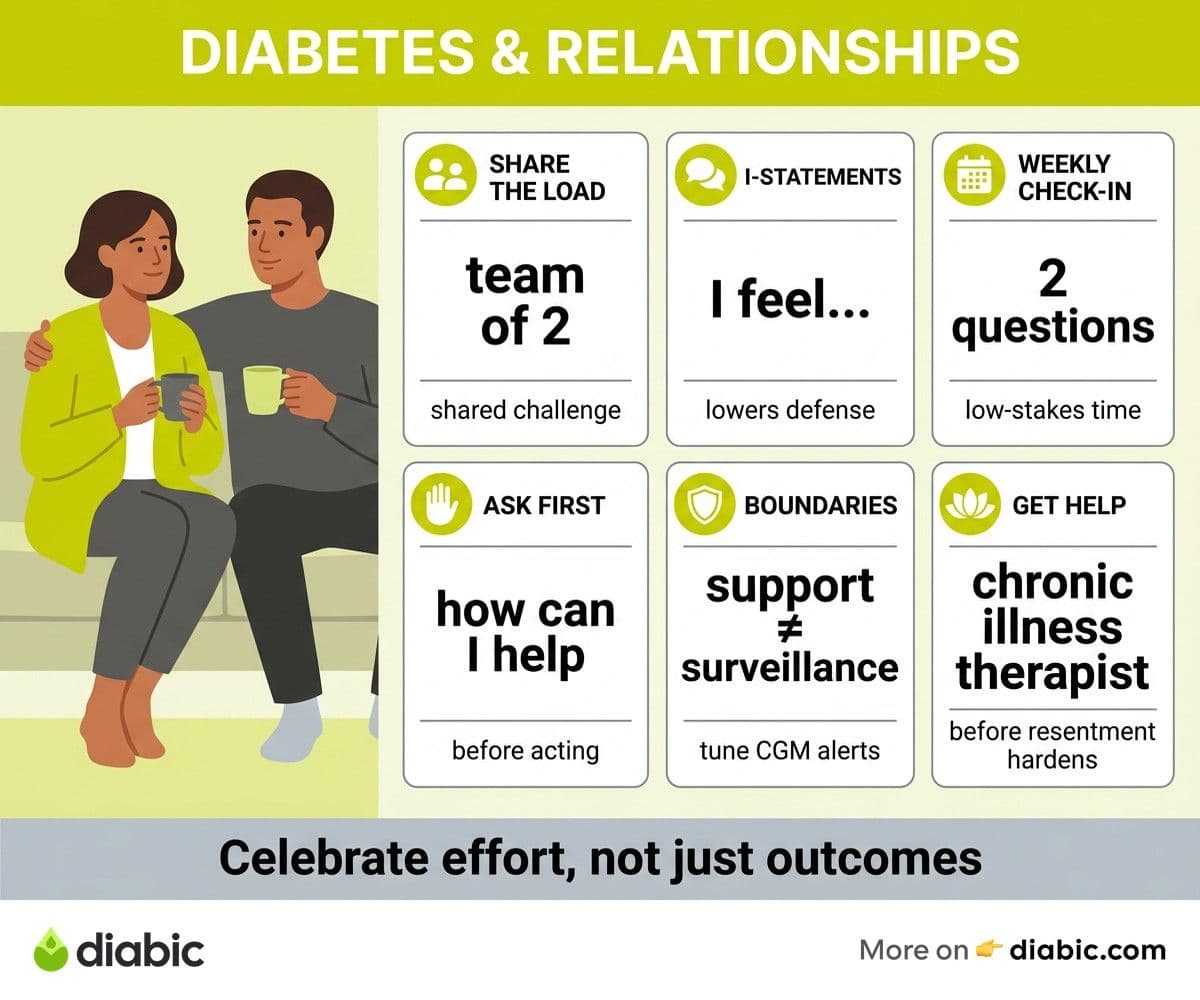
The foundation of good diabetes and relationships advice is simple to say and harder to live: talk about diabetes as a shared challenge, not one person's problem. That does not mean both partners carry the same load, since the body that has diabetes is the body that has diabetes. It means the team is two, and decisions about routines, food, and emergencies are made together rather than dictated.
I-statements are not just therapy-speak; they actually change conversations. "I feel scared when your number is in the 300s and you do not say anything" lands differently than "You never tell me when you are high." The first invites a response. The second triggers defense. The Gottman Institute, which has published decades of research on what predicts relationship success, finds that couples who lead with feelings rather than accusations argue less destructively, and that pattern holds for chronic illness conversations too.
Regular check-ins help more than people expect. Pick a low-stakes time, maybe a Sunday morning walk or after dinner once a week, and ask each other two questions. How is diabetes management going for you right now, and how can I show up better. Keep it short, keep it kind, and resist the urge to fix anything in the moment. The act of asking changes the dynamic on its own.
Boundaries deserve real attention. Not every meal needs commentary, not every blood sugar reading needs a response, and not every appointment requires both of you. Decide together what kind of involvement feels supportive and what tips into surveillance. Some couples like a shared CGM app; others find that turning off shared alerts at certain hours saves the relationship. There is no universal right answer, only the one you build between you.
Supporting Without Controlling
The line between supporting and parenting a partner is thin, and crossing it is one of the most common ways couples get stuck. Asking "How can I help?" is almost always better than taking over a task. It puts the person with diabetes back in the driver's seat of their own care, which is where they need to stay for the long haul. Doing things for someone occasionally is love; doing things for them constantly tends to feel like a comment on their competence.
Both partners benefit from knowing the basics. The non-diabetic partner should know how to recognize and treat a low, where glucose tabs and glucagon live, and what to do in a real emergency. Attending one diabetes appointment together each year goes a long way toward shared understanding. The American Diabetes Association offers resources specifically for family and partners, and they are worth a slow read together.
Celebrating effort rather than only outcomes changes how a relationship feels. Numbers fluctuate for reasons that have nothing to do with effort, especially with hormones, illness, or stress in the mix. If a partner only hears praise when their A1C is good and silence when it is not, the message becomes that love depends on performance. Notice the consistent logging, the willingness to ask for help, the courage of a hard conversation. Those are the behaviors that hold a long-term partnership together. Honest dialogue about sex and diabetes belongs in this same spirit of curious, non-judgmental support.
Telling your partner about diabetes, whether you are newly diagnosed or newly dating, is its own moment. Honesty up front beats a slow reveal, and most partners want the chance to learn rather than to be protected from the reality. Share what you actually need from them, not just what diabetes is. Needing reminders, needing space, needing snacks in the car, all of those are concrete things a willing partner can deliver on.
When a Relationship Needs Outside Help
Caregiver fatigue is real, and it does not mean the supporting partner does not love the person with diabetes. It means the mental and emotional load of worry, vigilance, and adjustment has stacked up without an outlet. Signs include irritability, withdrawal, sleep changes, resentment that surprises you, and a quiet sense of being trapped, the same warning signs NIMH's guide to caring for your mental health flags as reasons to seek support. Naming it early, ideally before resentment hardens, is far easier than untangling it later.
Couples counseling with a therapist who understands chronic illness can rebalance a stuck dynamic. A good therapist helps both partners see how diabetes has reshaped roles, expectations, and small daily rituals, and they offer language to renegotiate those patterns. Look for someone with experience in chronic conditions or health psychology rather than a generalist. Insurance coverage varies, so ask up front, and many therapists now offer telehealth that fits around busy schedules.
The person with diabetes also benefits from support beyond the relationship. A partner cannot be the only place you process diabetes, because the load is too big and the perspectives too few. Local or online diabetes support groups put you in contact with people who get it from the inside. Peer support reduces the pressure on the relationship and builds the kind of resilience that one person cannot give another.
If conflict has become constant, if intimacy has gone quiet for a long stretch, if either of you feels alone in the relationship, those are signals to act rather than wait. Reaching out for help is not a sign that you are failing as a couple. It is a sign that you take the relationship seriously enough to invest in it.
Frequently Asked Questions
How do you support a partner with diabetes without taking over?
Ask before acting, learn the basics of lows and emergencies, attend appointments occasionally, and let your partner lead their own care. Offer practical help like prepping snacks, walking after meals together, or covering household tasks on rough days. Notice effort and consistency rather than only good numbers, and resist commenting on every food choice.
Dating with diabetes: when should I tell a new partner?
Most people in our community share within the first few dates, once the connection feels worth the conversation. Earlier disclosure tends to lower anxiety and lets you see how a potential partner handles real information. Frame it as a part of your life rather than a warning, and share what you actually need from them, not a medical lecture.
What is good relationship advice for couples with diabetes?
Treat diabetes as a shared challenge, communicate with I-statements, schedule low-stakes check-ins, and divide responsibilities in ways that protect autonomy. Keep intimacy on the table as something you actively tend to. Seek outside support, whether peer groups, therapy, or both, before resentment sets in.
How do we handle differences in eating habits?
Many couples land on a flexible system where shared meals fit the partner with diabetes, and the other partner adds whatever they want on the side. Cooking together helps, and so does agreeing not to police each other's plates. Restaurants get easier with practice, and a quick scan of a menu before you go reduces stress for both of you.
What if my partner refuses to engage with their diabetes care?
Avoidance often signals burnout, depression, or fear rather than not caring. Approach the conversation with curiosity rather than ultimatums. Suggest a single small step, like one appointment or one new app, and offer to be there for it. If avoidance continues and risks pile up, a therapist who works with chronic illness or a diabetes educator can break the standoff better than a partner can alone.
We hope this diabetes and relationships advice gives you a starting point. Diabetes asks a lot of relationships, and couples who name what is happening, lean on each other and on outside support, and protect their connection through the hard weeks tend to come out closer rather than further apart.
Shahriar P. Shuvo is the founder of Diabic. He has lived with diabetes for over 14 years, and built Diabic to deliver the practical, evidence-based self-management tools he wished existed when he was first diagnosed. By trade, Shahriar is a senior design and frontend engineer with 6+ years shipping products at Agora, Timescale (now Tiger Data), and ShareTrip. He writes from the intersection of lived diabetes experience and product craft, focused on what works in daily management rather than what sounds good in a textbook.
Medically reviewed by
Dr. Shanto Arian is an internal medicine physician now specializing in clinical and aesthetic dermatology, with a parallel academic focus on epidemiology and public health. He holds an MBBS, MPH, MSc (UK), MRCP (UK), MRCPI (Ireland), Diploma in Dermatology (UK), and Diploma in Aesthetic Medicine (USA). Dr. Arian trained in internal medicine, including hospital work on hematology cases such as graft-versus-host disease, before moving toward dermatology. Skin is one of the earliest places diabetes shows itself, from acanthosis nigricans and diabetic dermopathy to slow foot wound healing, and that intersection is where his clinical and Diabic-review work meet. On Diabic, Dr. Arian medically reviews content on diabetes diagnosis, complications, dermatologic manifestations, and pharmacotherapy, ensuring every claim aligns with current ADA, NICE, and peer-reviewed literature.
More from Living with Diabetes
View all
A Gentle Chair Yoga Routine for people with diabetes
A gentle chair yoga for people with diabetes routine with safe poses, modifications for neuropathy, retinopathy, and joint pain, plus tips for older.

Shift Work and Diabetes: Managing Irregular Hours
Shift work and diabetes is a tough combination. Learn how to manage meals, sleep, medication, and blood sugar when your hours rotate or flip overnight.

Dating with Diabetes: When to Tell a New Partner
Dating with diabetes brings unique disclosure questions. Here is when to tell a new partner, what to say, and how to handle the conversation with.
Clinician-reviewed habits, plain-language guides, and honest answers - the small shifts that make living with diabetes feel lighter, every day.