Itchy Skin with Diabetes: Causes and Relief
Itchy skin with diabetes has several causes, from dry skin to yeast infections. Learn what drives the itch and which relief strategies actually help.

In this article(9)
The constant urge to scratch your shins, the back-of-the-knee crawl that wakes you at 2 a.m., the prickle along your forearms that lotion barely touches. Itchy skin diabetes brings is one of those symptoms that sounds minor on paper and feels enormous in real life. People often assume it is just dry weather or a new laundry soap, when the cause may be sitting much closer to the bloodstream.
The good news is that the itch is a signal, not a sentence. Once you understand what is driving it, the right relief strategy usually becomes clearer. This guide walks through the causes most people with diabetes face, the relief approaches that tend to work, and the warning signs worth taking seriously.
Why Diabetes Makes Skin Itchy
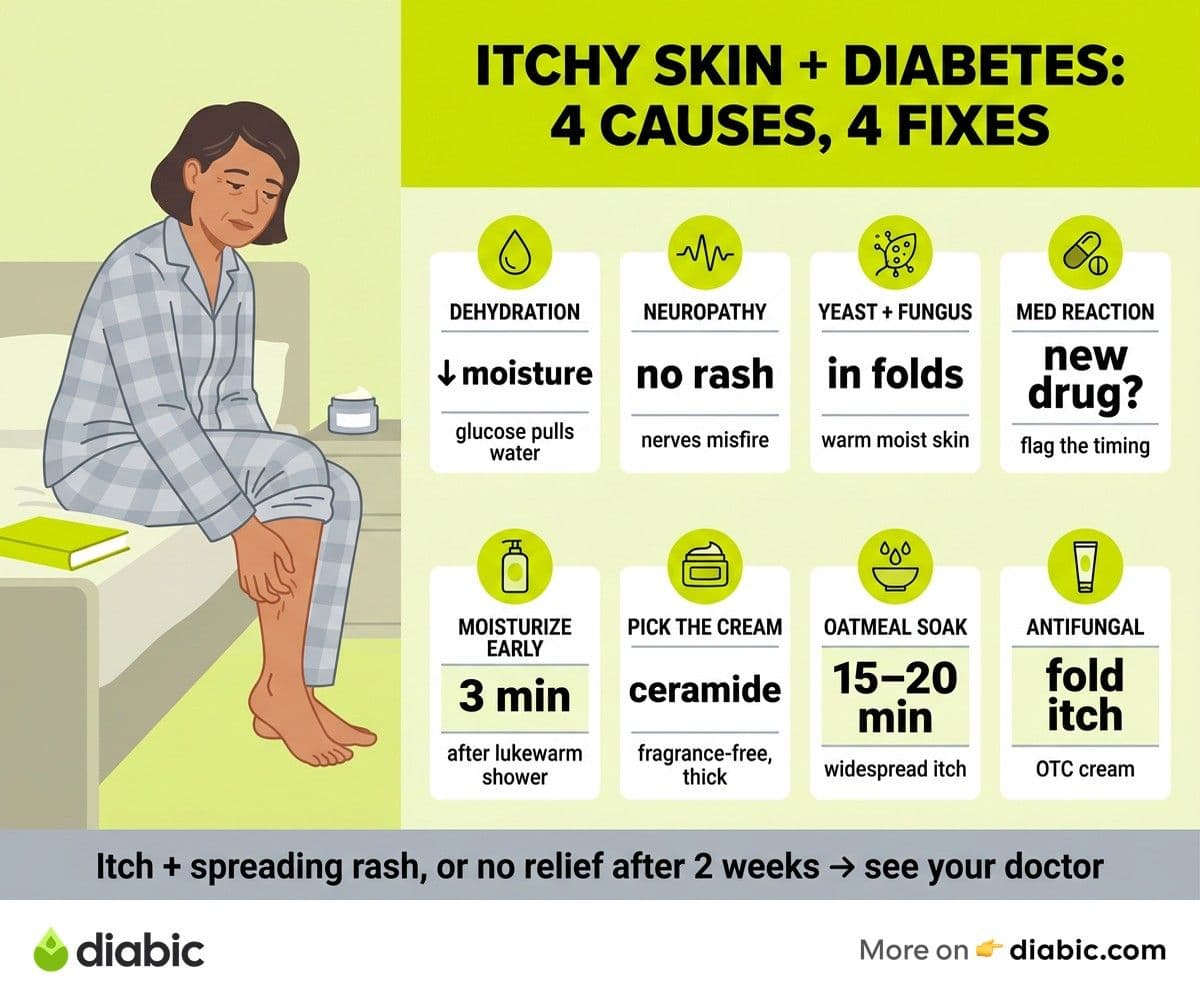
Diabetes can dehydrate the skin from the inside out. When blood sugar runs high, your kidneys pull more water from the body to flush excess glucose, leaving less moisture for skin cells. According to the ADA's overview of skin care and diabetes, this internal dehydration shows up as tight, flaky skin that itches even when you have applied lotion. Reduced blood flow to the lower legs can make the problem worse, since less circulation means less nutrient and moisture delivery to the surface layers.
Nerve changes also contribute. Peripheral neuropathy can produce abnormal sensations such as tingling, burning, or itching in places where there is no rash to scratch. The itch feels real because the nerve fibers are firing, even though the skin itself looks healthy. A peer-reviewed paper in the ADA's Diabetes Care journal on pruritus and diabetes describes this neuropathic itch as one of the more frustrating manifestations because moisturizers alone rarely calm it.
Yeast and fungal infections are another driver. Candida and tinea organisms thrive on warm, moist skin with extra glucose available, which is why itching often clusters in skin folds. Less commonly, certain diabetes medications can trigger an allergic itch, usually accompanied by a rash. If you started a new medication and the itch began soon after, that timing is worth flagging to your provider.
Common Itchy Skin Diabetes Patterns to Recognize
Generalized itching from dry skin is the most common type. It tends to be worse in winter, after long showers, and on the lower legs and arms. The skin may look dull, slightly scaly, or have small fine lines, and scratching often leaves red streaks that fade over hours. This pattern overlaps closely with dry skin and type 2 diabetes, which is one of the most underrecognized skin complications of diabetes.
Localized itching in skin folds usually points to a yeast or fungal infection. Common spots include the groin, under the breasts, in the armpits, and between toes. The skin may look red, slightly raised at the edges, and sometimes develop tiny pustules or peeling. This kind of itch responds best to antifungal treatment rather than moisturizer alone.
Neuropathic itching feels like an itch with no visible cause. There is no rash, no redness, and no relief from scratching, which can actually irritate the nerves further. It tends to come and go and may move around. Eruptive xanthomatosis is a rarer condition where firm, yellow, itchy bumps appear on the buttocks, elbows, or knees. It is usually a sign of very high triglycerides and high blood sugar, and it is often confused with diabetic dermopathy brown spots until a clinician takes a closer look. Addressing the underlying lipid and glucose issues, often discussed in managing triglycerides with diabetes, is the path to clearing it.
Relief Strategies That Work for Dry Skin and Type 2 Diabetes
Moisturize consistently, ideally within three minutes of getting out of the shower. The Mayo Clinic guide to itchy skin causes and relief recommends fragrance-free, thick creams or ointments rather than thin lotions. Look for ingredients like ceramides, glycerin, hyaluronic acid, or petrolatum, which lock water into the skin. Twice-daily application beats one heavy session, and reapplying after handwashing helps the hands and forearms stay calmer.
Adjust how you bathe. Use lukewarm water instead of hot, keep showers under 10 minutes, and switch to a fragrance-free, gentle cleanser. Pat the skin dry, leaving it slightly damp before moisturizing. The American Academy of Dermatology's itch relief tips note that adding colloidal oatmeal to a lukewarm bath can soothe widespread dry-skin itch in 15 to 20 minutes.
For specific situations, targeted treatments help. Over-the-counter hydrocortisone cream can calm a small, localized itchy patch for short stretches, but it is not meant for daily long-term use on large areas. Antihistamines may help if there is a clear allergic component or if itching disrupts sleep. Antifungal creams are the right choice for yeast or fungal infections. If the itch keeps returning despite these basics, schedule an appointment rather than rotating through more products. Strong cases of diabetes skin infection prevention sometimes need a prescription.
From my experience: After 14 years with type 1 diabetes, I learned that my winter shin itch was not just dry skin. It tracked almost perfectly with weeks where my time in range slipped. Once I tightened my numbers and switched to a thicker fragrance-free cream applied right out of the shower, the itch faded within 10 days. The lotion mattered, but so did the glucose pattern underneath it.
When Itching Signals Something More Serious
Some itches deserve medical attention sooner rather than later. Persistent itching that does not respond to two weeks of consistent moisturizing is one signal. Itch paired with a rash, redness that spreads, broken skin, oozing, or warmth around an area suggests an infection or inflammatory condition that needs assessment.
Localized itch that worsens over time, especially in one spot, can point to an infection brewing under the surface or, rarely, a skin cancer that happens to be itchy. If sleep, work, or daily activities are being interrupted, that alone is reason to seek help. Quality of life counts as a clinical concern, not a minor complaint.
Severe, generalized itching without a rash sometimes accompanies kidney or liver issues, both of which are tracked closely in long-term diabetes care. The itch is the body's way of flagging something deeper, and it is worth a conversation with your provider so labs can confirm everything is on track. Catching kidney or liver changes early gives you more options.
Preventing Itchy Skin Long-Term
The most powerful long-term strategy is steady blood sugar management. The closer your glucose stays to your target range, the less dehydration your skin experiences, the lower the fuel supply for fungi, and the calmer the nerves that drive neuropathic itch. The NIDDK page on diabetes skin conditions emphasizes glucose management as central to skin health, alongside daily skin habits.
Build small habits that protect the skin barrier. Drink water throughout the day, especially in dry weather. Choose soft, breathable fabrics like cotton and bamboo. Skip very hot showers, dry off thoroughly between skin folds, and apply moisturizer right after. Use sunscreen on exposed areas, since sun damage compromises the skin barrier and worsens dryness.
Make skin care a regular line item in your diabetes self-management. Once-a-day moisturizing, weekly skin checks for new patches or color changes, and quick attention to anything that feels off will save you from larger problems later. If a stubborn rash, repeated yeast infections, or unexplained itch keeps showing up, see a dermatologist who has experience with diabetes skin conditions. They can identify patterns a general visit might miss.
Frequently Asked Questions
Why does diabetes make your skin itchy?
High blood sugar pulls water out of the skin, reduced circulation limits moisture delivery, and elevated glucose feeds yeast and fungal organisms. Nerve changes from neuropathy can also cause itching without a visible rash. Most diabetes-related itch involves more than one of these causes at the same time.
How to relieve itchy skin caused by diabetes?
Apply a thick, fragrance-free moisturizer with ceramides or petrolatum twice a day, especially right after a lukewarm shower. Use gentle cleansers, avoid hot water, and add a colloidal oatmeal soak for widespread itch. For yeast or fungal infections, an antifungal cream may help. If the itch persists after two weeks, talk to your doctor.
Can itchy skin be a sign of unmanaged diabetes?
Yes, in many cases. Persistent or widespread itching is sometimes the first noticeable sign of high blood sugar, especially when paired with dry skin or yeast infections. If itching is new and you have not had recent labs, it is worth checking in with your provider to review your numbers.
If this guide helped, you might enjoy our look at skin complications of diabetes and the small daily habits that make a real difference. Most cases of itchy skin diabetes brings on respond to a calmer routine of glucose, moisture, and patience over two to four weeks.
Shahriar P. Shuvo is the founder of Diabic. He has lived with diabetes for over 14 years, and built Diabic to deliver the practical, evidence-based self-management tools he wished existed when he was first diagnosed. By trade, Shahriar is a senior design and frontend engineer with 6+ years shipping products at Agora, Timescale (now Tiger Data), and ShareTrip. He writes from the intersection of lived diabetes experience and product craft, focused on what works in daily management rather than what sounds good in a textbook.
Medically reviewed by
Dr. Shanto Arian is an internal medicine physician now specializing in clinical and aesthetic dermatology, with a parallel academic focus on epidemiology and public health. He holds an MBBS, MPH, MSc (UK), MRCP (UK), MRCPI (Ireland), Diploma in Dermatology (UK), and Diploma in Aesthetic Medicine (USA). Dr. Arian trained in internal medicine, including hospital work on hematology cases such as graft-versus-host disease, before moving toward dermatology. Skin is one of the earliest places diabetes shows itself, from acanthosis nigricans and diabetic dermopathy to slow foot wound healing, and that intersection is where his clinical and Diabic-review work meet. On Diabic, Dr. Arian medically reviews content on diabetes diagnosis, complications, dermatologic manifestations, and pharmacotherapy, ensuring every claim aligns with current ADA, NICE, and peer-reviewed literature.
More from Health & Complications
View all
Diabetes and Dental Implants: What to Know First
Diabetes dental implants guide covering safety, A1C targets, recovery expectations, gum health prep, and what to ask your oral surgeon before surgery.

Burning Mouth Syndrome and Diabetes Explained
Burning mouth syndrome diabetes link explained, including neuropathy, dry mouth, and thrush causes plus treatment options that may bring real relief.

Dental Care for people with diabetes: Tips That Help
Practical dental care diabetics need, with real tips for protecting teeth and gums when diabetes raises your risk for oral health problems.
Clinician-reviewed habits, plain-language guides, and honest answers - the small shifts that make living with diabetes feel lighter, every day.