Diabetic Dermopathy: Brown Spots on Your Legs
Diabetic dermopathy causes light brown shin spots in many people with diabetes. Learn what they look like, why they form, and when to see a doctor.

In this article(12)
Noticing a cluster of light brown spots on your shins can be unsettling, especially if they showed up gradually and you cannot recall any specific injury. If you have diabetes, there is a strong chance these are diabetic dermopathy, often called "shin spots." This is one of the most common and benign skin findings in people with diabetes, and understanding what they are can replace anxiety with simple, practical care.
A few minutes spent learning what these patches look like, why they appear, and how to tell them apart from other skin conditions can save you a lot of worry. Most people never need treatment for them, but they are also a reminder to check in on blood sugar trends and overall skin health.
What Is Diabetic Dermopathy?
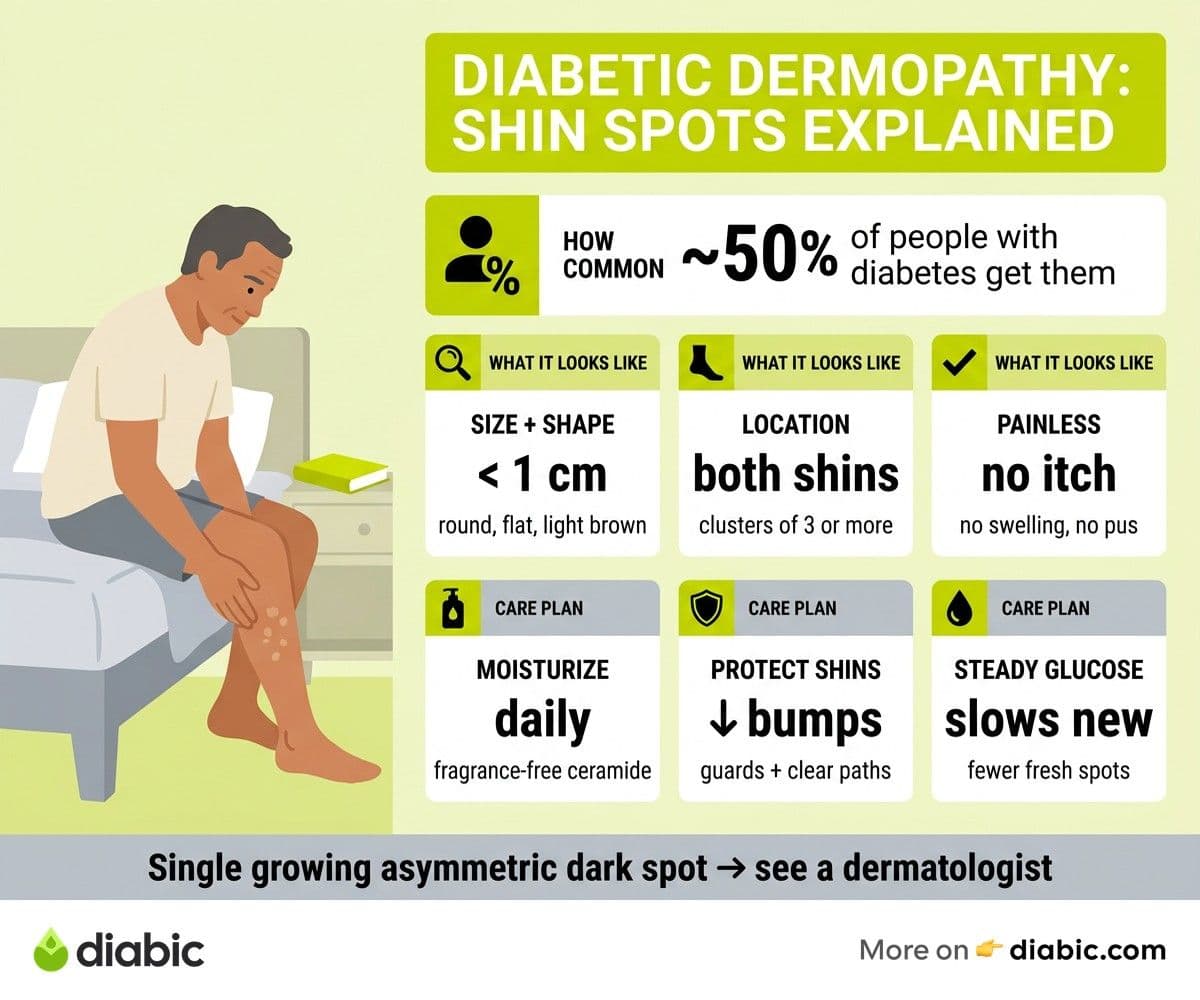
This condition is the medical name for the small, brownish, slightly scaly patches that develop on the lower legs, most often the shins. The condition is also known as shin spots or pigmented pretibial patches. Spots are typically round or oval, less than a centimeter across, and flat or slightly depressed.
This is the most common skin finding in people with diabetes. Estimates from the American Academy of Dermatology's diabetes-related skin conditions resource suggest the patches affect up to half of people living with diabetes, particularly those who have had it for many years and those over 60. It is more common in men than women.
The patches develop because of changes in the small blood vessels (capillaries) supplying the skin. These changes are part of the broader microvascular impact of diabetes, which is the same process that affects the eyes, kidneys, and nerves over time. For a wider view of how diabetes affects the skin overall, our skin complications of diabetes overview covers the full range of conditions you might encounter.
What Causes These Brown Spots?
The exact mechanism is still being studied, but researchers have a clear working model. Long-term elevation of blood glucose damages the tiny blood vessels feeding the skin of the shins. This microvascular change makes the skin more fragile, and the area becomes prone to small injuries that you may not even notice happening.
Minor trauma is the second piece. The shins are bumped against furniture, chair legs, car doors, and dog leashes more often than most other body areas. In someone with healthy circulation, those bumps fade in days. In someone with diabetes, the impaired healing response leaves behind a flat, pigmented patch as the skin tries to repair itself. Peripheral neuropathy can magnify this by reducing the sensation that would normally make you notice and protect a tender spot. If you suspect nerve changes are part of your picture, our piece on recognizing diabetic peripheral neuropathy covers early signs and what to do about them.
The NIDDK's overview of skin changes with diabetes and peer-reviewed research in the ADA's Diabetes Care journal both note that this condition is associated with longer diabetes duration and is sometimes a marker that other microvascular complications are present or developing. That makes the spots themselves harmless, but worth a brief conversation with your care team.
How to Identify Diabetic Dermopathy
Knowing what to look for makes it easier to relax when you find new spots, and easier to spot something that does not fit the pattern.
The patches share a consistent appearance. They are flat or very slightly depressed (never raised), round or oval, light brown to reddish brown, and often have a faintly scaly surface. They are usually less than a centimeter across, and they cluster in groups of three or more. They tend to appear bilaterally, meaning both shins are affected, although one side may have more spots than the other.
Importantly, the spots do not hurt, itch, or feel tender in most cases. There is no swelling, no warmth, and no pus. They do not bleed, ooze, or develop a scab. Each individual spot may fade over a year or two, but new ones often replace them, so the overall picture stays similar over time. The Mayo Clinic's guide to diabetic skin conditions is a useful visual reference if you want to compare what you are seeing.
How it differs from other conditions
Several other things can look similar at first glance, and knowing the differences saves you a worry-spiral on the internet:
- Bruises: typically purple or blue, larger, and tender. They fade through yellow and green within two weeks, while dermopathy patches stay roughly the same color.
- Fungal infections (tinea): usually have raised, ring-shaped edges with clearer skin in the middle, plus itching. Our piece on diabetes skin infection prevention covers what those look like in detail.
- Stasis dermatitis: larger, redder, and often itchy or weepy patches associated with venous insufficiency, usually in older adults with leg swelling.
- Necrobiosis lipoidica: a different diabetes-related condition that produces larger, shinier, yellow-orange plaques with prominent blood vessels visible through thin skin. It is much less common than dermopathy.
- Itchy patches that do not fit the dermopathy pattern: if a spot itches persistently, our guide on itchy skin with diabetes walks through the most common causes.
If a spot is raised, painful, growing rapidly, oozing, or unusually dark, that is your cue to have it evaluated rather than assume it is dermopathy.
Is This Condition Dangerous?
The short answer is no. The condition is considered benign and harmless. It does not lead to ulcers, infections, or skin cancer. It does not require treatment, and most clinicians take a "monitor but do not worry" stance.
That said, the spots are worth paying attention to as a signal. Their presence is correlated with longer diabetes duration and may be associated with other microvascular complications, particularly retinopathy, nephropathy, and neuropathy. Think of them less as a problem to fix and more as a gentle prompt to keep up with your annual eye exam, kidney function check, and foot exam.
Spots may fade on their own over 12 to 24 months, but new ones often appear in their place. There is currently no proven medical treatment that reliably erases dermopathy, although the American Academy of Dermatology's diabetes skin information notes that improving blood sugar management may reduce the rate at which new spots develop.
From my experience: I noticed my first dermopathy spots about eight years into managing type 1 diabetes, and my reaction was a brief panic followed by an unnecessary deep-dive into Google. After my endocrinologist explained what they were and confirmed they did not need treatment, I built two small habits: shin guards during weekend basketball, and a more honest conversation about my A1C trend. Neither stopped the existing spots, but they have not multiplied much since.
When a brown spot needs evaluation
A few patterns do warrant a clinic visit:
- A single, asymmetric, growing dark spot (which could indicate something else, including melanoma)
- A patch that becomes raised, painful, or develops a sore in the middle
- Brown spots in places other than the shins, especially if they are new
- Any lesion that bleeds, oozes, or fails to heal after a small injury
- Spots that change shape, color, or size noticeably over a few weeks
When in doubt, a dermatologist visit is quick and reassuring. A biopsy is rarely needed, but it is the definitive way to rule out other conditions.
Skin Care and Management
Even though dermopathy itself does not need active treatment, supporting the skin on your lower legs makes sense. The same habits that protect against other diabetes-related skin issues also reduce the trauma that triggers new spots.
Keep the skin moisturized. Apply a fragrance-free, ceramide-containing moisturizer to your legs after showering, while the skin is still slightly damp. This strengthens the skin barrier and reduces cracking, which is often the entry point for the small bumps and irritations that lead to new dermopathy patches.
Protect your shins from injury. This sounds obvious, but most people only realize how often they bump their shins after they start paying attention. Move chairs, dog crates, and low coffee tables out of high-traffic paths. Wear long pants for gardening, hiking, or recreational sports. If you play sports that involve kicking or contact, shin guards are an easy investment.
Manage blood sugar steadily. Stable glucose protects the small vessels feeding the skin and may slow the rate at which new dermopathy spots develop. Our guide on diabetic foot care routine covers a daily checklist that pairs well with leg skin care since both depend on the same vascular health.
If the appearance of the spots bothers you cosmetically, a few options exist. Self-tanning lotion can blend the patches into surrounding skin tone. Dermatologists can sometimes use targeted laser treatments for individual spots, though insurance rarely covers this and results are mixed. Most people, after a brief initial concern, leave them alone and find that the spots become unremarkable over time.
What to Take Away
Of the skin conditions linked to diabetes, this is one of the more reassuring discoveries you can make. The patches are common, harmless, and require no treatment. They do, however, deserve a few minutes of context: knowing what they are, what they signal, and what they are not. Daily moisturizing, shin protection, and steady blood sugar are the entire care plan for most people.
Talk to your doctor if a spot looks different from the others, if the pattern is asymmetric, or if you have not had a recent screening for the other microvascular complications of diabetes. Diabetic dermopathy itself is not the problem, but the spots are a quiet nudge to stay engaged with the rest of your diabetes care.
Frequently Asked Questions
What are brown spots on legs from diabetes?
The most likely cause is a benign condition called dermopathy, which produces small, light-brown, flat or slightly depressed, scaly patches on the shins. Spots are usually round or oval, painless, and appear in clusters on both legs. They are caused by changes in the small blood vessels supplying the skin combined with minor trauma to the area.
Is this skin condition dangerous?
No, the spots are not dangerous. It is considered a benign skin condition that does not lead to ulcers, cancer, or infection. The spots are worth monitoring as a possible signal that other microvascular complications (eye, kidney, or nerve issues) deserve a screening, but the patches themselves do not require treatment.
Can these brown spots go away?
Individual diabetic dermopathy spots may fade gradually over 12 to 24 months, although new ones often appear in their place. Steady blood sugar management may slow the rate at which new spots develop. There is no proven topical or oral treatment that reliably clears existing patches, so the standard recommendation for diabetic dermopathy is to leave the spots alone and protect the surrounding skin.
Shahriar P. Shuvo is the founder of Diabic. He has lived with diabetes for over 14 years, and built Diabic to deliver the practical, evidence-based self-management tools he wished existed when he was first diagnosed. By trade, Shahriar is a senior design and frontend engineer with 6+ years shipping products at Agora, Timescale (now Tiger Data), and ShareTrip. He writes from the intersection of lived diabetes experience and product craft, focused on what works in daily management rather than what sounds good in a textbook.
Medically reviewed by
Dr. Shanto Arian is an internal medicine physician now specializing in clinical and aesthetic dermatology, with a parallel academic focus on epidemiology and public health. He holds an MBBS, MPH, MSc (UK), MRCP (UK), MRCPI (Ireland), Diploma in Dermatology (UK), and Diploma in Aesthetic Medicine (USA). Dr. Arian trained in internal medicine, including hospital work on hematology cases such as graft-versus-host disease, before moving toward dermatology. Skin is one of the earliest places diabetes shows itself, from acanthosis nigricans and diabetic dermopathy to slow foot wound healing, and that intersection is where his clinical and Diabic-review work meet. On Diabic, Dr. Arian medically reviews content on diabetes diagnosis, complications, dermatologic manifestations, and pharmacotherapy, ensuring every claim aligns with current ADA, NICE, and peer-reviewed literature.
More from Health & Complications
View all
Diabetes and Dental Implants: What to Know First
Diabetes dental implants guide covering safety, A1C targets, recovery expectations, gum health prep, and what to ask your oral surgeon before surgery.

Burning Mouth Syndrome and Diabetes Explained
Burning mouth syndrome diabetes link explained, including neuropathy, dry mouth, and thrush causes plus treatment options that may bring real relief.

Dental Care for people with diabetes: Tips That Help
Practical dental care diabetics need, with real tips for protecting teeth and gums when diabetes raises your risk for oral health problems.
Clinician-reviewed habits, plain-language guides, and honest answers - the small shifts that make living with diabetes feel lighter, every day.