Skin Complications of Diabetes: Types and Treatments
Skin complications diabetes can cause range from rashes to infections. Learn the major types, what causes them, and how to treat each one effectively.

In this article(12)
Skin complications diabetes brings affect up to one-third of people living with the condition at some point. According to the CDC's data on diabetes complications, the skin is one of the earliest places that elevated blood sugar shows itself, sometimes years before any other complication appears. The encouraging part is that most skin complications diabetes can produce are recognizable and manageable once you know what to look for.
This post covers the major categories, from common bacterial and fungal infections to more specific conditions like diabetic dermopathy and acanthosis nigricans, plus when to seek care and what treatment usually involves.
Why Diabetes Affects the Skin
The skin is your largest organ and one of the most blood-sugar-sensitive systems in the body. Several mechanisms explain why elevated glucose causes problems here. According to the ADA's overview of skin complications, high blood sugar reduces blood flow to small vessels in the skin, impairs the immune cells that fight infection, and creates a more favorable environment for bacteria and fungi.
Nerve damage (neuropathy) compounds the issue by reducing sensation, particularly in the feet and lower legs. Small cuts, blisters, or pressure points that would normally feel uncomfortable go unnoticed, allowing minor injuries to progress into ulcers or infections. The NIDDK guidance on diabetes and skin problems emphasizes that this loss of protective sensation is one of the most underestimated risks for people with diabetes.
Excess glucose in the bloodstream also feeds fungi and certain bacteria. Yeast in particular thrive in sugar-rich environments and warm, moist skin folds. Inflammation from chronic high blood sugar damages skin proteins like collagen and elastin, contributing to the dryness, itching, and slower healing that many people with diabetes notice.
Insulin resistance plays its own role, particularly in conditions like acanthosis nigricans and skin tags. The body's attempt to compensate for insulin resistance by producing more insulin signals certain skin cells to grow more aggressively, creating distinctive patterns of thickening and pigmentation.
From my experience: in the early years after my diagnosis, I dismissed itchy patches and slow-healing cuts as separate issues to deal with later. After 14 years of living with type 1 diabetes, I have learned that the skin is often the first place to send a clear message when blood sugar is running higher than I think. Paying attention to it has saved me from at least two infections that would have been much worse if I had waited.
Bacterial Skin Infections
Bacterial infections are among the most common skin issues for people with diabetes. The usual culprits are staphylococcus and streptococcus species, the same bacteria that cause infections in people without diabetes, but they tend to occur more often and progress faster when blood sugar is elevated.
Common bacterial infections include:
- Boils and carbuncles: Painful, pus-filled lumps that develop deep in hair follicles. Boils involve one follicle; carbuncles involve a cluster.
- Styes: Tender bumps on the eyelid caused by an infected oil gland.
- Folliculitis: Inflammation of one or more hair follicles, often appearing as red bumps with a hair in the center.
- Nail infections (paronychia): Redness, swelling, and pus around fingernails or toenails.
Most mild bacterial infections respond to warm compresses and topical antibiotic ointments. Larger or more painful infections often need oral antibiotics. A doctor should drain abscesses and large boils rather than letting them rupture on their own, especially in people with diabetes where complications are more likely. Better blood sugar management reduces both the frequency and severity of these infections, which is one of the more visible motivations to keep glucose in range. Our piece on diabetes skin infection prevention covers daily habits that lower the risk.
See a doctor promptly for any infection that is rapidly spreading, accompanied by fever, or located on the face, hand, or foot. People with diabetes are more vulnerable to deeper tissue infections like cellulitis, which require prompt antibiotic treatment.
Fungal Skin Infections
Fungal infections, especially those caused by Candida albicans (a type of yeast) and dermatophytes, are common diabetes skin problems. They thrive in warm, moist environments where elevated glucose levels in skin secretions create an ideal feeding ground.
Candida infections typically appear in skin folds: under the breasts, in the groin, under the belly, between fingers and toes, and at the corners of the mouth. The classic appearance is a bright red, itchy rash with smaller "satellite" spots around the edges. Athlete's foot (tinea pedis), jock itch (tinea cruris), and ringworm (tinea corporis) are caused by dermatophytes and look more scaly and ring-shaped.
Treatment typically involves antifungal creams or powders containing clotrimazole, miconazole, or terbinafine. These are available over the counter and work well for mild cases when used consistently for the full recommended duration (often 2 to 4 weeks). Prescription oral antifungals may be needed for stubborn or widespread infections. Drying skin folds thoroughly after bathing, wearing breathable fabrics, and changing socks daily go a long way toward prevention.
The Mayo Clinic guidance on diabetes skin conditions notes that recurrent fungal infections can be an early signal of poorly managed blood sugar. If you keep getting yeast infections in skin folds, that is worth bringing up at your next appointment as part of a broader conversation about glucose patterns.
Diabetic Dermopathy
Diabetic dermopathy is one of the most common diabetes skin conditions, affecting up to half of people with the condition at some point. It appears as light brown, oval, slightly scaly patches, almost always on the shins. The patches range from a few millimeters to a couple of centimeters across and tend to occur in clusters.
Despite its prevalence, diabetic dermopathy is harmless. It does not itch, hurt, or progress to anything more serious. The patches are caused by changes in small blood vessels under the skin and reflect the same microvascular processes that affect other organs.
No specific treatment is needed. The patches typically fade slowly over months to years and may leave faint discoloration behind. Better blood sugar management does not reliably reverse existing patches but may reduce the appearance of new ones. The key is recognizing them so that you do not mistake them for something more serious. If the patches change suddenly, become painful, or develop a different appearance, that warrants a doctor visit. We cover the topic in more depth in our piece on diabetic dermopathy and brown spots.
Necrobiosis Lipoidica
Necrobiosis lipoidica is rarer but more concerning in appearance than dermopathy. It typically begins as small, dull red bumps that gradually expand into larger patches with shiny, yellow-brown centers and a raised, purplish border. The lesions almost always appear on the lower legs, particularly the shins.
The condition is more common in women and in people with type 1 diabetes. The exact cause is not fully understood, but it involves inflammation and damage to collagen in the skin, related to small-vessel changes from diabetes. Lesions can become painful or itchy, and the thinned skin in the center can ulcerate if injured.
Treatment is challenging. Topical or injected corticosteroids may help in early stages. Other options include topical tacrolimus, ultraviolet light therapy, and certain biologic medications for severe cases. Protecting the area from injury is important since ulcers can be slow to heal. Managing blood sugar carefully may help prevent new lesions, though it does not reliably resolve existing ones.
If you notice the early bumps that may signal necrobiosis lipoidica, talk to a dermatologist familiar with diabetes-related skin conditions. Early treatment offers the best chance of stopping progression.
Acanthosis Nigricans
Acanthosis nigricans is a condition that produces dark, velvety patches of thickened skin in body folds. The most common locations are the back of the neck, the armpits, the groin, and sometimes the elbows or knuckles. The patches feel slightly raised and can look like dirt that will not wash off, which is one reason it is often missed or misunderstood.
The condition is strongly associated with insulin resistance and is often an early warning sign of prediabetes or type 2 diabetes, sometimes appearing years before a diagnosis. Research published in Diabetes Care has documented this connection clearly, particularly in children and adolescents with elevated body weight.
Management focuses on the underlying insulin resistance rather than the skin changes themselves. Improving blood sugar through diet, exercise, weight management, and (when prescribed) medications like metformin often gradually reduces the appearance of patches. Topical treatments like retinoids, alpha hydroxy acids, or salicylic acid can help thin the skin in affected areas. Cosmetic results take months, so patience matters.
Acanthosis nigricans in someone not previously diagnosed with diabetes is a strong reason to have blood sugar tested. It is one of the body's earliest visible signals that something metabolic deserves attention.
Dry Skin, Itching, and Other Common Issues
Dry, itchy skin is one of the most universal complaints among people with diabetes. Several mechanisms contribute. Dehydration from elevated blood sugar (which pulls water out of cells), reduced sweat gland function from neuropathy, and frequent foot washing all play a role. The result is skin that cracks more easily, itches more often, and provides a less effective barrier against infection.
Daily moisturizing is the foundation of management. Fragrance-free creams and ointments work better than lotions for very dry skin. Apply moisturizer to slightly damp skin within a few minutes of bathing to lock in water. Avoid hot showers and harsh soaps, which strip natural oils. Our pieces on itchy skin with diabetes relief and dry skin and type 2 diabetes go deeper on practical routines.
A few less common conditions deserve mention:
- Eruptive xanthomatosis: Sudden appearance of small, yellow-orange bumps with a red base, usually on the buttocks, elbows, knees, or backs of the hands. These are deposits of fat caused by very high triglycerides, often a sign of severely uncontrolled diabetes. They typically resolve as triglycerides come down.
- Digital sclerosis: Thickened, tight, waxy skin on the backs of the hands and fingers. The skin can become so tight that finger movement is restricted. It is more common in long-standing type 1 diabetes and may improve with better blood sugar management.
- Skin tags (acrochordons): Small, soft, flesh-colored growths in skin folds. They are harmless but more common in people with insulin resistance. A dermatologist can remove them in the office if they are bothersome.
Most of these conditions improve when blood sugar is more consistently in range. Skin care does not replace glucose management, but it makes the day-to-day a lot more comfortable.
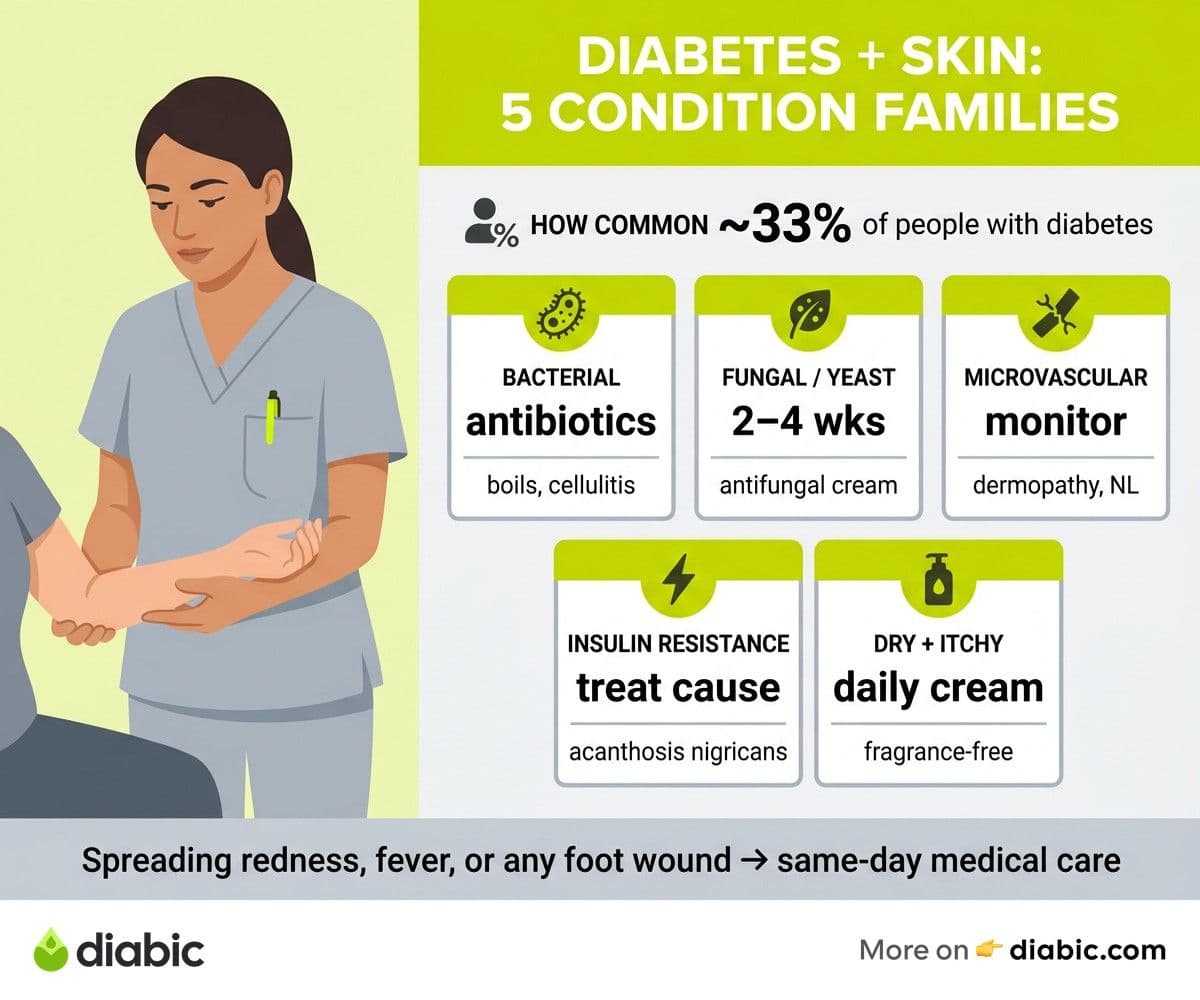
When Skin Complications Diabetes Causes Need a Doctor
The general rule with diabetes-related skin issues is to err on the side of getting it checked. Several warning signs deserve same-day or same-week medical attention:
- Signs of infection: redness, warmth, swelling, pus, or red streaks spreading from a wound.
- Wounds that are not healing: any cut, blister, or sore that has not improved within 1 to 2 weeks.
- Sudden new lesions: especially if they are painful, rapidly growing, or accompanied by other symptoms.
- Foot wounds of any kind: feet are higher-risk territory because of neuropathy and reduced circulation.
A small cut on the foot can become a serious problem within days when diabetes is involved. Our guide to diabetic wound healing at home covers what to do for minor wounds and when to escalate.
Beyond the obvious warning signs, any skin change that is affecting your daily comfort, sleep, or confidence is worth bringing to your provider. Skin issues often respond well to treatment, and there is no reason to live with persistent itching or rashes when help is available.
Frequently Asked Questions
What skin problems are caused by diabetes?
The most common include bacterial infections (boils, folliculitis), fungal infections (Candida, athlete's foot), diabetic dermopathy (light brown patches on the shins), acanthosis nigricans (dark velvety patches in skin folds), dry and itchy skin, and slow-healing wounds. Less common conditions include necrobiosis lipoidica, eruptive xanthomatosis, and digital sclerosis. Most are manageable when identified and addressed early.
How do you treat skin complications from diabetes?
Treatment depends on the specific condition. Bacterial infections usually require antibiotics, fungal infections respond to antifungal creams, and dry or itchy skin improves with consistent moisturizing and gentle skincare. The foundation across all of them is blood sugar management, since most diabetes-related skin issues improve when glucose is more consistently in range. Some conditions, like diabetic dermopathy, need no treatment but are worth recognizing.
Are diabetes skin conditions dangerous?
Most are not dangerous on their own, but a few deserve close attention. Untreated bacterial infections, particularly on the feet, can progress to deeper tissue infections that threaten the limb. Slow-healing wounds and ulcers are the most serious concern. Conditions like dermopathy and acanthosis nigricans are visually noticeable but not directly harmful, though acanthosis nigricans can be an early sign of insulin resistance worth investigating.
If you are noticing skin changes you have not seen before, please reach out to your healthcare provider. The skin is one of the most useful early warning systems your body has, and most skin complications diabetes can cause respond well when you act on the signal early rather than waiting for it to escalate.
Shahriar P. Shuvo is the founder of Diabic. He has lived with diabetes for over 14 years, and built Diabic to deliver the practical, evidence-based self-management tools he wished existed when he was first diagnosed. By trade, Shahriar is a senior design and frontend engineer with 6+ years shipping products at Agora, Timescale (now Tiger Data), and ShareTrip. He writes from the intersection of lived diabetes experience and product craft, focused on what works in daily management rather than what sounds good in a textbook.
Medically reviewed by
Dr. Shanto Arian is an internal medicine physician now specializing in clinical and aesthetic dermatology, with a parallel academic focus on epidemiology and public health. He holds an MBBS, MPH, MSc (UK), MRCP (UK), MRCPI (Ireland), Diploma in Dermatology (UK), and Diploma in Aesthetic Medicine (USA). Dr. Arian trained in internal medicine, including hospital work on hematology cases such as graft-versus-host disease, before moving toward dermatology. Skin is one of the earliest places diabetes shows itself, from acanthosis nigricans and diabetic dermopathy to slow foot wound healing, and that intersection is where his clinical and Diabic-review work meet. On Diabic, Dr. Arian medically reviews content on diabetes diagnosis, complications, dermatologic manifestations, and pharmacotherapy, ensuring every claim aligns with current ADA, NICE, and peer-reviewed literature.
More from Health & Complications
View all
Diabetes and Dental Implants: What to Know First
Diabetes dental implants guide covering safety, A1C targets, recovery expectations, gum health prep, and what to ask your oral surgeon before surgery.

Burning Mouth Syndrome and Diabetes Explained
Burning mouth syndrome diabetes link explained, including neuropathy, dry mouth, and thrush causes plus treatment options that may bring real relief.

Dental Care for people with diabetes: Tips That Help
Practical dental care diabetics need, with real tips for protecting teeth and gums when diabetes raises your risk for oral health problems.
Clinician-reviewed habits, plain-language guides, and honest answers - the small shifts that make living with diabetes feel lighter, every day.