7 Signs of Diabetes That Are Easy to Miss
Subtle signs of diabetes often hide in plain sight. Learn the seven warning signs most people overlook and what to do before blood sugar gets worse.

In this article(31)
Many signs of diabetes look like nothing more than a busy week or a bad night's sleep. By the time most people connect the dots, their blood sugar has been running high for months. We want to help you spot the early signs of diabetes before they become a bigger problem, so this guide walks through seven warning signals worth paying attention to.
The hardest part about high blood sugar is how quietly it builds. You might feel a little more tired, a little thirstier, a little foggier than usual, and chalk it all up to stress. Recognizing these patterns early gives you time to talk to your doctor, get tested, and make small changes before complications develop.
7 Signs and Symptoms of Diabetes You Should Not Dismiss
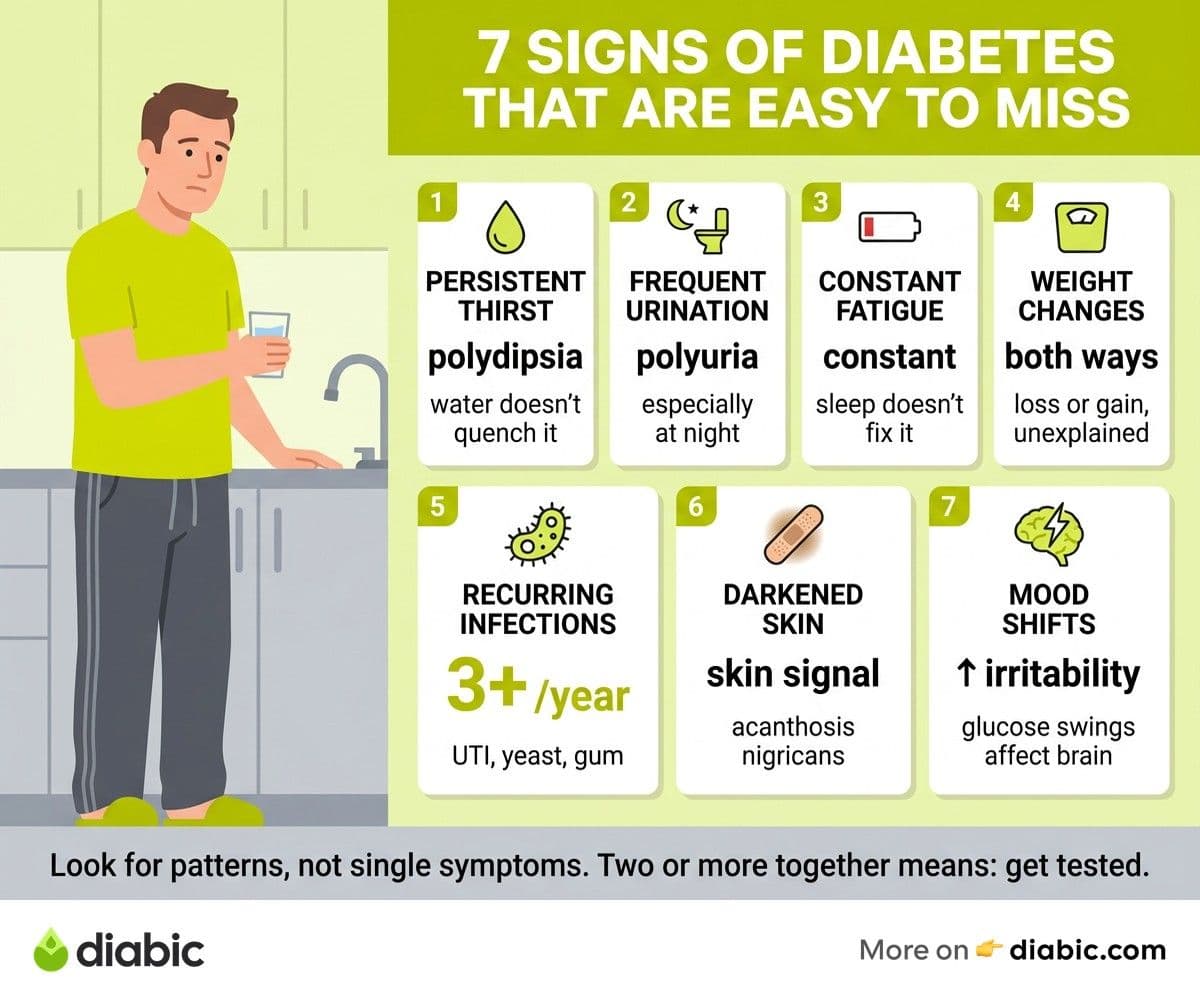
The signs and symptoms of a diabetes diagnosis often appear gradually, which is exactly why they get missed. The American Diabetes Association lists thirst, urination, and fatigue among the most reported early signs, but each one tends to feel small enough to ignore on its own. According to the ADA's official symptoms checklist, the warning signs are easier to catch when you look at them as a pattern rather than isolated complaints.
Here are seven signs we hear about most often from people who were eventually diagnosed.
1. Increased thirst that never quite goes away
You drink a glass of water and feel thirsty an hour later. You start carrying a bottle everywhere because your mouth feels dry by mid-morning. This kind of persistent thirst, called polydipsia, happens when high blood sugar pulls fluid out of your tissues.
The thirst is often paired with a strange dryness in the mouth or throat. People sometimes notice it most at night, waking up to drink. If hydrating more does not fix it, your body may be flagging something deeper.
2. Frequent urination disrupting daily routines
Trips to the bathroom that interrupt meetings, drives, or sleep are another quiet red flag. When blood sugar climbs above the kidneys' filtering threshold, glucose spills into the urine and pulls extra water with it. The medical term is polyuria, and it tends to show up before most other symptoms.
A useful question to ask yourself is whether you are getting up more than once at night to use the bathroom. That single change is one many people only notice in retrospect.
3. Fatigue unrelated to sleep quality
Diabetes-related fatigue feels different from regular tiredness. It is heavier, more constant, and does not lift after a good night's sleep or a strong cup of coffee. When your cells cannot pull glucose in for energy, your body runs on a kind of permanent low battery.
This is one of the most commonly dismissed symptoms. Stress, parenting, work, and aging all get blamed first. If your fatigue has lasted weeks and rest is not helping, it deserves a closer look.
4. Unexplained weight changes
Sudden weight loss without trying can sound like good news, but it can also mean your body is breaking down muscle and fat for energy because it cannot use glucose properly. This is more typical in type 1 diabetes but can show up in type 2 as well.
On the other side, some people notice unexplained weight gain, especially around the midsection, as insulin resistance builds. Either direction is worth paying attention to when paired with other signs.
5. Recurring infections (skin, gums, urinary tract)
High blood sugar creates an environment where bacteria and yeast thrive. People who develop diabetes often notice repeat urinary tract infections, gum problems, slow-healing cuts, or yeast infections that keep coming back. A persistent fungal infection between toes or under the breasts is another common quiet sign.
If you have noticed more frequent infections in the past year, it is worth mentioning to your doctor along with any other symptoms on this list.
6. Patches of darkened skin
A condition called acanthosis nigricans causes velvety, darkened patches of skin, usually on the back of the neck, in the armpits, or in skin folds. It is a visible sign of insulin resistance and often appears years before a diabetes diagnosis.
Many people assume the patches are dirt that will not wash off. They are not, and they are one of the more reliable physical clues that insulin levels have been running high.
7. Mood changes and irritability
Blood sugar swings can affect your mood far more than people realize. Feeling unusually short-tempered, anxious, or low for no clear reason can be linked to glucose fluctuations affecting brain chemistry. Some people describe it as a fog that lifts and settles unpredictably.
This is rarely the first sign someone investigates, but when paired with thirst, fatigue, or frequent urination, it adds weight to the bigger picture.
How Signs and Symptoms of Sugar Diabetes Develop
The signs and symptoms of sugar diabetes do not arrive all at once. Most begin years before a diagnosis, building so slowly that the body normalizes them. Understanding why this happens makes it easier to take subtle changes seriously.
The role of insulin resistance in gradual symptom onset
In type 2 diabetes, cells stop responding to insulin as well as they should. The pancreas compensates by producing more insulin, sometimes for years, keeping blood sugar in a near-normal range. According to the NIDDK's overview of diabetes symptoms and causes, this slow buildup is why so many people are diagnosed only after damage has already started.
This silent compensation phase is also why we link insulin resistance so closely to early prevention. If you want to dig deeper into this stage, our guide to insulin resistance symptoms covers the patterns that show up well before a formal diagnosis.
Why high blood sugar does not always cause obvious pain
Hyperglycemia does not hurt the way a cut or a sprain does. There is no sharp signal telling you something is off. Instead, the body sends quieter messages: thirst, urination, blurry vision, fatigue. These are easy to dismiss because they feel ordinary.
By the time symptoms become hard to ignore, blood sugar has often been elevated for a long time. This is why screening matters even when you feel fine.
How the body compensates before symptoms become noticeable
The pancreas, kidneys, and liver all work overtime in the early stages of high blood sugar. The kidneys filter out extra glucose, the liver tries to balance fuel supply, and the pancreas pumps out more insulin. This compensation buys time, but it eventually wears down the system.
For a closer look at the gradual nature of these changes, our piece on diabetes symptoms that sneak up on you explains how everyday clues add up over months and years.
Symptoms of Diabetes That Overlap With Other Conditions
The symptoms of diabetes share a lot of ground with other common complaints, which is part of why they get missed. The Mayo Clinic's type 2 symptom overview notes that many people learn about their diabetes through routine screening rather than symptom recognition.
Fatigue mistaken for stress or depression
Persistent low energy is often blamed on a demanding job, parenting, or a low mood. While those can absolutely cause fatigue, diabetes-related tiredness has a physiological cause that no amount of rest will resolve. If you have addressed sleep, stress, and nutrition without improvement, blood sugar is worth checking.
Frequent urination attributed to drinking more water
People sometimes assume they urinate more because they drink more, when in reality they drink more because high blood sugar is dehydrating them. The cycle reinforces itself. Pay attention to whether bathroom trips are interrupting your sleep or your work day.
Weight loss assumed to be from diet changes
Losing weight without trying is one of the more striking signs of undiagnosed diabetes, especially type 1. People may credit a recent diet shift, a stressful period, or an increase in activity. If you are losing weight faster than expected for the changes you have made, that mismatch deserves attention.
When to suspect diabetes instead of another explanation
Any single symptom can have many causes. The pattern matters. When two or three of these signs appear together, especially alongside risk factors, diabetes moves higher on the list of possibilities. A quick blood test can rule it in or out.
What to Do When You Spot the Signs of Diabetes
Recognizing the signs is the first step. Acting on them is the part that protects your long-term health. The earlier diabetes is identified, the more effective lifestyle changes and treatment can be.
Testing options: fasting glucose, A1C, oral glucose tolerance test
There are three main blood tests used to diagnose diabetes. A fasting plasma glucose test measures your blood sugar after at least eight hours without eating. An A1C test reflects your average blood sugar over the past two to three months. An oral glucose tolerance test measures how your body handles a glucose drink over two hours.
Your doctor will choose based on your symptoms, history, and any prior results. None of these tests require special preparation beyond what your provider recommends.
How to talk to your doctor about your concerns
Bringing a list of symptoms with rough dates is one of the most useful things you can do. Note when each symptom started, how often it happens, and whether anything makes it better or worse. This turns a vague conversation into a specific one.
Ask directly whether testing for diabetes makes sense given your symptoms and risk factors. You do not need to wait for a doctor to suggest it. Our guide to the early signs of diabetes you might not expect can help you build that list.
Steps to take while waiting for test results
Stay hydrated with water rather than sugary drinks. Eat balanced meals with protein, fiber, and healthy fats rather than restricting calories. Keep moving with walks or light activity, since movement helps cells respond better to insulin.
Avoid making dramatic dietary changes that could distort your test results. The goal is to get an honest picture of where your blood sugar sits today.
From my experience: I missed every single one of these signs in my early twenties. The thirst felt like summer. The fatigue felt like working too much. The frequent bathroom trips I blamed on coffee. By the time I got tested, my A1C was well above the diagnostic threshold and I had already lost weight without realizing it. After 14 years of living with diabetes, the lesson I keep coming back to is that the signs are not subtle on their own, they are subtle because we are all good at explaining them away.
Risk Factors That Make These Signs More Significant
Some people are more likely to develop diabetes than others, and that context changes how seriously these symptoms should be taken. According to the CDC's risk factor overview for type 2 diabetes, several factors meaningfully raise the odds.
Family history of diabetes
If a parent or sibling has type 2 diabetes, your risk is higher. This is partly genetic and partly shared environment. Knowing your family history makes it easier to spot patterns and prompts earlier screening.
Being over age 45 with a sedentary lifestyle
Risk climbs with age, especially after 45, and sitting for most of the day adds to it. Regular movement, even short walks after meals, may help your body respond better to insulin. This combination of age and inactivity is one of the most common backdrops for a type 2 diagnosis.
History of gestational diabetes or PCOS
Having had gestational diabetes during pregnancy raises the risk of developing type 2 later. Polycystic ovary syndrome (PCOS) is also linked to insulin resistance. If either applies to you, regular screening matters more, and so does paying attention to symptoms. Our piece on diabetes symptoms in women covers what often looks different.
Belonging to a high-risk ethnic group
Black, Hispanic, Native American, Asian American, and Pacific Islander adults have higher rates of type 2 diabetes than the general population. The reasons are complex, including genetics, healthcare access, and social determinants of health. Knowing your background-based risk can guide how often you screen.
If you are still building your foundation on the condition itself, our overview on what is diabetes explains the basics in plain language.
FAQ
What are sign and symptoms of diabetes?
Common signs and symptoms of diabetes include persistent thirst, frequent urination, unexplained fatigue, blurry vision, slow-healing wounds, and numbness or tingling in the hands or feet. These can develop slowly over weeks or months, making them easy to overlook. When two or more appear together, it is worth talking to your doctor about a blood sugar test.
What is diabetes and the symptoms?
Diabetes is a condition in which the body struggles to regulate blood sugar levels. The symptoms vary by type but often include excessive thirst, frequent urination, unexplained weight loss, fatigue, and blurred vision. Many people live with elevated blood sugar for years before recognizing the signs, which is why routine screening matters even when you feel fine.
Can you have diabetes without any symptoms?
Yes. Many people, especially those with early type 2 diabetes or prediabetes, have no obvious symptoms at all. This is why the ADA recommends routine screening for adults with risk factors. A simple A1C test may help catch elevated blood sugar before symptoms develop.
How quickly do diabetes symptoms appear?
Type 1 diabetes symptoms tend to appear over days or weeks, while type 2 symptoms often build over months or years. The slower onset of type 2 is part of why so many cases go undiagnosed for so long. If you notice any signs from this list, do not wait for them to get worse before getting tested.
The signs of diabetes are easy to miss because life is loud and the body is quiet about this one. If something on this list sounded familiar, that small flicker of recognition is worth following up on. A single conversation with your doctor and a simple blood test may give you the clarity to act early, and early action changes everything that comes next.
Shahriar P. Shuvo is the founder of Diabic. He has lived with diabetes for over 14 years, and built Diabic to deliver the practical, evidence-based self-management tools he wished existed when he was first diagnosed. By trade, Shahriar is a senior design and frontend engineer with 6+ years shipping products at Agora, Timescale (now Tiger Data), and ShareTrip. He writes from the intersection of lived diabetes experience and product craft, focused on what works in daily management rather than what sounds good in a textbook.
Medically reviewed by
Dr. Shanto Arian is an internal medicine physician now specializing in clinical and aesthetic dermatology, with a parallel academic focus on epidemiology and public health. He holds an MBBS, MPH, MSc (UK), MRCP (UK), MRCPI (Ireland), Diploma in Dermatology (UK), and Diploma in Aesthetic Medicine (USA). Dr. Arian trained in internal medicine, including hospital work on hematology cases such as graft-versus-host disease, before moving toward dermatology. Skin is one of the earliest places diabetes shows itself, from acanthosis nigricans and diabetic dermopathy to slow foot wound healing, and that intersection is where his clinical and Diabic-review work meet. On Diabic, Dr. Arian medically reviews content on diabetes diagnosis, complications, dermatologic manifestations, and pharmacotherapy, ensuring every claim aligns with current ADA, NICE, and peer-reviewed literature.
More from Diabetes Knowledge
View all
6 Safe Dessert for Gestational Diabetes Recipes You Can
Six dessert for gestational diabetes recipes that satisfy your sweet tooth without spiking blood sugar, with carb counts and pairing tips you can use.

8 High Fiber Foods That Help with Prediabetes
Add these 8 high fiber foods for prediabetes to slow glucose absorption, support steady blood sugar, and meet the daily fiber target most people miss.

Mediterranean Diet for Prediabetes: A Practical Guide
The mediterranean diet for prediabetes is one of the best-studied eating patterns for prevention. Here is what to eat, what to avoid, and how to start.
Clinician-reviewed habits, plain-language guides, and honest answers - the small shifts that make living with diabetes feel lighter, every day.