Sick Day Checklist for Diabetes: Stay on Track
A clear sick day checklist for diabetes covering hydration, ketones, insulin during illness, and when to call your provider or head to the ER.

In this article(12)
Getting sick with a cold, flu, or stomach bug is miserable for anyone, but when you have diabetes, illness can send your blood sugar on a rollercoaster you did not sign up for. A solid sick day checklist diabetes plan ready before you need it keeps you safer and calmer when you are already feeling awful. The worst time to figure out how often to test ketones or whether to keep taking insulin is at 3 a.m. with a fever of 102.
This post walks through what illness does to your body, the exact steps to follow when you feel a virus coming on, and the warning signs that mean it is time to call your provider or head to the ER. Print this page, save it to your phone, or tape it inside a kitchen cabinet. Future-you will be grateful.
Why Illness Affects Blood Sugar
Even a mild cold can wreak havoc on glucose readings, and the reasons go beyond what you eat or skip when you are sick. Stress hormones like cortisol, adrenaline, and glucagon flood your system during any illness, telling the liver to dump glucose into the bloodstream. That happens whether you are eating or not, which is why people with diabetes sometimes see high readings during a stomach bug that has kept them from eating for hours.
Vomiting and diarrhea bring a different danger: dehydration and electrolyte imbalance. Both can concentrate blood sugar, mask hypoglycemia symptoms, and tip you toward diabetic ketoacidosis (DKA) if you have type 1 diabetes. The CDC notes that fluid loss combined with high glucose is one of the fastest ways an otherwise manageable illness becomes a hospital visit.
Fever amps things up further. Every degree above normal increases insulin resistance, sometimes dramatically, so the same dose that worked yesterday may barely make a dent today. Watching your normal blood sugar levels climb during illness does not mean you are doing something wrong. Your body is fighting back, and your numbers reflect that fight.
One last trap worth mentioning: cough syrups, decongestants, and combination cold medicines often contain sugar or active ingredients (like pseudoephedrine) that raise glucose. Read labels, ask your pharmacist for sugar-free options, and tell your provider what you are taking.
The Core Sick Day Checklist Diabetes Plan
When you feel symptoms starting, switch to sick-day mode immediately. Do not wait until your blood sugar spikes or you feel terrible. The earlier you start checking and hydrating, the easier the next 48 hours become. This is also a good moment to lean on your daily self-care routine and remind yourself that consistency beats panic.
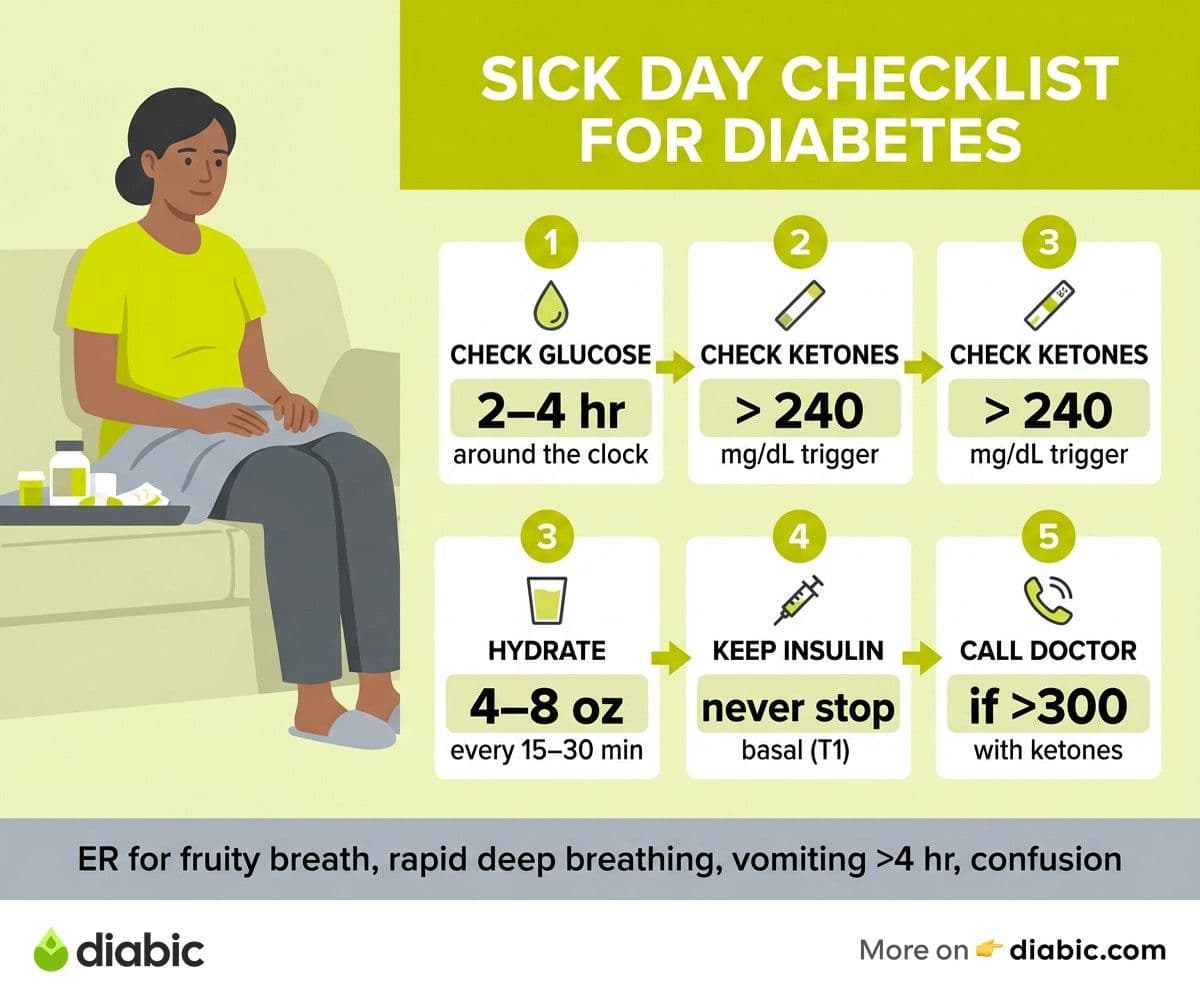
Here is the core sick day checklist diabetes guidance that the American Diabetes Association recommends:
- Check blood sugar every 2 to 4 hours, around the clock if needed. Sleep a few hours, set an alarm, then check again. Missing readings during illness is how small problems become big ones.
- Check ketones if blood sugar climbs above 240 mg/dL or if you feel nauseated, fruity-breathed, or unusually tired. Urine strips work in a pinch, but blood ketone meters give faster, more accurate readings.
- Sip fluids constantly, aiming for 4 to 8 ounces every 15 to 30 minutes. Water, broth, herbal tea, and sugar-free electrolyte drinks all count. If you are running high, stick with sugar-free options. If you are running low or cannot eat, switch to regular ginger ale, juice, or sports drink.
- Keep taking your diabetes medications unless your provider has told you to pause something specific. Insulin, in particular, should never be stopped during illness. Your body usually needs more, not less.
Write your sick-day plan down before you need it. A written plan removes guesswork when you are foggy from fever and cuts the risk of dangerous mistakes.
Stock a sick day kit
A small bin in your kitchen or bedside drawer means you do not have to drive to the pharmacy when you feel awful. Keep ketone strips (check the expiration date twice a year), sugar-free electrolyte powder, regular ginger ale or juice boxes, plain crackers, broth, a thermometer, and a list of your medications and provider numbers. Restock it after you use it, the same way you would a first aid kit.
What to Eat and Drink on Sick Days
Food is medicine on sick days, but only if you can keep it down. The goal is not nutritional perfection. The goal is steady blood sugar and adequate hydration until you feel human again. Plain, easy-to-digest carbs are usually the best choice when nausea is mild.
If you can eat normally, stick to gentle options: toast, plain crackers, applesauce, broth-based soup, plain rice, or oatmeal. Add a little protein (a soft-boiled egg, plain Greek yogurt, peanut butter) once your stomach calms down. These foods will not flatten your blood sugar, but they will not spike it the way greasy or heavy meals can. For more on managing energy when you feel drained, our diabetes fatigue tips post has practical ideas you can use even when you are sick.
If you cannot keep solid food down, switch to sippable carbs to prevent lows from your medication. The ADA suggests aiming for roughly 50 grams of carbohydrate every 3 to 4 hours if you are on insulin and unable to eat solid food. That looks like:
- 1 cup (8 oz) of regular ginger ale or juice
- 1 cup of regular Jell-O
- A popsicle plus a few saltines
- 1 cup of regular sports drink
Skip diet sodas and zero-calorie drinks if you are running low or not eating. They will not give you the carbs you need to balance your insulin. Avoid heavy, greasy, or fried foods, which slow stomach emptying and worsen nausea.
Sick Day Rules for Type 1 vs Type 2
Sick day rules for type 1 diabetes and type 2 diabetes overlap, but a few critical differences can change how you respond. The biggest one: people with type 1 are at much higher risk for diabetic ketoacidosis during illness, and DKA can develop in hours.
If you have type 1 diabetes, the most important rule is to never stop your basal (long-acting) insulin, even if you cannot eat. Your liver keeps producing glucose during illness, and without basal insulin, ketones rise fast. Check ketones any time blood sugar is over 240 mg/dL, you feel nauseated, or you have been throwing up. Breakthrough T1D (formerly JDRF) publishes detailed sick day guidance that is worth bookmarking before flu season.
If you have type 2 diabetes, the situation depends on which medications you take. Many providers ask people on metformin to pause it during severe illness, especially with vomiting, diarrhea, or dehydration, because metformin combined with dehydration raises the risk of lactic acidosis. SGLT2 inhibitors (drugs ending in "-flozin") may also need to be paused during acute illness because they can raise the risk of euglycemic DKA. Sulfonylureas can cause lows if you are not eating. The Endocrine Society recommends having these adjustment rules written into your sick-day plan in advance.
For both types, call your provider when:
- Blood sugar stays above 300 mg/dL for more than a few hours despite correction
- Ketones are moderate or high
- You cannot keep fluids down for 4 hours or more
- You feel confused, very weak, or short of breath
Knowing in advance when blood sugar is dangerous makes these decisions easier in the moment.
When to Call Your Doctor or Go to the ER
Most sick days end without a hospital visit. But part of having a sick day checklist for diabetes is knowing the line between "manage at home" and "get help now." Call your diabetes provider or endocrinologist for guidance when blood sugar will not come down, ketones are showing up, or symptoms are getting worse instead of better. Most clinics have an after-hours line for exactly this reason.
Go to the ER (or call 911) right away if you experience any of these:
- Vomiting that has lasted more than 4 hours and you cannot keep fluids down
- Moderate or high blood ketones (over 1.5 mmol/L) that are not coming down
- Fruity-smelling breath, deep rapid breathing, severe stomach pain, or extreme drowsiness (signs of DKA)
- Confusion, chest pain, or trouble breathing
- Blood sugar over 400 mg/dL that does not respond to correction
These are not "wait and see" symptoms. The Endocrine Society emphasizes early intervention because DKA progresses quickly, and severe dehydration can damage kidneys.
From my experience: In my 14 years with type 1 diabetes, the worst flu I ever had taught me one lesson I never forgot: I waited too long to call my endocrinologist because I was sure I could handle it myself. By the time I picked up the phone, I had moderate ketones and was dehydrated enough to need IV fluids. Now I have a rule. If I am sick and my numbers are misbehaving for more than two checks in a row, I call. Pride is not worth a hospital admission.
Building a Sick Day Plan With Your Provider
Sick days are easier when you have a written plan from the people who know your diabetes best. At your next routine appointment, ask your endocrinologist or primary care provider to help you build one. The plan should cover:
- Your specific glucose and ketone targets during illness
- Insulin correction guidance for high readings (or pump basal adjustments)
- Which oral medications to pause and when to restart them
- Phone numbers for after-hours questions
- A clear "go to ER" threshold based on your history
Keep a copy on the fridge, in your phone, and with whoever lives with you. If you live alone, share it with a family member or close friend who can check on you. Tell them what to look for if you stop answering texts.
Sick days will happen. A working sick day checklist diabetes plan, paired with a stocked kit and provider numbers, is one of the kindest things you can do for yourself. Take the small step today. Stock the supplies, write the numbers down, and rest easier knowing the next bug will not catch you off guard.
Frequently Asked Questions
How do I manage blood sugar when sick?
Test every 2 to 4 hours, hydrate constantly with sugar-free fluids if you are running high or regular fluids if you are running low, keep taking your insulin (adjusting only with provider guidance), and check ketones any time blood sugar is above 240 mg/dL. If readings stay over 300 for more than a few hours, ketones rise, or you cannot keep fluids down, call your provider. The goal is steady management, not perfect numbers.
What are the sick day rules for type 1 diabetes?
The core sick day rules for type 1 diabetes are: never stop basal insulin, check blood sugar every 2 to 4 hours, check ketones whenever glucose is over 240 mg/dL or you feel nauseated, sip 4 to 8 ounces of fluid every 15 to 30 minutes, and aim for about 50 grams of carbohydrate every 3 to 4 hours if you cannot eat solid food. Call your provider for persistent highs, moderate to high ketones, vomiting that lasts more than 4 hours, or any signs of DKA.
Should I exercise when I am sick with diabetes?
Skip workouts when you have a fever, ketones, or feel significantly unwell. Exercise can push ketones higher in people with type 1 and worsen dehydration in anyone. Light walking once you start feeling better is fine, but save real workouts for after symptoms have passed and your blood sugar has settled into its usual range.
Can I take regular cold medicine if I have diabetes?
Many cold medicines contain sugar or ingredients (like pseudoephedrine) that raise blood sugar. Look for sugar-free formulations, avoid combination products with multiple active ingredients when you can, and ask your pharmacist before buying anything new. Acetaminophen for fever and saline nasal spray for congestion are usually safe, but always check with your provider if you are unsure. Add the brands you keep on hand to your sick day checklist diabetes kit so you are not reading labels at midnight with a fever.
Shahriar P. Shuvo is the founder of Diabic. He has lived with diabetes for over 14 years, and built Diabic to deliver the practical, evidence-based self-management tools he wished existed when he was first diagnosed. By trade, Shahriar is a senior design and frontend engineer with 6+ years shipping products at Agora, Timescale (now Tiger Data), and ShareTrip. He writes from the intersection of lived diabetes experience and product craft, focused on what works in daily management rather than what sounds good in a textbook.
Medically reviewed by
Dr. Shanto Arian is an internal medicine physician now specializing in clinical and aesthetic dermatology, with a parallel academic focus on epidemiology and public health. He holds an MBBS, MPH, MSc (UK), MRCP (UK), MRCPI (Ireland), Diploma in Dermatology (UK), and Diploma in Aesthetic Medicine (USA). Dr. Arian trained in internal medicine, including hospital work on hematology cases such as graft-versus-host disease, before moving toward dermatology. Skin is one of the earliest places diabetes shows itself, from acanthosis nigricans and diabetic dermopathy to slow foot wound healing, and that intersection is where his clinical and Diabic-review work meet. On Diabic, Dr. Arian medically reviews content on diabetes diagnosis, complications, dermatologic manifestations, and pharmacotherapy, ensuring every claim aligns with current ADA, NICE, and peer-reviewed literature.
More from Living with Diabetes
View all
A Gentle Chair Yoga Routine for people with diabetes
A gentle chair yoga for people with diabetes routine with safe poses, modifications for neuropathy, retinopathy, and joint pain, plus tips for older.

Shift Work and Diabetes: Managing Irregular Hours
Shift work and diabetes is a tough combination. Learn how to manage meals, sleep, medication, and blood sugar when your hours rotate or flip overnight.

Dating with Diabetes: When to Tell a New Partner
Dating with diabetes brings unique disclosure questions. Here is when to tell a new partner, what to say, and how to handle the conversation with.
Clinician-reviewed habits, plain-language guides, and honest answers - the small shifts that make living with diabetes feel lighter, every day.