Reducing Your Diabetes Heart Attack Risk: A Practical Guide
Lower your diabetes heart attack risk with practical steps for blood sugar, blood pressure, cholesterol, and medications backed by current research.

In this article(9)
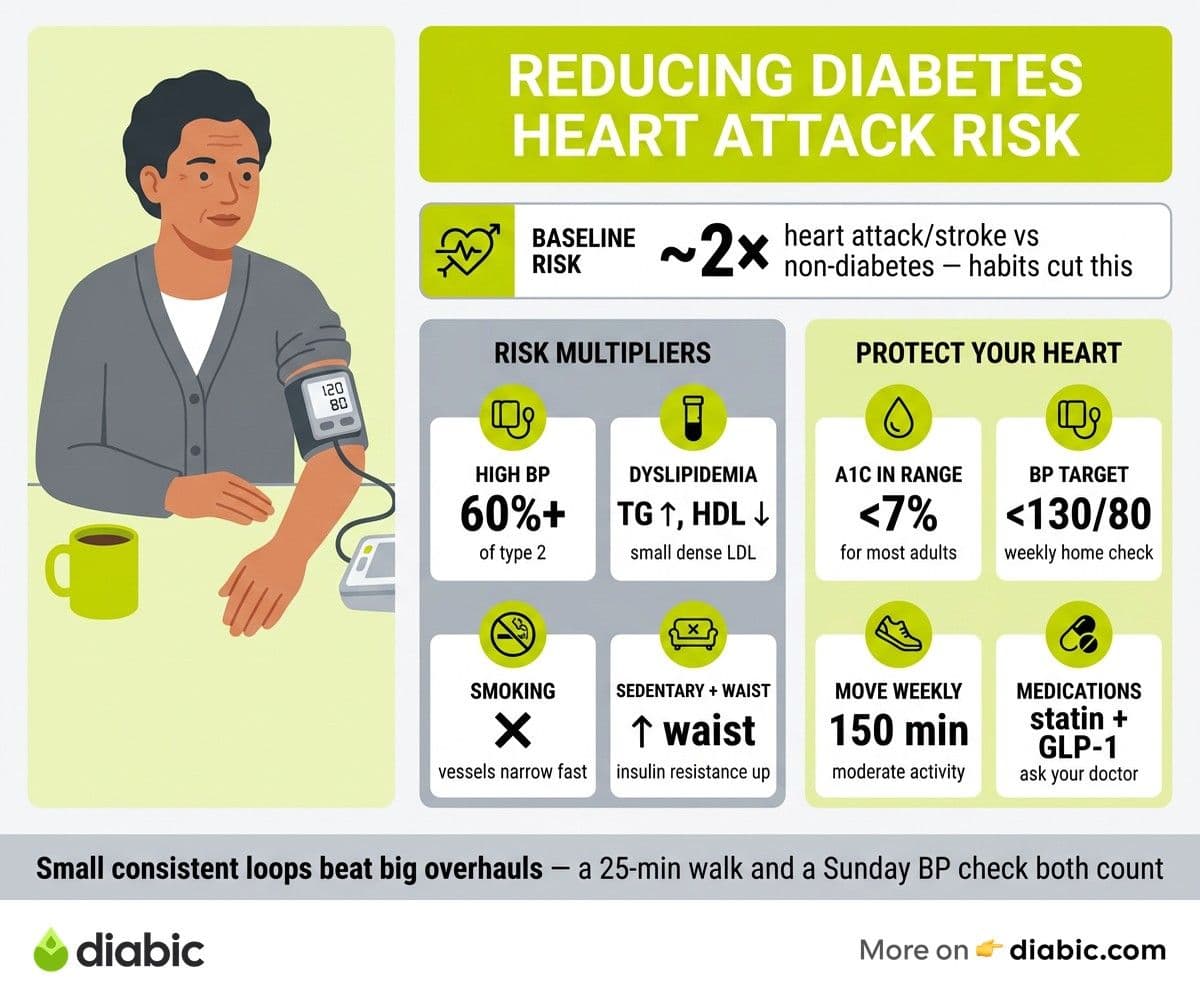
People with diabetes face a higher diabetes heart attack risk than those without it, but that statistic does not have to define your future. According to the Centers for Disease Control and Prevention, adults with diabetes are nearly twice as likely to have heart disease or stroke as adults without diabetes, and they tend to develop these conditions at a younger age. The encouraging part is that the same research keeps showing that proactive steps significantly reduce that risk, often by more than half when several habits stack together.
This guide focuses on what you can do, starting today, to protect your heart. We will look at why diabetes raises cardiovascular risk in the first place, the specific factors that compound that risk, and the practical changes that make the biggest difference. The goal is not to scare you, but to give you a clear picture of where your uses actually is.
Why Diabetes Heart Attack Risk Runs Higher
High blood sugar over months and years quietly damages the inner lining of your blood vessels, called the endothelium. When that lining gets injured, fats and cholesterol stick more easily, plaques form, and arteries narrow. The American Diabetes Association Standards of Care describes this process as the foundation for atherosclerotic cardiovascular disease, which is the most common driver of heart attacks in people with diabetes.
Inflammation and oxidative stress play supporting roles. Elevated glucose triggers low-grade inflammation that keeps the immune system mildly activated, and that inflammation makes existing plaques more likely to rupture. A ruptured plaque is what usually causes a heart attack, not the slow narrowing itself. Insulin resistance also raises triglycerides and lowers protective HDL cholesterol, which adds another layer to the problem.
Cardiovascular disease ends up being the leading cause of death in people with type 2 diabetes for these layered reasons. The link is so strong that screening and prevention for heart issues sit alongside blood sugar management as a core part of diabetes care. If you also want to learn how diabetes can affect the heart's pumping function, our piece on heart failure and diabetes prevention covers that side of the picture.
Key Risk Factors to Be Aware Of
Diabetes does not work in isolation. It often travels with other conditions that each raise heart risk on their own, and together they multiply.
High blood pressure shows up in more than 60% of people with type 2 diabetes, according to the National Institute of Diabetes and Digestive and Kidney Diseases. The combination is especially harmful because both conditions damage the same blood vessels in different ways. Our deeper look at the blood pressure and diabetes connection explains how the two feed each other.
High cholesterol and elevated triglycerides amplify plaque buildup. People with diabetes often have what is called diabetic dyslipidemia, a pattern of high triglycerides, low HDL, and small dense LDL particles that are particularly good at lodging in artery walls.
Smoking compounds vascular damage in a way few other factors do. It narrows blood vessels, raises blood pressure, and accelerates plaque formation, on top of the damage diabetes is already doing. Quitting at any age improves outcomes, and the benefit shows up in cardiovascular risk within months.
Family history, age, and male sex are non-modifiable factors that can raise baseline risk. They do not change what you can do, but they do change how aggressive your prevention plan may need to be. A sedentary lifestyle and excess weight, especially around the waist, also play a meaningful role and respond well to gradual change.
Practical Steps to Reduce Your Risk
The most effective prevention plan combines several habits rather than relying on any single one. The Mayo Clinic's heart attack prevention guidance emphasizes that lifestyle changes give your medications more room to work and often reduce how much medication you need long term.
Managing blood sugar within your target range is the foundation. For most adults, the ADA suggests aiming for an A1C below 7%, though your personal target may be higher or lower based on age, other conditions, and risk of low blood sugar. Time in range data from a CGM can give you a more granular view than A1C alone.
Regular blood pressure monitoring and management belongs in the same tier of priority. Home cuffs are inexpensive, and checking a few times a week gives your care team much better data than an occasional clinic reading. Most adults with diabetes do best with a blood pressure under 130/80, though again your target should be set with your provider.
Cholesterol management combines diet, exercise, and medication when needed. Reducing saturated fat, adding soluble fiber, and moving regularly can shift numbers meaningfully on their own. Our guide to lowering high cholesterol with diabetes walks through the specific changes that tend to work.
Quitting smoking and reducing alcohol intake are two of the highest-impact changes anyone with diabetes can make. Even cutting back rather than quitting outright still helps, and most insurance plans now cover cessation programs and nicotine replacement.
Stress management often gets dismissed as a soft recommendation, but chronic stress raises cortisol, which raises both blood sugar and blood pressure. Practices like daily walks, slower breathing, time outdoors, or simply protecting sleep hours can move your numbers in measurable ways. The full set of heart healthy habits for diabetes brings these threads together into a daily routine.
From my experience: After 14 years with type 1 diabetes, what changed my own cardiovascular numbers most was not perfection. It was building a few non-negotiables, like a 25 minute walk after dinner, a home blood pressure check on Sundays, and an annual lipid panel I actually look at. Small consistent loops beat big overhauls that fade by week three.
The Role of Medication in Heart Protection
Lifestyle does heavy lifting, but medications are often the difference between adequate protection and excellent protection. The decision about which to take, and when, belongs to you and your care team.
Aspirin therapy used to be a near-default recommendation for adults with diabetes. Current ADA guidance is more selective, suggesting low-dose aspirin mainly for people with established cardiovascular disease or those at clearly elevated 10-year risk who do not have a high bleeding risk. Talk to your doctor before starting or stopping aspirin on your own.
Statins are commonly recommended for adults with diabetes over 40, and increasingly for younger adults with additional risk factors. Multiple trials have shown that statins reduce heart attack and stroke risk in people with diabetes even when their LDL numbers look acceptable. If you want a deeper dive, our piece on statin medications for diabetes covers benefits, side effects, and what to ask your provider.
Newer diabetes medications have changed the conversation significantly. SGLT2 inhibitors and GLP-1 receptor agonists have showed cardiovascular benefits beyond blood sugar lowering in large peer-reviewed trials published in journals like Diabetes Care. For people with type 2 diabetes who also have established heart disease, current guidelines often recommend one of these classes regardless of A1C.
Working with your care team to optimize medication decisions is worth the effort. Bring questions, ask about cardiovascular benefits specifically, and revisit the plan annually. Medications that were right two years ago may not be the best fit today.
Screening and Monitoring for Heart Health
Prevention works better when you have data. The recommended cardiovascular screening for adults with diabetes typically includes an annual lipid panel, regular blood pressure checks, and at minimum an annual office visit focused on cardiovascular risk.
Some people benefit from additional testing such as a coronary artery calcium score, which uses a low-dose CT scan to look for early plaque. It is not for everyone, but in select cases it helps decide whether to start a statin earlier or push lifestyle changes harder.
Warning signs that need prompt medical attention include chest pressure, pain that radiates to the jaw or left arm, shortness of breath that feels new, sudden sweating with nausea, or unexplained fatigue with exertion. Symptoms in people with diabetes can be subtler than the classic crushing chest pain, partly because diabetes can affect the nerves that signal cardiac pain. When something feels wrong, getting checked is always the right call.
Building a relationship with your healthcare team around prevention pays off over years. The team that knows your history, your numbers, and your priorities will catch issues earlier and tailor decisions better than any one-off visit ever could.
FAQ
How does diabetes increase heart attack risk?
Diabetes increases heart attack risk mainly by damaging the lining of blood vessels through chronic high blood sugar, which encourages plaque to form and arteries to narrow. Inflammation, insulin resistance, and the dyslipidemia pattern common in diabetes add to that damage. People with diabetes also tend to have other risk factors like high blood pressure, which compounds the effect.
What can people with diabetes do to prevent a heart attack?
The most effective prevention combines blood sugar management, blood pressure control, cholesterol management, regular physical activity, not smoking, and taking prescribed medications consistently. Many people benefit from medications like statins or newer diabetes drugs that protect the heart, but the decision should always be made with your provider based on your full health picture.
Do all people with diabetes need heart medication?
Not everyone, but most adults with diabetes benefit from at least one heart-protective medication at some point. Current guidelines often recommend statins for adults over 40 with diabetes, and SGLT2 inhibitors or GLP-1 receptor agonists for people with established heart disease. Aspirin is more selective. The right plan depends on your age, risk profile, and other conditions, so this is a conversation to have with your care team.
The honest takeaway is that diabetes heart attack risk is real, but it is also one of the more responsive risks in medicine. Steady blood sugar, a blood pressure under 130/80 most days, statins when they are indicated, and a few stubborn habits like a daily walk and a yearly lipid panel can cut your odds substantially. Talk to your doctor about which of these levers gives you the most room to move next.
Shahriar P. Shuvo is the founder of Diabic. He has lived with diabetes for over 14 years, and built Diabic to deliver the practical, evidence-based self-management tools he wished existed when he was first diagnosed. By trade, Shahriar is a senior design and frontend engineer with 6+ years shipping products at Agora, Timescale (now Tiger Data), and ShareTrip. He writes from the intersection of lived diabetes experience and product craft, focused on what works in daily management rather than what sounds good in a textbook.
Medically reviewed by
Dr. Shanto Arian is an internal medicine physician now specializing in clinical and aesthetic dermatology, with a parallel academic focus on epidemiology and public health. He holds an MBBS, MPH, MSc (UK), MRCP (UK), MRCPI (Ireland), Diploma in Dermatology (UK), and Diploma in Aesthetic Medicine (USA). Dr. Arian trained in internal medicine, including hospital work on hematology cases such as graft-versus-host disease, before moving toward dermatology. Skin is one of the earliest places diabetes shows itself, from acanthosis nigricans and diabetic dermopathy to slow foot wound healing, and that intersection is where his clinical and Diabic-review work meet. On Diabic, Dr. Arian medically reviews content on diabetes diagnosis, complications, dermatologic manifestations, and pharmacotherapy, ensuring every claim aligns with current ADA, NICE, and peer-reviewed literature.
More from Health & Complications
View all
Diabetes and Dental Implants: What to Know First
Diabetes dental implants guide covering safety, A1C targets, recovery expectations, gum health prep, and what to ask your oral surgeon before surgery.

Burning Mouth Syndrome and Diabetes Explained
Burning mouth syndrome diabetes link explained, including neuropathy, dry mouth, and thrush causes plus treatment options that may bring real relief.

Dental Care for people with diabetes: Tips That Help
Practical dental care diabetics need, with real tips for protecting teeth and gums when diabetes raises your risk for oral health problems.
Clinician-reviewed habits, plain-language guides, and honest answers - the small shifts that make living with diabetes feel lighter, every day.